The pursuit of horological perfection often sees watchmakers setting seemingly insurmountable challenges: crafting ultra-thin movements, developing intricate complications, achieving astonishing skeletonization, or creating transparent mechanisms. Beyond the mechanical marvels, watchmakers also elevate timepieces into miniature canvases for decorative artistry. Among these artistic expressions, stone dials stand out, gracing watches with a rarity that has always commanded attention. This ancient art form, rooted in Italian Renaissance craftsmanship, continues to captivate collectors and brands alike, with recent resurgences highlighting its enduring appeal and technical sophistication.
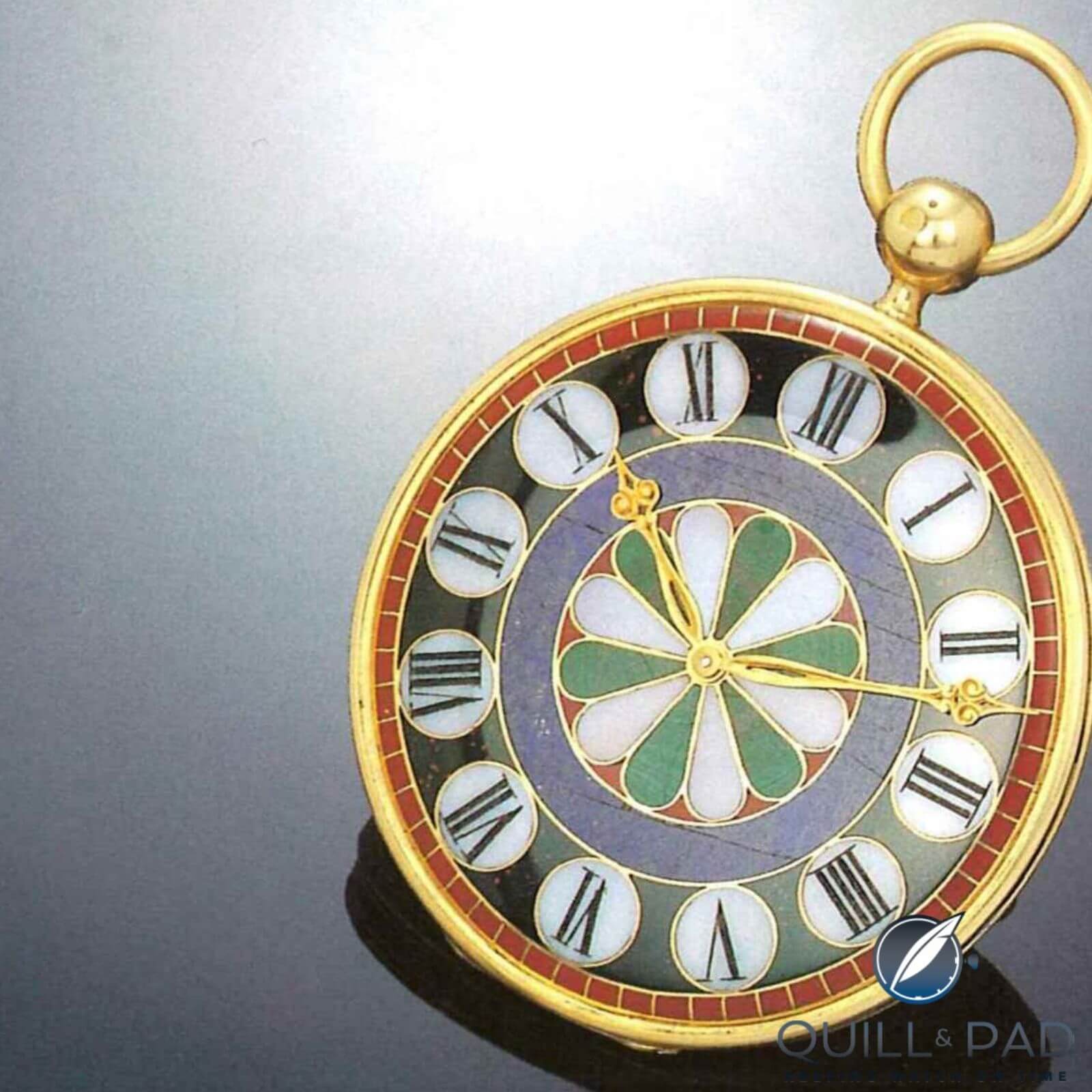
The genesis of this exquisite technique can be traced back to the Italian Renaissance, where artisans developed the Florentine mosaic. This method involved meticulously arranging small, multicolored stone plates to recreate the detail and vibrancy of painted artworks. Known as pietra dura, this art form eventually found its way into the intricate world of watchmaking, most likely in the 19th century. Prominent French firms like Breguet and Leroy, along with other now-obscure names, are historically associated with early examples of pietra dura watch dials. Later, in the late 19th and early 20th centuries, Vacheron & Constantin collaborated with Parisian jeweler Ferdinand Verger to produce pocket watches adorned with these remarkable stone mosaics. The technique experienced a significant revival in 1966 when Piaget reinterpreted it in a more simplified, yet equally stunning, form. Piaget’s modern approach typically featured a single, thin slab of decorative stone for the entire dial, or occasionally, a dual-stone composition for distinct central and peripheral elements.
The Golden Age of Stone Dials: 1970s and 1980s
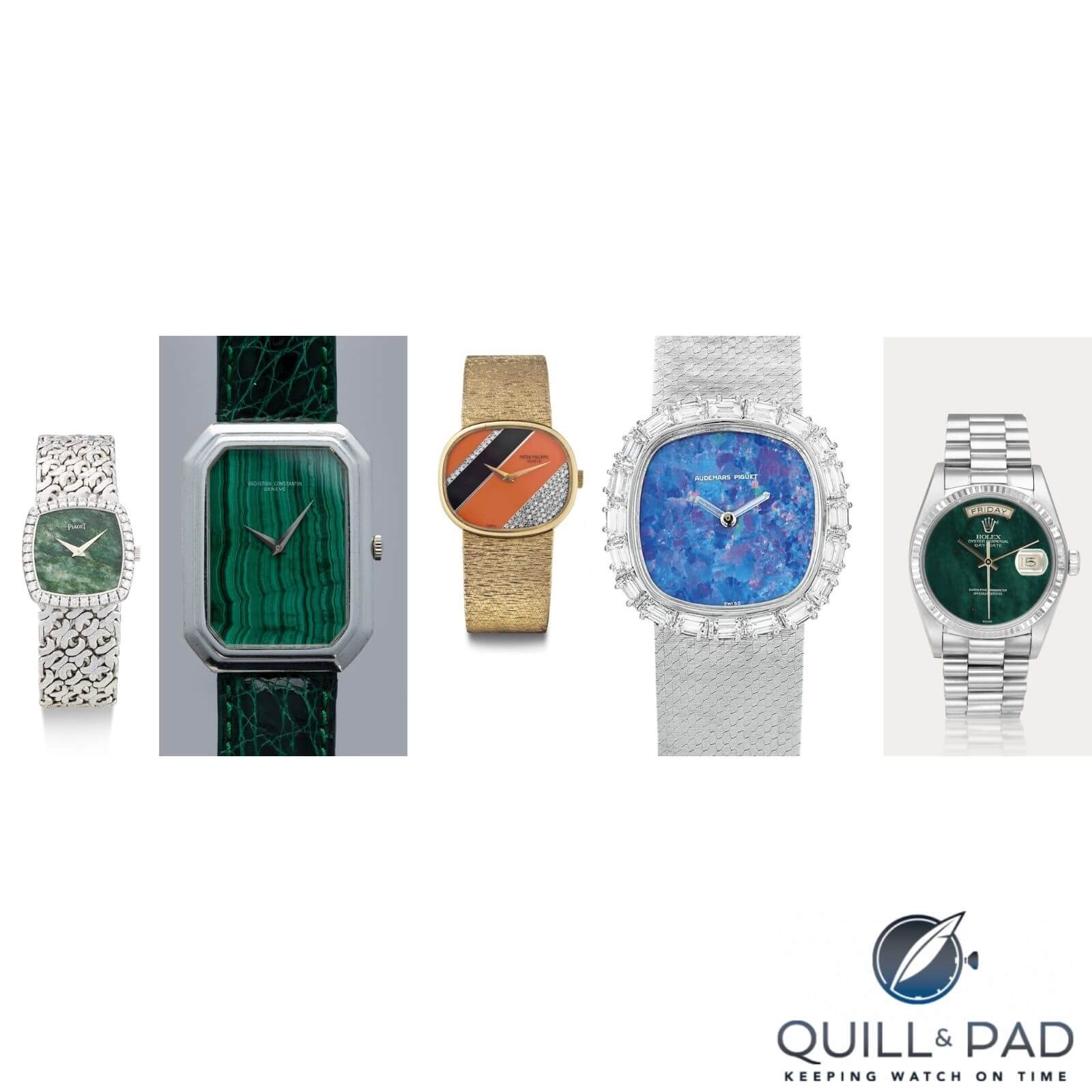
Stone dials on wristwatches experienced their zenith in popularity during the 1970s and 1980s. This era coincided with advancements in movement technology, particularly the well-established production of thin mechanical and quartz movements. This development facilitated the creation of more elegant and refined decorative timepieces. Watch manufacturers frequently employed a variety of semi-precious stones for these dials, including agate, jasper, jadeite, lapis lazuli, malachite, onyx, opal, tiger’s eye, hawk’s eye, and turquoise. While not strictly minerals, materials such as aventurine, coral, mother-of-pearl, and meteorite were also commonly incorporated into these artistic dials. Leading watch brands, including Rolex, Patek Philippe, Vacheron Constantin, Audemars Piguet, and notably Piaget, the pioneer of the modern stone dial, were all active participants in this luxurious segment of watchmaking.
The inherent challenges in working with these delicate, often imperfect, raw materials were substantial. High defect rates were common during the processes of sawing, polishing, and drilling the stones for hand pinions and applied markers. Consequently, the production cost of a stone dial, and by extension the entire watch, was significantly amplified. The production of hardstone dials has historically been, and continues to be, highly limited. Furthermore, the inherent fragility of these materials contributes to a dwindling number of surviving examples over time, making them increasingly rare and valuable.
Pietersite: A Rare Gemstone’s Emergence in Watchmaking
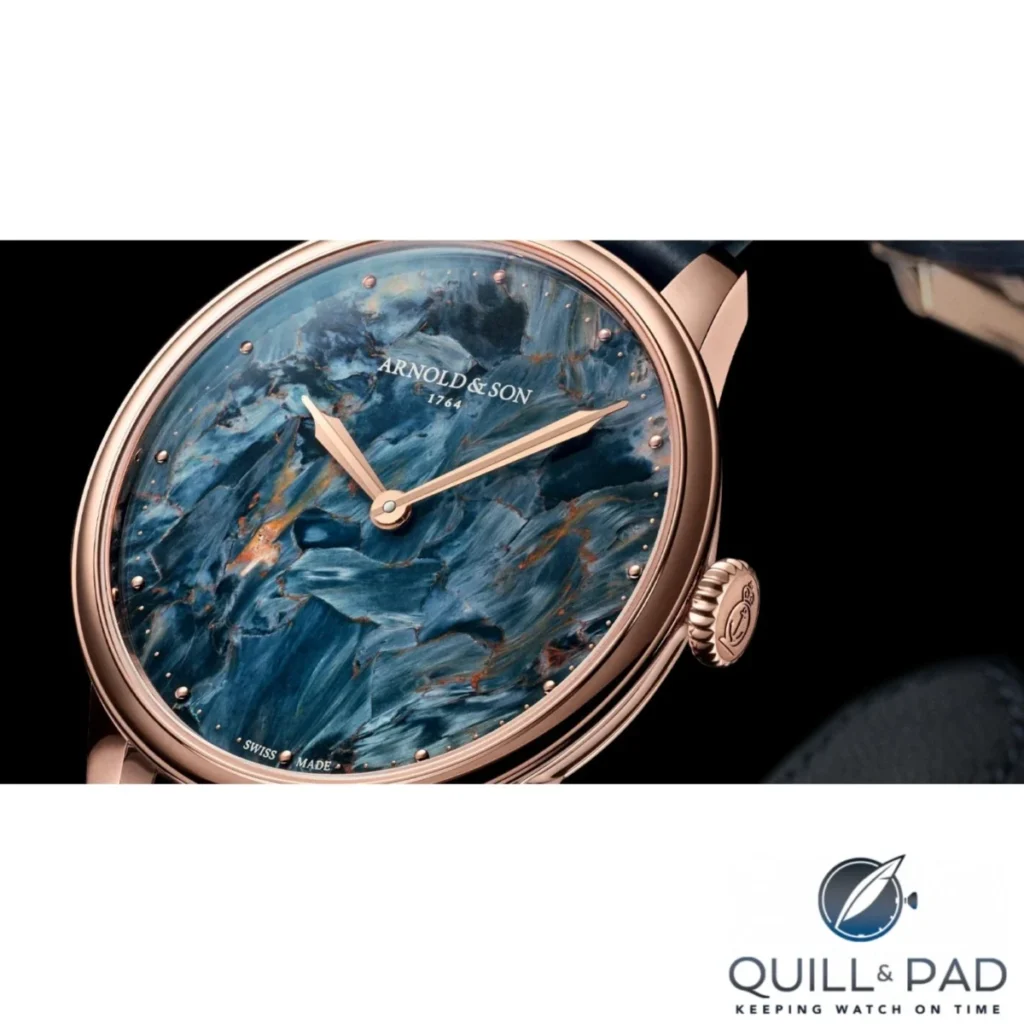
Among the pantheon of rare stone-dial watches, certain materials stand out for their exceptional scarcity and captivating beauty. Pietersite, a unique type of chalcedony, firmly belongs in this distinguished category. Characterized by its chaotic coloring and structure, coupled with an unpredictable fibrous texture, polished pietersite appears almost alive, shimmering and shifting with changes in viewing angle and lighting. Its visual appeal can be described as a wild, intertwined blend of hawk’s eye and tiger’s eye. The stone’s texture and predominant gray-blue hue often evoke stormy skies or a turbulent sea, earning it the evocative moniker "Storm Stone," a name that perfectly encapsulates its dramatic character. Pietersite dials exhibit a spectrum of hues, ranging from light gray to deep, dark gray-blue and red-brown tones. The interplay of red, brown, gold, and silver-blue accents does not appear static beneath the polished surface but seems to possess a dynamic, living shimmer.
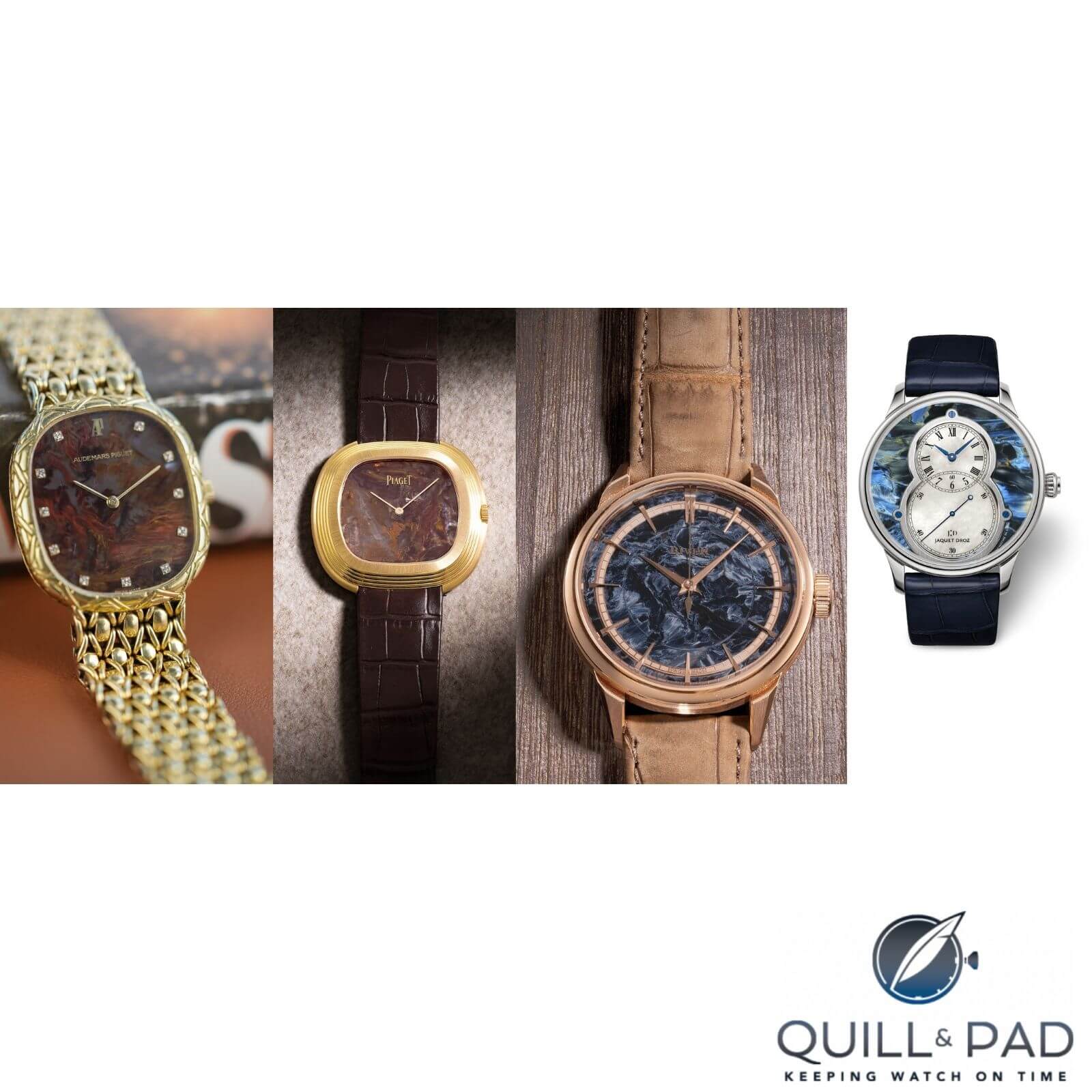
The use of pietersite in watch dials is relatively novel, with its discovery dating back to 1962 in Namibia by mineral dealer Sidney Pieters. Reports suggest that watches featuring pietersite dials began appearing in the 1970s, with Piaget’s collection, specifically Reference 9791, being a likely early adopter. Subsequently, this rare material graced dials of Audemars Piguet models like the Ref. 4647 (late 1980s) and the Royal Oak Ref. 14587 (1994). The emergence of a new source of pietersite specimens well-suited for watch dials in the 2010s led to a resurgence of dramatically patterned pietersite watches on the market. Piaget further solidified its reputation in this niche in 2017 with a unique Black Tie Vintage watch featuring a pietersite dial, auctioned for charity at Only Watch 2017. Jaquet Droz preceded them by introducing the Grande Seconde Pietersite a year earlier, later expanding their offering with two tourbillon models showcasing dials made from two distinct types of pietersite: the Grande Seconde Tourbillon Blue Pietersite and the Grande Seconde Tourbillon Red Pietersite.
A New Wave of Pietersite Watches
A fresh wave of interest in watches featuring dials made from this exotic mineral emerged in 2025, with several brands embracing pietersite. Notable among these were Biver with the Automatique Atelier Series Pietersite, Baltic with the Prismic Stone Dial Pietersite (whose "eternal" dial material was paired with an "eternal" design reminiscent of 1930s Patek Philippe Calatrava Ref. 96), Atelier Wen with the Millésime 2025 Perception, and Sartory-Billard with the SB04-E Pietersite Platinum.
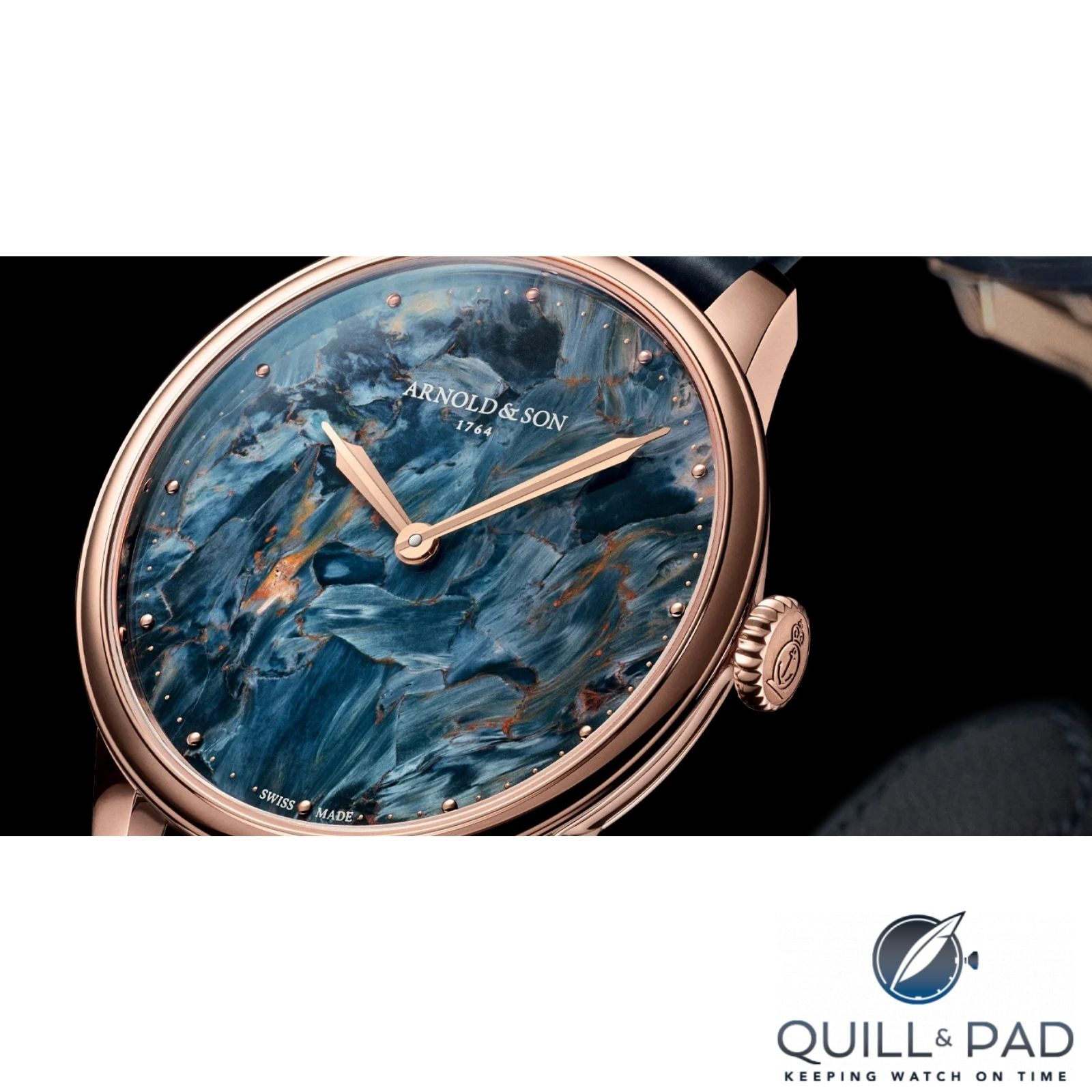
The most recent significant development occurred at Watches and Wonders 2026, where Arnold & Son unveiled not one, but two HM Pietersite models, crafted in stainless steel and red gold. This event highlighted a potential underestimation of demand for watches with exotic stone dials. Initially announced as limited editions of 18 steel and 8 gold pieces, the production numbers were subsequently increased to 28 and 18 pieces, respectively, by the summer. Intriguingly, at the time of reporting, the caseback images on the brand’s website still reflected the original, lower limitation numbers. This situation suggests that the market demand for stone-dial watches may be more robust than previously assumed, potentially indicating that such releases are not merely PR stunts but viable commercial propositions capable of generating significant sales.
Arnold & Son HM Pietersite: A Blend of Artistry and Engineering
The Arnold & Son HM Pietersite collection embodies a classic dress-watch aesthetic, adhering to contemporary trends with a diameter under 40 mm, specifically 39.5 mm. Its inherent elegance is derived not only from its perfectly round shape and meticulous full polishing but also from its remarkable slimness, measuring a mere 7.82 mm in thickness. This slim profile results in an aspect ratio exceeding 5:1, an exceptional figure for a modern mechanical watch, especially considering the technical challenges of incorporating stone dials, which inherently tend to add thickness. Arnold & Son’s expertise in achieving such pleasing proportions is particularly evident in their thin tourbillon models, and this skill is clearly translated to their stone-dial creations.
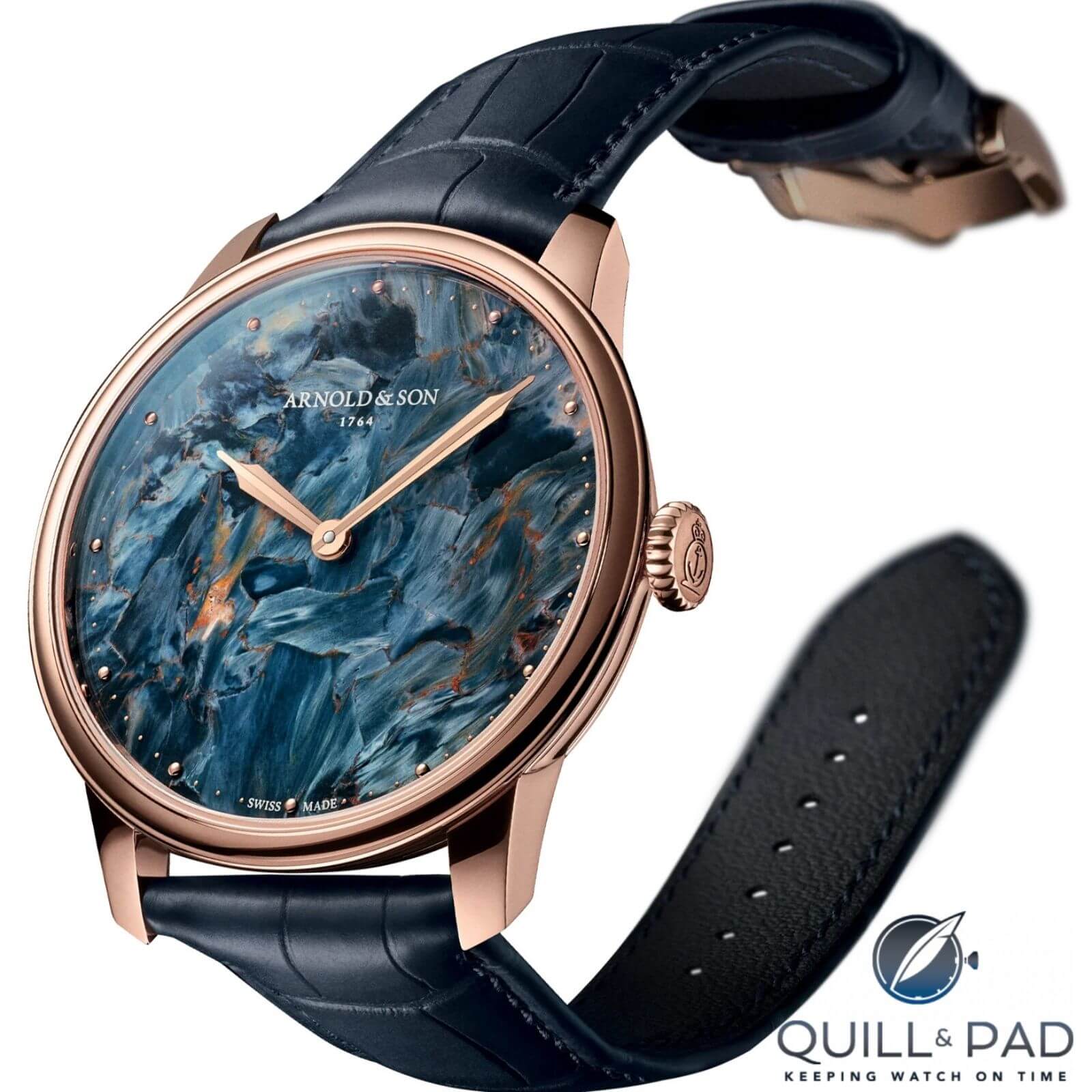
A noteworthy design choice is the domed sapphire crystal, a departure from the flat crystals typically found on thin watches. This domed crystal, treated with anti-reflective coating on both sides, enhances the visual experience of the pietersite dial, creating an almost seamless transition between the stone and the viewer’s eye, making the crystal appear to vanish.
The Dynamic Beauty of Pietersite Dials
The inherent nature of natural materials ensures that no two pietersite dials are identical. The swirling, randomly formed structures of the mineral result in a dial that is a unique piece of natural art. This dynamism offers the watch owner an endlessly fascinating visual experience, akin to observing a flickering flame, flowing water, or drifting clouds – a timeless appeal. The pietersite used by Arnold & Son is sourced from Namibia, the very region where Sidney Pieters made his groundbreaking discovery in the early 1960s, adding a layer of provenance to these exceptional timepieces.
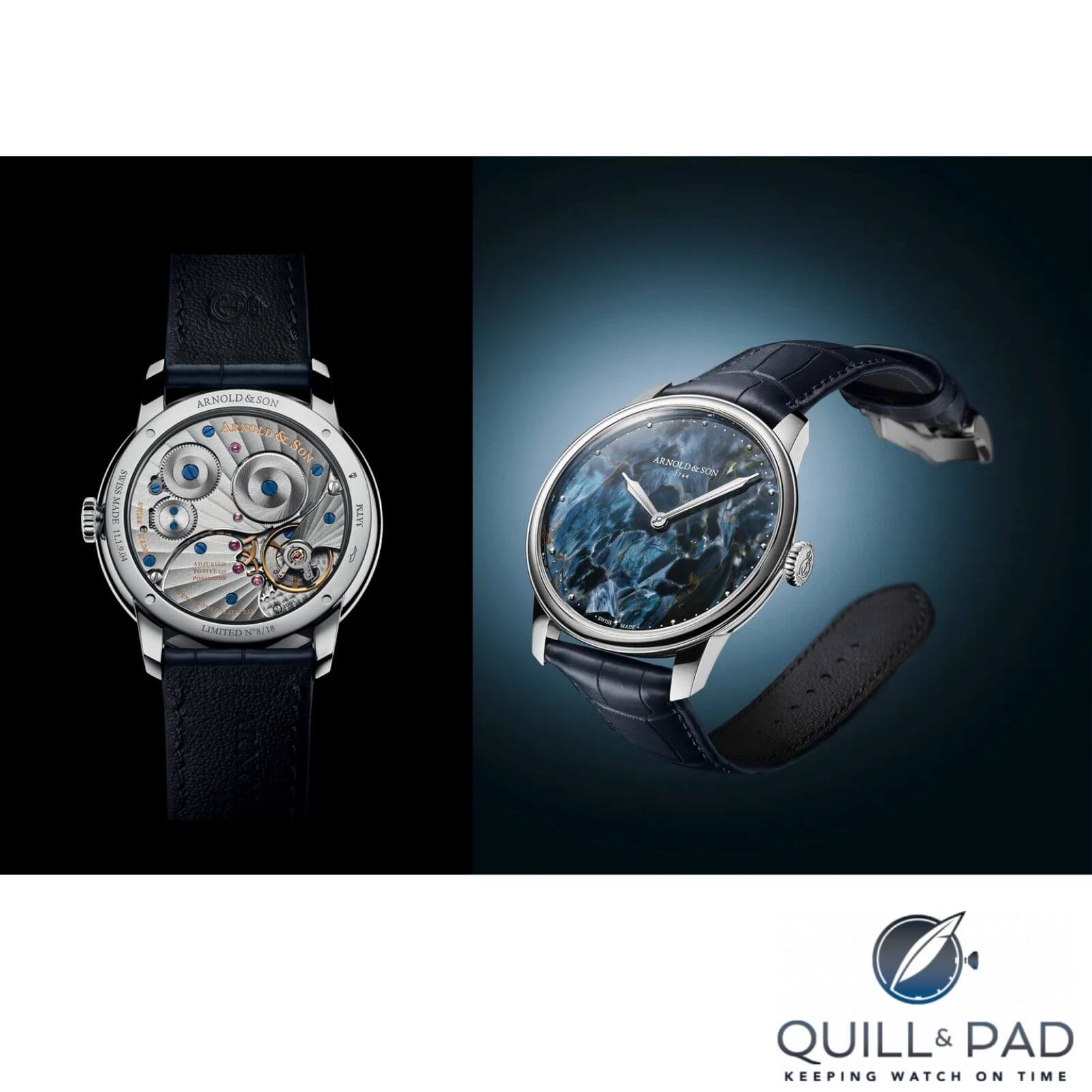
To maximize the visual impact of the pietersite, Arnold & Son opted for a minimalist dial design, featuring applied "pearl" indices. These small, polished hemispherical metal elements, with larger ones marking the hours and smaller ones the minutes, evoke a subtle nod to the styling of pocket watches from the first half of the 20th century. Rather than detracting from the pietersite, these indices serve as elegant design accents, adding a touch of technical sophistication to the dial. This approach aligns with the brand’s distinguished technical heritage, even though the modern company has no direct historical lineage to John Arnold’s original firm. Appropriately, the applied indices are crafted from the same material as the case, a detail that signifies refined taste and meticulous attention to detail.
A Glimpse into the Movement: Caliber A&S1001
In contrast to the classic stone-dial timepieces of the past, the Arnold & Son HM Pietersite offers a genuine appreciation for contemporary watchmaking excellence. The sapphire caseback reveals the exclusive Caliber A&S1001, a hand-wound movement meticulously produced by Arnold & Son’s sister company, La Joux-Perret, a renowned Swiss movement manufacturer. This ultra-thin movement, measuring a mere 2.7 mm thick, is equipped with twin barrels that provide an impressive 90-hour power reserve, a rare feat for such a slender caliber.
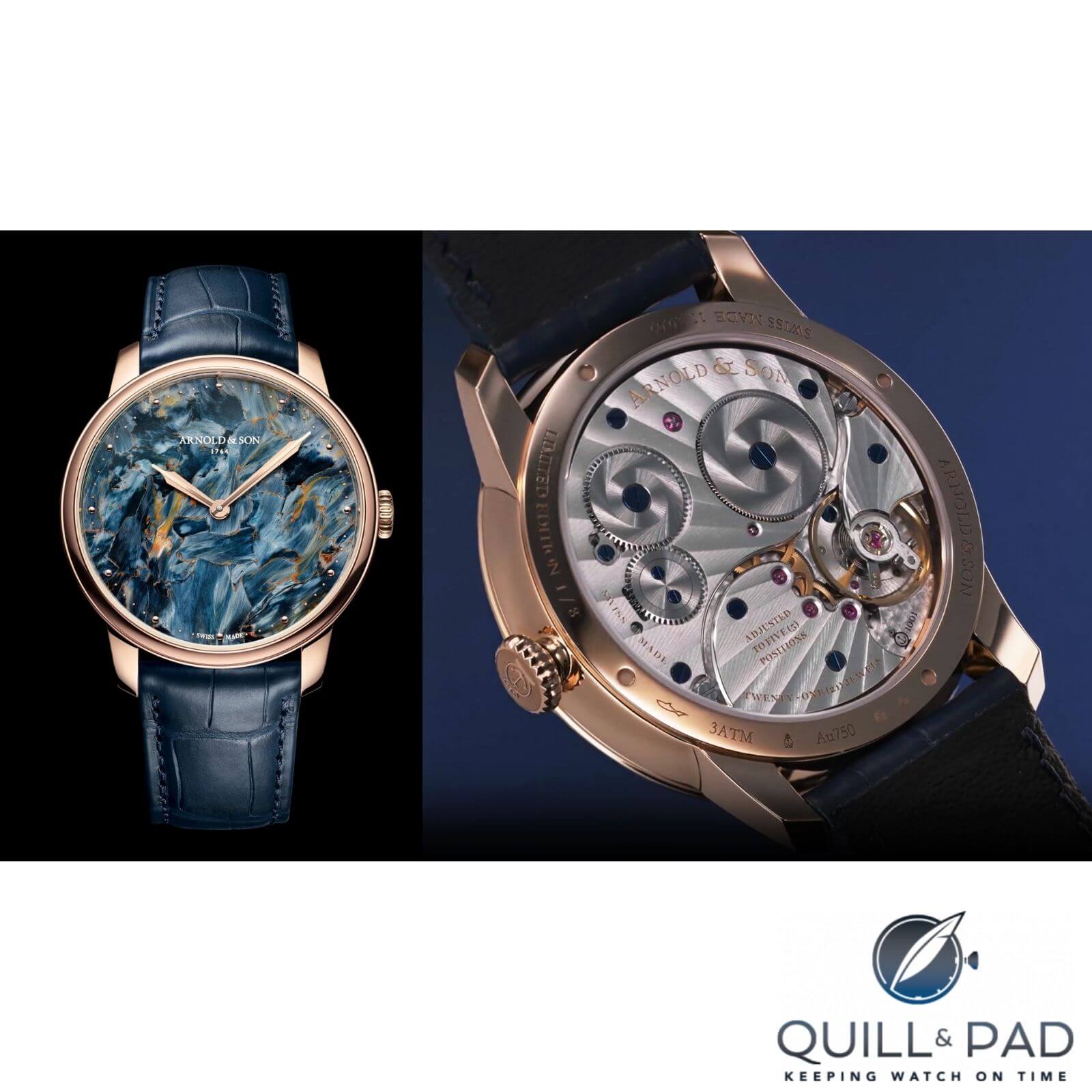
The architectural design of Caliber A&S1001 not only enables the watch’s superb 5:1 aspect ratio but also allows for a substantial movement diameter of 30 mm. This larger diameter is technically necessitated by the inclusion of the two barrels, and it also contributes to the movement’s commanding presence when viewed through the caseback. Arnold & Son and La Joux-Perret have masterfully utilized this geometry. The movement’s bridges feature contours reminiscent of fine, slim pocket watch calibers from the early to mid-20th century. This aesthetic is further enhanced by snail-brushed winding wheels, an abundance of blued screws, and gilded engravings. The traditional perlage on the mainplate is complemented by radial Côtes de Genève on the bridges, radiating from the balance staff. This combination of traditional finishing techniques and avant-garde design creates an intriguing blend that is perfectly suited for a modern dress watch.
Quick Facts: Arnold & Son HM Pietersite
- Models and Maker: HM Steel Pietersite, Ref. 1LCDS.Z02A.C1506S, and HM Red Gold Pietersite, Ref. 1LCDR.Z01A.C1506A, by Arnold & Son.
- Edition: Limited to 28 pieces in stainless steel and 18 pieces in 18k red gold.
- Case: Available in polished stainless steel or 18k red gold. Features a domed sapphire crystal with dual-sided anti-reflective coating, a sapphire case back with anti-reflective coating, a winding crown at 3 o’clock, and water resistance up to 30 meters.
- Case Dimensions: Diameter of 39.5 mm; thickness of 7.82 mm.
- Dial: Pietra dura dial crafted from Namibian pietersite, featuring semi-spherical applied indexes and polished and brushed plume-style hour and minute hands.
- Movement: Manufacture hand-wound caliber A&S1001. It operates at 3 Hz (21,600 vph) and offers a 90-hour power reserve. The movement contains 21 jewels, measures 30 mm in diameter, and has a thickness of 2.70 mm.
- Strap and Buckle: Dark blue alligator leather strap secured by a pin buckle in either stainless steel or 18k red gold, matching the respective case material.
All images, unless otherwise noted, are courtesy of Arnold & Son.