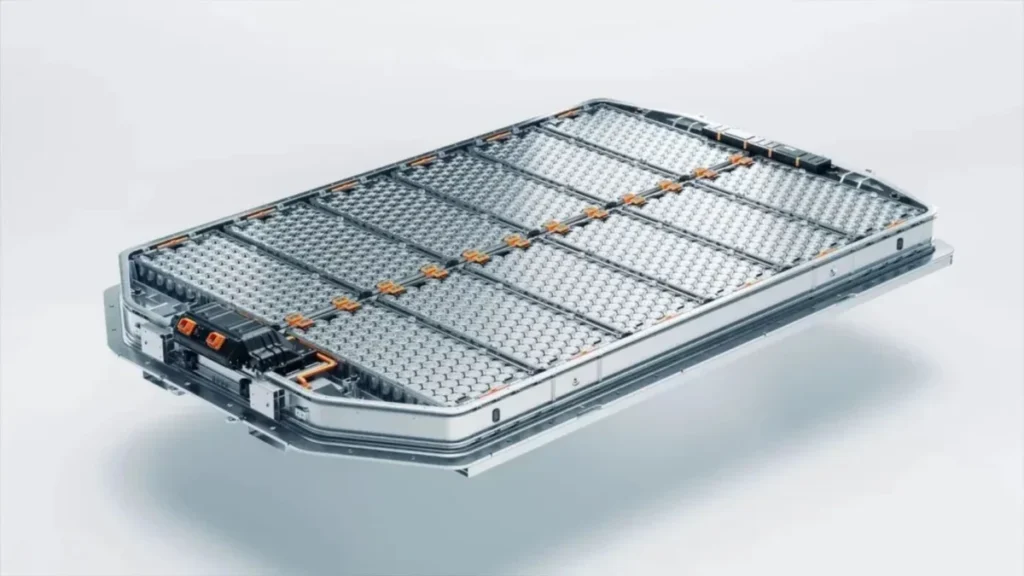
Changzhou, Jiangsu Province – Svolt Energy, a prominent Chinese battery manufacturer, has signaled a significant departure from prevailing industry sentiment by announcing the mass production of its 100-kWh "Dragon Armor" semi-solid fast-charging battery packs. The company, through an official announcement on Weibo, revealed that the first units have rolled off the assembly line at its Changzhou facility, marking a critical milestone in the evolution of electric vehicle (EV) battery technology. This move directly challenges the widely held view among many battery developers that semi-solid technology serves merely as an interim solution on the path to fully solid-state batteries, with Svolt firmly asserting its belief that semi-solid batteries will remain a fundamental and enduring option for electric vehicles for the foreseeable future.
The strategic decision by Svolt to commit to semi-solid technology as a long-term core offering is rooted in a pragmatic assessment of current technological capabilities and market readiness. Unlike all-solid-state designs, which rely exclusively on solid materials for ion transfer, semi-solid batteries incorporate a sophisticated blend of liquid and solid electrolytes. This hybrid approach aims to harness the benefits of both worlds: enhanced energy density and improved safety characteristics typically associated with solid-state, combined with the more manageable manufacturing processes and cost-effectiveness closer to conventional liquid lithium-ion cells. The company’s bold stance suggests a strategic maneuver to capture a significant share of the rapidly expanding EV market by offering a high-performance, commercially viable solution today, rather than waiting for the often-cited distant horizon of full solid-state commercialization.
Ambitious Performance Targets and Engineering Innovations
The technical specifications unveiled for the "Dragon Armor" battery packs underscore Svolt’s ambitious performance objectives. Built on a cutting-edge 900-volt architecture, these packs are designed to support extreme 6C fast charging, a rate that far surpasses the capabilities of many current EV batteries. To put this into perspective, a 6C charging rate means the battery can be fully charged in approximately one-sixth of an hour, or 10 minutes, theoretically. Svolt claims this advanced capability allows the "Dragon Armor" pack to replenish 311 miles (approximately 500 kilometers) of range in a mere 12 minutes, a figure that, if consistently achievable in real-world conditions, could significantly alleviate range anxiety and accelerate EV adoption globally.
Such rapid charging speeds inherently raise immediate and critical concerns regarding thermal management and overall safety. Svolt has addressed these challenges through a suite of innovative engineering solutions. The "Dragon Armor" packs feature a layered liquid cooling system meticulously integrated across both the top and bottom of the pack, ensuring efficient heat dissipation during intense charging and discharging cycles. Internally, within the individual cells, a proprietary separator transfer-printing technology has been developed to stabilize internal ion transfer, a crucial factor in maintaining cell integrity and preventing thermal runaway during high-power operations.
Beyond thermal considerations, physical safety has been a paramount design principle. The battery packs are encased in six layers of underbody armor, lining the base to provide robust protection against external impacts. Svolt asserts that this structural shell delivers three times the impact resistance mandated by China’s rigorous national safety standards, thereby enhancing occupant safety and the durability of the battery in diverse driving conditions.
Longevity is another central pillar of Svolt’s proposition for the "Dragon Armor" packs. The company employs high-speed cell stacking techniques, which reportedly contribute to a remarkable cycle life of over 3,000 charges. Translating this into practical terms, such a cycle life roughly corresponds to a theoretical lifetime driving distance exceeding 0.6 million miles (or 1 million kilometers). This exceptional durability not only reduces the total cost of ownership for consumers but also positions these batteries as an attractive option for commercial fleets and ride-sharing services, where long-term reliability and minimal maintenance are critical economic factors.
The Semi-Solid vs. Solid-State Debate: A Deeper Dive
The prevailing industry narrative often frames semi-solid batteries as an intermediate step toward the ultimate goal of fully solid-state technology. Solid-state batteries, which entirely replace liquid electrolytes with solid materials, promise higher energy density, greater inherent safety (due to the absence of flammable liquid electrolytes), and potentially longer lifespans. However, the path to their mass production is fraught with significant engineering and manufacturing hurdles. Challenges include achieving stable solid-solid interfaces with low resistance, preventing dendrite formation during charging, developing cost-effective manufacturing processes for solid electrolytes, and ensuring high cycle stability at scale. These complexities have pushed the timeline for widespread solid-state battery adoption further into the future, with many experts projecting commercial viability no earlier than the late 2020s or even 2030s.
Svolt’s strategy, therefore, represents a calculated counter-narrative. By championing semi-solid technology as a permanent and highly capable solution, Svolt leverages the advantages of its hybrid approach. Semi-solid electrolytes, often in the form of gel-polymer or composite materials, offer a balance: they improve upon the energy density and safety of traditional liquid lithium-ion batteries while mitigating some of the most formidable manufacturing challenges inherent in full solid-state designs. This allows for a more rapid transition to mass production and, crucially, the potential to achieve price parity with conventional liquid lithium-ion cells almost immediately, a critical factor for driving mainstream EV adoption. Svolt’s accelerated rollout, significantly ahead of earlier industry timelines that projected a 2027 debut for its semi-solid technology, underscores the company’s confidence in its current capabilities and its aggressive market strategy.
Market Dynamics and Svolt’s Strategic Positioning
The global EV battery market is characterized by intense competition, dominated by giants like CATL, LG Energy Solution, BYD, Panasonic, and Samsung SDI. Svolt, while a significant player, holds 2.6 percent of the global EV battery market, ranking ninth worldwide according to SNE Research data. Domestically, it commands a 6.31 percent share in China’s premium ternary battery segment, positioning it fourth in that specific, high-value category. The launch of the "Dragon Armor" battery is a clear bid to climb these rankings and carve out a larger, more influential role in the global arena.
Svolt’s timing is impeccably calculated. With fully solid-state batteries still grappling with scalability and cost challenges, semi-solid technology offers a compelling opportunity to deliver substantial performance upgrades—particularly in fast charging and longevity—without the prohibitive manufacturing complexities. This enables Svolt to address immediate market demands for more efficient and convenient EV charging solutions. The company’s focus on achieving price parity with conventional liquid lithium-ion cells is a testament to its understanding that technological superiority must be accompanied by economic feasibility for mass-market penetration.
The potential for Svolt to forge significant partnerships with major global automotive brands further solidifies its strategic position. While specific customer names remain undisclosed, executive leadership has confirmed that multiple automakers have secured nominations for the "Dragon Armor" pack. Rumors circulating within the industry, for instance, point to a major supply deal between Svolt and BMW, potentially involving its Mini brand as an initial launch customer. Such high-profile collaborations would not only validate Svolt’s technology but also provide a powerful springboard for its international expansion.
Industry Skepticism and the Path Forward
Despite the impressive claims, a degree of healthy skepticism is warranted within the industry. Svolt has yet to disclose the precise testing conditions behind its remarkable range-recovery numbers, nor has it revealed the size of this initial production batch. Transparency in these details—such as ambient temperatures during testing, the battery’s state of charge at the start of charging, the specific vehicle model used, and the power grid stability—is crucial for independent verification and building broader industry confidence. Until such data is made public, these performance metrics, while exciting, remain subject to further scrutiny. The lack of specific customer names, while a common practice in early stages of supply chain agreements, also keeps some level of anticipation and speculation alive.
Nevertheless, Svolt’s ambition extends beyond the current generation of "Dragon Armor" packs. The company is actively developing a second-generation semi-solid battery, targeting an even higher energy density of 360 Wh/kg, an improvement over the 300 Wh/kg of the first-generation packs. These next-generation batteries are anticipated to power future models for major global brands, potentially through established manufacturing joint ventures, further cementing Svolt’s role as an innovator in the battery space.
The competitive landscape for semi-solid technology is also intensifying. Competitors like WeLion, for example, already supply ultra-high-density 150-kWh packs for NIO’s luxury EVs, primarily focused on maximizing range, though these high-performance, high-cost solutions are largely confined to premium applications. Other collaborations, such as the partnership between QingTao Energy and SAIC on high-performance semi-solid technology, indicate a broader industry trend toward exploring and developing these hybrid solutions. Even industry giants like CATL and BYD are continuously innovating with their own advanced chemistries, such as CATL’s Qilin battery with cell-to-pack technology and BYD’s Blade battery, ensuring a dynamic and highly competitive market.
Svolt’s strategic outlook anticipates 2026 as the inflection point for widespread semi-solid battery adoption, a projection that aligns with its aggressive production timelines and market penetration goals. As mass production of all-solid-state technology remains a distant prospect, Svolt’s proactive stance with its "Dragon Armor" semi-solid batteries positions it to capitalize on the immediate demand for high-performance, fast-charging, and long-lasting EV power solutions. The success of this strategy could not only reshape Svolt’s market standing but also significantly influence the trajectory of EV battery development and adoption worldwide, potentially ushering in an era where semi-solid technology is not merely a bridge, but a destination in its own right.