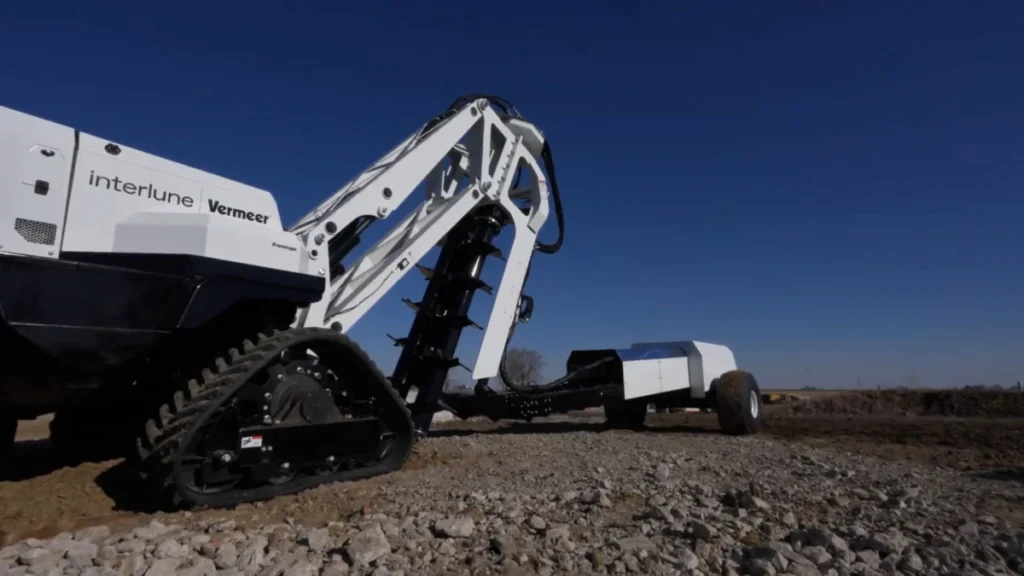
Before permanent lunar bases can become a tangible reality, the foundational work of leveling and preparing the ground is an indispensable prerequisite. Establishing a sustained human presence on the Moon will necessitate far more than advanced rockets and habitable modules; it demands robust heavy machinery capable of efficiently clearing terrain, stabilizing critical landing areas, and performing complex construction work with minimal, if any, direct human control. This monumental engineering challenge is now driving an intensified partnership between Interlune, a burgeoning lunar resources company, and Vermeer Corporation, a renowned industrial equipment manufacturer. The two entities have significantly expanded their collaborative efforts to develop sophisticated construction systems specifically tailored for future Moon Base missions, with a mission-ready lunar site-preparation tool now firmly targeted for delivery by 2028. This ambitious endeavor aligns seamlessly with NASA’s long-term strategic plans to establish permanent infrastructure on the Moon under its Artemis program. It also underscores a rapidly growing commercial interest in developing the essential equipment and technologies required before large-scale lunar exploration, resource extraction, and human settlement can truly commence.
The imperative for extraterrestrial construction is a relatively nascent but critical field in space exploration. For decades, lunar missions primarily focused on scientific reconnaissance and flag-planting. However, with the advent of NASA’s Artemis program, the vision has shifted dramatically towards establishing a sustained human presence, which inherently requires the ability to build and maintain infrastructure on the lunar surface. The Moon, a celestial body devoid of an atmosphere and thus unprotected from micrometeoroids, solar radiation, and extreme temperature fluctuations, presents an unparalleled challenge for any construction activity. Its surface, covered in an abrasive, electrically charged dust known as regolith, further complicates mechanical operations, posing significant wear and tear on equipment and potential health hazards for humans. Therefore, the development of specialized, highly durable, and autonomous construction machinery is not merely an advantage but an absolute necessity for the long-term viability of lunar outposts.
A Strategic Alliance: Bridging Terrestrial Expertise with Space Innovation
The expanded partnership between Interlune and Vermeer brings together a unique blend of expertise essential for conquering the lunar construction frontier. Interlune specializes in robotic systems, space infrastructure development, and advanced operations tailored for the harsh lunar environment. Their focus on identifying, extracting, and processing lunar resources, particularly Helium-3, positions them at the forefront of the emerging lunar economy. Conversely, Vermeer Corporation boasts nearly eight decades of unparalleled experience in designing and manufacturing industrial equipment for some of the most demanding construction sites on Earth. Their robust machinery is known for its durability, efficiency, and reliability in terrestrial excavation, trenching, and environmental management. This synergy between Interlune’s deep understanding of space operations and Vermeer’s proven prowess in heavy machinery engineering creates a powerful collaborative force. The goal is to develop an autonomous tool specifically designed to prepare the lunar surface for subsequent construction activities, from establishing stable landing pads to creating foundational structures for habitats and resource processing plants. Engineers plan to rigorously integrate this advanced system with a lunar rover, subjecting it to extensive testing in Earth-based simulations that mimic lunar conditions, before its ultimate demonstration on the Moon.
The challenges involved in designing equipment for lunar operations are fundamentally different from those on Earth. Traditional construction equipment relies on constant human oversight, readily available spare parts, and the forgiving nature of Earth’s atmosphere. On the Moon, machines must operate autonomously or semi-autonomously, given the significant communication delays (light-speed lag of several seconds) between Earth and the Moon, which preclude real-time teleoperation for precision tasks. The lunar environment’s extreme temperature swings, ranging from approximately -173°C (-280°F) during the lunar night to 127°C (260°F) during the lunar day, demand materials and systems capable of enduring such drastic thermal cycling. Furthermore, the ubiquitous, fine, and highly abrasive lunar regolith, which NASA astronaut Harrison Schmitt famously described as having "the smell of gunpowder," can clog mechanisms, degrade seals, and scratch optical sensors, requiring innovative dust mitigation and self-cleaning technologies. These conditions collectively necessitate highly robust and intelligent autonomous systems capable of performing complex excavation and site preparation tasks with minimal human intervention or remote guidance.
Chronology of Collaboration: From Prototype to Operational Hardware
The current expanded partnership represents a significant evolution in the collaboration between Interlune and Vermeer. Their initial joint effort culminated in the unveiling of a full-scale prototype lunar excavator in May 2025. This earlier project served as a crucial engineering proof of concept, demonstrating the feasibility of adapting terrestrial excavation principles to the lunar context and validating preliminary design choices. The prototype allowed engineers to explore critical aspects such as power requirements, mobility in low gravity, and the mechanics of digging in regolith simulants. Building upon the invaluable lessons learned from this initial phase, their expanded partnership now shifts its strategic focus squarely toward developing and refining hardware intended for actual operational missions. This transition from conceptual design and prototyping to mission-ready flight hardware signifies a critical step towards the practical implementation of lunar construction capabilities.
Rob Meyerson, co-founder and CEO of Interlune, emphasized the fundamental importance of this development, stating, "Dependable excavation and autonomous mobility will form the backbone of permanent lunar infrastructure." He further articulated the companies’ renewed focus on creating scalable systems that are not only capable of supporting future Moon Base construction but also essential for harvesting valuable lunar resources, such as water ice from permanently shadowed regions and potentially Helium-3, an isotope with immense potential as a future clean energy source. This vision extends beyond mere ground leveling; it encompasses the entire lifecycle of lunar resource utilization and infrastructure development.
Engineering for the Extremes: Overcoming Lunar Environmental Challenges
Vermeer Corporation’s nearly eight decades of experience in developing industrial equipment for demanding terrestrial construction sites provide a robust foundation for this extraterrestrial endeavor. Their expertise in designing heavy machinery that withstands harsh conditions, from extreme weather to abrasive materials, is invaluable. Interlune, with its specialized knowledge in robotic systems, space infrastructure, and operations within the unique lunar environment, perfectly complements Vermeer’s industrial strength. This combined expertise spans both traditional terrestrial engineering and cutting-edge space technology, creating a formidable team poised to tackle the unprecedented challenges of lunar construction.
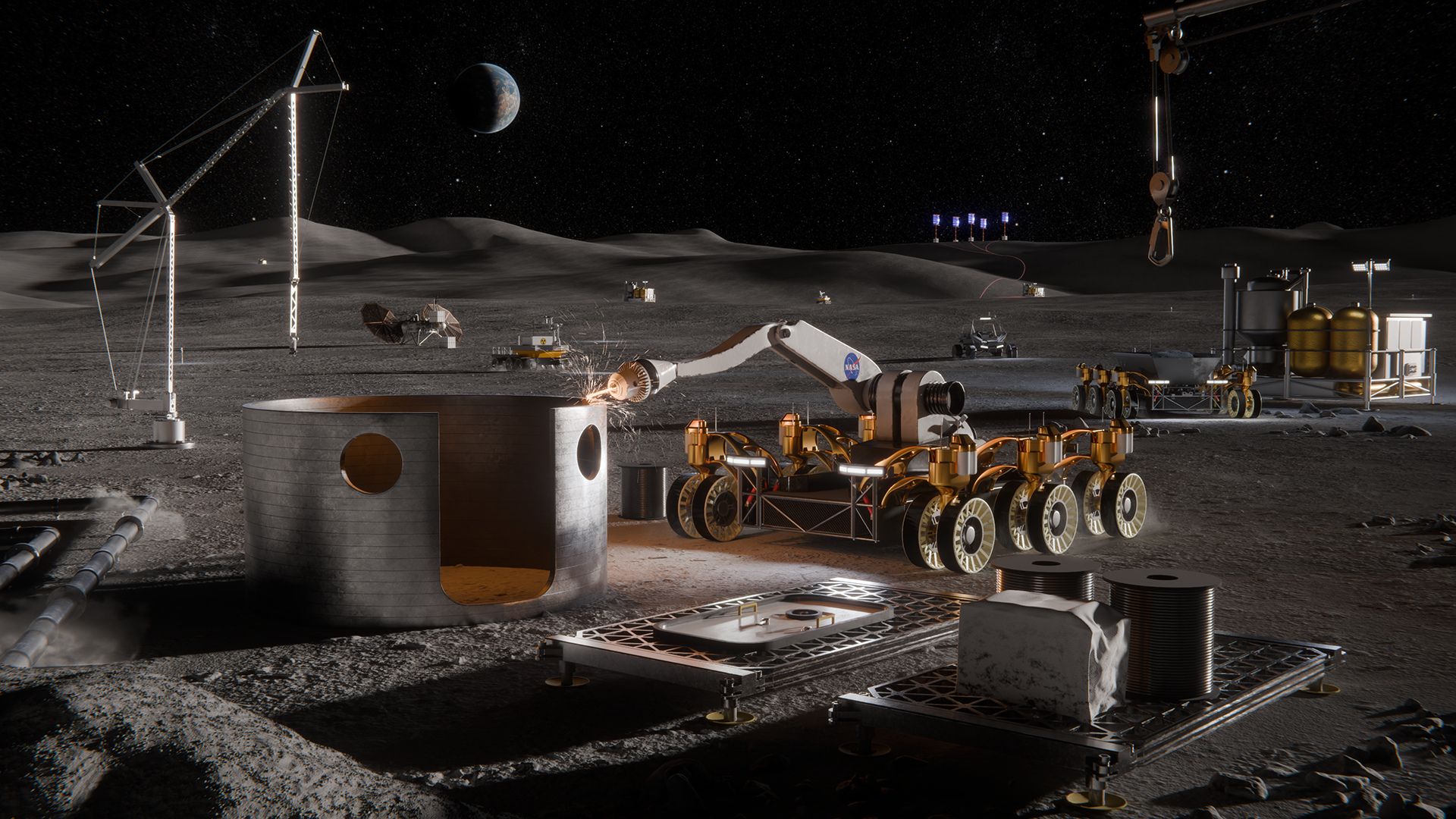
Engineers anticipate that the equipment developed through this partnership will perform some of the very earliest and most critical construction work on the Moon. Preparing stable surfaces for landing pads is paramount, as recurrent rocket plumes can churn up vast quantities of regolith, creating hazardous conditions and damaging nearby infrastructure. Establishing well-defined and stable transport routes is equally important for the efficient movement of materials and personnel between different modules of a lunar base. Furthermore, preparing solid foundations for future facilities, including habitats, laboratories, and resource processing plants, will become increasingly vital as mission activity expands and the lunar outpost grows in complexity and scale.
Jason Andringa, President and CEO of Vermeer, articulated the company’s perspective on this ambitious undertaking, stating that Vermeer views the Moon as its most demanding job site yet. He affirmed Vermeer’s commitment to collaborating closely with Interlune, NASA, and other key partners to help supply the foundational infrastructure required for future lunar settlements. This statement highlights a proactive and collaborative approach, recognizing that no single entity can achieve the ambitious goals of lunar colonization alone. The success of this partnership will undoubtedly pave the way for a new era of collaborative space development, where private industry plays an increasingly significant role in supporting governmental space agencies.
NASA’s Vision and Commercial Synergy: The Artemis Program’s Foundation
The partnership’s target of delivering a mission-ready site-preparation system by 2028 is strategically aligned with NASA’s broader Moon Base timeline under the Artemis program. NASA’s ambitious plan aims to return humans to the Moon by the mid-2020s (Artemis III) and subsequently establish a sustained human presence and a permanent lunar outpost by the late 2020s or early 2030s. The initial phases of Artemis focus on proving technologies and operational capabilities, leading to the construction of the "Artemis Base Camp" at the lunar South Pole. This permanent base will require extensive site preparation, including grading terrain for habitats, constructing landing pads, and developing infrastructure for In-Situ Resource Utilization (ISRU), particularly the extraction of water ice for life support and propellant production. The availability of autonomous construction equipment by 2028 would be a critical enabler for these subsequent phases of lunar development, accelerating the pace at which a sustainable base can be established.
The success of such a system holds profound implications for how future missions approach extraterrestrial construction. It could set a precedent for the design, development, and deployment of autonomous heavy machinery across the solar system. Equipment initially developed and proven on the Moon may eventually be adapted and deployed to support resource extraction, infrastructure projects, and human exploration efforts on Mars and other celestial destinations. The ability to autonomously prepare and modify extraterrestrial surfaces before human arrival significantly reduces risks, costs, and the logistical complexities associated with human-led construction in hostile environments. This shift towards pre-positioning and autonomous construction is a cornerstone of NASA’s long-term vision for deep space exploration.
The Broader Implications: Paving the Way for a Sustainable Lunar Economy
As governments and private companies intensify their lunar ambitions, autonomous construction equipment is rapidly emerging as a critical piece of the broader space economy puzzle. The market for lunar infrastructure and resource utilization is projected to grow substantially in the coming decades, driven by both governmental initiatives and private investment. Companies like Interlune and Vermeer are at the vanguard of this burgeoning industry, laying the groundwork for future commercial ventures on the Moon. The ability to reshape the lunar surface efficiently and autonomously before astronauts even set foot on a site could fundamentally determine how quickly permanent outposts transition from ambitious concepts to tangible realities.
Beyond simply enabling construction, this technology has far-reaching implications for the sustainability and self-sufficiency of lunar operations. By preparing sites for ISRU, these machines can facilitate the extraction of water ice, which can be processed into potable water for astronauts, breathable oxygen, and hydrogen-oxygen rocket propellant. This local production dramatically reduces the reliance on costly and logistically complex resupply missions from Earth, making lunar operations more economically viable and sustainable in the long run. Furthermore, regolith itself can be used as a building material, either directly for berms and radiation shielding or processed into bricks and other structures through sintering or 3D printing techniques. Autonomous excavation is the first step in this entire value chain.
Beyond 2028: Future Horizons and Extraterrestrial Expansion
The 2028 target for a mission-ready site-preparation system is not an endpoint but rather a crucial milestone in a much longer journey. The technologies and operational experience gained from developing and deploying this initial system will undoubtedly inform and accelerate the development of more complex lunar construction machinery. Future systems could include autonomous bulldozers, graders, concrete mixers (using lunar regolith and binders), and even robotic welders or assemblers. The evolution of artificial intelligence and robotics will play a pivotal role in increasing the autonomy, adaptability, and sophistication of these machines, allowing them to perform an ever-wider range of tasks with minimal human oversight.
Moreover, the expertise cultivated in lunar construction is directly transferable to other extraterrestrial bodies. Mars, with its own unique environmental challenges including a thin atmosphere, dust storms, and lower gravity, would also benefit immensely from similar autonomous construction capabilities. Establishing a human presence on Mars, a long-term goal for many space agencies, would necessitate extensive site preparation for habitats, landing zones, and resource extraction facilities. The lunar experience serves as an invaluable proving ground for the technologies and methodologies required for such ambitious endeavors, making the Interlune-Vermeer partnership a foundational step not just for lunar colonization, but for the future of multi-planetary human presence. This dawn of extraterrestrial infrastructure promises to unlock unprecedented opportunities for scientific discovery, economic development, and the expansion of humanity’s footprint beyond Earth.