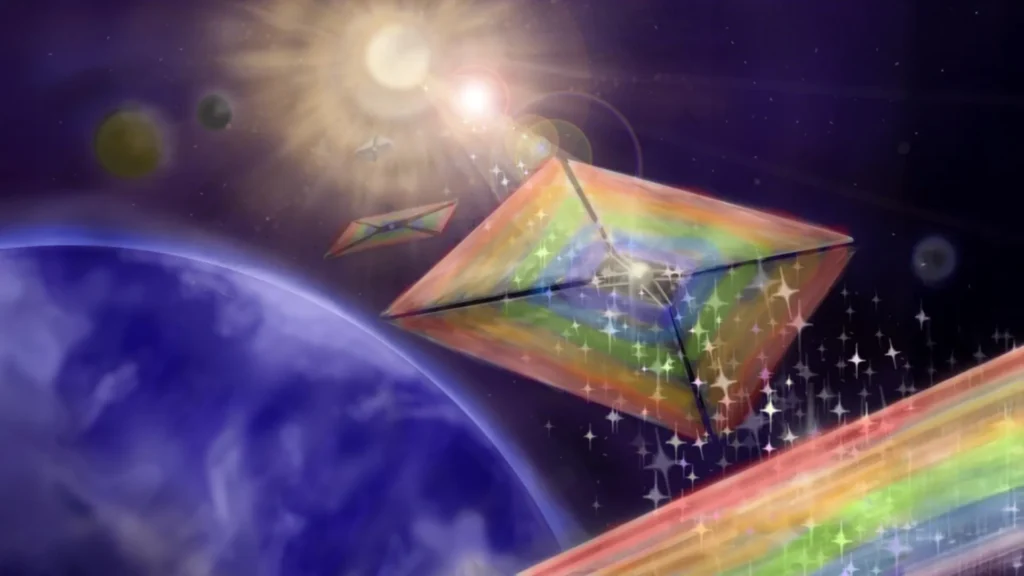
Humanity’s age-old dream of interstellar travel, propelling a spacecraft to another star system within a practical human timescale, demands propulsion technologies far exceeding the capabilities of conventional chemical rockets. Among the most promising and extensively studied concepts is the solar sail, a colossal, ultra-thin reflective membrane designed to harness the minuscule but constant pressure exerted by photons. The vision involves deploying such a sail and then accelerating it to incredible velocities, potentially a significant fraction of the speed of light, by aiming intensely powerful, ground-based lasers at its surface. This "lightsail" concept, epitomized by ambitious projects like Breakthrough Starshot, offers a pathway to bypass the ‘tyranny of the rocket equation’ by eliminating the need for onboard fuel, which constitutes the vast majority of a traditional rocket’s mass. However, as scientific inquiry pushes the boundaries of theoretical physics, new research is revealing unforeseen complexities, suggesting that the very light intended to propel these interstellar voyagers could, under certain relativistic conditions, eventually begin to impede their progress.
A groundbreaking paper recently published on arXiv by researchers Chao Shen and Jiaze Li from the Harbin Institute of Technology has cast a spotlight on an unexpected problem that could arise once a lightsail reaches a substantial fraction of the speed of light. Their findings indicate that the light itself, particularly through a phenomenon known as diffuse scattering, could produce a drag effect, thereby diminishing the overall efficiency of the propulsion system at extreme velocities. This revelation introduces a critical new parameter for engineers and physicists to consider as they design the next generation of interstellar probes.
The Enduring Promise of Light Propulsion
The concept of harnessing light for propulsion is not new, tracing its roots back to pioneering scientists like Johannes Kepler, who observed comet tails being pushed away from the sun, and Konstantin Tsiolkovsky, who theorized about space travel at the turn of the 20th century. Modern interest surged with physicist Robert L. Forward’s detailed engineering analyses in the 1980s, which laid much of the theoretical groundwork for laser-driven lightsails. The fundamental principle is elegantly simple: photons, despite having no rest mass, carry momentum. When billions of photons strike a reflective surface, they transfer a tiny amount of this momentum, creating a continuous thrust. Over vast distances and with sufficient light intensity, this cumulative push can accelerate a spacecraft to speeds unattainable by other means.
Early experimental demonstrations have validated the basic premise. In 2010, Japan Aerospace Exploration Agency (JAXA) successfully deployed IKAROS (Interplanetary Kite-craft Accelerated by Radiation Of the Sun), the world’s first operational solar sail to achieve interplanetary flight, demonstrating propulsion solely by solar radiation pressure. More recently, The Planetary Society’s LightSail 2 mission, launched in 2019, successfully raised its orbit using solar sailing, further proving the technology’s viability in Earth orbit. These missions, however, operate at relatively low speeds and within the solar system, far removed from the relativistic regimes envisioned for interstellar travel.
The ultimate goal for interstellar lightsails, such as those proposed by Breakthrough Starshot, is to accelerate small, wafer-sized probes, weighing just a few grams, to speeds approaching 15-20% the speed of light (approximately 45,000 to 60,000 kilometers per second). At these incredible velocities, a probe could potentially reach Proxima Centauri, the nearest star system, in about 20-30 years, a timeframe that makes interstellar exploration conceivable within a human lifetime. Achieving such speeds requires an immense power source – a "gigawatt-scale" or even "terawatt-scale" laser array on Earth or in orbit, capable of focusing its beam on the sail over millions of kilometers.
Deconstructing the Forces of Light: Incident, Specular, and Diffuse
To understand the newly identified drag effect, it’s essential to first grasp how photons propel a solar sail. Shen and Li categorize the forces generated by photons interacting with a sail into three primary components:
- Incident Light (Raw Momentum): This is the most significant contributor to forward thrust. It represents the direct momentum transfer from photons as they initially strike the sail’s surface. Imagine countless tiny projectiles hitting a target; each impact imparts a forward push.
- Specular Reflection (Perfect Bounce): This component arises from photons that bounce off the sail’s surface perfectly, much like light reflecting off a mirror. In an ideal scenario, the angle of incidence equals the angle of reflection. When photons reflect, they impart additional momentum, effectively doubling the thrust compared to simply being absorbed, as the momentum change is twice the incident momentum.
- Diffuse Scattering (Absorption and Re-emission): This is the weakest but most complex component. It accounts for photons that are absorbed by the sail material and then re-emitted in random directions as thermal radiation. While some of this re-emitted energy will contribute to forward thrust, a significant portion will be scattered sideways or even backward, leading to a less efficient conversion of photon momentum into directed motion. This process also generates heat, a critical consideration for sail material integrity.
At the relatively low speeds observed in current solar sail experiments and even in theoretical calculations for early acceleration phases, all three of these effects primarily contribute to pushing the sail forward. The cumulative effect is a steady, albeit small, acceleration. However, as the spacecraft’s velocity increases to relativistic speeds – a substantial fraction of the speed of light – the physics governing light-matter interactions undergo profound transformations, leading to a much more intricate situation.
The Relativistic Onset: Doppler Shift Weakens the Push
The first major relativistic challenge identified by the researchers involves the Doppler effect. As the lightsail races away from its laser source at ever-increasing speeds, the light photons reaching its surface undergo an increasingly pronounced relativistic Doppler shift. This phenomenon, familiar from how the pitch of a siren changes as an ambulance moves away, affects light by stretching its wavelength and consequently reducing its frequency and energy.
For the laser beam illuminating the lightsail, this means that as the sail accelerates, the incoming photons appear to have less energy and momentum from the sail’s perspective. The frequency of the incoming light decreases, effectively "redshifting" the laser beam. This reduction in individual photon energy directly translates to a reduced amount of thrust produced by all three components of light interaction – incident light, specular reflection, and diffuse scattering.
The consequence is a progressive decrease in propulsion efficiency. The faster the sail travels, the less effectively the laser beam can impart additional momentum, making continued acceleration increasingly difficult. This is a fundamental speed limit imposed by the nature of light and relative motion, independent of any material properties of the sail. It signifies that even with a perfectly reflective sail and an infinitely powerful laser, the acceleration rate would naturally diminish as the probe approaches the speed of light.
The Unexpected Twist: When Scattered Light Becomes Drag at 75% c
The situation becomes even more dramatically complicated once the lightsail reaches approximately 75% of the speed of light (0.75c). At this threshold, a second relativistic phenomenon, known as relativistic light aberration, becomes critically important.
Light aberration is the apparent change in the direction of light coming from a source due to the relative motion of the observer. Imagine driving through rain; even if the rain is falling straight down, it appears to be coming from an angle in front of your car. Similarly, as the lightsail hurtles through space at 0.75c, light that would ordinarily scatter perpendicularly or even slightly backward from the sail’s surface (from the sail’s perspective) begins to appear directed forward from the viewpoint of a stationary observer on Earth.
This is where the diffuse scattering component, previously the weakest contributor to forward thrust, becomes a liability. Because every action has an equal and opposite reaction, radiation directed forward (from the Earth observer’s frame) must exert a force in the opposite direction. Therefore, once the lightsail surpasses roughly 75% of the speed of light, the diffusely scattered photons, which are re-emitted by the sail after absorption, begin to create a drag effect. They are effectively pushing the sail backward, albeit weakly, relative to its direction of travel.
It is crucial to note that the overall force from the laser beam does not become negative; the incident light and specular reflection components still provide a powerful forward thrust. However, the efficiency of the propulsion system drops substantially. This drag component, while minor compared to the primary thrust, represents a fundamental physical limit and an inherent inefficiency that must be accounted for in mission planning. It highlights that even in the vacuum of space, interacting with light itself can generate resistance at extreme velocities.
Beyond the Ideal: Real-World Challenges for Interstellar Sails
The study by Shen and Li focuses specifically on the radiative dynamics of light-sail interaction, providing a crucial theoretical framework. However, real-world solar sails would face an array of additional, non-radiative challenges that were simplified or excluded from this initial model:
- Interstellar Medium Drag: While space is largely a vacuum, it is not empty. The interstellar medium (ISM) contains diffuse gas (mostly hydrogen and helium) and dust particles. At relativistic velocities, even these sparse particles would collide with the lightsail with immense kinetic energy, acting as a significant source of drag and potential damage. A probe traveling at 0.2c would experience hydrogen atoms hitting it with energies equivalent to several TeV, posing a major threat to structural integrity and potentially causing erosion.
- Thermal Limits of Materials: The power required to accelerate a lightsail to relativistic speeds is immense. A gigawatt-scale laser array would bathe the sail in an incredibly intense beam, subjecting it to extreme temperatures. Current sail materials, typically made of thin Kapton or Mylar films coated with highly reflective aluminum, have strict temperature limits. An ideal sail would need to reflect nearly 100% of the incident light to maximize thrust and minimize heat absorption. Any absorbed energy translates directly into heat, which could cause the sail to overheat, warp, or even melt, leading to catastrophic mission failure. This necessitates the development of advanced materials capable of withstanding colossal thermal loads while maintaining exceptional reflectivity and minimal mass.
- Sail Degradation and Damage: Over the decades-long journey to another star, the sail would be exposed to various forms of radiation (cosmic rays, stellar winds) and micrometeoroid impacts. Even if it survives the initial laser acceleration phase, its structural integrity and reflective properties could degrade over time, further impacting its performance and survivability.
- Curvature of Spacetime: For simplicity, the paper also omits the effects of the curvature of spacetime, which becomes increasingly relevant over interstellar distances, particularly when considering gravitational interactions with stars and other celestial bodies. While perhaps not a dominant factor in the initial acceleration phase, it would certainly play a role in trajectory planning and navigation over light-year scales.
Material Science: The Next Frontier
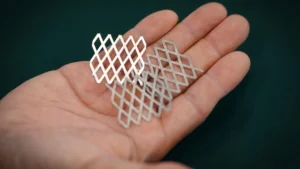
The challenges outlined above underscore the critical importance of advanced materials science. Engineers are actively investigating advanced metamaterials and photonic crystals – engineered materials with unique electromagnetic properties not found in nature – that could potentially revolutionize solar sail design. These materials could be tailored to specific laser wavelengths, allowing for near-perfect reflectivity and minimal heat absorption.
Intriguingly, such sophisticated materials might even be designed to actively take advantage of aberration effects. For instance, a "smart sail" could incorporate photonic structures that automatically adjust their reflective properties or orientation to compensate for relativistic aberration, helping the lightsail maintain its optimal alignment within the laser beam and stabilize its trajectory. This could potentially mitigate some of the drag identified by Shen and Li, transforming a theoretical impediment into an engineering opportunity. The development of self-healing or adaptive materials could also address the long-term degradation challenges.
Breakthrough Starshot and the Road Ahead
The findings from Shen and Li’s paper, while identifying a new challenge, do not invalidate the lightsail concept but rather refine our understanding of its operational limits and complexities. The Breakthrough Starshot initiative, launched in 2016 by Yuri Milner and advised by Stephen Hawking, aims to demonstrate the feasibility of sending gram-scale lightsail probes to Alpha Centauri within a generation. Their vision includes a powerful light beamer, potentially a 100-gigawatt laser array, pushing "StarChip" probes to 20% the speed of light.
Projects like Starshot are investing heavily in research across various disciplines, from laser technology and precision navigation to advanced materials and miniaturization. The new findings from Harbin Institute of Technology highlight precisely the kind of detailed, high-fidelity physics modeling that is indispensable for such an ambitious endeavor. Understanding these high-speed effects is not merely an academic exercise; it is an essential part of determining how such spacecraft might eventually work, what their ultimate speed limits are, and how mission profiles need to be adapted.
Implications for Interstellar Mission Design
The implication of this new research is profound for interstellar mission designers. It suggests that:
- Peak Velocity Limits: The 75% c threshold for diffuse scattering drag, combined with the earlier onset of Doppler shift inefficiency, implies practical upper limits on achievable speeds for laser-driven lightsails. While 20% c might remain attainable, pushing significantly beyond that, towards 90% or 99% c, becomes exponentially more difficult and inefficient due to these intrinsic physical barriers.
- Thrust Curve Optimization: Mission planners will need to meticulously model the decreasing efficiency of the laser thrust as the probe accelerates. The laser firing sequence and power output will need to be dynamically adjusted to account for the Doppler shift and the eventual drag effect, optimizing the acceleration profile to maximize final velocity within the practical limits of the laser array’s power and operational time.
- Material Design Imperatives: The findings reinforce the paramount importance of developing sail materials with ultra-high specular reflectivity (approaching 100%) and minimal diffuse scattering. Any imperfection that leads to diffuse scattering will increasingly contribute to drag at relativistic speeds.
- Deceleration Strategies: The challenges of accelerating a lightsail are only half the problem; slowing it down at the destination star system presents an equally formidable hurdle. Without onboard fuel, deceleration often involves complex maneuvers like "photon braking" against the destination star’s light or magnetic sails interacting with stellar winds. The same relativistic effects encountered during acceleration will also apply during any light-based deceleration, adding another layer of complexity.
In conclusion, the journey to another star is not merely a feat of engineering; it is a profound exploration of the limits of physics itself. The work by Chao Shen and Jiaze Li represents a vital contribution to this grand scientific endeavor, peeling back another layer of complexity in the dream of interstellar flight. If humanity is someday to send a probe to another star, engineers will need a comprehensive and detailed understanding of every force – both propulsive and resistive – that could affect its epic journey across the cosmic ocean. The path is long, but each new piece of research brings us closer to making the seemingly impossible, possible.