The scientific landscape is currently experiencing an unprecedented surge in innovation, with researchers across the globe unveiling a series of groundbreaking discoveries and technological advancements. From the microscopic realms of quantum mechanics and materials science to the vast expanses of the cosmos and the intricate biology of living systems, these developments promise to redefine fundamental understanding and yield transformative practical applications. This period of intense scientific activity highlights the iterative and often challenging nature of scientific progress, where years of meticulous experimentation, rigorous testing, and collaborative efforts culminate in breakthroughs that push the boundaries of human knowledge and capability.
Pioneering Advances in Materials and Quantum Engineering
Recent weeks have seen significant strides in materials science and quantum engineering, paving the way for more powerful technologies and novel applications. One notable development involves 3D printing giving laser waveguides a ceramic upgrade for higher power. Traditional laser waveguides often face limitations in handling high power outputs due to thermal management issues and material degradation. By utilizing advanced 3D printing techniques to fabricate ceramic waveguides, scientists are unlocking possibilities for lasers with significantly increased power and efficiency. Ceramics offer superior thermal stability and optical properties compared to conventional materials, making them ideal for high-intensity laser applications in manufacturing, defense, and scientific research. This innovation allows for the creation of complex waveguide geometries previously unattainable, enabling better light confinement and heat dissipation, which are critical for next-generation laser systems. Experts suggest that this could lead to a new era of industrial lasers for precision cutting, welding, and advanced material processing, with potential implications for fusion energy research.
Concurrently, the US Army is turning to predictive chemistry for next-gen light-absorbing materials. Leveraging sophisticated computational models and artificial intelligence, military researchers are accelerating the discovery and development of materials designed for specific light absorption characteristics. This initiative aims to create novel coatings and composites with tailored properties for stealth technology, advanced sensor systems, and energy harvesting applications. The traditional trial-and-error approach to materials discovery is time-consuming and resource-intensive. Predictive chemistry, by contrast, uses algorithms to forecast material properties based on their molecular structure, dramatically shortening development cycles. A spokesperson for the Army Research Laboratory emphasized that this approach could yield breakthroughs in camouflage, infrared suppression, and even solar energy conversion for battlefield applications, offering a strategic advantage in future engagements.
In the realm of quantum phenomena, quantum vacuum fluctuations have been used to boost superconductivity for the first time. Superconductivity, the ability of certain materials to conduct electricity with zero resistance, typically requires extremely low temperatures, limiting its widespread application. This groundbreaking research explores how transient energy fluctuations in the vacuum of space, a concept rooted in quantum field theory, can be harnessed to enhance superconducting properties. While still in its early stages, this discovery could represent a significant step towards achieving superconductivity at higher, more practical temperatures. The implications are profound, potentially revolutionizing energy transmission, medical imaging (MRI), and quantum computing by reducing the immense cooling infrastructure currently required. Theoretical physicists hailed the finding as a novel way to manipulate quantum states, opening new avenues for materials engineering.
Furthering quantum advancements, MIT’s new quantum device could make advanced radar and sensors work at room temperature. This hybrid magnetic device represents a major leap in developing quantum technologies that are less reliant on cryogenic cooling. Quantum sensors are renowned for their extreme sensitivity, capable of detecting minute changes in magnetic fields, gravity, or temperature. However, their operation often demands ultra-cold environments, making them impractical for many real-world scenarios. By integrating novel magnetic materials and quantum architectures, MIT researchers have demonstrated a pathway to creating robust, room-temperature quantum sensors. This could lead to a new generation of highly accurate navigation systems, medical diagnostic tools, and even advanced radar for autonomous vehicles and defense, transforming fields from healthcare to aerospace.
Unraveling the Universe: From Particle Physics to Cosmic Origins
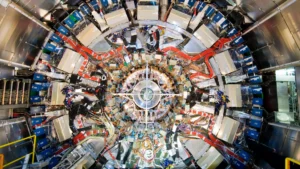
The quest to understand the fundamental building blocks of matter and the universe continues with significant investments and discoveries. A new US particle collider is set to receive 1,069 crystals to track electrons after collisions. This massive deployment of highly sensitive detector crystals is crucial for the Electron-Ion Collider (EIC), an upcoming facility designed to probe the internal structure of protons and neutrons with unprecedented precision. These crystals, forming a calorimeter, will measure the energy and trajectory of electrons produced in high-energy collisions, providing vital data to map the distribution of quarks and gluons within nucleons. The sheer number and precision of these crystals underscore the ambition of the EIC to unlock secrets of the strong nuclear force, which binds atomic nuclei together, offering a deeper understanding of matter itself.
In a related vein, US scientists have placed a record limit on a muon’s electric signal in search for new physics. Muons, often described as "fat electrons," are fundamental particles that exhibit peculiar behavior. Experiments designed to measure the muon’s electric dipole moment (EDM) are crucial because any detectable EDM would violate fundamental symmetries of nature and point towards physics beyond the Standard Model. By setting a new, tighter limit on this electric signal, researchers are refining our understanding of fundamental particle interactions and narrowing the search for hypothetical new particles or forces that could explain mysteries like dark matter or the matter-antimatter asymmetry of the universe. This painstaking work, often carried out at facilities like Fermilab, pushes the boundaries of experimental particle physics.
Looking further into the cosmos, Cygnus X-3 has become the highest-energy gamma-ray source known anywhere in space. This remarkable discovery, made by advanced gamma-ray observatories, identifies a binary star system located in our Milky Way galaxy as an incredibly powerful accelerator of particles. Cygnus X-3 consists of a massive star orbiting a compact object, likely a black hole or neutron star, with material being siphoned from the star onto its companion, generating immense energies. The detection of gamma-rays with energies exceeding hundreds of tera-electronvolts (TeV) challenges current astrophysical models of particle acceleration and provides invaluable insights into the origins of cosmic rays, which constantly bombard Earth. This finding opens a new window into the most extreme environments in the universe.
Meanwhile, on Earth, geologists are re-evaluating the history of one of its most iconic features as the Grand Canyon’s missing billion years may trace back to a giant 1-km cliff. The "Great Unconformity" in the Grand Canyon represents a significant gap in the geological record, where over a billion years of rock layers appear to be missing. New research, utilizing advanced geological mapping and dating techniques, proposes that this missing period was not merely eroded away by slow processes, but rather carved out by a colossal, mile-high cliff face that formed during a period of intense tectonic activity. This dramatic hypothesis suggests a more dynamic and violent past for the Earth’s crust than previously thought, influencing our understanding of continental rifting, mountain building, and the conditions that shaped early life on our planet.
Biological and Medical Breakthroughs: Health and Beyond
The biomedical field is witnessing transformative progress, particularly in the fight against cancer and the development of novel biological computing platforms. The world’s first personalized mRNA cancer vaccine has succeeded in a US Phase 3 trial. This landmark achievement represents a significant leap forward in oncology, demonstrating the potential for highly individualized treatments. Unlike traditional vaccines that target pathogens, these therapeutic mRNA vaccines are designed to train a patient’s immune system to recognize and attack specific mutations unique to their tumor. The success in a large-scale Phase 3 trial, often the final hurdle before regulatory approval, signals a potential paradigm shift in cancer therapy, offering hope for more effective treatments with fewer side effects by precisely targeting cancerous cells. Oncologists and patient advocacy groups expressed immense optimism about the future impact of this technology.

Beyond medicine, researchers are exploring entirely new paradigms for computation with the development of new biological transistors that use living bacteria to compute logic inside live plants. This revolutionary concept introduces the idea of "living circuit boards," where genetically engineered bacteria are integrated into plants to perform basic computational tasks. By manipulating bacterial gene expression, scientists can create logic gates (AND, OR, NOT) that respond to environmental cues or internal biological signals. This breakthrough could lead to a new generation of bio-sensors capable of monitoring environmental pollutants, detecting plant diseases early, or even optimizing crop growth in real-time. The vision of programmable, self-sustaining biological systems opens doors to entirely new forms of bio-integrated computing and smart agriculture, blurring the lines between biology and technology.
Innovations for a Safer and More Efficient Future
Technological advancements are also addressing some of humanity’s most pressing challenges, from environmental cleanup to enhancing robotic capabilities. The US is developing first-of-its-kind smart tools to tackle nuclear waste and cleanup. Nuclear waste management is a complex and costly endeavor, with legacies from decades of nuclear power generation and weapons production. This initiative integrates artificial intelligence, advanced robotics, and sophisticated sensor technologies to automate and optimize the challenging processes of waste characterization, handling, and remediation. These "smart tools" are projected to deliver substantial efficiency gains and safety improvements, potentially saving the US government an estimated $150 billion in cleanup costs over the coming decades. This demonstrates a commitment to applying cutting-edge technology to long-standing environmental and safety concerns.
In the realm of robotics, an electric-field robot sensor now lets machines ‘feel’ and identify objects without touch. Traditional robotic manipulators often rely on visual feedback or direct tactile sensors, which can be limited in challenging environments or when handling delicate objects. This innovative electric-field sensor detects changes in electrical fields around an object, allowing a robot to perceive its proximity, shape, and even material properties without physical contact. This non-contact sensing capability is a game-changer for applications requiring extreme precision or the handling of fragile, hot, or hazardous materials. Potential uses include advanced manufacturing, minimally invasive surgery, and inspection tasks in environments where physical touch is undesirable or impossible, greatly expanding the versatility and dexterity of robotic systems.
Pushing the Boundaries of Fundamental Science
Several other significant developments underscore the continuous push to understand the fundamental laws governing the universe and harness their potential. Scientists are building a crystal for a nuclear clock that will be up to 10 times more precise than current atomic clocks. Atomic clocks, which measure time based on the vibrations of atoms, are already incredibly accurate, forming the backbone of GPS and global communication networks. Nuclear clocks, however, promise even greater precision by utilizing the transitions within atomic nuclei, which are far less susceptible to external interference. This new crystal-based design aims to harness these nuclear transitions, offering an unprecedented level of accuracy that could revolutionize fundamental physics experiments, improve navigation systems, and potentially aid in the search for dark matter and the detection of gravitational waves.
Quantum sensors made from diamond defects are poised to let US scientists probe the universe with unparalleled sensitivity. Nitrogen-vacancy (NV) centers in diamonds act as natural quantum bits (qubits) and are highly sensitive to magnetic fields, temperature, and electric fields at the nanoscale. Researchers are leveraging these defects to create robust quantum sensors capable of operating in diverse environments. These sensors could be deployed in deep-space missions, underground laboratories, or even medical settings to detect subtle anomalies, search for exotic particles, and map fundamental forces with precision far beyond current capabilities. This initiative underscores the strategic importance of quantum technologies for both scientific discovery and national security.
The complex dynamics of matter are also being explored in detail, as scientists map the microscopic roots of chaos in dusty plasma using supercomputers. Dusty plasmas, which are ionized gases containing microscopic solid particles, are found in various astrophysical environments, industrial processes, and even fusion reactors. Understanding the chaotic behavior within these systems is crucial for controlling them. By employing powerful supercomputers to simulate and analyze the interactions between billions of particles, researchers are gaining unprecedented insights into the non-linear dynamics that govern chaos. This work has implications for improving plasma confinement in fusion energy devices, understanding planetary ring formation, and optimizing industrial processes involving plasmas.
In a fascinating convergence of biology and materials science, a hybrid material based on nanosheets 500x thinner than a human hair can now produce hydrogen peroxide. This ultrathin material combines inorganic nanosheets with organic components, creating a highly efficient catalyst for the production of hydrogen peroxide. Hydrogen peroxide is a versatile chemical used in disinfectants, bleaching agents, and as an oxidant in various industrial processes. The ability to produce it efficiently using such novel hybrid materials could lead to more sustainable and localized production methods, reducing reliance on traditional, energy-intensive chemical synthesis. The innovation holds promise for applications in green chemistry, water purification, and decentralized chemical manufacturing.
Finally, in the realm of fundamental particle physics, a new theory suggests that a gluon junction may explain where a proton’s baryon number comes from. Protons, the nuclei of hydrogen atoms, are composed of quarks held together by gluons, the carriers of the strong nuclear force. The "baryon number" is a quantum property that is conserved in most particle interactions, explaining the stability of matter. This new hypothesis posits that a specific configuration of gluons, known as a gluon junction, plays a crucial role in determining and preserving the proton’s baryon number. This theoretical advancement offers a fresh perspective on the internal structure of protons and the fundamental nature of the strong force, potentially resolving long-standing puzzles in quantum chromodynamics and shedding light on the early universe.
The Interconnected Future of Science
These diverse breakthroughs, while spanning distinct scientific disciplines, share common threads: the increasing reliance on advanced computational power (AI, supercomputers), the development of novel materials, and the relentless pursuit of understanding at both macroscopic and quantum levels. The general sentiment among the scientific community is one of cautious optimism, acknowledging that while these discoveries represent significant milestones, they also open new avenues for further research and present new challenges. Funding bodies and academic institutions continue to emphasize the importance of collaborative, interdisciplinary research to translate these fundamental findings into tangible benefits for society.
The "About Science" section from Interesting Engineering aptly frames this ongoing endeavor: "Science is less about sudden discoveries and more about steady, often frustrating work. It advances through experiments that fail, results that need to be replicated, and questions that take years, sometimes decades, to answer." The recent cascade of innovations perfectly exemplifies this ethos, showcasing how rigorous methodology, persistent inquiry, and an emphasis on reproducibility are foundational to building reliable scientific knowledge. As these advancements continue to unfold, they promise not just new technologies, but a deeper, more nuanced understanding of ourselves and the universe we inhabit.