CHICAGO—Manufacturers across the globe are no longer questioning the inherent value of artificial intelligence in their operations; instead, their collective focus has decisively shifted towards mastering the intricate process of implementing and scaling AI effectively across diverse production environments. This pivotal transition marks a new era in industrial automation, characterized by both unprecedented opportunity and significant operational hurdles.
The manufacturing sector is witnessing a rapid acceleration in AI adoption, moving far beyond initial exploratory phases. A recent comprehensive survey conducted by industry leaders Revalize and Configure One, which polled 500 manufacturing technology decision-makers, revealed that a striking 92% of manufacturers have progressed beyond preliminary AI investigations. More critically, 60% of these firms now report either broad or advanced stages of AI integration within their facilities. In the United States, this figure is even more pronounced, with 69% of manufacturers demonstrating robust AI adoption, underscoring a strong domestic drive towards intelligent manufacturing.
This surge in adoption, while indicative of forward-thinking strategies and a commitment to technological advancement, has simultaneously unveiled a complex array of new challenges. The journey from conceptualizing AI’s potential to realizing its full-scale operational benefits is proving to be multifaceted, touching upon areas from financial accountability to foundational data integrity and organizational alignment.
The Evolving Landscape of AI in Manufacturing: A Chronology of Progress and Pitfalls
The journey of AI in manufacturing can be traced through several distinct phases, each building upon the last while introducing new complexities. Initially, the conversation around AI in the early 2020s was largely speculative, centered on its theoretical capabilities: how it could revolutionize predictive maintenance, optimize supply chains, or enhance quality control. This exploratory phase saw manufacturers experimenting with pilot projects, often in isolated departments, testing specific use cases without a broader integration strategy.
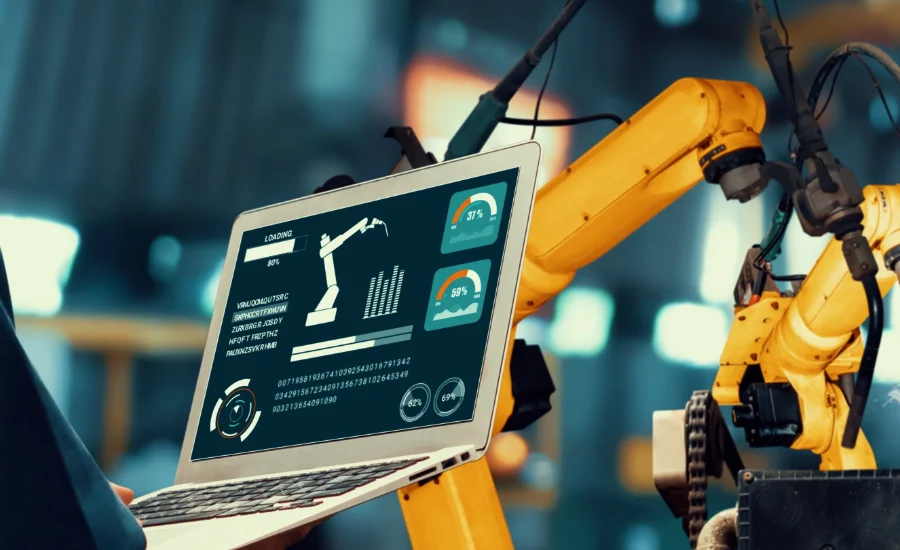
By the mid-2020s, as computational power became more accessible and AI algorithms matured, the industry transitioned into a period of initial adoption. This phase, reflected in the current survey data, is characterized by a wider deployment of AI tools, moving from singular projects to departmental or even facility-wide implementations. Manufacturers began to integrate AI into specific workflows, such as visual inspection systems powered by machine learning, robotic programming enhancements, and basic demand forecasting. The image of an assembly worker using AI to program robotic motion, for instance, perfectly encapsulates this stage, where human expertise is augmented by intelligent systems to streamline complex tasks and improve precision.
However, the current phase, as highlighted by the Revalize and Configure One report, is defined by the critical imperative of scaling. Manufacturers are grappling with how to move AI solutions from successful pilots to widespread, enterprise-level integration, ensuring seamless operation across multiple production lines, facilities, and even global networks. This transition is proving to be the most demanding yet, revealing deep-seated challenges that require strategic foresight, significant investment, and a fundamental rethinking of operational paradigms.
Persistent Hurdles to Scalable AI: Unpacking the Challenges
Despite the undeniable momentum, the path to fully scaled AI integration is fraught with significant obstacles, chief among them being the rigorous measurement of return on investment (ROI), the pervasive issue of data quality, and a noticeable disparity in perception between executive leadership and those on the front lines of implementation.
-
The Elusive ROI and Misaligned Expectations:
A striking finding from the survey indicates that only 49% of respondents rigorously measure the ROI of their AI investments. This statistic points to a critical gap in financial accountability and strategic planning. While the promise of AI often includes enhanced efficiency, reduced costs, and improved product quality, quantifying these benefits precisely can be challenging. Many manufacturers, especially those new to AI, may lack the sophisticated analytical frameworks or baseline data needed to establish clear metrics for success.In the United States, the pressure for quick returns is particularly intense, with 58% of manufacturers expecting their AI investments to pay back in less than 12 months. This aggressive expectation, while understandable in a competitive landscape, clashes with the reality faced by 27% of US respondents who still cite unclear ROI as a significant barrier. The discrepancy suggests a potential disconnect between investment timelines and the often longer, more iterative process required for AI solutions to mature and demonstrate tangible financial benefits in complex manufacturing environments. For instance, while AI-driven predictive maintenance might prevent costly downtime, attributing a precise dollar value to averted failures over a short period can be difficult without robust long-term tracking and comparative analysis.
-
Data Quality: The Foundational Challenge:
Consistently identified as the largest overall barrier to AI adoption, data quality was cited by 33% of respondents. AI models are only as good as the data they are trained on. In manufacturing, data often originates from a myriad of sources: legacy machinery with outdated sensors, disparate enterprise resource planning (ERP) systems, quality control checks, supply chain logistics, and manual input. This data is frequently fragmented, inconsistent, incomplete, or plagued by inaccuracies.The challenge extends beyond mere collection; it encompasses data harmonization, cleansing, and establishing robust data governance protocols. Without clean, reliable, and well-structured data, AI algorithms can produce biased, inaccurate, or even counterproductive results, undermining the very purpose of their implementation. This necessitates significant upfront investment in data infrastructure, data engineering expertise, and ongoing data management strategies to ensure the integrity and usability of information fed into AI systems. Manufacturers must tackle data silos, integrate real-time sensor data with historical production logs, and establish standardized data formats across their operations to unlock AI’s full potential.

-
The Perception Gap: Executive Vision vs. Ground-Level Reality:
The survey also unearthed a notable disparity between how executive leadership and senior managers perceive the progress of AI adoption. C-suite respondents were more than twice as likely as senior managers to characterize their AI adoption as advanced. Furthermore, executives were twice as likely to believe their ability to scale AI had become much stronger.This "perception gap" is a critical organizational challenge. While executives may focus on strategic vision and high-level outcomes, senior managers and operational teams are directly involved in the day-to-day implementation, encountering the practical difficulties of integrating new technologies with existing systems, training staff, and troubleshooting issues. This divergence in viewpoint can lead to misaligned expectations, insufficient resource allocation for implementation challenges, and a potential disconnect in understanding the true state of AI readiness and maturity within the organization. Bridging this gap requires transparent communication channels, a shared understanding of implementation complexities, and collaborative goal-setting that acknowledges both strategic aspirations and operational realities.
The ASSEMBLY Show 2024: A Crucial Forum for Practical AI Solutions
It is against this backdrop of rapid adoption and emerging challenges that the manufacturing industry converges at The ASSEMBLY Show, scheduled for October 27-29 at the Donald E. Stephens Convention Center in Rosemont, Illinois. Recognizing the critical juncture the industry faces, AI will be a paramount focus throughout the event, with the conversation deliberately shifting beyond speculative discussions of what the technology could achieve to practical, actionable insights on where AI is actually working.
Attendees will seek answers to pressing questions: How can AI be seamlessly integrated with existing operational frameworks? What are the most effective strategies for preparing the workforce for an AI-augmented future? And, most importantly, how can manufacturers definitively measure and demonstrate the tangible ROI of their AI investments?
-
The AI in Manufacturing Keynote: Bridging the Knowledge Gap:
A cornerstone of the event, the dedicated "AI in Manufacturing" keynote address, is specifically designed to tackle these complex questions head-on. Industry leaders and pioneering manufacturers will share their experiences and insights on critical topics such as:- ROI Measurement: Discussing best practices for quantifying AI’s financial impact, moving beyond simple cost savings to include metrics like improved product quality, reduced waste, increased throughput, and faster time-to-market.
- Data Governance: Addressing strategies for overcoming data quality challenges, establishing robust data pipelines, and ensuring the security and integrity of industrial data.
- Workforce Readiness: Exploring innovative approaches to upskilling and reskilling the manufacturing workforce, fostering a culture of continuous learning, and optimizing human-AI collaboration.
- From Experimentation to Production: Providing concrete examples and frameworks for transitioning AI projects from pilot phases to full-scale production environments, navigating integration complexities, and ensuring sustained operational efficiency.
-
Live Demonstrations: AI on the Factory Floor:
Beyond theoretical discussions, The ASSEMBLY Show’s exhibit floor will serve as a dynamic showcase for AI technologies actively transforming factory operations. Attendees will have the opportunity to witness firsthand how AI is moving from concept to tangible application through live demonstrations of cutting-edge systems. These will include:- AI-powered Inspection Systems: Utilizing computer vision and machine learning to perform highly accurate and rapid quality checks, detecting defects that human eyes might miss, thereby reducing rework and improving overall product quality.
- Operator Guidance Systems: Employing augmented reality and AI to provide real-time instructions and feedback to assembly line workers, enhancing precision, reducing errors, and accelerating training for complex tasks.
- Process Planning and Optimization: Demonstrating AI algorithms that can analyze vast amounts of production data to identify bottlenecks, optimize assembly sequences, predict equipment failures, and suggest improvements to streamline manufacturing processes, leading to increased efficiency and reduced downtime.
- Robotic Motion Programming: Exhibitors will showcase systems mirroring the article’s image, where AI simplifies the programming of complex robotic movements, making automation more accessible and adaptable to varying production needs without extensive manual coding. This directly addresses the need for faster deployment and greater flexibility in automated assembly.
Broader Implications for Manufacturing’s Future: Beyond the Factory Floor
The successful integration of AI at scale carries profound implications that extend beyond immediate operational efficiencies, shaping the very fabric of the manufacturing industry for decades to come.
-
Workforce Transformation and Human-AI Collaboration:
The widespread adoption of AI necessitates a significant transformation of the manufacturing workforce. While concerns about job displacement persist, the prevailing industry consensus leans towards job evolution rather than outright elimination. AI is increasingly seen as an augmentation tool, empowering workers with enhanced capabilities and freeing them from repetitive, dangerous, or tedious tasks. The focus shifts to developing "AI literacy" – the ability to interact with, interpret, and leverage AI tools. This includes skills in data analysis, human-robot interaction, predictive maintenance interpretation, and continuous process improvement facilitated by AI insights. Manufacturers must invest heavily in training programs that prepare their employees for these new roles, fostering a collaborative environment where humans and AI systems work in concert to achieve unprecedented levels of productivity and innovation. -
Competitive Edge and Global Innovation:
Manufacturers who successfully navigate the challenges of AI integration and achieve scalable deployment will gain a significant competitive advantage. This will manifest in superior product quality, faster time-to-market for new innovations, greater responsiveness to market demands, and optimized resource utilization. The ability to leverage AI for predictive analytics, personalized production, and dynamic supply chain management will differentiate leading companies in an increasingly global and competitive landscape. It will also foster a culture of continuous innovation, as AI tools can accelerate research and development cycles by analyzing vast datasets and simulating complex scenarios. -
Ethical Considerations and Responsible AI Deployment:
As AI becomes more embedded in critical manufacturing processes, ethical considerations and robust governance frameworks become paramount. Issues such as data privacy, algorithmic bias (especially in quality control or HR applications), transparency in AI decision-making, and the secure handling of sensitive production data will require careful attention. Manufacturers will need to develop internal policies and adhere to emerging industry standards to ensure that AI is deployed responsibly, ethically, and in a manner that builds trust among employees, customers, and regulatory bodies. This includes establishing clear lines of accountability and ensuring human oversight in critical automated processes.
The Path Ahead: From Adoption to Optimization
The current "AI boom" has indeed brought manufacturers to this critical juncture, where the fundamental question is no longer if AI belongs in their operations, but how to make it work effectively and at scale. The challenges—particularly around ROI measurement, data quality, and organizational alignment—are significant but not insurmountable. Events like The ASSEMBLY Show serve as vital platforms for the industry to collectively address these issues, share best practices, and collaborate on solutions. The transition from initial experimentation to full-scale production represents the next major challenge, requiring strategic vision, technological acumen, and a deep commitment to transforming the very nature of manufacturing. The future of industrial production hinges on the industry’s ability to not just adopt AI, but to truly master its integration and optimize its vast potential.