NASA has chosen a proposal led by the Planetary Science Institute (PSI) to determine whether a potentially large cave stretches underground from the opening of a pit on the Moon. If such a cavern exists, it could eventually offer astronauts natural protection from radiation and the dramatic temperature changes experienced on the lunar surface. This ambitious undertaking, funded through NASA’s Payloads and Research Investigations on the Surface of the Moon (PRISM) program, leverages the burgeoning capabilities of the Commercial Lunar Payloads Services (CLPS) initiative to deliver cutting-edge scientific instruments to the lunar regolith.
Unveiling the Lunar Underground: The GIMLI Initiative
The project, officially designated the Geophysical Instruments for Marius Lunar pit Investigation (GIMLI), is spearheaded by Than Putzig, Associate Director and Senior Scientist at the Planetary Science Institute. This endeavor marks a significant step in lunar exploration, aiming to directly investigate geological features that have long been theorized based on remote sensing data. PSI is collaborating with Honeybee Robotics, a company renowned for its expertise in developing advanced robotic systems and scientific instrumentation for space exploration. Honeybee Robotics will be responsible for the construction of much of the mission’s equipment, including sophisticated sensors and operational components.
The GIMLI instruments will be transported to the Moon aboard a lander and rover provided through the CLPS initiative, a key component of NASA’s broader lunar exploration strategy. This program aims to accelerate scientific discovery on the Moon by partnering with commercial companies to develop lunar landers and services. The Norwegian Space Agency is also a vital partner in this international collaboration, contributing crucial expertise and resources to the GIMLI mission.
Amanda Hendrix, Director and CEO of the Planetary Science Institute, expressed profound enthusiasm for the GIMLI mission, highlighting its alignment with PSI’s core mission. "GIMLI represents the type of ambitious planetary science that PSI was built to pursue," Hendrix stated. "Than and his team are taking a scientific question we’ve been studying from orbit and have developed a way to investigate it directly on the Moon. We’re excited to have PSI leading this effort and to be partnering with NASA and Honeybee Robotics to learn more about the Moon and its volcanic past."
The Allure of Subsurface Structures
For years, scientists analyzing data from lunar orbiters have observed compelling evidence suggesting the existence of extensive cave systems and lava tubes beneath the Moon’s surface. These subterranean voids are believed to be the remnants of ancient volcanic activity, formed when molten lava flowed through subsurface channels and subsequently drained or solidified, leaving behind hollow tubes.
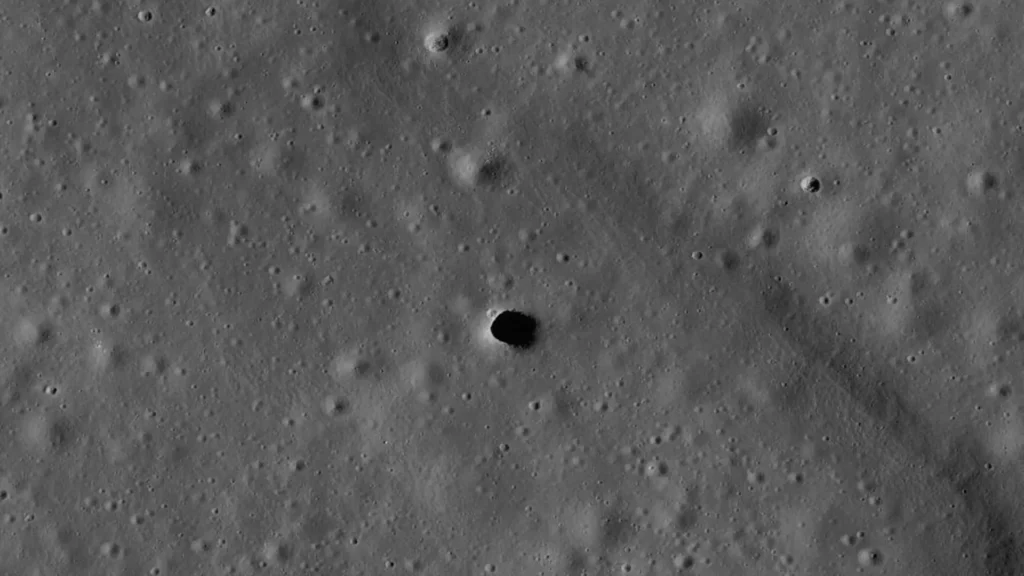
The GIMLI mission will focus its investigation on the Marius Hills Pit (MHP), a particularly large and intriguing opening situated within one of the Moon’s most geologically diverse and volcanically active regions. Like other identified lunar pits, MHP is thought to be a potential skylight—an opening in the surface that offers a glimpse into these hidden underground structures. These pits are of immense scientific interest because they provide direct access to the subsurface, bypassing the need for complex drilling operations.
The significance of these potential lava tubes extends far beyond academic curiosity. They represent a natural solution to some of the most pressing challenges for future human lunar missions. The lunar surface is a harsh environment, characterized by extreme temperature fluctuations, ranging from approximately -173°C (-280°F) during the lunar night to 127°C (260°F) during the lunar day. Furthermore, the Moon lacks a substantial atmosphere, leaving its surface exposed to constant bombardment by harmful cosmic rays and solar energetic particles.
Underground lava tubes, with their thick overlying rock and regolith, could provide a natural shield against this pervasive radiation. Their stable internal temperatures would also offer a more hospitable environment for human habitation and scientific operations. The potential for these natural shelters could significantly reduce the complexity and cost of establishing a sustainable human presence on the Moon, making long-duration missions more feasible and safer.
Advanced Instrumentation for Subsurface Exploration
The GIMLI mission’s approach is revolutionary in its directness. Instead of relying solely on remote observations, the mission will deploy a suite of advanced geophysical instruments directly onto the lunar surface. This will allow for unprecedented in-situ analysis of the subsurface environment surrounding the Marius Hills Pit.
"It’s long been a desire of mine to reintroduce intentional active-source seismic methods to planetary science, as it has essentially not been done since the Apollo astronauts conducted the first seismic surveys on the Moon," shared Putzig, the Principal Investigator. "Combining that method with ground-penetrating radar and gravity measurements makes it all the more exciting, as these methods together will allow us to get a much better understanding of subsurface properties—including the anticipated detection of a lava tube extending away from the Marius Hills pit."
The core of the GIMLI investigation will involve a sophisticated combination of technologies designed to peer beneath the lunar surface:
- Ground-Penetrating Radar (GPR): This active sensing technique will emit radio waves into the subsurface and analyze the reflected signals to map out different geological layers and identify potential voids or cavities. The Norwegian Space Agency’s contribution of the GPR system is critical to this aspect of the mission.
- Seismic Sensors: GIMLI will deploy active-source seismic sensors. This involves generating small seismic waves on the surface (e.g., by a small impactor or a vibrator) and then measuring how these waves travel through the subsurface. The analysis of these seismic waves can reveal information about the density, structure, and composition of the materials beneath the surface, including the presence of hollow spaces. This method, as Putzig noted, is a revival of a technique last used during the Apollo era, updated with modern sensor technology.
- Gravimeter: A gravimeter will measure subtle variations in the Moon’s gravitational field. These variations can be indicative of changes in subsurface density. A large void, such as a lava tube, would create a localized deficit in mass, which the gravimeter could detect.
- Cameras: High-resolution cameras will be crucial for documenting the lunar surface and, importantly, for photographing the exposed walls of the Marius Hills Pit. These images will provide visual context and allow scientists to study the stratigraphy and geological features visible in the pit’s exposed layers.
By deploying these instruments in concert, the GIMLI team aims to achieve a comprehensive understanding of the subsurface structure extending from MHP. The primary goal is to detect the presence of a lava tube and, if found, to estimate its dimensions, depth, and potential extent.
A Partnership for Innovation
The successful execution of the GIMLI mission hinges on a robust partnership between scientific institutions and commercial providers. Honeybee Robotics, a Blue Origin company, plays a pivotal role as PSI’s commercial partner. Their responsibilities encompass project management, the design and fabrication of critical instrumentation including the active source seismic system, the gravimeter, and the camera systems. Furthermore, Honeybee Robotics will be instrumental in integrating these scientific instruments onto the lunar lander and rover, ensuring their seamless deployment. Post-landing, both PSI and Honeybee Robotics will jointly lead instrument operations, coordinating the scientific investigation on the lunar surface.
This collaborative model is central to NASA’s CLPS initiative, which seeks to foster a vibrant commercial lunar ecosystem. By leveraging the specialized capabilities of private companies, NASA can access innovative technologies and services, enabling more frequent and cost-effective scientific missions to the Moon.
Beyond the Lava Tube: Unearthing Lunar History
While the prospect of discovering a habitable lava tube is a primary driver for the GIMLI mission, the scientific returns are not contingent on such a find. Even if no large lava tube is detected, the mission’s data will yield significant insights into fundamental questions about lunar geology.
One such question is the very origin of the Marius Hills Pit itself. The precise formation mechanisms of these lunar pits are still a subject of scientific debate. By analyzing the surrounding regolith and subsurface materials through GPR, seismic, and gravity measurements, scientists could gain invaluable clues about the processes that led to the formation of MHP. This could involve understanding whether it was formed by volcanic collapse, meteorite impact, or other geological phenomena.
The walls of the Marius Hills Pit offer a unique geological cross-section, exposing layers of regolith and ancient lava flows that are typically buried beneath the lunar surface. The GIMLI mission’s cameras and subsurface instruments will provide an opportunity to study these exposed strata in detail. This analysis could reveal crucial information about the Moon’s volcanic history, including the sequence of eruption events, the types of lava involved, and the duration and intervals between these eruptive periods. Understanding these processes is fundamental to reconstructing the Moon’s geological evolution.
Lunar pits, therefore, serve a dual purpose in scientific exploration. They are not only potential gateways to subsurface environments but also natural windows into the Moon’s otherwise hidden geological past. The detailed study of these exposed layers can help refine models of lunar volcanism, which shares similarities with terrestrial volcanic processes but unfolded under different gravitational and atmospheric conditions.
Implications for Lunar Science and Exploration
The potential confirmation of a substantial lava tube on the Moon would have profound implications for both scientific understanding and future human exploration. Gareth Morgan, a Senior Scientist at PSI and Deputy Principal Investigator on the GIMLI program, elaborated on this point: "Confirming a substantial lava tube would give us an insight into how volcanism operated on the Moon. Lava tubes are a common feature of basaltic volcanism on Earth, so identifying them on the Moon means we could use knowledge of such terrestrial caves to better understand lunar history."
The presence of widespread lava tube systems on the Moon would suggest that lunar volcanism was more dynamic and extensive than previously understood, mirroring processes observed on Earth. This could lead to a re-evaluation of the Moon’s thermal evolution and the extent of its magmatic activity over geological time.
Furthermore, the success of GIMLI could pave the way for similar investigations at other promising pit locations on the Moon. As the CLPS initiative continues to mature, delivering more payloads and establishing a more robust lunar infrastructure, the ability to conduct detailed in-situ geophysical surveys will become increasingly common. This trend promises to transform our understanding of the Moon from a surface-centric view to a three-dimensional appreciation of its subsurface architecture.
The GIMLI mission is not just about finding a cave; it’s about unlocking secrets of the Moon’s formation, evolution, and its potential as a future home for humanity. The collaborative spirit behind the mission, bringing together leading scientific minds from institutions like Boise State University, Johns Hopkins University, the Lunar and Planetary Institute, and the University of Oslo, alongside the commercial expertise of Honeybee Robotics and the Norwegian Space Agency, exemplifies the integrated approach required for the next era of space exploration.
A Timeline of Lunar Exploration and Discovery
The GIMLI mission builds upon decades of lunar observation and scientific inquiry. The initial understanding of potential subsurface structures began with observations from lunar orbiters like NASA’s Lunar Reconnaissance Orbiter (LRO), launched in 2009. LRO’s high-resolution imagery and altimetry data revealed numerous features resembling "pit craters" and potential skylights.
The conceptualization of using seismic methods for planetary exploration dates back to the Apollo missions (1969-1972), where astronauts deployed seismometers that provided early data on the Moon’s internal structure. However, active-source seismic surveys, which involve deliberately generating seismic waves, have not been systematically conducted on another celestial body since then.
The PRISM program, which funds GIMLI, is a relatively recent NASA initiative designed to capitalize on the CLPS providers. The first CLPS missions began in earnest in 2023, demonstrating the growing capability to deliver scientific payloads to the lunar surface. GIMLI’s selection in 2024 signifies a maturation of these capabilities, allowing for more complex and scientifically demanding investigations.
While a specific launch date for GIMLI has not yet been announced, missions funded through PRISM typically target deployment within a few years of selection. This suggests that the instruments could be operating on the lunar surface sometime in the late 2020s, providing critical data to address these long-standing scientific questions and to inform future human landing site selection and habitat design. The journey from orbital observation to direct subsurface probing represents a significant leap in our ability to explore and understand the Moon.