This groundbreaking research, published in the prestigious journal PNAS, marks a significant milestone in both physics and artificial intelligence. A collaborative effort between experimental and theoretical physicists at Emory University has demonstrated that AI can transcend its traditional roles of data analysis and prediction, serving as a powerful tool to uncover entirely new physical laws. By intricately combining a bespoke neural network with empirical data from a dusty plasma system, the team has not only provided unprecedented insights into particle interactions but also challenged long-standing theoretical assumptions.
Unlocking New Physics with AI
The core of this discovery lies in the study of non-reciprocal forces, which are notoriously challenging to measure and model using conventional methods. These forces are ubiquitous in nature, governing interactions in diverse systems ranging from the intricate movements within living cells to the behavior of industrial materials like paint and ink. Understanding them is crucial for advancing our knowledge across numerous scientific disciplines.
"We showed that we can use AI to discover new physics," states Justin Burton, an Emory professor of experimental physics and senior co-author of the seminal paper. Burton emphasized the transparency and universality of their methodology, noting, "Our AI method is not a black box: we understand how and why it works. The framework it provides is also universal. It could potentially be applied to other many-body systems to open new routes to discovery." This assertion underscores the potential for this technique to revolutionize scientific inquiry across various fields.
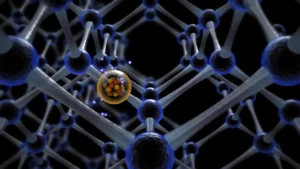
The research provides one of the most detailed descriptions to date of the intricate physics governing dusty plasma, a system comprising an ionized gas populated by interacting charged particles, including microscopic dust grains. The AI model achieved a remarkable accuracy of more than 99% in describing these complex non-reciprocal forces, a level of precision previously unattainable.
Ilya Nemenman, an Emory professor of theoretical physics and co-senior author, highlighted the significance of this precision. "We can describe these forces with an accuracy of more than 99%," he explained. "What’s even more interesting is that we show that some common theoretical assumptions about these forces are not quite accurate. We’re able to correct these inaccuracies because we can now see what’s occurring in such exquisite detail." This capability to refine and correct established theories based on AI-driven insights represents a paradigm shift in scientific discovery.
The Enigma of Dusty Plasma: A Window into Complex Systems
To fully appreciate the scope of this research, it is essential to understand the unique properties of dusty plasma. Often dubbed the "fourth state of matter," plasma forms when gas becomes ionized, allowing electrons and ions to move freely. This ionization imparts unique characteristics, such as electrical conductivity. Plasma constitutes approximately 99.9% of the visible universe, manifesting in phenomena as grand as the solar wind streaming from the Sun and as commonplace as lightning strikes on Earth.
Dusty plasma introduces an additional layer of complexity by incorporating charged dust particles into this ionized gas. This variant of plasma is prevalent in numerous environments, from the majestic rings of Saturn to the Earth’s ionosphere. On the Moon, for instance, the weak gravitational pull allows charged dust to hover above the surface, a phenomenon that famously leads to astronauts’ suits being covered in lunar dust, as Burton elucidates. Closer to home, dusty plasma can form during wildfires when soot particles mix with smoke. These charged particles can severely disrupt radio signals, thereby complicating vital communication for firefighters battling blazes.
Burton’s laboratory specializes in studying dusty plasma and similar materials by meticulously recreating them in controlled experimental settings. Researchers suspend tiny plastic particles within a plasma-filled vacuum chamber, effectively simulating more intricate systems. By precisely adjusting the gas pressure, they can mimic real-world conditions and observe how these particles respond to various forces. This controlled environment made dusty plasma an ideal testbed for exploring whether AI could uncover new physical principles, offering a simpler yet sufficiently complex environment compared to living systems.
A Novel Methodology: Blending Experiment and Artificial Intelligence
The success of this project hinges on a sophisticated methodological fusion of advanced experimental techniques and pioneering AI development. For this particular study, Burton and his then-PhD student, Wentao Yu (now a postdoctoral fellow at the California Institute of Technology), devised an innovative tomographic imaging method. This technique allowed them to capture the three-dimensional (3D) motion of particles with unprecedented detail. A laser sheet methodically sweeps through the vacuum chamber, while a high-speed camera simultaneously records images. These individual snapshots are then meticulously combined to reconstruct the precise positions of dozens of particles over time, enabling researchers to track their intricate motions.
On the theoretical front, Ilya Nemenman, a theoretical biophysicist with a keen interest in how complex systems emerge from simpler interactions, led the development of the AI model. Nemenman’s research often focuses on collective motion, such as the synchronized movement of cells within the human body. He explains, "General questions of how a whole system arises from interactions of tiny parts are very important." He cites the example of cancer metastasis: "In cancer, for instance, you want to understand how the interaction of cells may relate to some of them breaking away from a tumor and moving to a new place, becoming metastatic."
The application of AI to discover fundamental physical laws is a relatively nascent field. Nemenman notes, "For all the talk about how AI is revolutionizing science, there are very few examples where something fundamentally new has been found directly by an AI system." This project aimed to fill that void.
Designing the AI model presented a unique set of challenges. Unlike systems trained on colossal datasets, this project was constrained by the limited experimental data inherent in probing entirely new physical phenomena. "When you’re probing something new, you don’t have a lot of data to train AI," Nemenman explains. "That meant we would have to design a neural network that could be trained with a small amount of data and still learn something new."
The iterative refinement of the neural network’s design was a painstaking process, involving weekly meetings over more than a year. Burton describes the meticulous balancing act: "We needed to structure the network to follow the necessary rules while still allowing it to explore and infer unknown physics." Nemenman concurs, adding, "It took us more than a year of back-and-forth discussions in these weekly meetings. Once we came up with the correct structure of the network to train, it turned out to be fairly simple." The final model ingeniously separated particle motion into three primary influences: drag stemming from velocity, ambient environmental forces such as gravity, and the complex forces acting between individual particles. This modular design was crucial for allowing the AI to disentangle and identify novel interaction mechanisms.
Revolutionary Findings and Theoretical Refinements
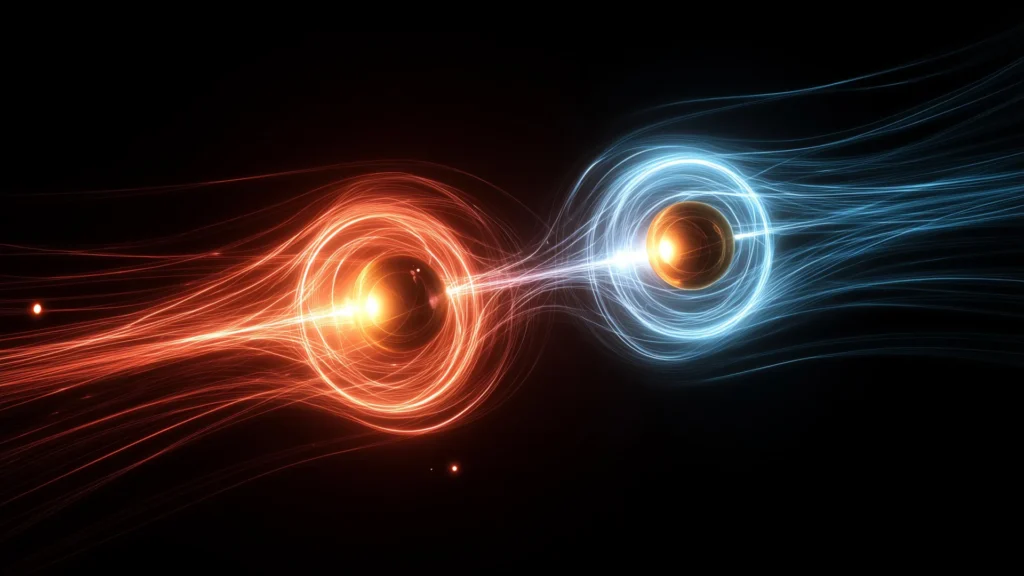
Upon training with the precise 3D particle trajectories, the AI model successfully captured the intricate, non-reciprocal interactions, including highly asymmetrical forces between particles. The researchers drew an illuminating analogy to two boats navigating a lake: each boat generates waves that affect the other, but depending on their relative positions, these waves can push or pull the boats differently.
In the context of dusty plasma, the AI revealed a precise interaction: "In a dusty plasma, we described how a leading particle attracts the trailing particle, but the trailing particle always repels the leading one," Nemenman details. "This phenomenon was expected by some but now we have a precise approximation for it which didn’t exist previously." This quantitative validation of a previously speculative interaction marks a significant advance.
Beyond confirming anticipated behaviors, the AI’s findings directly challenged several long-standing theoretical assumptions in dusty plasma physics. One prevailing idea held that a particle’s electric charge increases in direct proportion to its size. The new findings, however, demonstrated a more nuanced relationship: while larger particles do indeed carry more charge, the correlation is more intricate, depending on additional factors such as plasma density and temperature. This multi-variate dependency adds a crucial layer of complexity to previous models.
Another entrenched assumption suggested that forces between particles decrease exponentially with distance in a manner independent of particle size. The AI model, through its detailed analysis, contradicted this, revealing that particle size does significantly affect how quickly these inter-particle forces weaken. These surprising results were not merely theoretical inferences; the team rigorously confirmed them through additional, targeted experiments, underscoring the robustness of the AI’s discoveries. Co-author Eslam Abdelaleem, also an Emory graduate student during the project and now a postdoctoral fellow at Georgia Tech, played a crucial role in these validations.
Broader Implications and the Future of AI in Science
The development of this physics-based neural network, which can operate efficiently on a standard desktop computer, offers a flexible and powerful framework for studying many-body systems across an expansive range of scientific disciplines. Its potential applications extend far beyond dusty plasma, reaching into fields as diverse as materials science, biology, and even social sciences.
Nemenman is set to bring this innovative methodology to a wider audience, teaching at the Konstanz School of Collective Behavior in Germany. There, scientists from across the globe study complex systems ranging from the synchronized movements of bird flocks to the emergent dynamics of human crowds. "I’ll be teaching students from all over the world how to use AI to infer the physics of collective motion — not within a dusty plasma but within a living system," he states, highlighting the direct translational potential of their work.
This research exemplifies a new era of interdisciplinary collaboration, as acknowledged by Vyacheslav (Slava) Lukin, program director for the NSF Plasma Physics program. "This project serves as a great example of an interdisciplinary collaboration where the development of new knowledge in plasma physics and AI may lead to further advances in the study of living systems," Lukin commented. He emphasized the growing role of AI in understanding and controlling complex collective interactions: "The dynamics of these complex systems is dominated by collective interactions that emerging AI techniques may help us to better describe, recognize, understand and even control."
Crucially, the researchers stress that even with these profound technological advances, human expertise remains indispensable. Scientists must carefully design the models, formulate the questions, and critically interpret the results. "It takes critical thinking to develop and use AI tools in ways that make real advances in science, technology and the humanities," Burton asserts.
The research was primarily supported by the National Science Foundation, with additional funding provided by the Simons Foundation, underscoring the recognized importance and potential impact of this work by leading scientific organizations.
Looking ahead, Burton remains profoundly optimistic about the future of AI in scientific exploration. He articulates a vision reminiscent of scientific pioneering: "I think of it like the Star Trek motto, to boldly go where no one has before. Used properly, AI can open doors to whole new realms to explore." This sentiment encapsulates the transformative potential of artificial intelligence, not merely as a computational aid, but as an active partner in pushing the boundaries of human knowledge and uncovering the fundamental laws that govern our universe.