The Helmholtz-Zentrum Berlin (HZB) has officially announced the commencement of operations for a groundbreaking X-ray research instrument at the BESSY II synchrotron facility. Developed through an international tripartite collaboration involving the Max Planck Institute for Chemical Energy Conversion (MPI-CEC) in Mülheim an der Ruhr and the National Institute of Standards and Technology (NIST) in Boulder, Colorado, this new Transition Edge Sensor (TES) spectrometer represents a paradigm shift in photon detection technology. As the first and only instrument of its kind currently operational at a European synchrotron, it positions BESSY II at the forefront of global spectroscopic research, offering a leap in sensitivity that promises to unlock previously inaccessible data in the fields of quantum materials, molecular biology, and chemical catalysis.
A Quantum Leap in Photon Detection Efficiency
At the core of the new system’s significance is a radical departure from the limitations of conventional X-ray spectroscopy. Traditional wavelength-dispersive X-ray emission spectrometers, while reliable, suffer from inherent inefficiencies. They typically utilize crystals to diffract photons, a process that captures only a tiny fraction of the radiation emitted by a sample. This necessitates long exposure times and high-intensity X-ray beams, which can often damage delicate samples or fail to produce a clear signal from highly diluted materials.
The newly deployed TES spectrometer addresses these challenges by delivering an improvement in photon detection efficiency by a factor of 100 to 1,000. This massive increase in sensitivity allows researchers to detect almost every photon that hits the detector array, transforming how X-ray Emission Spectroscopy (XES) and Resonant Inelastic X-ray Scattering (RIXS) are conducted. By maximizing the utility of every photon, the instrument enables the study of samples that were previously considered "unmeasurable" due to their low concentration or their tendency to degrade under prolonged X-ray exposure.
The Physics of Sub-Kelvin Superconductivity
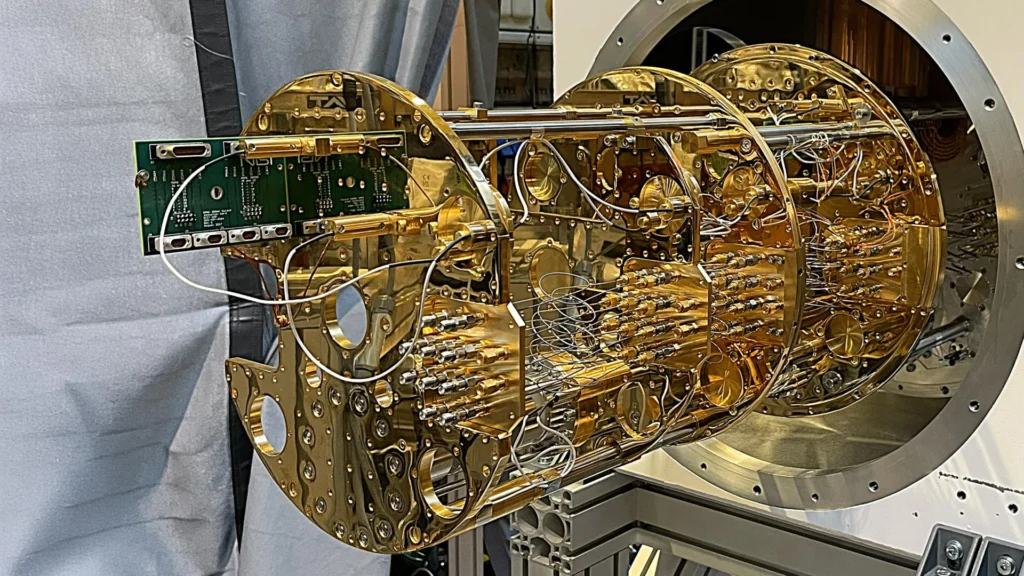
The technological heart of the spectrometer is an array of 248 superconducting sensors. To function, these sensors must be maintained at a temperature of 25 milli-Kelvin—just a fraction of a degree above absolute zero (-273.15°C). Achieving and maintaining such extreme temperatures requires a He4-He3 dilution refrigerator, a sophisticated cooling system more commonly associated with the operation of advanced quantum computers than with standard laboratory equipment.
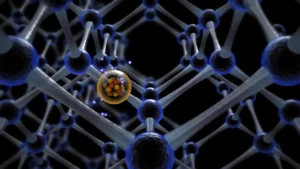
The operational principle of a Transition Edge Sensor relies on the physics of superconductivity. Each sensor is a thin film of material held precisely at its "transition edge"—the narrow temperature range where the material shifts from a superconducting state (zero electrical resistance) to a normal conducting state. When a single X-ray photon strikes a sensor, its energy is converted into heat. Even the minuscule amount of energy in a single photon is enough to cause a measurable rise in the sensor’s temperature, pushing it further into the resistive state.
This change in resistance is then captured by an array of Superconducting Quantum Interference Devices (SQUIDs). These SQUIDs act as incredibly sensitive ammeters, translating the thermal pulse into a digital signal that corresponds to the energy of the incident photon. Because the TES measures the heat of the photon directly, it can resolve energy levels with high precision across a broad spectrum simultaneously, rather than scanning through wavelengths one by one as traditional spectrometers do.
Collaborative Origins and the Global Scientific Landscape
The realization of the TES spectrometer at BESSY II is the result of years of interdisciplinary and international cooperation. The technology originally found its footing in the field of astrophysics, where NIST researchers developed TES arrays to detect the incredibly faint X-ray signals coming from distant galaxies and black holes. Recognizing the potential for this technology in terrestrial material science, HZB and MPI-CEC partnered with NIST to adapt the sensors for use in a synchrotron environment.
Until now, this technology was a rarity in the global scientific community. Prior to the BESSY II installation, only five such spectrometers were operational at X-ray facilities worldwide: four in the United States—including those at the Stanford Synchrotron Radiation Lightsource (SSRL) and the Advanced Photon Source (APS)—and one in Japan at the SPring-8 facility. By establishing the first European hub for TES spectroscopy, HZB has effectively bridged a significant technological gap, providing European researchers with local access to a tool that was previously only available via transoceanic travel.
Dr. Régis Decker, the HZB scientist responsible for the new instrument, emphasized that the deployment is not merely a technical upgrade but a foundational shift in capability. The ability to complete experiments in minutes that previously took hours allows for high-throughput screening of materials, which is essential for the rapid development of new technologies in the energy and electronics sectors.
Targeted Research: From Quantum Materials to Molecular Biology
The scientific community is already identifying key areas where the TES spectrometer will have an immediate impact. One of the primary targets is the study of atomically thin materials, such as graphene or transition metal dichalcogenides (TMDs). These "2D materials" often possess unique electronic and quantum properties that are highly sensitive to their environment. Because they are only one or a few atoms thick, they provide very little material for traditional X-ray probes to interact with. The high efficiency of the TES system makes it possible to map the electronic structures of these monolayers with unprecedented clarity.
In the realm of molecular chemistry and biology, the spectrometer offers a new window into the behavior of dilute samples. Many biological catalysts, such as enzymes, contain metal centers that are present in extremely low concentrations within a large protein matrix. Traditional X-ray methods often struggle to isolate the signal of these metal atoms from the surrounding noise. The TES spectrometer’s sensitivity allows for the detailed study of the oxidation states and bonding environments of these centers, which could lead to breakthroughs in our understanding of photosynthesis or cellular respiration.
Furthermore, the instrument is expected to complement existing techniques like Angle-Resolved Photoemission Spectroscopy (ARPES). While ARPES is excellent for scanning the electronic band structures of solids, the TES spectrometer provides a deeper look into the specific transitions and inelastic scattering processes that define a material’s quantum state.
Technical Integration and Future Capabilities
The spectrometer has been integrated into the UE52-SGM beamline at BESSY II. This specific beamline is renowned for its ability to provide full polarization control of the X-ray beam, which is crucial for studying magnetic materials and chiral molecules. To facilitate complex experiments, the system is connected to a custom-built ultra-high vacuum sample chamber. This chamber is equipped for in-situ sample preparation and transfer, ensuring that sensitive materials can be analyzed without exposure to air or contaminants.
The setup also allows for precise temperature control of the sample itself, ranging from 10 Kelvin to room temperature. This allows scientists to observe phase transitions in real-time—watching as a material moves from a conducting to a superconducting state or changes its magnetic orientation.
Looking ahead, HZB has already outlined a roadmap for further enhancements. Planned upgrades include the integration of magnetic fields into the sample environment. This will enable X-ray Magnetic Circular Dichroism (XMCD) and Resonant Inelastic X-ray Scattering Magnetic Circular Dichroism (RIXS-MCD) measurements. These techniques are vital for the development of next-generation data storage and spintronic devices, where the manipulation of magnetic moments at the atomic level is the primary goal.
Strategic Implications for European Science
The commissioning of the TES spectrometer at BESSY II is a strategic milestone for the European Research Area. By hosting a unique instrument, HZB becomes a magnet for international talent and high-stakes research projects. The facility has officially begun inviting research proposals from the global scientific community, anticipating a surge in demand for beamtime.
The broader implications of this technology extend into the "Green Deal" and the transition to sustainable energy. MPI-CEC’s involvement underscores the importance of the spectrometer in studying chemical energy conversion. Understanding the electronic changes in catalysts during a reaction is key to developing more efficient hydrogen production methods and better carbon capture technologies. The speed and sensitivity of the TES system mean that researchers can observe these catalysts under conditions that more closely mimic real-world industrial processes.
In conclusion, the arrival of the TES spectrometer at BESSY II marks the beginning of a new era for X-ray spectroscopy in Europe. By combining the extreme sensitivity of superconducting sensors with the intense brightness of a third-generation synchrotron, HZB has created a platform that will likely drive innovation in material science, chemistry, and physics for decades to come. As the first sets of data begin to emerge from the UE52-SGM beamline, the scientific world remains watchful of the new insights this European-first technology will undoubtedly provide.