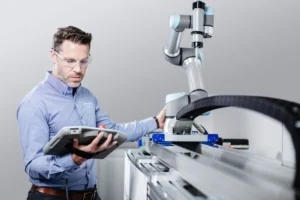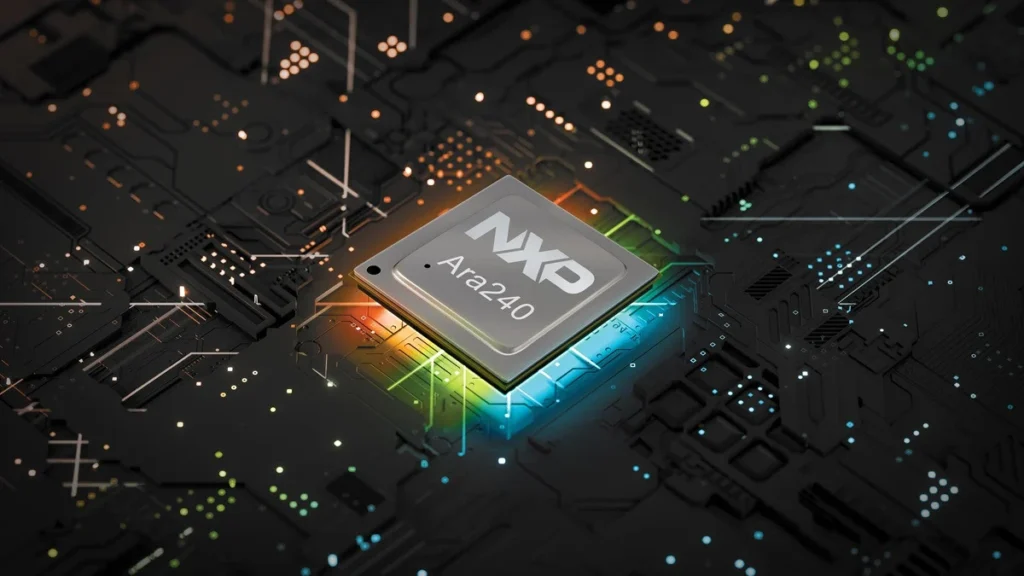
Arrow Electronics, a global leader in technology solutions, has announced the integration of NXP Semiconductors’ cutting-edge Ara240 discrete neural processing unit (DNPU) into its innovative Digital Test Drive platform. This strategic addition empowers engineers and developers worldwide with unprecedented remote access to the high-performance AI accelerator, enabling comprehensive evaluation and prototyping before necessitating significant hardware investment. The move is set to democratize access to advanced artificial intelligence capabilities at the edge, streamlining development cycles and fostering innovation across a multitude of industries.
The collaboration between Arrow and NXP addresses a critical bottleneck in the rapidly evolving field of AI hardware development. Traditionally, evaluating new silicon involved ordering costly development kits, managing complex hardware setups, and navigating intricate software configurations, a process that could be time-consuming and resource-intensive. Arrow’s Digital Test Drive platform radically simplifies this by providing a cloud-based, remote environment where developers can connect to physical systems over the web. This means engineers can now rigorously test and assess the Ara240’s performance, particularly when paired with NXP i.MX applications processors, from anywhere with an internet connection. The ability to evaluate real hardware, rather than relying solely on datasheets or theoretical benchmarks, offers a tangible advantage, providing critical insights into how the DNPU performs under actual AI workloads, including sophisticated computer vision tasks, large language model (LLM) inference, and complex vision language AI applications. This practical, hands-on experience is invaluable for making informed architectural decisions and accelerating time-to-market for next-generation intelligent systems.
NXP’s Ara240 DNPU stands at the forefront of dedicated AI acceleration for edge applications. Designed specifically for scenarios demanding the execution of increasingly complex AI workloads locally, the Ara240 is engineered to bring robust AI capabilities directly to the device. The impetus behind this shift from centralized cloud processing to distributed edge intelligence is multifaceted. Processing data at the edge significantly reduces latency, a critical factor for real-time applications such as autonomous robotics, industrial automation, and advanced driver-assistance systems (ADAS). By minimizing the round-trip time to a distant cloud server, edge AI ensures faster decision-making and more responsive system behavior. Furthermore, it reduces dependence on cloud infrastructure, enhancing system reliability, especially in environments with intermittent or limited connectivity. Perhaps most importantly, keeping data processing within the local system bolsters data privacy and security, as sensitive information does not need to be transmitted over networks, thereby mitigating potential vulnerabilities and complying with stringent data protection regulations. The Ara240’s architecture is tailored to meet these demanding requirements, offering a powerful, energy-efficient solution for intelligent edge platforms.
Technically, the NXP Ara240 is a powerhouse, delivering an impressive performance of up to 40 equivalent tera operations per second (eTOPS). This metric, which indicates the number of trillion operations an accelerator can perform per second, highlights its capability to handle computationally intensive AI tasks with remarkable speed. Its versatility is further underscored by its broad support for various advanced AI models, including large language models (LLMs) that power sophisticated natural language understanding and generation, vision language models (VLMs) which integrate visual and textual information, transformers that are foundational to many state-of-the-art AI architectures, and convolutional neural networks (CNNs) widely used in image and video processing. The inclusion of support for up to 16 GB of LPDDR4 memory is a crucial differentiator. This substantial memory capacity allows significantly larger and more complex AI models to be loaded and executed directly within edge and embedded systems, overcoming a common limitation of previous edge AI solutions. This capability expands the horizons for applications that were previously confined to cloud-based processing due to model size constraints. Potential applications span a vast array of sectors, including advanced industrial systems for predictive maintenance and quality control, sophisticated robotics for autonomous navigation and manipulation, high-precision machine vision for inspection and sorting, and a wide spectrum of other intelligent edge platforms requiring real-time, on-device AI inference.

The strategic importance of remote evaluation platforms like Arrow’s Digital Test Drive cannot be overstated in the current technological landscape. The traditional hardware evaluation process often involves a significant upfront investment in evaluation kits, followed by the arduous task of setting up the hardware, installing necessary drivers, configuring development environments, and debugging initial issues. This lengthy and costly process can be a major barrier, especially for smaller development teams or startups with limited resources. Digital Test Drive effectively eliminates these hurdles. By providing engineers with remote access to physical development platforms, it democratizes access to cutting-edge technology. This service not only reduces the financial burden but also dramatically cuts down the time required to initiate a project. Development teams can quickly assess how NXP’s Ara240 accelerator performs with their specific workloads, rapidly iterate on designs, and make informed decisions about hardware selection and overall system architecture without the logistical complexities of physical hardware procurement and setup. This agility is vital in fast-moving markets where speed to innovation can determine success.
The integration of the Ara240 into Digital Test Drive comes at a time when the demand for edge AI capabilities is experiencing exponential growth. Market research firm IDC projects that by 2025, 75% of data will be created and processed outside the traditional data center or cloud, a testament to the surging importance of edge computing. This shift is driven by the proliferation of IoT devices, the need for real-time analytics, and increasing concerns over data privacy and bandwidth limitations. Industries such as automotive (for autonomous driving and in-cabin monitoring), industrial IoT (for smart factories and predictive maintenance), healthcare (for remote patient monitoring and intelligent diagnostics), and smart cities (for traffic management and public safety) are aggressively adopting edge AI solutions. Dedicated AI accelerators like the Ara240 are critical enablers for this trend, as general-purpose CPUs often lack the efficiency and performance required for demanding AI inference at the edge. The ability to efficiently execute complex neural networks on-device not only enhances performance but also leads to significant power savings, crucial for battery-operated or power-constrained edge devices.
Justin Mortimer, Senior Director of Product Marketing for Secure Connected Edge at NXP Semiconductors, underscored the significance of this development, stating, “Developers need practical ways to understand how advanced AI technologies will perform in real applications. By providing access to NXP’s Ara240 DNPUs through Digital Test Drive, Arrow enables engineering teams to evaluate real-world edge AI performance faster and make informed design decisions.” This statement highlights NXP’s commitment to facilitating easier adoption of their advanced silicon. From Arrow’s perspective, the move solidifies its position as a vital enabler in the technology ecosystem. An inferred statement from an Arrow representative might emphasize their dedication to empowering engineers: "Our mission at Arrow is to accelerate innovation by providing engineers with the tools and resources they need. Integrating NXP’s powerful Ara240 DNPU into our Digital Test Drive platform is a testament to this commitment, offering unparalleled remote access that dramatically reduces barriers to entry for cutting-edge AI development. This partnership ensures that our customers can prototype and validate their next-generation edge AI solutions with unprecedented speed and confidence." Industry experts would likely view this as a positive development, indicating a maturing ecosystem for AI hardware development, making advanced technologies more accessible and accelerating the pace of innovation across various sectors.
Looking at the broader implications, this collaboration is poised to have a ripple effect across the embedded systems and AI development landscape. By lowering the barrier to entry for evaluating high-performance AI hardware, Arrow and NXP are effectively democratizing advanced AI development. This could lead to a surge in innovative applications from a wider range of developers, including smaller firms and academic institutions that might otherwise be deterred by the costs and complexities of traditional evaluation methods. Furthermore, it fosters a more agile development paradigm, where rapid prototyping and iterative design become the norm, rather than the exception. This speed can translate directly into faster product cycles, allowing companies to bring smarter, more efficient, and more responsive edge AI solutions to market quicker. The competitive landscape for AI accelerators is fierce, with numerous players vying for market share. By making the Ara240 more accessible, NXP strengthens its position in the edge AI segment, ensuring that its technology can be readily explored and integrated by a broader developer base. This partnership also reinforces Arrow’s value proposition as a critical link between innovative silicon manufacturers and the engineering community, offering not just components but comprehensive solutions that accelerate technological adoption.
In conclusion, the integration of NXP Semiconductors’ Ara240 DNPU into Arrow Electronics’ Digital Test Drive platform represents a significant leap forward for the entire edge AI ecosystem. By providing remote, real-time access to a powerful AI accelerator, this initiative effectively dismantles traditional barriers to hardware evaluation, empowering engineers to test, iterate, and innovate with unprecedented speed and efficiency. This strategic move by Arrow and NXP is not merely about making a new component available; it is about accelerating the future of intelligent edge computing, enabling the development of smarter, more responsive, and more secure devices across industrial, automotive, robotics, and countless other applications that define our increasingly connected and intelligent world. The NXP Ara240 evaluation environment is now fully accessible through Arrow Digital Test Drive, marking a new era for accessible, high-performance edge AI development.