Beckhoff Automation, a global leader in PC-based control technology, is celebrating the 30th anniversary of its pioneering TwinCAT automation software. Introduced in 1996, TwinCAT (The Windows Control and Automation Technology) has evolved from a groundbreaking concept that brought IT standards to industrial automation into a comprehensive, real-time control platform encompassing PLC, motion control, CNC, measurement, machine vision, robotics, and artificial intelligence. This milestone not only highlights Beckhoff’s enduring innovation but also underscores the profound impact TwinCAT has had on shaping the modern landscape of industrial manufacturing and machine building, fundamentally redefining the relationship between hardware and software in automation.
A Legacy of Innovation: The Genesis of TwinCAT
Before TwinCAT’s advent, industrial automation was largely dominated by proprietary hardware controllers, primarily PLCs (Programmable Logic Controllers) and dedicated motion controllers, each often operating in siloed environments with specific programming languages and limited interoperability. This fragmented ecosystem often led to complex system architectures, high costs, and significant limitations in flexibility and scalability. Beckhoff recognized an opportunity to leverage the rapidly advancing power and ubiquity of personal computers (PCs) as the central processing unit for industrial control. The vision was to separate control functions from specialized, proprietary hardware, thereby democratizing automation by bringing the processing power, connectivity, and development tools of the IT world to the factory floor.
In 1996, Beckhoff unveiled TwinCAT as a critical component of its burgeoning PC-based control platform. Initially running on DOS and quickly transitioning to the more powerful and user-friendly Windows operating system, TwinCAT was revolutionary. It offered a unified environment for engineering tools and supported PLC programming in accordance with the international standard IEC 61131-3, which provided a common framework for industrial control programming. This adherence to an open standard was a significant departure from proprietary approaches, enabling engineers to develop control logic using familiar languages like Ladder Diagram, Function Block Diagram, Structured Text, Instruction List, and Sequential Function Chart within a single, integrated development environment. This foundational step laid the groundwork for an era of unprecedented flexibility and integration in industrial automation.
The PC-Based Control Revolution: Redefining Industrial Architectures
The core philosophy behind TwinCAT was the strategic separation of hardware and software functions. By harnessing the processing capabilities of standard industrial PCs, Beckhoff offered an alternative to traditional control systems that relied on purpose-built, often expensive, and less adaptable hardware. This approach yielded immediate benefits. Firstly, it allowed for significantly higher processing power and memory resources than were typically available in dedicated control hardware of the time, enabling more complex control algorithms and larger applications. Secondly, it drastically reduced the cost per axis and per function, making advanced automation capabilities more accessible to a broader range of machine builders and manufacturers.
The shift to PC-based control, spearheaded by TwinCAT, empowered machine builders with unparalleled design freedom. They could now implement sophisticated electric machine designs without being constrained by the limitations or high costs associated with conventional, hardware-centric control solutions. This paradigm shift was not merely about cost reduction; it was about fostering innovation by providing a versatile and scalable software foundation that could adapt to rapidly changing industrial requirements. The move from DOS to Windows was pivotal, as it opened up the automation world to the vast ecosystem of IT tools and development methodologies, paving the way for further integration of advanced functionalities.
Chronology of Expansion: From PLC to AI, A Thirty-Year Evolution
The journey of TwinCAT over three decades is a testament to continuous innovation and adaptation to evolving industrial needs.
-
Early Foundations (1996-2000s): PLC and Motion Control: TwinCAT’s initial success stemmed from its robust implementation of PLC functionality alongside integrated motion control. From its inception, it supported cycle times down to an impressive 100 microseconds, ensuring deterministic real-time operation crucial for high-precision applications. Early motion control functions included standard axes, electronic gearing, and cam plates, providing sophisticated control for synchronized movements in various machinery. The capability to manage 10 axes initially, quickly expanding to 50, then 100, and now over 1,000 axes, while consistently reducing the cost per axis, underscored the scalability and economic advantage of the software-driven approach.
-
Embracing Openness: IEC Standards and IT Languages (2000s-2010s): Beyond IEC 61131-3, Beckhoff strategically expanded TwinCAT’s programming capabilities to include IT programming languages and tools such as C, C++, MATLAB, and Simulink. This crucial integration bridged the gap between operational technology (OT) and information technology (IT), allowing a broader range of developers to contribute to automation projects and facilitating the incorporation of complex algorithms and simulations directly into the control environment. The platform also broadened its operating system support beyond Windows to include TwinCAT/BSD and Linux, further enhancing its flexibility and appeal to diverse industrial applications and IT infrastructures.
-
The EtherCAT Synergy (Mid-2000s onwards): A significant accelerator for TwinCAT’s capabilities was the development and widespread adoption of EtherCAT (Ethernet for Control Automation Technology). As a real-time Ethernet fieldbus, EtherCAT perfectly complemented TwinCAT’s deterministic nature, providing extremely fast and synchronized communication between the central industrial PC and distributed I/O devices. This synergy allowed for coordinated process control and regulation with unprecedented precision, further reducing installation work, cabinet space, and overall system cost. EtherCAT’s open nature and high performance cemented TwinCAT’s position as a leading solution for high-performance automation.
-
Integrated Intelligence: Vision, Robotics, and AI (2010s-Present): In recent years, TwinCAT has extended its reach into increasingly sophisticated domains, reflecting the broader trends in Industry 4.0 and smart manufacturing.
- TwinCAT Vision: Introduced as a runtime module, TwinCAT Vision seamlessly integrates image processing directly into the control system. This eliminates the need for separate vision systems and complex interfaces, allowing for real-time quality control, object recognition, and robotic guidance within a single, deterministic environment.
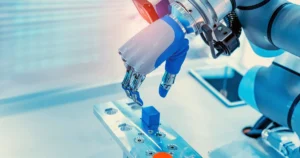
- System-Integrated Robot Controller: The platform now includes a fully integrated robot controller, capable of managing complex kinematics for various robot types. This integration simplifies programming, synchronization, and maintenance, making robotics more accessible and easier to deploy in manufacturing lines.
- Artificial Intelligence Tools: Recognizing the transformative potential of AI, Beckhoff has expanded TwinCAT with dedicated tools for machine learning and artificial intelligence. TwinCAT Machine Learning Creator allows users to generate AI models for analyzing image data, time series, and process data, enabling predictive maintenance, anomaly detection, and process optimization directly within the control environment. The TwinCAT CoAgent tool further assists users with automation programming during engineering and machine operation, leveraging AI for intelligent support. These advancements signify TwinCAT’s commitment to enabling intelligent automation and autonomous systems.
Architectural Pillars: Openness, Flexibility, and Determinism
The enduring success of TwinCAT is rooted in its foundational architectural principles:
- Open Software Structure: A central tenet has always been openness. By embracing open standards like IEC 61131-3, supporting multiple operating systems, and integrating IT programming languages, TwinCAT fostered an ecosystem where diverse technologies and skill sets could converge. This open approach allowed machine builders to select the best components and tools for their specific needs, rather than being locked into a single vendor’s ecosystem.
- Modularity and Flexibility: TwinCAT’s modular framework allows users to select and integrate only the functions they need, from a library of over 100 functions covering measurement, control, and communication. This scalability ensures that the platform can be tailored for simple applications or expanded for highly complex, multi-axis, multi-domain control tasks. The ability to add modules for vision, robotics, or AI as needed provides a future-proof platform that can evolve with a company’s requirements.
- Deterministic Real-Time Environment: Despite its integration of IT standards and general-purpose PC hardware, TwinCAT maintains strict determinism. This means that control tasks execute with predictable timing and minimal jitter, which is absolutely critical for precision motion control, high-speed data acquisition, and reliable process regulation. This combination of IT flexibility with OT determinism is a hallmark of TwinCAT’s unique value proposition.
Transforming Machine Building: Economic and Technical Impacts
TwinCAT’s impact on machine building has been profound, driving both technical innovation and economic efficiencies. By moving control logic from specialized hardware to powerful, cost-effective industrial PCs, Beckhoff significantly reduced the bill of materials for machine builders. The consolidation of PLC, motion, CNC, and other functions into a single software environment simplified machine architecture, reduced wiring, and minimized the footprint of control cabinets. This led to faster development cycles, easier maintenance, and lower total cost of ownership for end-users.
Furthermore, the software-centric approach fostered greater innovation. Machine builders could experiment with complex algorithms, integrate advanced simulations (e.g., via MATLAB/Simulink), and deploy sophisticated control strategies that would have been cost-prohibitive or technically impossible with traditional hardware-based systems. The scalability of TwinCAT allowed companies to develop a single control platform that could be adapted for a wide range of machine variants, from entry-level models to high-performance, multi-axis systems, streamlining product development and reducing time-to-market.
Statements from Leadership and Industry Recognition
While specific quotes from Beckhoff leadership for this hypothetical 2026 celebration are not available, one can infer the consistent message that Beckhoff has championed over the decades. A spokesperson for Beckhoff might articulate: "For thirty years, TwinCAT has embodied our commitment to open automation and the power of PC-based control. We envisioned a future where software would unlock unprecedented flexibility and performance on the factory floor, and TwinCAT has consistently delivered on that promise. This anniversary is a testament to our engineers’ dedication, our customers’ trust, and the enduring relevance of our foundational principles. We believe TwinCAT will continue to be a cornerstone of industrial innovation as we navigate the complexities of Industry 4.0, AI, and sustainable manufacturing."
Industry analysts frequently highlight Beckhoff’s role in advancing industrial automation. Reports from organizations like Statista or Mordor Intelligence consistently point to the growing market for industrial automation software, projected to reach hundreds of billions of dollars globally by the late 2020s, with PC-based control being a significant segment. The increasing demand for integrated solutions, real-time data processing, and AI capabilities directly aligns with TwinCAT’s comprehensive feature set. Beckhoff’s consistent growth and market penetration over the years reflect the industry’s strong adoption of its PC-based control philosophy, with TwinCAT at its core.
Forging the Future: IT/OT Convergence and Beyond
Looking ahead, the TwinCAT architecture continues to evolve, positioning PC-based control as the indispensable foundation for seamless IT/OT integration and robust connectivity with cloud and edge infrastructure. The modular software framework is inherently designed to support the rapidly changing requirements of modern manufacturing, including:
- Advanced AI and Machine Learning: As AI moves from theoretical concept to practical application, TwinCAT’s integrated AI tools will become even more critical for predictive maintenance, quality inspection, process optimization, and even autonomous decision-making on the edge. The ability to deploy and manage AI models directly within the deterministic control environment offers significant advantages in terms of latency and data security.
- Enhanced Communication Standards: With the proliferation of new communication protocols (e.g., OPC UA, 5G, TSN – Time-Sensitive Networking), TwinCAT’s open architecture ensures it can readily integrate these standards, facilitating ever more sophisticated data exchange between machines, enterprise systems, and the cloud.
- Robust Cybersecurity: As industrial control systems become more interconnected, cybersecurity becomes paramount. Beckhoff’s continuous development of TwinCAT includes features and best practices designed to protect against cyber threats, ensuring the integrity and reliability of industrial operations.
- Sustainability and Efficiency: By enabling more precise control, advanced diagnostics, and optimized processes, TwinCAT contributes to greater energy efficiency and resource optimization in manufacturing, aligning with global sustainability goals.
The platform’s scalability and compatibility with IT standards mean that machine builders can invest in TwinCAT with confidence, knowing it provides a future-proof foundation that can be adapted and expanded over time to meet new challenges and embrace emerging technologies. This continuous adaptability ensures that the platform remains at the forefront of automation innovation for decades to come.
Conclusion: A Continuing Journey of Automation Excellence
Thirty years ago, Beckhoff launched TwinCAT with a vision to revolutionize industrial automation through PC-based control. Today, that vision has not only been realized but has profoundly reshaped the industry. From its humble beginnings on DOS, supporting basic PLC and motion control, TwinCAT has blossomed into an all-encompassing platform that seamlessly integrates advanced functionalities like vision, robotics, and artificial intelligence within a deterministic, real-time environment. Its core principles of openness, flexibility, and the separation of hardware and software functions have proven to be remarkably resilient and forward-looking. As Beckhoff looks to the next chapter, TwinCAT stands as a powerful testament to the transformative potential of software, continuing its journey as a pivotal enabler of the smart factories and intelligent machines of tomorrow. The anniversary is not just a celebration of past achievements but a reaffirmation of Beckhoff’s unwavering commitment to pushing the boundaries of industrial automation.