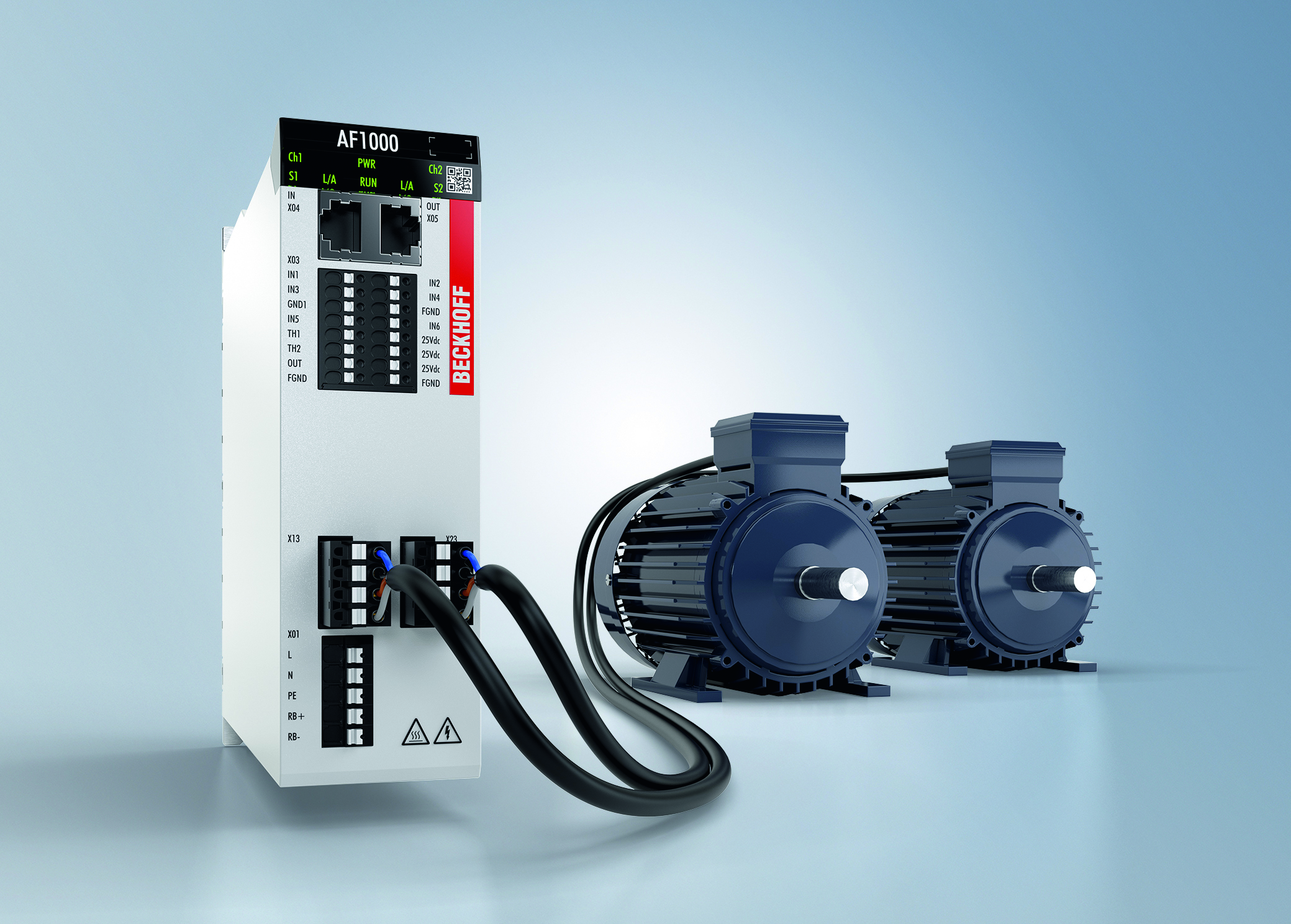
Beckhoff Automation, a global leader in open automation systems, has unveiled the AF1000 variable frequency drive (VFD), a significant addition to its product portfolio designed to address fundamental motion control requirements across various industrial sectors. This new drive aims to deliver Beckhoff’s renowned integration capabilities and advanced control features to a broader range of applications, specifically targeting basic drive functionalities such as those found in conveyor systems, pumps, and fans. The introduction of the AF1000 underscores Beckhoff’s strategic commitment to providing scalable, high-performance automation solutions, from the most complex multi-axis motion control to simpler, yet critical, industrial tasks.
The AF1000 represents a crucial step in democratizing sophisticated automation technology, bringing the power of the TwinCAT automation system and EtherCAT communication protocol to applications where cost-effectiveness and ease of integration are paramount. Traditionally, variable frequency drives have been essential components in industrial settings, offering benefits such as energy savings, precise speed control, and reduced mechanical stress on equipment. However, the AF1000 distinguishes itself by seamlessly integrating into Beckhoff’s established PC-based control architecture, providing users with a unified engineering environment and familiar diagnostic functions typically associated with the company’s high-end servo drive products.
Understanding Variable Frequency Drives and Their Importance
Variable frequency drives (VFDs), also known as adjustable frequency drives (AFDs) or inverters, are power electronic devices that control the speed and torque of AC electric motors by varying the frequency and voltage of the power supplied to the motor. Their importance in modern industrial operations cannot be overstated. By precisely controlling motor speed, VFDs offer numerous advantages, including:
- Energy Efficiency: Motors operating at full speed when not required can consume excessive energy. VFDs allow motors to run only as fast as necessary, leading to substantial energy savings, particularly in applications with variable loads like pumps and fans, where a small reduction in speed can result in significant energy savings due to the cube law relationship between speed and power consumption.
- Process Optimization: Precise speed control enables tighter control over manufacturing processes, improving product quality and consistency. For example, in conveyor systems, maintaining a consistent speed is crucial for smooth material flow and preventing bottlenecks.
- Reduced Mechanical Stress: VFDs facilitate soft starts and stops, gradually ramping up or down the motor speed. This eliminates the sudden shock loads associated with direct-on-line (DOL) starting, thereby reducing wear and tear on mechanical components like gearboxes, belts, and couplings, extending the lifespan of machinery.
- Noise Reduction: By operating motors at optimal speeds, VFDs can contribute to quieter operation, an important consideration in many industrial and commercial environments.
- Power Factor Correction: Some VFDs can improve the power factor of the electrical system, reducing reactive power consumption and potentially lowering utility costs.
The AF1000 leverages these inherent benefits of VFD technology while enhancing them with Beckhoff’s signature integration capabilities.
Seamless Integration with TwinCAT and EtherCAT
A cornerstone of the AF1000’s appeal is its deep integration with Beckhoff’s TwinCAT automation software and the EtherCAT industrial Ethernet system. This integration is not merely a connectivity feature; it is a fundamental design principle that streamlines the entire automation workflow.
- EtherCAT (Ethernet for Control Automation Technology): Developed by Beckhoff, EtherCAT is an ultra-fast, real-time industrial Ethernet fieldbus system renowned for its high performance, flexibility, and topological freedom. Unlike traditional fieldbuses that often require dedicated communication processors in each device, EtherCAT processes telegrams on the fly, achieving extremely short cycle times and minimal jitter. For the AF1000, EtherCAT connectivity means that the drive can be seamlessly incorporated into a larger Beckhoff control system, exchanging data with the central controller (IPC or Embedded PC) at deterministic speeds. This ensures precise synchronization of motion tasks, even for basic applications, and simplifies wiring by allowing a single Ethernet cable to connect multiple devices in a line, tree, or star topology.
- TwinCAT Automation System: TwinCAT (The Windows Control and Automation Technology) is Beckhoff’s comprehensive software platform that transforms any compatible PC into a real-time control system. It integrates PLC (Programmable Logic Controller), motion control, robotics, safety, HMI (Human Machine Interface), and IoT functionalities into a single, cohesive environment. By integrating the AF1000 with TwinCAT, Beckhoff provides a unified programming, configuration, and diagnostic environment. This "one software for all tasks" approach significantly reduces engineering complexity and development time. Engineers familiar with TwinCAT for servo drives or PLC programming can immediately leverage their existing knowledge and tools to configure and manage the AF1000, eliminating the need to learn proprietary software interfaces for different drive types.
This powerful combination of EtherCAT and TwinCAT ensures that even basic motion tasks handled by the AF1000 benefit from the same high level of control, diagnostics, and data transparency available for more complex Beckhoff systems.
Technical Specifications and Versatility
The AF1000 is offered in two distinct versions, catering to a wide array of industrial power supply standards and application requirements:
- Single-Phase 240 V AC Supply: This version is designed for applications where a single-phase power supply is readily available, typically in smaller workshops, commercial buildings, or specific machine designs. It supports a power range from 0.37 kW to 1.5 kW, making it suitable for light-duty conveyors, smaller pumps, and ventilation fans.
- Three-Phase 480 V AC Supply: Geared towards more demanding industrial environments, this version accommodates a three-phase power supply up to 480 V AC. It offers a broader power range from 0.37 kW to 5.5 kW, extending its applicability to medium-sized pumps, larger conveyor systems, and more robust fan applications commonly found in manufacturing plants and processing facilities.
Both versions incorporate several integrated features that contribute to their compact design, ease of installation, and enhanced reliability:
- Integrated Control Power Supply: This eliminates the need for an external power supply unit for the drive’s internal electronics, simplifying wiring and reducing component count.
- DC Link Capacitors: These are crucial for smoothing the DC voltage in the drive’s intermediate circuit, ensuring stable operation and mitigating voltage fluctuations.
- Ballast Circuit: An integrated ballast circuit is designed to dissipate excess regenerative energy generated by the motor during deceleration. This is particularly important for applications involving frequent stopping or rapid changes in speed, preventing overvoltage conditions and protecting the drive.
- Control Voltage Generation: The internal control voltage for the drive’s electronics is generated directly from the DC link via the integrated power supply, further streamlining the drive’s internal architecture.
Furthermore, the AF1000 offers flexible module configurations:
- Single-Axis Module: For applications requiring control of a single motor.
- Two-Axis Module: This option is particularly advantageous for applications where two motors need independent control but can benefit from shared power components or a compact footprint, such as dual conveyor lines or pump systems. This reduces cabinet space and wiring complexity.
Motor Compatibility and Control Modes
The AF1000 supports a versatile range of motor types, expanding its applicability:
- Synchronous Servomotors: While primarily aimed at basic tasks, the AF1000’s compatibility with synchronous servomotors (without feedback) highlights its potential for applications requiring precise speed and torque, even if not full positional control.
- Asynchronous Motors (Induction Motors): These are the workhorses of industrial automation due to their robustness and cost-effectiveness. The AF1000’s support for asynchronous motors makes it ideal for the vast majority of pump, fan, and conveyor applications.
- Reluctance Motors: Reluctance motors, including switched reluctance motors and synchronous reluctance motors, are gaining traction due to their high efficiency and robust design, often without the need for rare-earth magnets. The AF1000’s compatibility positions it for future-proof and energy-efficient solutions.
The drive supports two primary control modes for these motors:
- U/f (Volts per Hertz) Mode: This is a simpler control method where the ratio of voltage to frequency is kept constant to maintain a constant magnetic flux in the motor. It is robust and suitable for basic applications where precise speed regulation under varying loads is not critical, such as fans and centrifugal pumps.
- Vector Control: Also known as Field-Oriented Control (FOC), vector control provides independent control of motor flux and torque. This allows for more precise speed and torque control, even at low speeds, and offers better dynamic performance. For the AF1000, implementing vector control without feedback suggests advanced algorithms that estimate motor parameters, offering a balance between performance and cost-efficiency for applications that require better dynamic response than U/f control but don’t necessitate a motor encoder.
Streamlined Commissioning with TwinCAT Drive Manager 2
One of the most significant advantages for existing Beckhoff users and new adopters alike is the commissioning process. The AF1000 is configured and managed using TwinCAT Drive Manager 2, the identical engineering tool employed for Beckhoff’s advanced servo drives. This common platform approach yields substantial benefits:
- Reduced Learning Curve: Engineers already familiar with Beckhoff’s servo drive ecosystem can immediately and intuitively work with the AF1000, minimizing the time and effort required for training.
- Unified Workflow: All drive types, from basic VFDs to high-performance servo drives, can be managed within the same software environment, streamlining project development, parameterization, diagnostics, and maintenance.
- Consistent User Experience: This consistency fosters efficiency, reduces errors, and improves overall productivity across various automation projects.
- Advanced Diagnostic Capabilities: The AF1000 benefits from the sophisticated diagnostic and monitoring functions inherent in TwinCAT Drive Manager 2, allowing users to quickly identify and troubleshoot issues, minimize downtime, and optimize system performance.
Background Context and Beckhoff’s Strategic Vision
Beckhoff Automation has consistently championed the philosophy of PC-based control and open automation systems since its inception in 1980. The company’s innovations, such as the introduction of EtherCAT in 2003, have played a pivotal role in shaping the landscape of industrial automation. Their core strategy revolves around providing scalable, integrated hardware and software solutions that allow customers to standardize on a single, powerful platform for all automation tasks.
The introduction of the AF1000 aligns perfectly with this long-term vision. While Beckhoff has a strong presence in high-performance motion control with its extensive range of servo drives and advanced TwinCAT functionalities, there has always been a segment of the market for simpler, cost-sensitive applications. Previously, customers might have had to integrate third-party VFDs, leading to fragmented control architectures, disparate software tools, and increased engineering overhead.
The AF1000 fills this market gap by offering an economical, yet fully integrated, Beckhoff solution for basic motion tasks. This move allows Beckhoff to:
- Expand its Market Reach: By catering to basic drive applications, Beckhoff can attract new customers who may not initially require complex servo systems but can benefit from the company’s integrated approach.
- Strengthen its Ecosystem: The AF1000 reinforces the "one platform" concept, making it even more compelling for users to adopt Beckhoff’s complete automation solution, from PLCs and I/O to basic and advanced motion control.
- Offer End-to-End Solutions: Machine builders and system integrators can now source all their control and drive components from a single vendor, simplifying procurement, integration, and support.
Broader Impact and Implications for Industrial Automation
The introduction of the AF1000 carries significant implications for industrial automation:
- Enhanced Energy Efficiency Across Industries: By making integrated VFD technology more accessible and easier to implement, the AF1000 will contribute to broader adoption of energy-saving practices in applications like HVAC systems, water treatment plants, and general manufacturing, aligning with global sustainability goals.
- Improved Operational Performance for Basic Machinery: Even seemingly simple machines like conveyors and fans are critical to overall plant efficiency. The AF1000 enables more precise control, reducing wear, minimizing maintenance, and preventing costly downtime.
- Reduced Total Cost of Ownership (TCO): While the initial purchase price is a factor, the TCO is paramount. The AF1000’s simplified integration, reduced wiring, common engineering environment, and energy-saving potential collectively lead to lower installation, commissioning, operational, and maintenance costs over the lifetime of the equipment.
- Democratization of Advanced Features: By embedding advanced commissioning and diagnostic functions, previously associated with higher-end servo drives, into a basic VFD, Beckhoff is making sophisticated control more accessible and user-friendly for a wider range of applications and skill levels.
- Future-Proofing Automation Systems: The EtherCAT backbone and TwinCAT integration ensure that systems built with the AF1000 are inherently scalable and compatible with future Beckhoff developments, providing a degree of future-proofing for industrial investments.
- Empowering System Integrators and OEMs: For machine builders and system integrators, the AF1000 simplifies their design process. They can now standardize on a single control platform, reducing inventory, streamlining training, and accelerating project delivery.
Industry Reactions (Inferred)
Industry experts and stakeholders are likely to view the AF1000 as a strategic and well-timed product launch. A representative from Beckhoff might emphasize: "The AF1000 is a testament to our commitment to providing integrated, high-performance solutions across the entire spectrum of automation needs. By extending the proven power of TwinCAT and EtherCAT to basic motion tasks, we empower our customers to achieve greater efficiency, flexibility, and cost-effectiveness, even in the most fundamental industrial applications. This new drive allows our customers to leverage a unified engineering environment, reducing complexity and accelerating time to market."
An independent industry analyst could observe: "Beckhoff’s introduction of the AF1000 is a smart move that strategically broadens their market appeal. In a competitive landscape where integration and ease of use are increasingly critical, offering a unified control platform that spans from basic VFDs to complex servo systems provides a compelling value proposition. This strengthens Beckhoff’s ecosystem and makes it an even more attractive option for companies looking to standardize their automation infrastructure."
From the perspective of an end-user or system integrator, the sentiment would likely be: "The ability to manage both our basic pump and fan applications alongside our more complex servo-controlled machinery within the same TwinCAT environment is a game-changer. It simplifies our engineering, maintenance, and diagnostics significantly, saving us valuable time and resources."
Chronology and Development Context
While specific development timelines for the AF1000 are not publicly detailed, its introduction fits within Beckhoff’s consistent product development trajectory. Since its founding, Beckhoff has steadily expanded its portfolio, moving from initial PC-based control concepts in the 1980s to the revolutionary introduction of EtherCAT in the early 2000s, and subsequently building out a comprehensive range of I/O, IPCs, and motion control components. The AF1000 represents a natural evolution, filling a logical gap in their drive technology offerings. It leverages years of expertise in drive development for servo applications, adapting proven methodologies and software tools to a new class of industrial equipment. This ensures that even as a "basic" drive, it benefits from the robust design principles and advanced software integration that characterize Beckhoff’s higher-end products. Its development likely stemmed from market feedback indicating a strong demand for a fully integrated VFD solution that could seamlessly reside within a Beckhoff control architecture, eliminating the compromises often associated with disparate systems.
Conclusion
The Beckhoff AF1000 variable frequency drive marks a significant milestone in industrial automation, offering a powerful, integrated, and cost-effective solution for basic motion tasks. By seamlessly embedding VFD functionality within the familiar TwinCAT and EtherCAT ecosystem, Beckhoff empowers industries to achieve greater energy efficiency, operational precision, and simplified engineering across a wider spectrum of applications. This strategic product launch not only expands Beckhoff’s market footprint but also reinforces its long-standing commitment to delivering scalable, open, and high-performance automation solutions that truly bridge the gap between simple and complex control requirements. As industries continue to strive for increased efficiency and intelligence in every facet of their operations, the AF1000 stands poised to play a crucial role in enabling smarter, more sustainable, and more productive automation environments.