In a compelling testament to the enduring power of practical effects in an increasingly CGI-dominated entertainment landscape, animatronics designer Jesse Velez has peeled back the curtain on the intricate engineering and artistic ingenuity behind "Thing," the iconic disembodied hand from Netflix’s hit series "Wednesday." Velez and his dedicated team crafted a fully wireless, portable animatronic that seamlessly mirrored human movements in real time, transforming a beloved character into a tangible, interactive presence at red carpet events across major global cities including Los Angeles, New York, Seoul, Istanbul, and London. This groundbreaking achievement not only captivated audiences and cast members alike but also underscored a growing appreciation for the visceral thrill of tangible spectacle in an era of digital overload.
The Genesis of an Icon: From Page to Practical Effect
The character of "Thing T. Thing" has been a staple of the Addams Family universe since its inception by cartoonist Charles Addams in 1938. Initially portrayed as a sentient hand that emerged from boxes or hidden compartments in the original 1960s television series, "Thing" quickly became one of the most recognizable and endearing members of the macabre family. Its role evolved through various adaptations, often serving as a loyal companion, a comedic device, and a surprisingly expressive character despite its lack of a full body or voice.
When Netflix announced its "Wednesday" series, helmed by director Tim Burton and focusing on the titular character’s years at Nevermore Academy, the question of how to portray "Thing" in a contemporary, high-budget production immediately arose. In an industry often defaulting to digital solutions for fantastical elements, the decision to employ practical effects for "Thing" was a deliberate and strategic choice that paid immense dividends. It anchored the character in a physical reality that CGI often struggles to replicate, fostering a deeper connection with the audience and allowing for genuine, unscripted interactions during promotional events.
Netflix’s "Wednesday": A Global Phenomenon
"Wednesday" premiered on Netflix in November 2022 to widespread critical acclaim and unprecedented viewership. The series quickly shattered streaming records, becoming the most-watched English-language series debut in Netflix history, surpassing even "Stranger Things 4." Its immediate success was attributed to a compelling narrative, Burton’s signature aesthetic, Jenna Ortega’s captivating performance as Wednesday Addams, and a diverse, talented supporting cast. Within weeks, "Wednesday" had amassed over a billion hours viewed globally, solidifying its status as a cultural phenomenon.
The immense popularity of the series created a unique opportunity and challenge for its promotional campaign. How do you engage a global fanbase with a character as unique and beloved as "Thing"? The answer, as demonstrated by Jesse Velez’s work, lay in bringing the character to life in the physical world, offering fans an authentic, immersive experience that transcended screens.
From Concept Sketch to Walking Hand Prototype
Like many ambitious engineering and artistic endeavors, the journey of the animatronic "Thing" began with a foundational concept and a simple prototype. Velez and his team initiated the project with the core idea of a hand that could walk independently, a concept central to "Thing’s" character in the "Wednesday" series. This initial prototype was crucial for establishing the basic mechanics and exploring the feasibility of creating a mobile, expressive animatronic that could convincingly portray a sentient hand.
The evolution from a rudimentary walking hand to the sophisticated, performing animatronic seen globally was a testament to iterative design and problem-solving. The objective was clear: to create a portable, wireless animatronic hand capable of real-time control, allowing a performer to improvise spontaneously with audiences and interact seamlessly with the "Wednesday" cast. This real-time interaction was paramount, distinguishing Velez’s creation from pre-programmed robots or purely digital effects. The ability to react dynamically to its environment and human interaction was key to "Thing’s" charm and effectiveness during live events.
The Technical Alchemy: Hacking and Crafting "Thing" to Life
Jesse Velez’s approach to animatronics, as highlighted in his presentations and work, embodies a philosophy of creative hacking – intelligently combining readily available, off-the-shelf components with custom-fabricated parts to achieve a seamless, organic result. This blend of accessibility and bespoke engineering is a hallmark of innovative prop design, particularly in projects requiring rapid prototyping and adaptable solutions. While specific proprietary components remain part of Velez’s trade secrets, the general "ingredients" for building such an advanced animatronic hand typically include:
- Miniaturized Servomotors and Actuators: These are the muscles of the animatronic, providing precise, controlled movement to each finger and the wrist. High-torque, compact servos are essential for detailed articulation and responsiveness.
- Custom-Fabricated Skeleton and Shell: A lightweight yet durable internal frame, often 3D-printed or machined from specialized plastics or composites, forms the hand’s skeletal structure. This is then covered with a flexible, realistic skin, meticulously sculpted and painted to match the character’s appearance, including texture and subtle anatomical details.
- Advanced Microcontroller System: A compact, powerful microcontroller acts as the brain, processing commands from the operator and translating them into precise movements of the servos. These systems often incorporate custom firmware for optimized performance and responsiveness.
- Wireless Communication Module: Critical for portability and real-time control, a robust wireless system (e.g., radio frequency, Wi-Fi, or Bluetooth variants) enables the operator to control the hand remotely without restrictive cables. This allows for freedom of movement and spontaneous interaction.
- Motion Capture or Haptic Feedback Control System: To achieve real-time mirroring of human movements, Velez’s team likely employed a sophisticated control mechanism. This could involve a glove-based motion capture system worn by the performer, translating their hand movements directly to the animatronic. Alternatively, a haptic feedback system might be used, providing the performer with tactile sensations corresponding to the animatronic’s interactions.
- Power Management System: Compact, high-density batteries are crucial for extended operation, along with efficient power distribution to all components to ensure the animatronic can perform for the duration of events without needing constant recharging.
- Sensors (Optional but enhancing): For even more advanced interaction, proximity sensors or touch sensors might be integrated, allowing the hand to react to its environment or human touch, adding another layer of realism and interactivity.
The genius in Velez’s approach lies not just in selecting these components but in their seamless integration. The goal was to make the technology invisible, allowing "Thing" to appear as a genuinely sentient entity, capable of expressing personality through gestures and movement.

The Global Promotional Tour: "Thing" Takes the World Stage
The practical application of Velez’s animatronic "Thing" during the "Wednesday" global promotional tour was a masterclass in experiential marketing. Unlike traditional character appearances, which often rely on actors in costumes, "Thing" offered a unique, almost magical presence. Its ability to interact spontaneously with cast members and fans alike created viral moments across social media platforms.
Imagine the surprise and delight of fans on the red carpet as "Thing" scuttled across the floor, gave a high-five, or playfully tugged at a celebrity’s outfit. These unscripted interactions were gold for capturing genuine reactions and generating organic buzz. The animatronic traveled across continents, from the glitz of Los Angeles and New York premieres to the cultural hubs of Seoul, Istanbul, and London, becoming a consistent, beloved fixture of the promotional circuit. This global deployment underscored the animatronic’s robustness and portability, proving its capability to perform flawlessly under diverse conditions and demanding schedules.
For the cast of "Wednesday," particularly Jenna Ortega, "Thing" became more than just a prop; it was a co-star. Their interactions on screen were often genuine, as Ortega herself would react to the real animatronic hand during filming. This authenticity carried over to the red carpet, where the cast could engage with "Thing" as they would on set, creating a consistent and believable portrayal of their on-screen relationships. This synergy between practical effects and live performance elevated the promotional events from standard publicity stunts to memorable, immersive experiences.
The Resurgence of Practical Effects: A Tactile Future
Jesse Velez’s work on "Thing" is more than just a fascinating behind-the-scenes anecdote; it is a significant indicator of a broader movement within the entertainment industry. For years, computer-generated imagery (CGI) dominated visual effects, offering unparalleled flexibility and the ability to create anything imaginable. However, a growing sentiment, both among filmmakers and audiences, suggests a renewed appreciation for practical effects.
The appeal of practical effects stems from several factors:

- Tangibility and Realism: Practical effects inherently possess a physical presence that CGI often struggles to replicate perfectly. The way light interacts with a real object, the subtle imperfections, and the sheer fact of its physical existence contribute to a sense of realism that digital creations can sometimes lack.
- Performer Interaction: Actors often report that working with practical props and creatures enhances their performance, allowing for more authentic reactions and interactions compared to acting against a green screen.
- Audience Engagement: There’s an undeniable "wow" factor when audiences see something physically impossible brought to life right in front of them, whether on set or during a live event. This visceral reaction is difficult for digital effects alone to achieve.
- Cost-Effectiveness (in certain scenarios): While complex animatronics can be expensive, for specific applications, a well-designed practical effect can be more cost-effective than extensive CGI, especially when factoring in render times, software licenses, and the iterative nature of digital effects work.
The success of "Thing" on "Wednesday" echoes other recent triumphs in practical effects, such as the animatronics in "The Mandalorian" (particularly Grogu, or "Baby Yoda") and the creature work in films like "Godzilla Minus One." These examples demonstrate that when skillfully employed, practical effects can not only complement but often surpass purely digital solutions in terms of impact and audience connection.
Art, Engineering, and the Maker Movement
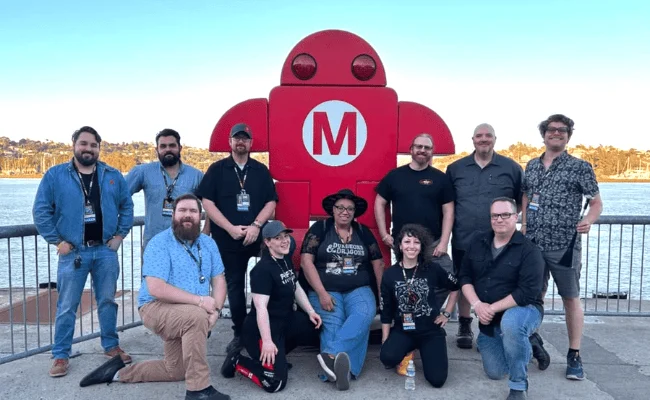
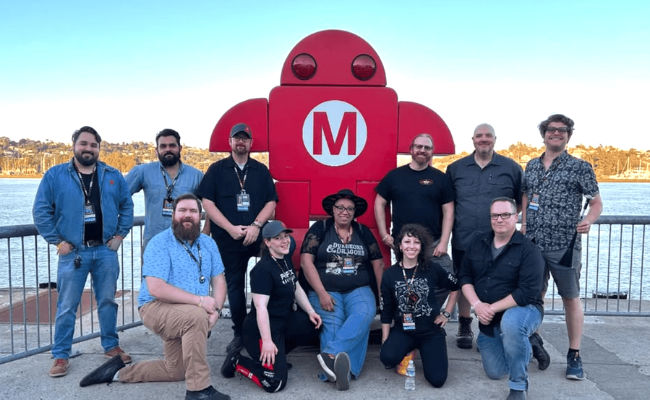
Jesse Velez’s career and the "Thing" project exemplify the spirit of the maker movement – a global subculture that champions hands-on innovation, problem-solving, and the creative application of technology. His ability to "creatively hack together off-the-shelf and purpose-built components" is a core tenet of this philosophy, demonstrating that cutting-edge results don’t always require unlimited budgets but rather ingenuity, technical skill, and an artistic vision.
Events like Maker Faire Bay Area, where Velez has presented or is slated to present his work, serve as vital platforms for sharing these innovations. They connect professionals like Velez with aspiring creators, fostering a community where knowledge is exchanged, techniques are refined, and the boundaries of what’s possible are continually pushed. These gatherings are crucial for inspiring the next generation of animatronics designers, robotics engineers, and practical effects artists.
Broader Implications and the Future of Entertainment
The success of the "Wednesday" animatronic "Thing" carries several significant implications for the future of entertainment and promotional strategies:
- Enhanced Experiential Marketing: The project has set a new benchmark for how intellectual property can be brought to life for fan engagement. Future promotional campaigns for films and TV shows may increasingly invest in sophisticated practical effects to create memorable, shareable, and interactive experiences.
- Validation for Practical Effects: It reinforces the idea that practical effects are not a relic of the past but a vital, evolving tool in the modern filmmaker’s arsenal, capable of producing highly effective and emotionally resonant results.
- Cross-Disciplinary Innovation: Velez’s work highlights the critical intersection of art, engineering, and storytelling. The best practical effects are born from a deep understanding of mechanics, electronics, materials science, and character design.
- The Power of the Tangible: In an increasingly virtual world, the project reminds us of the profound human desire for tangible, physical interaction. The "visceral thrill of seeing something real, complex, and alive right in front of you" remains a powerful draw.
As technology continues to advance, the distinction between practical and digital effects will likely blur even further, leading to hybrid approaches that leverage the strengths of both. However, the core principle exemplified by Jesse Velez’s "Thing" – that a well-executed practical effect can breathe unparalleled life into a character and create unforgettable moments – will undoubtedly endure. His work stands as a beacon for creators dedicated to bringing our wildest sci-fi and fantasy dreams to life, one servo and line of code at a time, proving that the future of spectacle is indeed tactile.