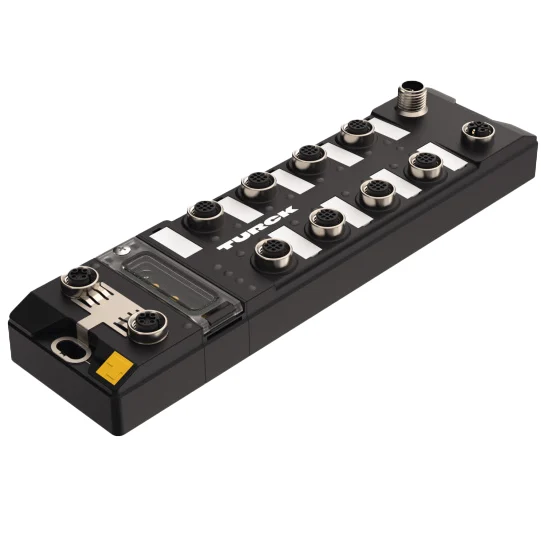
TURCK, a global leader in industrial automation, has announced the upcoming launch of its TBEN-LLH-4RMC, a sophisticated multiprotocol Ethernet I/O module engineered for precise control and seamless integration of conveyor roller motors. This compact and robust solution is poised to significantly enhance material handling and intralogistics applications, with its U.S. market debut scheduled for the second quarter of 2026. The module represents a strategic advancement in decentralized automation, promising to streamline operations in diverse environments ranging from high-speed packaging lines to intricate manufacturing facilities.
The TBEN-LLH-4RMC is specifically designed to address the evolving demands of modern conveyor systems, which are the backbone of efficient material flow in intralogistics, packaging, and manufacturing sectors. Its core appeal lies in its ability to offer field-level motor control, thereby reducing the reliance on complex, centralized Programmable Logic Controllers (PLCs). This shift towards decentralized intelligence is a hallmark of Industry 4.0 paradigms, where smart, connected devices operate closer to the point of action, enhancing system flexibility, responsiveness, and resilience. By integrating onboard logic and comprehensive I/O functions within a rugged housing, the module empowers system integrators and manufacturers to simplify wiring architectures, minimize installation complexities, and significantly lower ongoing maintenance requirements, translating into tangible operational cost reductions and increased uptime.
The Paradigm Shift Towards Decentralized Automation
Traditional industrial automation architectures often rely on a centralized PLC to manage a vast array of sensors, actuators, and motors. While effective, this approach can lead to intricate wiring, complex programming, and a single point of failure. The TBEN-LLH-4RMC champions the decentralized automation model, where intelligence and control are distributed closer to the field devices. This modular approach allows for greater scalability and flexibility. For instance, in a large distribution center with hundreds of meters of conveyors, a centralized PLC system would require extensive cabling running back to a control cabinet, making troubleshooting and expansion challenging. With decentralized modules like the TBEN-LLH-4RMC, each segment of the conveyor can be managed autonomously, with local intelligence handling motor control and basic I/O tasks. This dramatically reduces cable runs, simplifies diagnostic procedures, and accelerates system commissioning.
The "onboard logic" feature is particularly noteworthy. It signifies that the module possesses processing capabilities to execute control algorithms directly at the device level, rather than solely relying on commands from a master PLC. This edge computing capability allows for quicker reaction times, reduced network traffic, and enhanced system autonomy. For example, a conveyor segment could detect a jam and initiate a localized shutdown or speed adjustment without waiting for a command from a central controller, thereby preventing further damage or bottlenecks. This level of distributed intelligence is crucial for complex material handling systems where real-time decision-making is paramount.
Key Technical Attributes and Their Operational Impact
The TBEN-LLH-4RMC’s "multiprotocol Ethernet" capability ensures broad compatibility with leading industrial Ethernet standards, including EtherNet/IP, PROFINET, and EtherCAT. This flexibility is a critical advantage for system integrators who often work with diverse control platforms and network infrastructures. Instead of requiring different hardware for different protocols, a single TBEN-LLH-4RMC module can adapt, simplifying inventory management and reducing integration effort. This interoperability future-proofs installations, allowing for seamless upgrades or modifications to the control system without necessitating a complete overhaul of the I/O infrastructure.

The "I/O functions" integrated into the module are designed to interface directly with conveyor roller motors, providing capabilities such as start/stop commands, speed control, direction reversal, and feedback monitoring. While specific technical details will be fully unveiled closer to the launch, it is expected that the module will support common motor control interfaces and diagnostic capabilities essential for maintaining optimal conveyor performance. The "rugged housing" is another vital component, engineered to withstand the harsh conditions prevalent in industrial environments. This typically implies compliance with high IP ratings (e.g., IP65/IP67) for protection against dust and water ingress, resistance to shock and vibration, and operation across a wide temperature range. Such durability ensures reliable performance and longevity, minimizing the need for protective enclosures and reducing downtime due to environmental factors.
Strategic Positioning in a Booming Market
The material handling and intralogistics sectors are experiencing unprecedented growth, driven by the explosion of e-commerce, the demand for faster delivery times, and the increasing automation of manufacturing processes. According to market research reports, the global material handling equipment market is projected to reach over $200 billion by 2027, growing at a compound annual growth rate (CAGR) of approximately 6-8%. Within this landscape, conveyor systems remain a fundamental technology, continuously evolving to meet higher throughput, flexibility, and energy efficiency demands.
TURCK’s TBEN-LLH-4RMC is strategically positioned to capitalize on these trends. Modern warehouses and distribution centers require highly modular and reconfigurable conveyor systems to adapt to fluctuating order volumes and product mixes. A decentralized I/O module that can easily integrate and control individual conveyor segments allows for quicker layout changes and system expansions. For instance, a new sorting line can be added or an existing one reconfigured with minimal disruption, as each module operates relatively independently. This agility is a significant competitive advantage for businesses operating in dynamic markets.
TURCK’s Legacy of Innovation and Market Anticipation
TURCK has a long-standing reputation as a pioneer in industrial automation, particularly in sensor technology, fieldbus components, and connectivity solutions. For decades, the company has focused on developing robust, high-performance products that enhance efficiency and reliability in challenging industrial settings. The TBEN-LLH-4RMC is a natural extension of this legacy, building upon TURCK’s expertise in compact, rugged, and intelligent I/O modules.
The preview of the TBEN-LLH-4RMC, well in advance of its Q2 2026 U.S. launch, indicates TURCK’s confidence in the product’s market readiness and its strategic importance. Such early announcements allow system integrators and end-users to plan their future automation projects, incorporating the new technology into their design considerations. This pre-launch buzz also provides TURCK with valuable feedback from potential customers, which can be incorporated into final product refinements.
While no official statements have been released beyond the initial preview, industry experts anticipate a positive reception. Dr. Evelyn Reed, a leading analyst in industrial automation at Apex Analytics, commented, "The trend towards intelligent, decentralized control in material handling is undeniable. Solutions like TURCK’s TBEN-LLH-4RMC are crucial for unlocking the full potential of Industry 4.0, offering a pathway to more flexible, scalable, and cost-effective automation. The multiprotocol support is a key differentiator, reducing integration headaches for diverse industrial environments."

A hypothetical statement from a TURCK executive, such as Mr. Michael O’Neill, Vice President of Automation Solutions at TURCK North America, might emphasize: "The TBEN-LLH-4RMC embodies our commitment to pushing the boundaries of industrial connectivity and control. We understand the pressures our customers face – the need for speed, precision, and adaptability. This module is engineered to directly address those challenges, providing a robust, intelligent, and easy-to-deploy solution that will redefine conveyor system integration and efficiency for years to come."
Economic and Operational Implications
The deployment of the TBEN-LLH-4RMC is expected to yield substantial economic and operational benefits.
- Reduced Installation Costs: By simplifying wiring and reducing the need for large control cabinets and extensive cable trays, installation time and material costs can be significantly lowered. Estimates suggest potential savings of 20-30% on wiring and labor for new conveyor installations.
- Lower Maintenance Expenses: The modular design means that if a component fails, only the specific module needs to be replaced, rather than troubleshooting complex central wiring. Onboard diagnostics can pinpoint issues rapidly, minimizing downtime and maintenance hours. The rugged housing further contributes to reduced repair frequencies.
- Increased Uptime and Throughput: Decentralized control with onboard logic allows for faster fault detection and recovery, preventing minor issues from escalating into major system stoppages. This directly translates to higher operational uptime and increased material throughput, which is critical for meeting production targets and customer demands.
- Enhanced Flexibility and Scalability: Businesses can easily add, remove, or reconfigure conveyor segments without extensive re-engineering of the entire control system. This adaptability is invaluable in dynamic manufacturing and logistics environments.
- Optimized Energy Consumption: Intelligent, localized control can enable more precise motor management, potentially leading to energy savings by optimizing speed and operation based on actual load and demand.
Competitive Landscape and Future Outlook
The market for industrial I/O modules is highly competitive, featuring established players such as Siemens, Rockwell Automation, Beckhoff, and WAGO, among others. Each company offers its own suite of I/O solutions, often with a focus on specific industrial Ethernet protocols or unique form factors. TURCK’s TBEN-LLH-4RMC stands out with its explicit focus on conveyor roller motors, multiprotocol flexibility, and emphasis on decentralized intelligence within a compact, rugged form factor. This specialization positions it as a compelling solution for a critical niche within the broader automation market.
Looking ahead, the demand for smart, connected, and autonomous industrial systems will only intensify. The TBEN-LLH-4RMC represents a step towards truly distributed control, where individual machines and machine segments possess their own intelligence, communicating seamlessly within a larger interconnected ecosystem. This trend aligns perfectly with the vision of self-optimizing factories and logistics hubs, capable of real-time adaptation and predictive maintenance. Further innovations might include enhanced cybersecurity features embedded directly into the module, advanced predictive analytics capabilities, and even greater integration with cloud-based platforms for overarching system management and data analysis.
In conclusion, TURCK’s forthcoming TBEN-LLH-4RMC Ethernet I/O module is more than just a new product; it is a significant enabler for the next generation of material handling and intralogistics systems. By championing decentralized control, offering multiprotocol flexibility, and ensuring rugged reliability, it addresses core challenges faced by industries striving for greater efficiency, adaptability, and resilience. Its launch in Q2 2026 is keenly anticipated, promising to empower manufacturers and system integrators with a powerful tool to build smarter, more agile, and future-ready automation infrastructures.