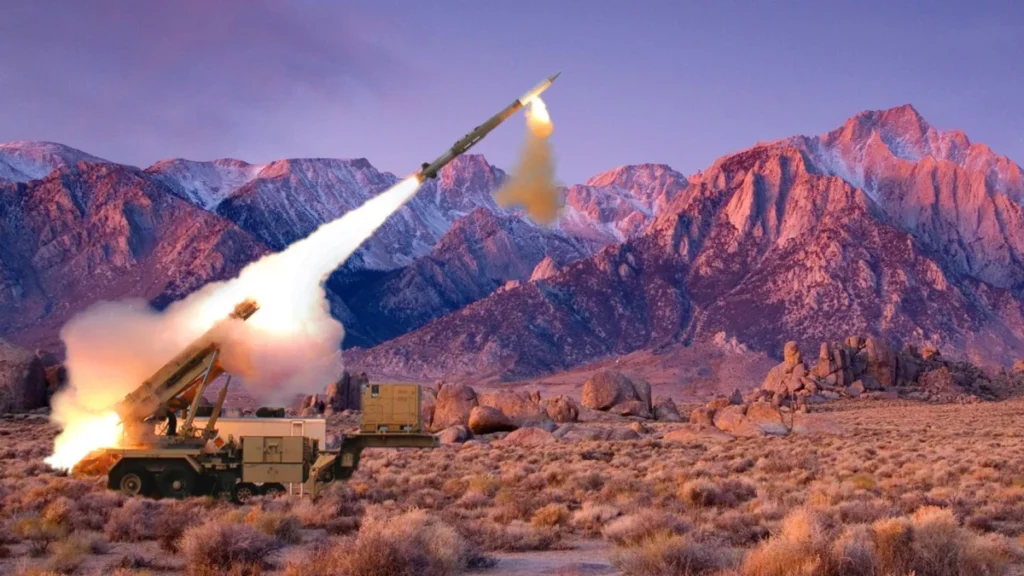
Boeing has officially been awarded a substantial $14.7 billion contract action from Lockheed Martin, a move poised to significantly enhance the production capabilities for seekers integral to the advanced PAC-3 Missile Segment Enhancement (MSE) interceptor. This indefinite-delivery contract solidifies a comprehensive seven-year production framework, formally agreed upon with the U.S. Department of War, now more commonly known as the Department of Defense. This strategic agreement is projected to allow Boeing to more than triple its current output of PAC-3 MSE seekers, directly addressing a critical demand within the global air and missile defense landscape.
The PAC-3 MSE represents the vanguard of interceptor technology integrated into the venerable Patriot air defense system. Its sophisticated seeker, positioned at the missile’s forefront, is a non-negotiable component, providing the crucial intelligence necessary for the missile to detect, track, and ultimately engage airborne threats with pinpoint accuracy throughout its flight trajectory. This capability is paramount in the face of increasingly complex and elusive targets that challenge modern air defense systems. PAC-3 interceptors, renowned for their "hit-to-kill" technology, are engineered to neutralize a broad spectrum of threats, encompassing ballistic missiles, cruise missiles, sophisticated aircraft, and emerging hypersonic weapons.
The Strategic Imperative: Boeing Ramps Up Seeker Output
The seeker’s role transcends mere detection; it is the "eyes and brains" of the interceptor, delivering vital targeting information that enables the missile to maintain a precise track on its target as it hurtles towards impact. Recognizing the escalating global demand for advanced missile defense, Boeing has proactively initiated extensive preparations at its Huntsville, Alabama, operations center to accommodate this unprecedented production surge. This foresight involved ramping up manufacturing processes and embarking on a significant hiring drive earlier this year, setting the stage for the current expansion.
Steve Parker, President and CEO of Boeing Defense, Space & Security, underscored the company’s readiness and commitment in a recent statement, articulating expectations for delivering seekers at "unprecedented production levels." He attributed this ambitious outlook to strategic early investments and substantial manufacturing improvements that have strategically positioned the program for rapid expansion. Parker also emphasized Boeing’s unwavering commitment to maintaining stringent quality standards, even as production volumes reach new heights, ensuring that increased output does not compromise the critical reliability of these advanced components.
The industrial mobilization extends far beyond Boeing’s internal facilities. The company has meticulously strengthened its relationships with a vast network of suppliers, cultivating a larger, more resilient, and geographically diverse production ecosystem. This collaborative approach is essential for mitigating potential supply chain vulnerabilities and ensuring a consistent flow of materials and sub-components necessary for sustained high-volume manufacturing over the seven-year contract duration. This robust supply chain integration is a testament to the comprehensive planning involved in scaling such a vital defense program.
Huntsville’s Transformation: A Hub for Advanced Defense Manufacturing
Since 2024, Boeing has channeled over $200 million into bolstering its PAC-3 seeker production capabilities, a significant portion of which has been allocated to its Huntsville facility. This substantial investment includes the addition of a 35,000-square-foot expansion, a tangible sign of the company’s long-term commitment to the program and the region. The Huntsville facility, already a cornerstone of advanced aerospace and defense manufacturing, is undergoing a profound transformation.
These facility upgrades are designed not only to significantly augment production capacity but also to modernize the entire manufacturing process for seeker components. Boeing has strategically introduced state-of-the-art manufacturing technologies and implemented tighter production controls, aiming for enhanced efficiency, precision, and consistency. These technological advancements are critical for meeting the exacting specifications required for components that operate in extreme conditions and play a decisive role in missile accuracy.
The overarching goal behind these changes addresses a fundamental industrial challenge: maintaining equilibrium within the complex missile production chain. A larger inventory of interceptors necessitates a commensurately robust supply of specialized seekers to ensure an uninterrupted flow of missiles through final assembly and delivery. The seven-year contractual framework provides Boeing with invaluable long-term visibility into future demand, enabling more predictable planning, optimizing resource allocation, and creating ample room for further strategic investments across the entire production chain, from raw materials to finished goods. This stability is crucial for fostering innovation and securing a skilled workforce. The expansion around Huntsville is projected to generate hundreds of direct and indirect jobs, providing significant economic impetus to the region. The hiring effort, encompassing engineers, technicians, and skilled manufacturing personnel, has already commenced in parallel with the production ramp-up.
The PAC-3 MSE: Countering Harder Threats in a Dynamic World
The PAC-3 MSE represents a pivotal evolution in the Patriot system’s ability to defend against a rapidly evolving spectrum of incoming threats. This interceptor utilizes advanced hit-to-kill technology, a sophisticated method that destroys targets through direct kinetic impact rather than relying on an explosive warhead. This precision approach significantly reduces collateral damage and increases the probability of kill against even highly maneuverable targets.
The seeker’s importance is amplified during the crucial terminal phase of an engagement, where fractions of a second and millimeter precision can determine success or failure. In these critical moments, the component works tirelessly to identify, lock onto, and track the target with unparalleled accuracy just prior to impact. Its ability to discriminate between actual threats and decoys, and to adapt to evasive maneuvers, is fundamental to the PAC-3 MSE’s effectiveness.
This significant production increase aligns perfectly with the Pentagon’s broader strategic initiatives, which advocate for faster weapons procurement cycles and the cultivation of a more robust and resilient U.S. defense industrial base. In response to an increasingly volatile global security environment, Washington has placed a heightened emphasis on producing critical weapons systems at accelerated rates. This push is not merely about volume but also about ensuring technological superiority and readiness.
Boeing’s expanded seeker capacity will play a vital role in supporting PAC-3 production not only for the United States but also for its extensive network of international allies. The company asserts that this new seven-year framework will be instrumental in meeting the burgeoning global demand for Patriot interceptors, a system deployed by over a dozen nations worldwide, forming a cornerstone of their respective air defense strategies.
The sheer scale of this $14.7 billion award provides a clear illustration of where manufacturing bottlenecks can emerge within complex missile programs. While significant progress may be made in producing missile airframes or propulsion systems, increasing overall interceptor output fundamentally relies on ensuring that all specialized components, particularly high-tech elements like seekers, can keep pace. Boeing now has a definitive seven-year window to transform this expanded capacity into a vastly increased and consistent flow of PAC-3 MSE seekers, thereby eliminating a potential choke point in the larger production ecosystem.
Broader Context: The Evolving Landscape of Air and Missile Defense
The investment in PAC-3 MSE seeker production cannot be viewed in isolation; it is a direct response to a rapidly evolving geopolitical landscape and the proliferation of advanced missile technologies globally. Nations across various regions are actively developing and deploying more sophisticated ballistic and cruise missiles, many of which possess enhanced maneuverability, longer ranges, and reduced radar signatures. The emergence of hypersonic weapons, capable of traveling at speeds exceeding Mach 5 and executing unpredictable flight paths, presents an entirely new layer of complexity for existing air defense architectures.
The Patriot system, with its PAC-3 MSE variant, is designed to be a crucial layer in an integrated air and missile defense (IAMD) strategy. IAMD aims to provide a layered defense against threats, using a combination of sensors, command and control systems, and various interceptors to counter threats at different altitudes and ranges. The seeker’s ability to precisely guide the PAC-3 MSE is paramount for the success of this layered approach, especially against highly advanced threats where a near-direct impact is often the only effective neutralization method.
This contract also underscores the collaborative nature of modern defense procurement. Lockheed Martin, as the prime contractor for the PAC-3 MSE, relies heavily on specialized partners like Boeing for critical subsystems. This partnership ensures that the best available technology and manufacturing expertise are leveraged for each component, resulting in a superior overall system. While no direct statement from Lockheed Martin was immediately available regarding this specific contract action, it can be logically inferred that they welcome this significant ramp-up in seeker production, as it directly supports their ability to meet delivery schedules for the PAC-3 MSE program to the U.S. government and international customers. A reliable and high-volume supply of seekers is fundamental to Lockheed Martin’s capacity to deliver complete interceptors.
From an economic perspective, the investment in Huntsville strengthens the U.S. industrial base, fostering a skilled workforce and contributing to technological leadership. The long-term nature of the contract provides stability for Boeing and its suppliers, encouraging further research and development in seeker technology, which could lead to even more advanced capabilities in the future. This stability also enables greater efficiency in manufacturing planning and execution, allowing for optimization of processes and cost management over the contract’s duration.
Ultimately, the $14.7 billion award to Boeing for PAC-3 MSE seeker production is more than just a financial transaction; it is a strategic investment in national and allied security. It represents a proactive measure to address current and anticipated threats, bolster industrial capacity, and ensure that the U.S. and its partners possess the cutting-edge defense capabilities necessary to maintain stability in an increasingly complex global environment. The expansion of seeker output directly translates into more robust, reliable, and readily available PAC-3 MSE interceptors, significantly enhancing the deterrent and defensive posture against a spectrum of airborne adversaries for years to come.