A collaborative international research effort, involving prominent chemical engineers from the University of Manchester and other leading global institutions, has successfully developed a highly efficient single-atom catalyst capable of dismantling the complex molecular structure of lignin. The study, recently published in the prestigious journal ACS Catalysis, represents a significant milestone in the quest to transform agricultural and forestry waste into valuable chemical precursors. By utilizing individual ruthenium atoms anchored within a nitrogen-doped carbon framework, the team—which includes Dr. Christopher Parlett, Xinyue Zhou, and Yutao Jiang—has unlocked a method to break the notoriously resilient chemical bonds of lignin under significantly milder conditions than previously required. This advancement could pave the way for a more sustainable, circular chemical industry, reducing the global reliance on petroleum-based feedstocks.
The Challenge of Lignin: Nature’s Most Stubborn Polymer
Lignin is a complex organic polymer that serves as a fundamental structural component in the support tissues of vascular plants and some algae. It is particularly crucial in the formation of cell walls, especially in wood and bark, because it lends rigidity and does not rot easily. Chemically, lignin is the largest renewable source of aromatic compounds on Earth, characterized by a dense, three-dimensional network of cross-linked phenolics. In the context of the global economy, lignin is a ubiquitous byproduct; it can constitute up to 35% of the waste biomass generated by the agricultural and forestry sectors.
Despite its abundance, lignin has long been considered a "problem" material in industrial processing. In the pulp and paper industry, lignin is typically removed from wood fibers to produce high-quality paper, resulting in vast quantities of "black liquor." Historically, this byproduct has been burned on-site to generate low-grade process heat. While this provides some energy recovery, it represents a massive loss of potential value. The primary obstacle to "upcycling" lignin lies in its molecular "recalcitrance." The polymer is held together by a variety of strong chemical linkages, most notably carbon-oxygen (C-O) and carbon-carbon (C-C) bonds. Conventional methods to break these bonds often require extreme temperatures, high pressures, and the use of harsh, corrosive chemicals, which often degrade the resulting molecules into low-value char or gas.
The Innovation: Precision Engineering at the Atomic Scale
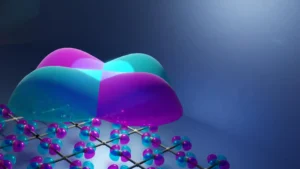
The breakthrough achieved by Dr. Parlett and his colleagues centers on the development of a "single-atom catalyst" (SAC). In traditional catalysis, metal particles are often clustered together in the form of nanoparticles. However, in an SAC, the active metal atoms are isolated from one another and anchored individually onto a supporting surface. This maximizes the efficiency of the metal, as every single atom is available to participate in the chemical reaction.
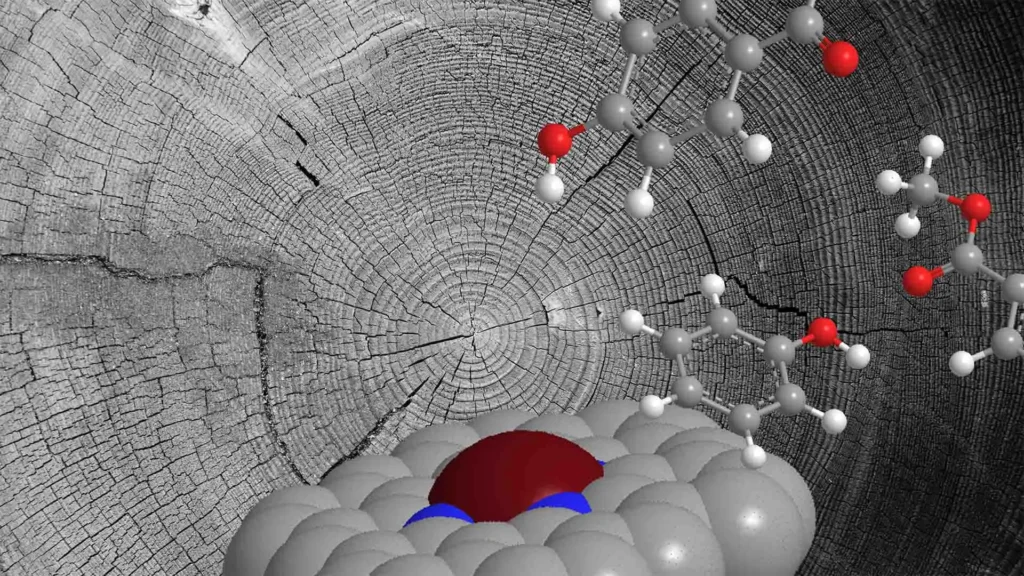
The team’s catalyst utilizes ruthenium (Ru)—a rare transition metal—embedded within a nitrogen-doped carbon material. The structural secret to the catalyst’s success is the "Ru-N4 site," where a single ruthenium atom is coordinated with four nitrogen atoms. This specific atomic arrangement creates a unique electronic environment that allows the catalyst to perform tasks that traditional bulk metal catalysts cannot.
By keeping the ruthenium atoms isolated, the design ensures that the expensive metal is used with maximum economy. More importantly, the Ru-N4 sites are uniquely tuned to interact with oxygen molecules. When oxygen enters the system, these sites activate it, creating highly reactive species that can specifically target and cleave the tough C-O and C-C bonds that define the lignin structure.
A New Understanding of Molecular Deconstruction
One of the most significant contributions of this research is the detailed mapping of the catalytic process at the molecular level. For decades, lignin research was hindered by a "black box" problem: researchers knew certain catalysts worked, but they didn’t know exactly how or which specific parts of the catalyst were doing the heavy lifting.
To solve this, the international team combined rigorous laboratory experimentation with advanced computational modeling. By simulating the interactions between the ruthenium atoms and the lignin molecules, they were able to reconstruct the step-by-step mechanism of bond cleavage.
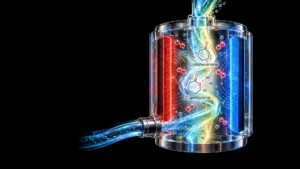
The process begins with the "activation" of oxygen at the Ru-N4 site. This produces intermediate reactive oxygen species which then "attack" the lignin’s polymer chain. Unlike previous methods that might randomly shatter the molecule, this single-atom approach allows for more controlled dismantling. The researchers demonstrated that the catalyst could effectively trigger the breaking of both the ether linkages (C-O) and the more stable C-C bonds, which are typically the most difficult to disrupt. This dual-action capability is what allows the catalyst to convert the bulky, complex polymer into smaller, more useful aromatic molecules.
Experimental Success: From Model Compounds to Real-World Biomass
To validate their findings, the researchers first tested the catalyst on "model compounds"—simplified molecules that mimic the structure of lignin. Under optimized, relatively mild conditions, the catalyst achieved nearly 100% conversion of these compounds. The primary products were high-value chemicals, most notably phenol. Phenol is a critical industrial commodity used in the production of plastics, resins, adhesives, and pharmaceuticals, currently valued at billions of dollars in the global market.
However, the team did not stop at laboratory models. A common critique of new catalytic systems is that they often fail when confronted with the complexity of real-world materials. To address this, the researchers tested the Ru-N4 catalyst on actual lignin samples extracted from various biomass sources.
The results were consistently impressive. The catalyst successfully transformed real lignin into a suite of aromatic compounds. These molecules are the "building blocks" of modern chemistry. By producing them from biomass rather than petroleum, the process offers a pathway to manufacturing sustainable fuels, biodegradable plastics, and high-performance materials without further depleting fossil fuel reserves.
Efficiency and Environmental Impact
The environmental implications of this research are twofold. First, the process operates under "mild conditions." In the world of chemical engineering, this means lower temperatures and lower pressures compared to standard industrial cracking or gasification. Reducing the energy intensity of the conversion process significantly lowers the carbon footprint of the resulting chemicals.
Second, the catalyst avoids the need for toxic or highly acidic reagents that are often required in traditional lignin processing. This "green chemistry" approach aligns with global efforts to minimize industrial waste and hazardous byproducts.
"Understanding exactly how these catalysts work at the atomic level allows us to design better materials for converting renewable resources into valuable chemicals," stated Dr. Christopher Parlett, Lecturer in Chemical Engineering. His remarks highlight a shift in the field toward "rational design"—where catalysts are engineered with atomic precision to perform specific tasks, rather than discovered through trial and error.
Towards a Circular Bio-Economy
The potential impact of this research extends far beyond the laboratory. Currently, the chemical industry is largely "linear": petroleum is extracted, processed into chemicals and plastics, used, and then disposed of as waste or CO2. The ability to efficiently "upcycle" lignin into high-value aromatics is a cornerstone of the "circular bio-economy."
In a circular model, agricultural and forestry waste—which is already being produced at a scale of millions of tons per year—becomes the primary feedstock for the chemical industry. This not only provides a new revenue stream for the forestry and agricultural sectors but also creates a "closed-loop" system where carbon is recycled through the biosphere rather than being pulled from deep underground.
Industry experts suggest that the transition to lignin-based aromatics could revolutionize the manufacturing of everything from carbon fiber for the automotive industry to vanillin for the food industry. Phenol, the primary product of this new catalytic process, is particularly important. As a precursor to bisphenol A and phenolic resins, it is essential for the construction and electronics industries. Replacing petroleum-derived phenol with biomass-derived phenol would be a major step toward decarbonizing these sectors.
Future Outlook and Scalability
While the results published in ACS Catalysis are promising, the journey from laboratory breakthrough to industrial application involves several hurdles. The next phase of research will likely focus on the "durability" and "poisoning" of the catalyst. Real-world biomass contains various impurities, such as sulfur and minerals, which can sometimes "deactivate" sensitive single-atom catalysts over time.
Furthermore, scaling up the production of nitrogen-doped carbon materials with precisely embedded ruthenium atoms will require innovative manufacturing techniques. However, the researchers are optimistic. The fact that the system requires such small amounts of ruthenium makes it economically attractive, even if the initial fabrication of the catalyst is complex.
The work of Dr. Parlett, Zhou, Jiang, and their international collaborators provides a definitive roadmap for the next generation of biomass conversion technologies. By proving that the "unbreakable" bonds of lignin can be dismantled with atomic precision, they have moved the world one step closer to a future where our chemical needs are met by the very plants that grow around us, rather than the fossil fuels buried beneath us.
As global regulations on carbon emissions tighten and the demand for sustainable materials grows, technologies like this single-atom catalyst will be essential. This study does more than just describe a new chemical reaction; it offers a vision for a manufacturing sector that works in harmony with the planet’s natural carbon cycle. The success of this ruthenium-based system serves as a powerful reminder that the solutions to our greatest environmental challenges may be found at the smallest scales imaginable—at the level of a single atom.