The rapid integration of artificial intelligence and machine learning into the global healthcare infrastructure has necessitated a parallel evolution in secondary education. As diagnostic tools and treatment protocols increasingly rely on algorithmic outputs, the need for a workforce capable of critically evaluating these systems has become a priority for educators and policymakers alike. During the fourth installment of the Raspberry Pi Foundation’s research seminar series on teaching AI across the arts, humanities, and sciences, Kathy Jessen Eller of The Concord Consortium presented a comprehensive framework designed to address these challenges. The program, titled Data Science, AI & You (DSAIY), offers a semester-long curriculum for high school students that centers on the intersection of healthcare data, machine learning, and ethical reasoning.
The seminar highlighted a growing concern in modern pedagogy: the tendency for students to "offload" cognitive tasks to generative AI and machine learning tools without a fundamental understanding of the underlying data. As AI becomes more accessible, educators face the risk of students accepting algorithmic answers as absolute truths rather than probabilistic estimations. To counter this, the DSAIY program—pronounced "Daisy"—aims to foster "critical computational literacy," ensuring that the next generation of clinicians, data scientists, and patients can discern the limitations and biases inherent in automated systems.
The Evolution of the DSAIY Curriculum and Pilot Implementation
The development of the DSAIY program stems from a collaborative effort to bring authentic data science experiences into the high school classroom. Traditionally, computer science education has focused on syntax and logic, often divorced from the messy, real-world datasets found in fields like medicine. The Concord Consortium sought to change this by creating a pipeline that mirrors the professional machine learning workflow.
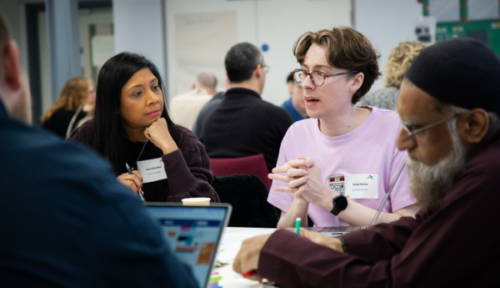
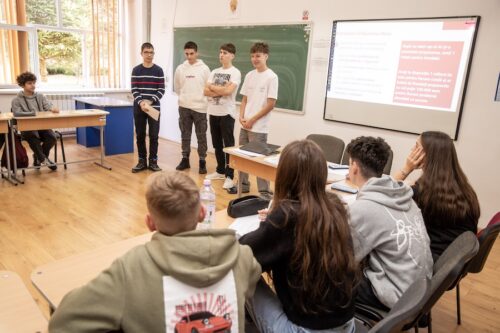
According to the data presented during the seminar, the program has already seen significant implementation across the state of Rhode Island. To date, 11 teachers have delivered the curriculum to a diverse cohort of more than 800 students. The demographic reach of the program is particularly noteworthy; Jessen Eller reported that the course attracted a high percentage of female students, outperforming traditional computer science electives in gender parity. This success is attributed to the curriculum’s focus on healthcare—a field that often resonates more strongly with students interested in social impact and biological sciences than abstract programming exercises.
The rollout of the program included a rigorous support structure for educators. Recognizing that many high school teachers may not have a background in advanced statistics or Python programming, the initiative provided four days of intensive professional development. This was supplemented by ongoing technical assistance, allowing teachers to navigate the complexities of data preparation and model evaluation alongside their students.
Technical Framework: From CODAP to Python-Based Modeling
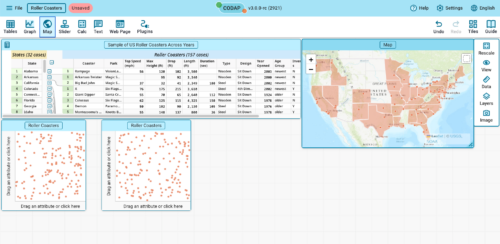
A cornerstone of the DSAIY program is its use of the Common Online Data Analysis Platform (CODAP). Developed by The Concord Consortium, CODAP is a free, web-based tool designed to make data visualization accessible to novices. Unlike traditional spreadsheets, which can be intimidating for students, CODAP provides a highly interactive environment where users can drag and drop variables to create graphs and identify patterns.
The curriculum utilizes a scaffolded approach to technical skills:

- Data Exploration: Students begin by visualizing large healthcare datasets in CODAP, learning to identify trends and anomalies.
- Case-Level Reasoning: The platform allows students to click on individual data points to see the specific "case" or patient history it represents. This humanizes the data, preventing it from becoming a mere abstraction.
- Machine Learning Integration: Once students are comfortable with data visualization, they transition to using Python. They learn to train and test simple machine learning models, moving from basic descriptive statistics to predictive modeling.
- Deployment and Evaluation: The final phase involves testing the model’s accuracy against new data and critically assessing why certain predictions may fail.
By the end of the semester, students are expected to move beyond simple graphing. They are challenged to reason about the data’s provenance and the ethical implications of the models they build. This transition from "plotting data" to "reasoning with data" is the primary pedagogical goal of the initiative.
Case Studies in Algorithmic Bias: The Pulse Oximeter Example
One of the most impactful segments of the DSAIY curriculum involves the study of bias in medical devices. Students are introduced to the pulse oximeter, a standard medical tool used to measure blood oxygen levels. The curriculum explains the physics of the device, which uses red and infrared light to estimate oxygenation. However, it also delves into the critical flaw: because the light must pass through the skin, variations in skin pigmentation can lead to inaccurate readings.
In a hands-on exercise, students collect their own blood oxygen data and use CODAP to plot the results. This activity serves several purposes:
- Understanding Variability: Students see firsthand how biological and environmental factors introduce noise into a dataset.
- Ethics of Data Cleaning: When faced with "outliers" or inaccurate readings, students must decide whether to remove them. This sparks a larger debate about the ethics of data manipulation and how the exclusion of certain data points can lead to biased outcomes in a clinical setting.
- Critical Inquiry: The exercise prompts students to ask who was included in the original clinical trials for medical devices. If the data used to train an AI model is predominantly from one demographic, the resulting system may be less effective—or even dangerous—for others.
This practical application of ethics ensures that students do not view AI as a neutral "black box," but as a human-designed system subject to the same prejudices and oversights as its creators.
The "AI-a-thon": A Multi-Disciplinary Capstone
The culmination of the DSAIY program is the "AI-a-thon," a high-stakes event that mimics professional hackathons. In this setting, students work in cross-disciplinary teams to solve healthcare-related problems. Unlike a standard classroom assignment, the AI-a-thon brings in external stakeholders, including data scientists, practicing clinicians, and teachers.
The event requires students to synthesize their technical knowledge of Python and CODAP with their understanding of healthcare ethics. They must present their findings and defend their models to a panel of experts. Jessen Eller noted that this experience significantly boosted students’ confidence in public speaking and collaborative problem-solving. It also provided a rare opportunity for students to interact with professionals in the field, potentially opening pathways to future careers in STEM and healthcare.
Analysis of Broader Educational and Social Implications
The DSAIY initiative arrives at a critical juncture in the global conversation about AI regulation and literacy. As governments move toward implementing frameworks like the EU AI Act, there is an increasing demand for "explainable AI" (XAI). However, the ability to understand an explanation requires a baseline of data literacy that many current educational systems lack.
The Concord Consortium’s approach suggests that AI literacy is fundamentally an extension of data literacy. By focusing on the "data" part of "data science," the program equips students with the tools to question the inputs of any system. This skill is directly transferable to everyday technologies, such as Large Language Models (LLMs) like ChatGPT. A student who understands how a healthcare model can be biased by a limited training set is more likely to question the source material and potential hallucinations of a generative AI tool.
Furthermore, the focus on healthcare serves as a powerful recruitment tool for a more diverse tech workforce. By framing data science as a tool for social good and medical equity, the DSAIY program successfully engages students who might otherwise be alienated by the "brogrammer" culture often associated with computer science.
Future Directions in AI Research and Education
The seminar concluded with a look toward the future of the Raspberry Pi Foundation’s research series. The ongoing series aims to explore how AI education can be integrated across all subjects, rather than being confined to the computer science lab.
The next seminar, scheduled for Tuesday, 14 July, will feature Dan Verständig from Goethe University Frankfurt. His presentation will pivot toward "Social Explainable AI" (Social XAI) and its connection to "Critical Computational Literacy" (CCL). This upcoming session is expected to build on the foundations laid by Jessen Eller, exploring how the social sciences can contribute to our understanding of human-AI interaction.
As AI continues to permeate every facet of modern life, from the doctor’s office to the classroom, the work of organizations like The Concord Consortium and the Raspberry Pi Foundation remains vital. Programs like DSAIY demonstrate that while the risks of AI—such as amplified bias and cognitive offloading—are real, they can be mitigated through a rigorous, hands-on, and ethically-focused education. By empowering students to be critical evaluators of technology, educators are ensuring that the future of healthcare remains both innovative and equitable.