The rapid integration of artificial intelligence (AI) and data science into the global infrastructure has fundamentally altered the methodology by which society extracts insights from complex information. Nowhere is this transformation more visible than in the healthcare sector, where machine learning algorithms are currently being deployed to accelerate drug discovery, refine diagnostic accuracy, and personalize patient treatment plans. However, this technological leap is not without significant ethical peril. When AI systems are trained on datasets that reflect historical inequities or are designed without a rigorous understanding of social context, they risk amplifying existing biases, leading to disparate health outcomes for marginalized populations.
To address these emerging challenges, the Raspberry Pi Foundation recently hosted the fourth installment of its ongoing seminar series, "Teaching about AI in the Arts, Humanities, and Sciences." The featured speaker, Kathy Jessen Eller of The Concord Consortium, introduced a pioneering educational initiative: the Data Science, AI & You (DSAIY) program. This high school curriculum represents a strategic effort to equip the next generation of thinkers with the critical evaluation skills necessary to navigate the intersection of data science and medical ethics.
The Pedagogical Challenge: Beyond Automated Answers
A primary concern among educators in the current technological climate is the tendency for students to use AI tools, such as generative large language models, as a means of "cognitive offloading." During her presentation, Eller argued that while many students are adept at using AI to complete coursework, few possess the critical framework required to interrogate the outputs of these tools. There is a growing trend where students may accept an AI-generated response without cross-referencing primary sources or understanding the statistical likelihood of hallucinations.
The DSAIY program—phonetically referred to as "Daisy"—was developed to move students away from passive consumption and toward active, critical engagement. By involving students directly in the machine learning process, the curriculum aims to demystify the "black box" of AI. This shift in focus is intended to ensure that students do not merely learn how to use AI, but rather learn how AI functions, where it fails, and why the quality of input data is the ultimate determinant of an algorithm’s reliability.
The DSAIY Curriculum: A Chronological Framework
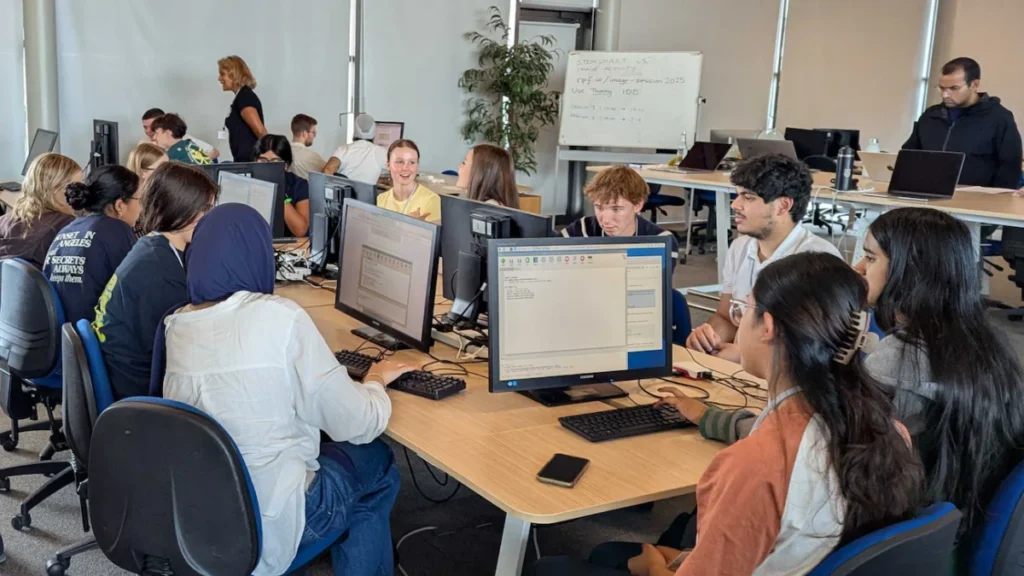
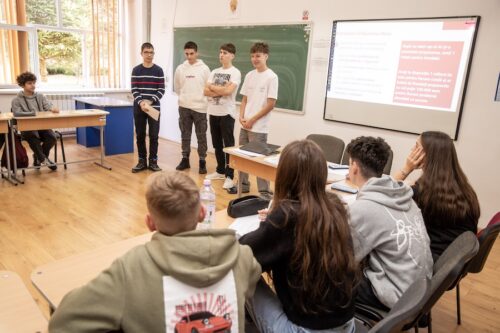
The DSAIY program is structured as a comprehensive, semester-long curriculum designed for high school students. It does not assume a background in computer science or advanced statistics, making it accessible to a broad demographic. The program is currently being piloted in Rhode Island, USA, where it has already reached over 800 students across 11 different educational settings.
The curriculum follows a logical progression that mirrors the professional machine learning pipeline. The journey begins with an introduction to the fundamental concepts of data science, followed by a deep dive into the mechanics of machine learning. Students are then guided through the stages of data collection, data cleaning, model training, and eventually, the evaluation of those models.
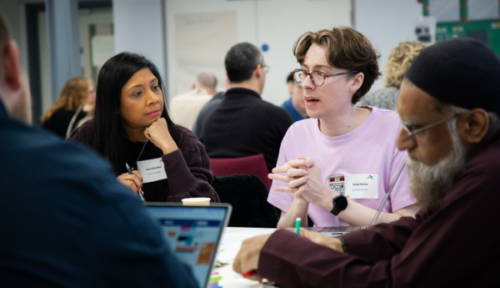
One of the program’s most distinctive features is its culminating event: the "AI-a-thon." Similar to a hackathon but with a specific focus on social impact, the AI-a-thon allows students to work in cross-disciplinary teams. These young learners collaborate with their teachers, professional data scientists, and clinical healthcare providers. This exposure to industry professionals provides students with a realistic view of how data science is applied in professional medical environments and the ethical considerations that practitioners must balance daily.
Technical Implementation and the Role of CODAP
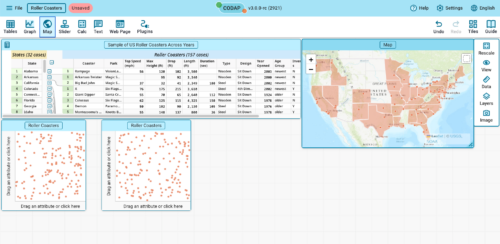
To lower the barrier to entry for complex data analysis, The Concord Consortium utilizes the Common Online Data Analysis Platform (CODAP). CODAP is a free, web-based tool that provides a highly visual and interactive environment for students to explore large datasets. Unlike traditional spreadsheet software, which can be cumbersome and unintuitive for beginners, CODAP allows students to drag and drop variables, visualize correlations instantaneously, and "click into" individual data points to see the specific cases behind the numbers.
In the DSAIY curriculum, students use Python-based environments to train and test simple machine learning models using authentic healthcare data. By transitioning from basic graphing to complex model evaluation, students are taught to reason about data rather than just plot it. This distinction is vital for developing "data intuition"—the ability to recognize when a dataset is skewed or when a model’s high accuracy might be masking a failure to account for specific subgroups.

Case Study: Addressing Biophysical Bias in Healthcare
A cornerstone of the DSAIY curriculum is its focus on real-world examples of algorithmic bias. A prominent case study used in the program involves the pulse oximeter, a device used to measure blood oxygen levels. Pulse oximeters function by sending red and infrared light through the skin; however, studies have shown that skin pigmentation can affect how this light is absorbed, leading to less accurate readings for patients with darker skin tones.
Students in the DSAIY program engage in hands-on data collection to understand this phenomenon. They collect their own blood oxygen data and use CODAP to visualize the variability. This exercise forces students to grapple with the ethics of data management. For instance, when should an "outlier" be removed from a dataset? If an outlier represents a specific demographic group that the technology is failing to serve, removing that data point effectively erases a critical flaw in the system.
Through these exercises, students are encouraged to ask systemic questions:
- Who was included in the original training data for this medical device?
- What are the clinical consequences of a 2% error margin for different populations?
- How can we design more equitable testing protocols?
Supporting Data and Demographic Impact
The pilot implementation of the DSAIY program in Rhode Island has yielded significant insights into the current state of STEM education. One of the most notable outcomes reported by Eller was the high rate of participation among female students. In several instances, teachers reported that the DSAIY course saw higher female enrollment than any other computer science or technology elective offered at their schools.
This success is attributed to the curriculum’s focus on healthcare and social implications, which research suggests can be more engaging for students who may otherwise feel alienated by traditional, abstract programming courses. Furthermore, the program provides extensive support for educators, including four days of intensive professional development and ongoing technical assistance. This ensures that teachers, who may not have a background in AI themselves, feel confident delivering complex material to their students.
Broader Implications: Data Literacy as a Foundation for AI Literacy
The central thesis of Kathy Jessen Eller’s seminar is that AI literacy cannot exist without a robust foundation of data literacy. As AI tools like ChatGPT become ubiquitous, the ability to evaluate the "trustworthiness" of digital outputs becomes a basic civic necessity.
From a journalistic and analytical perspective, the DSAIY program addresses a critical gap in modern education. While many national curricula are rushing to include "coding" or "AI use," few are focusing on the underlying data reasoning that informs these technologies. If students do not understand how data is sampled, weighted, and cleaned, they cannot truly understand the limitations of the AI models built upon that data.
The implications of this educational shift extend far beyond the classroom. As these students enter the workforce, their ability to identify bias and demand transparency in algorithmic decision-making will be essential for the ethical development of future technologies. Whether they become doctors, policy-makers, or software engineers, their "data-first" mindset will serve as a safeguard against the uncritical adoption of flawed AI systems.
Future Outlook and Continued Research
The Raspberry Pi Foundation’s seminar series continues to explore these themes, with upcoming sessions scheduled to investigate the intersection of "Social Explainable AI" (Social XAI) and "Critical Computational Literacy" (CCL). The next seminar, featuring Dan Verständig of Goethe University Frankfurt, will further examine how society can demand explanations from AI systems that are often treated as infallible authorities.
The work being done by Kathy Jessen Eller and The Concord Consortium provides a scalable model for how AI education can be integrated into high schools without requiring a complete overhaul of existing STEM departments. By using healthcare—a field with universal relevance and clear ethical stakes—as the primary lens for learning, the DSAIY program ensures that students are not just learning to code, but learning to care about the impact of their code.
As the pilot program expands, the data collected from these 800 students will likely inform future iterations of the curriculum, potentially leading to a national or international standard for AI and data science education in secondary schools. For now, the "Daisy" program stands as a vital intervention in the effort to ensure that the AI revolution is characterized not just by technical innovation, but by intellectual rigor and social equity.