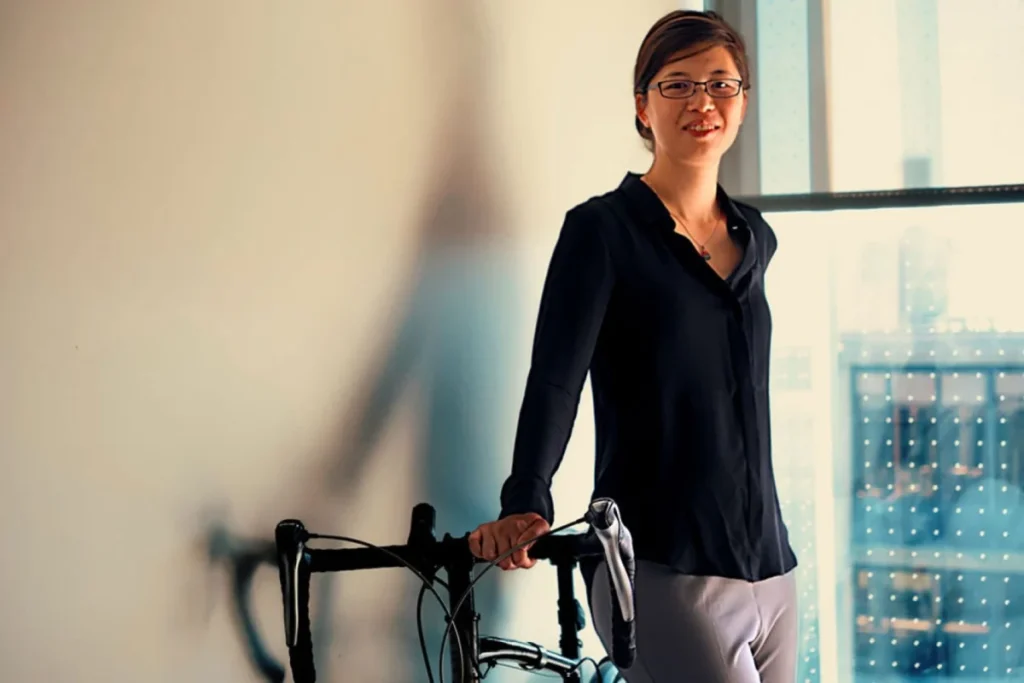
From the bustling streets of her childhood, where her father’s long commute underscored the inefficiencies of transportation, to the sophisticated labs at MIT, Cathy Wu has dedicated her career to the pursuit of problem-solving for the betterment of human lives. Her journey, deeply influenced by her immigrant parents’ perseverance and a childhood spent immersed in the strategic challenges of computer games like "SimCity," has culminated in groundbreaking research at the intersection of artificial intelligence, complex systems, and public policy. As an associate professor at MIT’s Department of Civil and Environmental Engineering (CEE) and the Institute for Data, Systems, and Society (IDSS), Wu is at the forefront of developing novel machine learning and reinforcement learning (RL) strategies to tackle some of the world’s most pressing transportation and logistical issues.
Wu’s formative years were shaped by a desire to improve lives, a sentiment amplified by her parents’ experiences as Taiwanese immigrants. Her father’s demanding commute, a daily battle against traffic that limited precious family time, and the constraints of living on a busy street that discouraged outdoor play, instilled in young Cathy a keen awareness of how systemic inefficiencies could directly impact daily well-being. These experiences, coupled with the problem-solving simulations offered by computer games, laid the foundation for her future academic and professional pursuits. "Designing transportation systems consists of modeling and analyzing dozens, if not hundreds or thousands, of variants, which means that an evidence-driven approach to designing those systems is simply not within reach of today’s tools," Wu explains, highlighting the critical need for advanced computational approaches. "This is the role that RL plays. If successful, it would free transportation researchers and enable their practitioner partners to design the systems they want."
The Genesis of a Transportation Visionary
Wu attributes a significant part of her passion for improving people’s lives to her older sister, a sentiment that found a natural outlet in her interest in transportation. "I like transportation because it connects everyone. We all use it, we all experience it, we all have issues with it. So, at some level, we’re all interested in the system being better," she states, underscoring the universal relevance of her field.
Her formal entry into the realm of applying artificial intelligence to transportation began during her undergraduate studies at MIT. A pivotal moment occurred when she attended a lecture on autonomous vehicles by the late Professor Seth Teller. This lecture, delivered during an Independent Activities Period robotics competition which Wu herself won, crystallized her research focus. She subsequently began working with Professor Teller, and upon his shift in research focus, he encouraged her to collaborate with Professor Daniela Rus, whose work on robotaxis aligned with Wu’s burgeoning interests. "I’m very grateful to the people who helped me explore those interests and helped me become the person I am now," Wu reflects, acknowledging the profound impact of her mentors, including Teller and Rus, as well as the supportive environment provided by her friends at Dropbox, who facilitated a second internship dedicated to transportation challenges.
From Academia to Cutting-Edge Research: A Chronological Progression
Following her master’s degree at MIT, Wu pursued her Ph.D. at the University of California, Berkeley. During this period, she observed a significant bottleneck in transportation research: academics were dedicating years to developing optimization methods for analyzing single, novel system variants. Wu’s approach, rooted in computer science and focused on developing RL and optimization methodologies, offered a path toward exponentially greater efficiency.
A major breakthrough arrived in 2018, Wu’s final year at UC Berkeley. She successfully applied RL to a complex traffic problem, developing a system that could automatically analyze the potential traffic flow impact of autonomous vehicles across diverse traffic networks. This research garnered widespread attention, marking a significant proof of concept for RL’s applicability in transportation.
Navigating the Nuances of Reinforcement Learning
Despite this early success, the path forward with RL proved to be more intricate than anticipated. During her postdoc at Microsoft and upon her return to MIT as faculty, Wu encountered persistent challenges in applying RL to traffic problems. "That was stressful," Wu admits, describing the period of uncertainty regarding the root cause of these failures – whether it was her advisement, her students’ work, the traffic domain itself, or RL as a methodology.
However, the initial success served as a crucial validation of RL’s potential. By 2022, Wu and her students identified a key characteristic of RL algorithms: their extreme sensitivity. An algorithm that performed well on one problem might falter on a closely related one. This observation led to a significant discovery in 2023, which Wu describes as "the light at the end of a long tunnel of negative results." Her team devised a method to overcome RL’s sensitivity. They found that while RL might not train effectively on a large percentage of problems, it could excel on a smaller subset. By strategically training RL models on these more tractable problems, the resulting models could generalize and perform well across a broader range of related issues, even those that wouldn’t have been solvable through direct training. The researchers developed an algorithm to identify the optimal problems for RL training, leading to efficiency gains of up to 30 times. This means a task that might have required 100 training models could potentially be accomplished with just three.
"This work gave me back the confidence that reinforcement learning can play an important role in solving hard optimization problems, including in transportation," Wu asserts. This pivotal achievement has led a significant portion of her research group to focus on "contextual RL," a framework aimed at solving entire families of related problems.
Broader Impact: Eco-Driving and Evidence-Based Policy
Wu’s more recent research leverages RL to address a critical transportation optimization challenge with profound policy implications: the promotion of eco-driving. Her work demonstrates that intelligently controlling vehicle speeds to minimize excessive stopping and starting can reduce vehicle emissions by an impressive 11 to 22 percent. This research provides concrete evidence that policies mandating such measures could dramatically enhance system efficiency. "This is a demonstration that RL can be used to inform transportation policy on problems of practical importance," Wu states.
Her commitment extends beyond technical solutions to the very fabric of societal decision-making. "I am a big fan of evidence-based policy and believe it’s the basis for a thriving democratic society, yet our societal systems are so complex," she observes. "People can bicker forever about what’s better or worse, but I do believe that there are questions we bicker about that can be analyzed systematically using data and have objective answers. A large part of the reason I am in academia is to better understand how technology can support democratic societal decision-making."
Use-Inspired Basic Research: Bridging Theory and Practice
The algorithms developed by Wu and her team over the past several years are designed to streamline the creation of solvers for complex optimization problems, extending beyond transportation to encompass logistics, supply chains, manufacturing, and resource allocation. This approach aligns with her preferred research methodology: "use-inspired basic research." This paradigm involves addressing practical problems by developing fundamental knowledge that can subsequently be applied to other real-world challenges. Her students are encouraged to begin by investigating consequential problems related to safety, congestion, and accessibility, identifying where current methods fall short, and allowing the problems themselves to guide the research trajectory.
Mentorship and the Future of Problem-Solving
Beyond her research endeavors, Wu finds immense fulfillment in her role as an educator and mentor. "I love working with students, both in the classroom and research mentoring," she shares. "It makes my day when I am able to teach someone something – when I see that light bulb go on in a student." Her dedication to teaching has been recognized with prestigious accolades, including a 2023 National Science Foundation Faculty Early Career Development Award and the Ole Madsen Mentoring Award in 2025.
For students grappling with seemingly insurmountable challenges, Wu offers sage advice: "Be patient. Start small. Societal impact is a lifelong endeavor, not something to be accomplished in a few years," she advises. "It will take years to really understand what’s going on and where the real problems are. In the meantime, try to be helpful. Be curious. Ask many questions." Her message is one of perseverance, curiosity, and a deep-seated commitment to incremental, yet impactful, progress. Through her pioneering work in AI-driven transportation solutions and her dedication to fostering the next generation of innovators, Cathy Wu is not only shaping the future of mobility but also contributing to a more informed and equitable society.