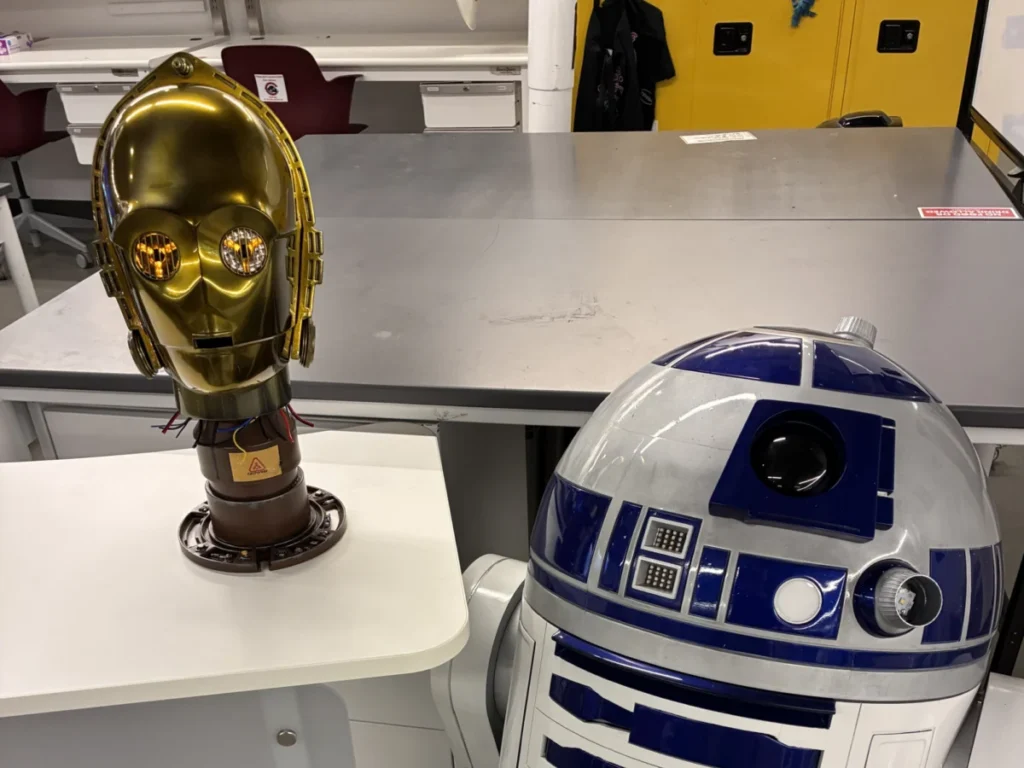
In a remarkable convergence of advanced robotics, artificial intelligence, and beloved pop culture iconography, Sam Potozkin, a student at Chapman University, has meticulously engineered an embodied AI system modeled after the iconic Star Wars protocol droid, C-3PO. This ambitious project, affectionately dubbed "Threepio," transcends mere fan tribute, serving as a sophisticated platform to explore the nuanced dynamics of human-AI interaction when artificial intelligence is given a physical presence, a distinct voice, and a carefully crafted personality. The initiative not only showcases impressive technical prowess in hardware design and software integration but also contributes significantly to the academic discourse surrounding the future of human-robot relationships, a field of increasing relevance in the rapidly evolving technological landscape.
The Genesis of an Embodied Intelligence: Replicating an Icon
AI chatbots have proliferated across various digital platforms, becoming a ubiquitous feature of modern online interaction, often available at minimal cost or even free. While custom hardware integrations for conversational AI are less common, they consistently emerge from the vibrant global maker community. To truly distinguish such a project, innovators must often "go the extra mile," infusing their creations with layers of personality, meticulous aesthetic detail, and advanced communicative capabilities. Potozkin’s Threepio project exemplifies this ethos, aiming to replicate the immersive experience of interacting with the original 1977 film’s famed protocol droid as faithfully as possible.
Potozkin’s dedication to authenticity began with the physical form. The robot’s casing, produced through 3D printing, underwent extensive post-processing to achieve a smooth, polished finish, perfectly mimicking C-3PO’s characteristic shiny gold exterior. This meticulous attention to detail extended to the display stand, which was adorned with "greeblies"—small, intricate details often used in science fiction models to suggest functional complexity—further enhancing the illusion of a sophisticated, operational droid. Such aesthetic precision is crucial in fostering the sense of familiarity and believability that Potozkin sought to achieve, drawing directly from decades of cinematic conditioning regarding C-3PO’s appearance.
Beyond the exterior, the internal architecture of Threepio is equally impressive. The entire AI chat stack operates locally on a Raspberry Pi 5, a powerful single-board computer renowned for its versatility and growing capabilities in edge computing. This local processing ensures lower latency and greater privacy compared to cloud-based AI solutions, offering a more immediate and controlled conversational experience. A key innovation in Potozkin’s design is the audio output system. Instead of a conventional speaker, an exciter is employed to transmit sound vibrations directly through the robot’s head, making the voice appear to emanate organically from the entire cranium. This choice significantly enhances the illusion of an embodied voice, a critical component in replicating the naturalistic communication style of the fictional droid. Extensive time was dedicated to refining these audio effects, ensuring that the sound quality and spatialization contributed optimally to the overall immersive experience.
C-3PO’s Enduring Legacy and the Inspiration for Embodied AI
The choice of C-3PO as the muse for this project is highly significant. Since its debut in Star Wars: Episode IV – A New Hope in 1977, the character has become one of the most recognizable droids in cinematic history. Portrayed as a "protocol droid" fluent in "six million forms of communication," C-3PO was designed to assist with etiquette, customs, and translation, acting as a crucial intermediary between different species and cultures across the galaxy. His fussy, anxious, yet ultimately loyal personality provided a relatable human-like foil to the more stoic or adventurous characters, allowing audiences to connect with a machine on an emotional level.
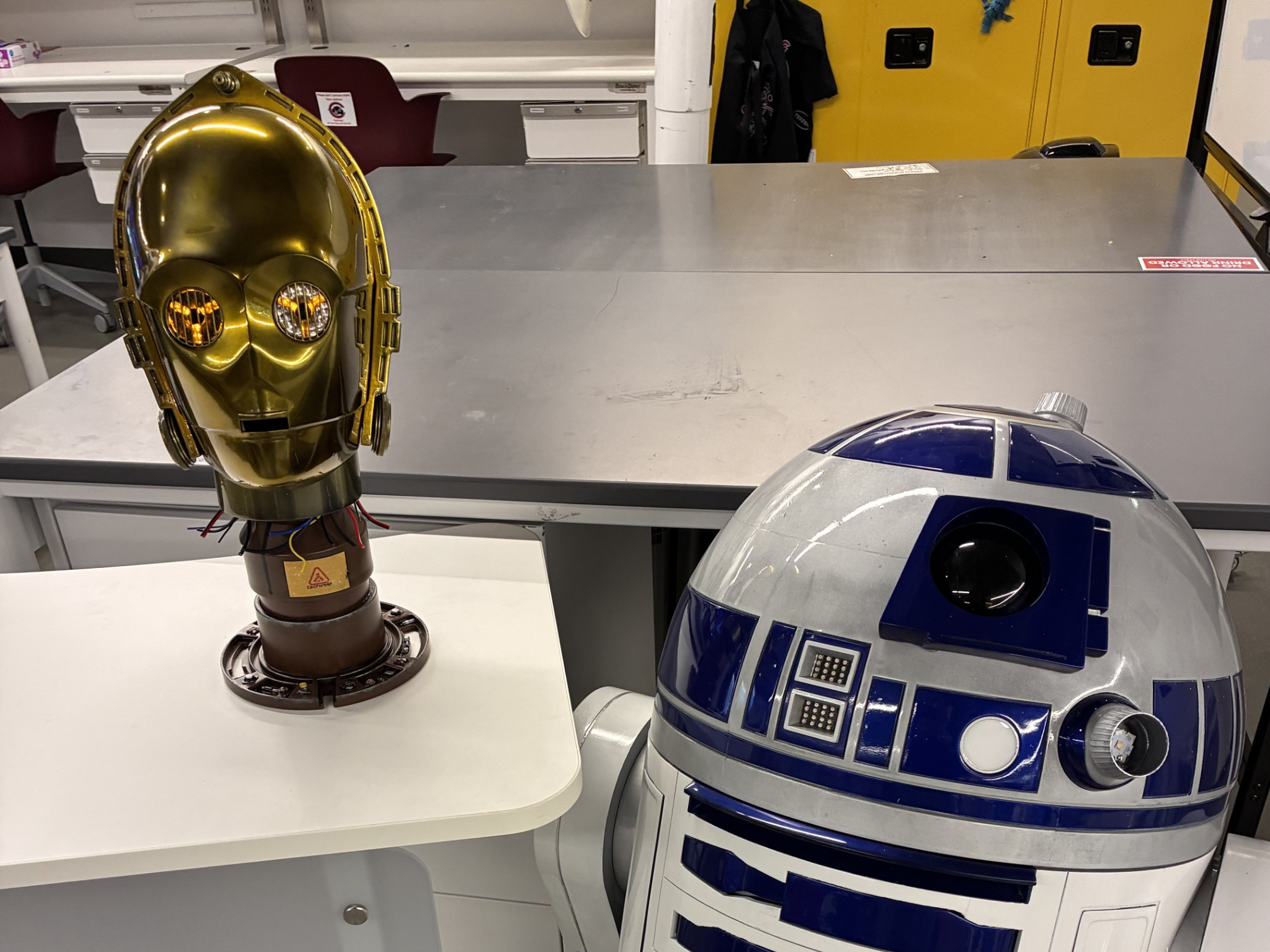
The enduring popularity of C-3PO, along with his counterpart R2-D2, played a pivotal role in shaping public perception of robots. Unlike the often menacing or purely functional robots depicted in earlier science fiction, C-3PO presented a robot capable of complex verbal communication, emotional expression (albeit often exaggerated for comedic effect), and a distinct personality. This cinematic portrayal profoundly influenced generations of scientists, engineers, and dreamers, inspiring countless real-world robotic endeavors aimed at achieving similar levels of interaction and companionship. The "Star Wars effect" on robotics innovation is well-documented, with many modern researchers citing the droids of George Lucas’s universe as early catalysts for their interest in the field. Potozkin’s project directly taps into this powerful cultural memory, leveraging pre-existing human familiarity and affection for the character to explore how these sentiments transfer to a real-world, albeit simulated, embodiment.
The Academic Underpinning: Exploring Human-AI Interaction
Potozkin’s Threepio is more than just a sophisticated fan project; it is a serious academic endeavor. Alongside the physical build, Potozkin authored a comprehensive paper exploring human-AI interaction, delving into why individuals might react differently to contemporary, often disembodied, AI systems compared to an iconic, physically present android like C-3PO, despite the latter being a fictional construct from nearly half a century ago. This inquiry forms the core intellectual contribution of the project.
The paper posits that the familiarity derived from C-3PO’s consistent portrayal across decades of media creates a unique psychological foundation for interaction. When this familiarity is translated into a tangible, interactive system, it can elicit a different, potentially more positive and engaged, response from humans. As Potozkin articulates in his paper:
"This project explores the translation of a fictional character into a real-world, embodied AI system. Developing this system required translating and combining abstract concepts from both AI and communication theory into a functional, working architecture. The goal of the project was to explore what happens when conversational AI moves off the screen and into a physical, interactive system. Rather than treating AI as something purely digital, this build focuses on embodiment, giving the system a presence, voice, and personality that can be experienced in the real world."
This perspective highlights a critical area of research in human-robot interaction (HRI) and social robotics. The concept of "embodiment" – giving AI a physical form – has long been debated in AI ethics and philosophy. Research suggests that physical presence significantly impacts human perception and interaction with AI. An embodied AI can leverage non-verbal cues (even subtle ones like head orientation or implied gaze), occupy shared physical space, and facilitate a more intuitive understanding of its "attention" or "focus." This contrasts sharply with screen-based chatbots, which, despite their sophistication, remain confined to two dimensions and lack the same sensory impact. Potozkin’s work empirically demonstrates how embodiment, combined with a recognizable persona, can bridge the gap between abstract AI and tangible, relatable interaction, potentially fostering greater trust and engagement.
Technical Deep Dive: The Engineering Behind the Persona
The successful realization of Threepio required overcoming numerous technical hurdles, a testament to Potozkin’s dedication and growing expertise. The process involved a steep learning curve in various disciplines, from fundamental electronics to advanced material finishing.

3D Printing and Post-Processing: The base of Threepio’s head was created using 3D printing technology, a ubiquitous tool in the modern maker movement. However, raw 3D prints often exhibit visible layer lines and a rough surface texture. Achieving the smooth, metallic sheen characteristic of C-3PO necessitated extensive post-processing, including sanding, priming, and painting. Potozkin mentions battling "orange peel"—a common paint defect resembling the texture of an orange peel—and even recovering from a "dropped head at one point," highlighting the iterative and often challenging nature of such a complex fabrication. This attention to detail in finishing is vital for the suspension of disbelief and the successful translation of a fictional character into a physical object.
Raspberry Pi 5 and Local AI Stack: The decision to run the AI chat stack locally on a Raspberry Pi 5 is a strategic one. The Raspberry Pi 5, released in late 2023, represents a significant leap in performance over its predecessors, offering substantially more processing power, faster I/O, and improved graphics capabilities. This makes it an ideal platform for running more demanding AI models at the "edge" – directly on the device rather than relying on remote cloud servers. Advantages of a local AI stack include:
- Reduced Latency: Conversations feel more immediate and natural without the delay of sending data to and from a distant server.
- Enhanced Privacy: User data, including conversational input, remains on the device, mitigating concerns about data collection and security breaches.
- Offline Capability: The system can function without an internet connection, increasing its reliability and versatility.
- Customization: A local stack offers greater flexibility for developers to fine-tune AI models and integrate custom functionalities.
Innovative Audio Exciter: The use of an exciter instead of a traditional speaker is a clever engineering choice that significantly elevates the audio experience. An exciter works by vibrating an entire surface, turning it into a speaker. In Threepio’s case, this means the sound literally emanates from the entire 3D-printed head, creating a more diffuse, resonant, and naturalistic vocal quality. This approach avoids the directional sound of a conventional speaker, which can often break the illusion of an embodied voice. Potozkin’s dedication to refining these effects underscores the importance of auditory perception in creating a believable and engaging conversational AI.
The Maker Ethos and Open-Source Contribution
Potozkin’s project aligns perfectly with the principles of the global maker movement, a culture that emphasizes DIY (Do-It-Yourself) innovation, hands-on creation, and the sharing of knowledge. By making the project open-source and providing detailed documentation on GitHub, Potozkin invites others to engage with his creation, customize it, and even expand upon it. This collaborative spirit is a hallmark of the maker community, where projects often serve as starting points for further innovation. The invitation to "add in the other 5,999,999 languages" is a playful nod to C-3PO’s fictional abilities but also a serious encouragement for other enthusiasts to extend the project’s capabilities.
This open-source approach has several benefits:
- Accelerated Innovation: By sharing the codebase and hardware designs, Potozkin enables others to build upon his foundation without starting from scratch, potentially leading to new features or improvements.
- Educational Value: The project serves as an excellent learning resource for aspiring roboticists, AI developers, and electronics hobbyists, providing practical examples of complex systems integration.
- Community Building: Open-source projects foster communities of interest, allowing individuals to collaborate, troubleshoot, and share their unique contributions.
The article highlights that this isn’t the first Star Wars-inspired droid featured by Make:, referencing the vibrant community of "droidsmiths" who build functional replicas of R2-D2 and other droids. The advice often given to R2-D2 builders to "start with the dome" underscores the complexity and dedication required for such projects, echoing the meticulous effort Potozkin invested in Threepio’s head.
Broader Implications and the Future of AI

Sam Potozkin’s Threepio project offers significant insights and implications for several fields:
Human-Robot Interaction Research: The project empirically demonstrates the profound impact of physical embodiment and established character persona on human perception of AI. It provides a tangible case study for researchers exploring questions of anthropomorphism, social presence, and the "uncanny valley" in robotics. Understanding how humans form bonds and interact with embodied AI is crucial for designing future assistive robots, companions, and educational tools.
AI Ethics and Design: As AI becomes more integrated into daily life, questions of personality, emotional expression, and user expectations become paramount. Potozkin’s work encourages a deeper consideration of how we design AI systems that are not just functional but also engaging, trustworthy, and ethically sound. The creation of a "personality" for an AI, even one inspired by fiction, carries implications for user manipulation, dependency, and the nature of human-machine relationships.
Education and STEM Inspiration: Projects like Threepio serve as powerful educational tools, inspiring students to pursue careers in STEM (Science, Technology, Engineering, and Mathematics). They demystify complex technologies by showing them applied in a fun, relatable context. The open-source nature further enhances its educational value, providing a practical framework for learning about 3D printing, electronics, programming, and AI development.
The Future of Personalized AI Companions: Beyond current smart speakers and screen-based assistants, Threepio hints at a future where personalized AI companions could take on physical forms, offering more immersive and emotionally resonant interactions. Imagine a future where AI assistants are not just voices in a box but embodied entities that can move, gesture, and truly share physical space, bringing a new dimension to human-AI cohabitation.
The Continuous Feedback Loop Between Fiction and Innovation: The project stands as a testament to the enduring power of science fiction to inspire real-world technological advancement. For decades, Star Wars has fueled the imagination of engineers and innovators. Potozkin’s Threepio closes a loop, bringing a piece of that fictional inspiration to life, and in doing so, pushes the boundaries of what is currently achievable in robotics and AI.
In conclusion, Sam Potozkin’s Threepio project is a remarkable achievement that transcends the boundaries of a mere hobbyist endeavor. It is a meticulously crafted piece of engineering, a heartfelt tribute to a cultural icon, and a significant academic contribution to the burgeoning field of human-AI interaction. By giving artificial intelligence a tangible form, a recognizable voice, and a beloved personality, Potozkin has not only brought a piece of science fiction into reality but has also provided invaluable insights into how humans perceive, engage with, and ultimately integrate embodied AI into their world. As artificial intelligence continues its rapid evolution, projects like Threepio serve as critical bridges, helping us understand the profound implications of giving intelligence a physical presence and a voice in our increasingly connected lives.