In a groundbreaking development poised to redefine the landscape of microscopic robotics and responsive materials, engineers at the Massachusetts Institute of Technology (MIT), in collaboration with researchers from the École Polytechnique Fédérale de Lausanne (EPFL) in Switzerland and the University of Cincinnati, have unveiled a novel soft magnetic hydrogel. This innovative material, detailed in a study published today in the esteemed journal Matter, allows for the fabrication of complex, three-dimensional structures that can be precisely manipulated by external magnetic fields. The implications are vast, ranging from advanced medical interventions to sophisticated micro-scale engineering applications.
The core innovation lies in the material’s ability to transform from a collection of passive, microscopic components into an active, functional robotic element with instantaneous magnetic actuation. Imagine, under the magnified gaze of a scientist, a petri dish filled with a liquid medium. Within this fluid, a bouquet of lollipop-shaped structures, each minuscule – smaller than a grain of sand – gently sways. The moment a small magnet is brought near the dish, these delicate forms snap together, reminiscent of the swift closure of a Venus flytrap. This dramatic transformation, from inert particles to a coordinated robotic gripper, underscores the material’s remarkable responsiveness.
This new class of soft magnetic hydrogel represents a significant leap beyond existing micro-scale magnetic actuation technologies. While the principle of using magnets to move objects is well-established, particularly at the macroscale where a simple refrigerator magnet can move a collection of paper clips, and at the microscale with "micro-swimmers" that navigate through confined spaces, the MIT team’s approach offers unprecedented control and complexity. Previous micro-scale magnetic devices typically involve embedding magnetic particles within a printable resin, effectively pulling the entire structure in the direction of an external magnet. This method, while effective for basic directional movement, often limits the intricacy and deformability of the resulting structures.
In stark contrast, the MIT-developed hydrogel enables the creation of highly intricate and deformable three-dimensional architectures with micron-scale precision. This capability is crucial for developing advanced micro-robots, termed "magno-bots," that can perform more sophisticated maneuvers and interact with their environment in highly specific ways.
A Paradigm Shift in Micro-Scale Engineering
Carlos Portela, the Robert N. Noyce Career Development Associate Professor of Mechanical Engineering at MIT and a lead author on the study, highlighted the transformative potential of this breakthrough. "We can now engineer soft, intricate 3D architectures with components that possess the ability to move and deform in complex ways within the same microscopic structure," Portela stated. "For the field of soft microscopic robotics, or stimuli-responsive matter, this is a game-changing capability. It opens doors to applications previously confined to the realm of science fiction."
The research team, which also includes MIT graduate students Rachel Sun and Andrew Chen, alongside Yiming Ji and Daryl Yee from EPFL and Eric Stewart from the University of Cincinnati, has been exploring the frontier of metamaterials – materials engineered with unique, microscopic architectures that bestow properties beyond those found in nature. Portela’s lab has a history of fabricating diverse metamaterials, including exceptionally tough and stretchy architectures, and designs capable of manipulating sound and withstanding extreme impacts.
More recently, Portela’s group has focused on "programmable" materials, which are designed to alter their properties in response to specific external stimuli, such as chemicals, light, or electromagnetic fields. Among these, magnetic stimuli hold particular appeal due to their unique advantages.
The Advantage of Magnetic Actuation
Andrew Chen, a co-lead author on the study, elaborated on why magnetic fields are so advantageous for this application. "With a magnetically responsive material, we have control at a distance, and the response is instantaneous," Chen explained. "We don’t have to wait for a slow chemical reaction or physical process, and we can manipulate the material without physically touching it. This level of immediate, remote control is invaluable for microscopic applications where physical interaction is challenging or impossible."
The research journey leading to this discovery began with the team’s ambition to create magnetically responsive metamaterials small enough to operate at the sub-millimeter scale. Traditional methods for fabricating microstructures, such as two-photon lithography, involve using a laser to selectively solidify a liquid resin layer by layer. While this high-resolution 3D printing technique excels at creating intricate designs, incorporating magnetic properties directly into these printed structures has proven to be a significant hurdle.
Overcoming Fabrication Challenges
The conventional approach to creating magnetic microstructures has involved mixing magnetic nanoparticles into the resin before printing. However, this method faces several inherent problems. Metal-based magnetic particles tend to scatter light, reducing the laser’s effectiveness during the printing process. Furthermore, these particles can agglomerate or settle unintentionally, compromising the structural integrity and the uniformity of magnetic properties. In many cases, the presence of magnetic particles significantly weakens the resulting structure or prevents its successful fabrication altogether.
"Directly 3D printing deformable micron-scale structures with a high fraction of magnetic particles is extremely difficult, often involving a tradeoff between magnetic functionality and structural integrity," noted Sun, another co-lead author. This fundamental challenge has limited the complexity and robustness of magnetic micro-robots and devices.
A Novel "Double-Dip" Fabrication Process
The MIT team’s breakthrough lies in a novel fabrication method that circumvents these limitations by employing a two-step "double-dip" process. Instead of embedding magnetic particles directly into the printing resin, they first use conventional resin printing to create a precise microstructure from a standard polymer gel, devoid of any magnetic additives.
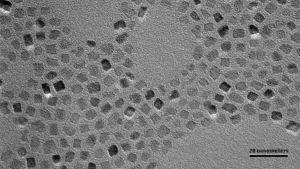
Once the intricate 3D structure is formed, it is then submerged in a solution containing iron ions. The porous hydrogel readily absorbs these iron ions. Following this initial immersion, the iron-infused structure undergoes a second dip into a solution containing hydroxide ions. Within the gel, the absorbed iron ions react with the hydroxide ions, chemically forming iron-oxide nanoparticles – the magnetic component – in situ.
This post-printing magnetic infusion process offers several critical advantages. Firstly, it allows for the printing of highly complex and delicate microstructures with exceptional fidelity, as the printing resin itself is not compromised by the presence of magnetic particles. Secondly, it provides an unprecedented level of control over the magnetic properties of individual features within the structure.
Precision Control Over Magnetism
The researchers discovered that by carefully adjusting the laser’s power during the initial printing phase, they could control the cross-linking density of the polymer gel. A more tightly cross-linked gel, formed by higher laser power, is less porous and can absorb fewer iron ions, resulting in a less magnetic feature. Conversely, a less cross-linked gel can accommodate more iron ions, leading to a more magnetic component.
"This provides unprecedented design freedom to print multifunctional structures and materials at the microscale," Sun emphasized. "We can now precisely tune the magnetic responsiveness of different parts of a single microscopic object."
Demonstrating Versatile Functionality
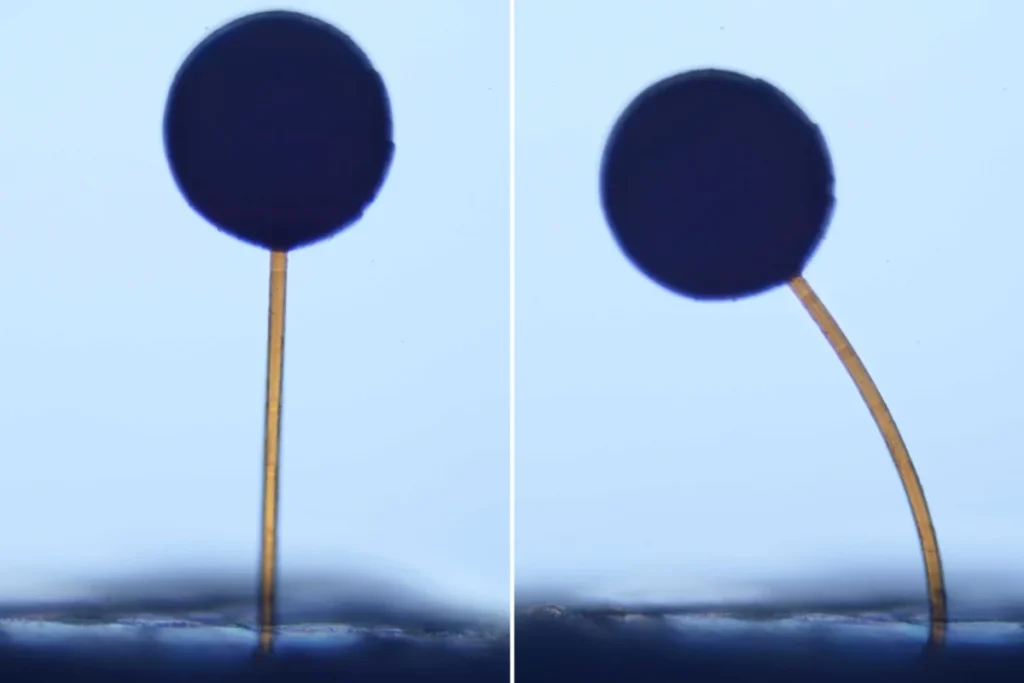
To showcase the capabilities of their new material and fabrication technique, the team created several compelling demonstrations. One of the most striking examples was the fabrication of ball-and-stick structures, resembling miniature lollipops, each less than a millimeter in height with balls smaller than a grain of sand. By varying the laser power during printing and consequently the iron absorption, they endowed each lollipop’s "ball" with a different degree of magnetism.
When observed under a microscope, these magnetic lollipops exhibited a remarkable behavior. As an external refrigerator magnet was moved across the petri dish, the lollipops were drawn towards it with varying degrees of attraction, configuring themselves into a formation that mimicked a set of gripping fingers. This demonstration vividly illustrates the potential for these microstructures to act as miniature robotic grippers.
"You could envision a magnetic architecture like this acting as a small robot that you could guide through the body with an external magnet, and it could latch onto something, for instance, to take a biopsy," Portela speculated, highlighting a key potential medical application. "That is a vision that others can take from this work and develop further."
Beyond grippers, the researchers also fabricated a magnetically responsive, "bistable" switch. This device consisted of a small, millimeter-long rectangle of polymer gel with four tiny, oar-like magnetic structures attached to either side. Each "oar" measured approximately 8 microns thick – roughly the diameter of a red blood cell. When a magnet was applied to one end of the rectangle, the oars on that side flipped towards the magnet, pulling the rectangle in the same direction and locking it into that position. Applying the magnet to the opposite side caused the oars to flip again, effectively switching the rectangle’s orientation.
"We believe this represents a new kind of bistable mechanism that could be utilized, for instance, in a microfluidic device as a magnetic valve to control the flow of liquids," Portela explained. "For now, we have successfully demonstrated how to fabricate magnetic complex architectures at the microscale and how to spatially tune their properties. This opens up a wealth of exciting possibilities for the future development of soft miniature robots."
Broader Implications and Future Directions
The implications of this research extend far beyond the immediate demonstrations. The ability to create precisely controlled, magnetically actuated micro-structures opens up new avenues for:
- Targeted Drug Delivery: Micro-robots could be guided through the bloodstream to specific sites in the body to release therapeutic agents, minimizing systemic side effects.
- Minimally Invasive Surgery: Tiny magnetic surgical tools could perform delicate procedures within confined anatomical spaces, reducing the need for open surgery.
- Biopsy and Sample Collection: The gripping capabilities demonstrated could be used to precisely collect tissue samples from hard-to-reach areas for diagnostic purposes.
- Microfluidic Devices: The bistable switch mechanism could be integrated into microfluidic systems to create highly sophisticated valves and pumps for laboratory-on-a-chip applications.
- Advanced Materials Science: The programmable nature of these hydrogels could lead to the development of self-assembling materials or adaptive structures that respond to their environment.
The research was supported by grants from the National Science Foundation and a MathWorks seed grant program, underscoring the significant investment in advancing this cutting-edge field. Furthermore, the work benefited from the state-of-the-art facilities at MIT.nano, highlighting the crucial role of advanced infrastructure in enabling such pioneering research.
As scientists continue to explore the vast potential of this novel soft magnetic hydrogel, the vision of microscopic robots performing complex tasks with unprecedented precision and control moves closer to reality, promising transformative impacts across medicine, engineering, and beyond. The ability to imbue tiny structures with precise, remotely controllable magnetic responsiveness marks a pivotal moment in the ongoing quest to miniaturize and enhance the capabilities of artificial systems.