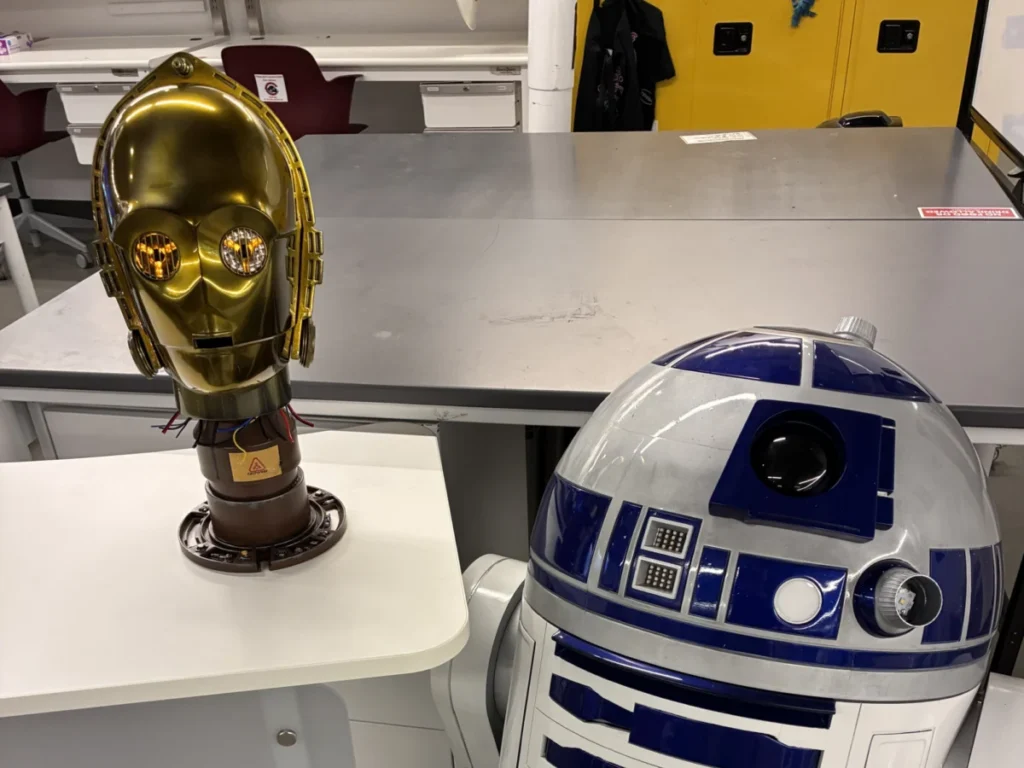
In an era saturated with digital chatbots, a remarkable project has emerged that transcends the typical screen-based AI experience, pushing the boundaries of human-AI interaction. Sam Potozkin, a student at Chapman University, has meticulously crafted "Threepio," an embodied AI system designed to replicate the beloved protocol droid C-3PO from the Star Wars saga. This ambitious endeavor is not merely a fan tribute but a profound exploration into why physical presence, personality, and tangible interaction fundamentally alter our relationship with artificial intelligence, as detailed in Potozkin’s accompanying academic paper.
The project stands out in a crowded field of AI innovations by deliberately focusing on embodiment. While AI chatbots are increasingly commonplace, accessible often at no cost and integrated into countless platforms, the creation of a conversational robot within custom hardware remains a more specialized pursuit. Potozkin’s Threepio goes the extra mile by integrating a realistic layer of personality, a meticulously crafted gold exterior, and an immersive audio experience, aiming to evoke the familiar charm and detailed communication capabilities associated with the original cinematic character. This commitment to detail, from the smooth finish of its 3D-printed case to the subtle "greeblies" on its display stand, is central to selling the illusion of a truly interactive, sentient entity.
The Genesis of an Icon Reimagined: Bridging Fiction and Reality
The inspiration for Threepio is, of course, rooted deeply in the original 1977 Star Wars film, A New Hope, which introduced audiences to the perpetually worried, etiquette-obsessed golden droid. C-3PO, along with his astromech counterpart R2-D2, quickly became iconic symbols of intelligent machines that could communicate, assist, and even exhibit human-like traits such as loyalty and anxiety. Potozkin’s vision was to translate this fictional character into a tangible, real-world AI system, observing how people react to an embodied, familiar AI compared to a generic, abstract digital interface. This foundational premise highlights a critical distinction: the power of recognition and established personality in shaping human perception of AI.
The enduring appeal of C-3PO lies not just in his appearance but in his sophisticated communication skills and his role as a translator and diplomat. He famously claims mastery of "over six million forms of communication," a hyperbole that nonetheless underscores his function as a bridge between diverse species and cultures. While Potozkin’s Threepio doesn’t literally command six million languages, the project strives to capture the essence of C-3PO’s communicative prowess and distinctive personality, making the interaction feel authentic and engaging. This emotional connection, cultivated over decades of cinematic storytelling, provides a unique lens through which to study human-AI dynamics.
Technical Ingenuity: Bringing C-3PO to Life with Modern Tech
The technical execution of Threepio is as impressive as its conceptual depth. At its core, the AI chat stack runs locally on a Raspberry Pi 5, a powerful single-board computer known for its versatility in DIY electronics and robotics projects. This local processing capability is a crucial design choice, ensuring responsiveness and reducing reliance on cloud-based services, which can introduce latency and privacy concerns. The Raspberry Pi 5, with its enhanced processing power and improved I/O, provides a robust platform for running complex AI models, including speech-to-text and text-to-speech functionalities, directly on the device.
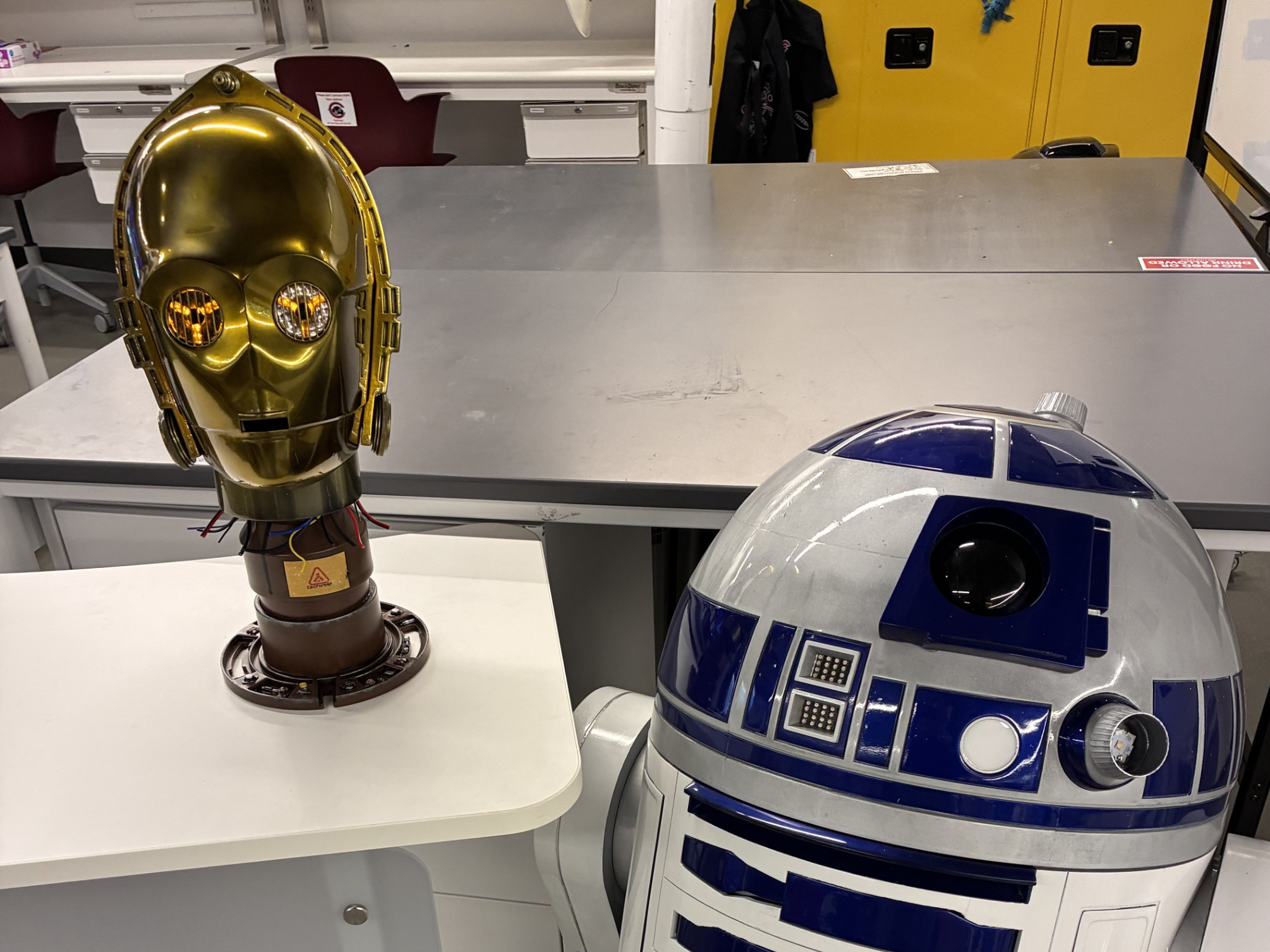
One of the most innovative aspects of the build is the audio output system. Instead of a conventional speaker, Potozkin employed an exciter, a device that transforms any surface into a speaker by vibrating it. In Threepio’s case, the exciter is strategically placed within the 3D-printed head, making the droid’s voice sound as if it genuinely emanates from the entire head structure, rather than a singular point. This nuanced audio design significantly enhances the illusion of an active, thinking entity within the golden shell. Achieving this effect required considerable refinement, with Potozkin dedicating substantial effort to honing audio effects until the sound quality and spatialization were just right, contributing to a truly immersive experience.
The physical construction also presented its own set of challenges and triumphs. The casing for Threepio was painstakingly 3D-printed, a process that often leaves visible layer lines. Potozkin invested significant time in sanding and finishing the printed parts to achieve a smooth, metallic-like surface that convincingly mimics C-3PO’s iconic gold plating. This attention to detail extended to dealing with issues like "orange peel" texture during finishing and even recovering from a mishap where the head was accidentally dropped, underscoring the demanding nature of such a hands-on project. The integration of subtle decorative elements, or "greeblies," on the display stand further contributes to the authentic Star Wars aesthetic, demonstrating a deep understanding of prop-making principles.
Beyond the Build: The Academic Inquiry into Embodied AI
Potozkin’s Threepio project transcends mere technical prowess; it serves as a tangible research platform for exploring complex questions about human-AI interaction. His accompanying paper delves into the critical distinction between interacting with AI on a screen and engaging with it as a physical, embodied presence. The central hypothesis is that the human response to an AI system is profoundly influenced by its physical manifestation and perceived personality.
In his paper, Potozkin articulates the project’s core objective: "This project explores the translation of a fictional character into a real-world, embodied AI system. Developing this system required translating and combining abstract concepts from both AI and communication theory into a functional, working architecture." He emphasizes that the goal was not simply to create another chatbot but to investigate "what happens when conversational AI moves off the screen and into a physical, interactive system." This shift, he argues, focuses on "embodiment, giving the system a presence, voice, and personality that can be experienced in the real world."
This academic approach taps into established theories of human-robot interaction (HRI) and communication. Research in HRI has consistently shown that the physical form, perceived autonomy, and social cues of a robot can significantly impact human trust, engagement, and emotional response. An embodied AI, particularly one modeled after a culturally familiar character like C-3PO, bypasses some of the cognitive barriers associated with abstract digital interfaces. Users bring pre-existing expectations and emotional connections to the interaction, which can lead to a richer, more nuanced engagement. This contrasts sharply with the often transactional or purely utilitarian interactions users have with generic screen-based chatbots, which typically lack a persistent personality or physical presence.
The Broader Landscape of Human-AI Interaction and Embodied Systems
The emergence of Threepio comes at a pivotal moment in the evolution of artificial intelligence. The AI chatbot market, valued at approximately $17.17 billion in 2023, is projected to grow significantly, reaching over $100 billion by 2032. However, the vast majority of these solutions remain screen-bound, integrated into websites, messaging apps, and virtual assistants. While effective for specific tasks, these digital interactions often lack the depth and nuance that a physical presence can provide.

The concept of embodied AI is gaining increasing traction in both academia and industry. Companies like Boston Dynamics with their agile robots, or the development of social robots like Sophia by Hanson Robotics, illustrate a growing interest in creating AI systems that can interact with the physical world and with humans in more natural, intuitive ways. Projects like Threepio serve as valuable proof-of-concept demonstrations, showing how sophisticated AI can be integrated into consumer-level hardware to create compelling, personalized experiences.
Psychologically, humans are hardwired to respond to physical entities. An embodied AI can trigger a phenomenon known as anthropomorphism, where users attribute human-like qualities, intentions, and emotions to non-human objects. In the case of C-3PO, this attribution is amplified by decades of character development in popular culture. This pre-existing familiarity and emotional resonance can reduce the "uncanny valley" effect, a hypothesis in aesthetics that describes the unsettling feeling people get when robots and other facsimiles of human beings look and act almost, but not perfectly, like actual humans. By building upon an already accepted and beloved fictional character, Potozkin’s project navigates this challenge adeptly.
A Chronology of Creation and Innovation
The development of Threepio was a multi-faceted journey, spanning various disciplines from mechanical engineering and electronics to software development and human-computer interaction research. While specific dates are not detailed, the project can be broadly chronicled through its key phases:
- Conceptualization and Research: Inspired by the Star Wars films, Potozkin began by researching C-3PO’s design, personality, and the academic literature surrounding human-AI interaction and embodied cognition. This initial phase would have involved outlining the project’s academic goals and technical requirements.
- Design and 3D Modeling: Utilizing 3D modeling software, Potozkin designed the detailed components of C-3PO’s head, ensuring accuracy to the original character while also accommodating internal electronics.
- 3D Printing and Finishing: The physical components were fabricated using 3D printing. This iterative process likely involved multiple prints, adjustments, and significant post-processing work, including sanding, priming, and painting, to achieve the desired smooth, metallic gold finish. The mention of dealing with "orange peel" and a "dropped head" highlights the practical challenges encountered during this phase.
- Hardware Integration: This phase involved the assembly of the electronics, including the Raspberry Pi 5, the exciter speaker, wiring, and power management. Potozkin would have needed to learn and apply soldering skills, a common rite of passage in complex electronics projects.
- Software Development and AI Stack Configuration: Configuring the local AI chat stack on the Raspberry Pi 5 was a critical step. This included setting up speech recognition (turning spoken words into text), natural language processing (understanding user intent), generating AI responses, and text-to-speech synthesis (converting AI text into spoken words). Fine-tuning the AI’s "personality" to match C-3PO’s characteristics would have been a significant undertaking.
- Audio Refinement: As highlighted in the original article, considerable time was spent refining the audio effects, specifically to ensure the exciter produced a convincing, resonant voice emanating from the entire head. This would have involved experimentation with different frequencies, amplitudes, and digital audio processing techniques.
- Academic Paper Development: Concurrent with or following the physical build, Potozkin drafted his paper, synthesizing the project’s technical aspects with its theoretical implications for human-AI interaction.
- Testing and Iteration: Throughout the process, continuous testing and iteration would have been crucial to identify and resolve issues, refine functionalities, and enhance the overall user experience.
This ambitious timeline, executed by a student, underscores the dedication and interdisciplinary skills required for such a project.
The Maker Movement and Open-Source Philosophy
Potozkin’s Threepio project is a shining example of the innovation fostered by the global maker movement. This movement, characterized by a DIY ethos and a passion for creating, inventing, and learning, thrives on the availability of affordable tools like 3D printers and single-board computers like the Raspberry Pi. The decision to make the project "customizable and extended" and to share its resources on GitHub reflects the open-source philosophy central to the maker community.
By providing access to the project’s code and design files, Potozkin invites other enthusiasts and developers to build their own Threepio, modify it, or expand its functionalities. This collaborative approach accelerates learning and innovation, allowing the community to iterate on existing designs, add new features (perhaps even working towards those "5,999,999 other languages"), and explore diverse applications. This spirit of sharing and collective improvement is a powerful force driving technological advancement from the grassroots level. The maker community has a rich history of Star Wars-inspired builds, from elaborate R2-D2 droids that move and interact to detailed cosplay props, and Potozkin’s Threepio adds a significant new dimension by integrating advanced AI.

Implications for Future AI Development and Education
The Threepio project carries significant implications for several fields:
- AI Research and Development: It provides tangible evidence that embodiment and personality are crucial factors in designing more engaging and effective AI systems. Future AI development may increasingly focus on these aspects, moving beyond purely functional interfaces to create agents that foster deeper connections with users. This could lead to more intuitive domestic robots, companion AIs for the elderly, or more effective educational tools.
- Robotics and Human-Robot Interaction: The project contributes to the understanding of HRI, particularly concerning the psychological impact of familiar fictional characters. It suggests that leveraging cultural archetypes can be a powerful way to make complex robotic systems more approachable and less intimidating.
- Interdisciplinary Education: Potozkin’s project exemplifies the power of interdisciplinary learning, combining elements of computer science, engineering, design, and communication theory. It serves as an excellent case study for STEM education, demonstrating how theoretical concepts can be translated into practical, impactful applications. Such projects inspire students to bridge academic silos and tackle complex, real-world problems.
- Experiential Technology: As virtual and augmented reality evolve, the line between digital and physical experiences blurs. Projects like Threepio offer a glimpse into a future where embodied AI can create richer, more interactive entertainment and educational experiences, moving beyond passive consumption to active engagement.
Expert Perspectives (Inferred)
Experts in human-robot interaction would likely commend Potozkin’s work for its practical application of theoretical HRI principles. Dr. Cynthia Breazeal, an MIT professor and pioneer in social robotics, has long advocated for robots that can engage humans socially and emotionally. She might highlight how Threepio demonstrates the importance of a robot’s "social intelligence" and its ability to build rapport through personality and familiar aesthetics. Similarly, AI ethicists might discuss the implications of creating AI that is designed to evoke emotional attachment, prompting questions about user expectations, potential dependency, and the ethical responsibilities of AI developers. Robotics engineers would undoubtedly appreciate the technical challenges overcome, particularly the integration of local AI processing and the innovative audio solution within a custom 3D-printed form factor.
Conclusion: The Enduring Allure of the Droid
Sam Potozkin’s Threepio project is more than just an impressive piece of engineering or a homage to a beloved sci-fi character. It is a compelling statement about the future of artificial intelligence and our evolving relationship with it. By meticulously crafting an embodied AI that channels the familiar charm and communicative nature of C-3PO, Potozkin has created a powerful platform for understanding why physical presence and personality matter in human-AI interaction.
The project underscores that as AI becomes more sophisticated, its form and perceived character will play an increasingly vital role in how we perceive, trust, and engage with these intelligent systems. From learning to solder and refining audio effects to sanding layer lines and overcoming unexpected challenges, Potozkin’s ambitious endeavor successfully translates abstract concepts from AI and communication theory into a functional, interactive reality. As the world continues to grapple with the profound implications of AI, projects like Threepio offer valuable insights, reminding us that the future of AI may not just be about what it knows, but how it feels to interact with it. It reaffirms the enduring allure of droids and their potential to bridge the gap between human and machine, one chatty golden head at a time.