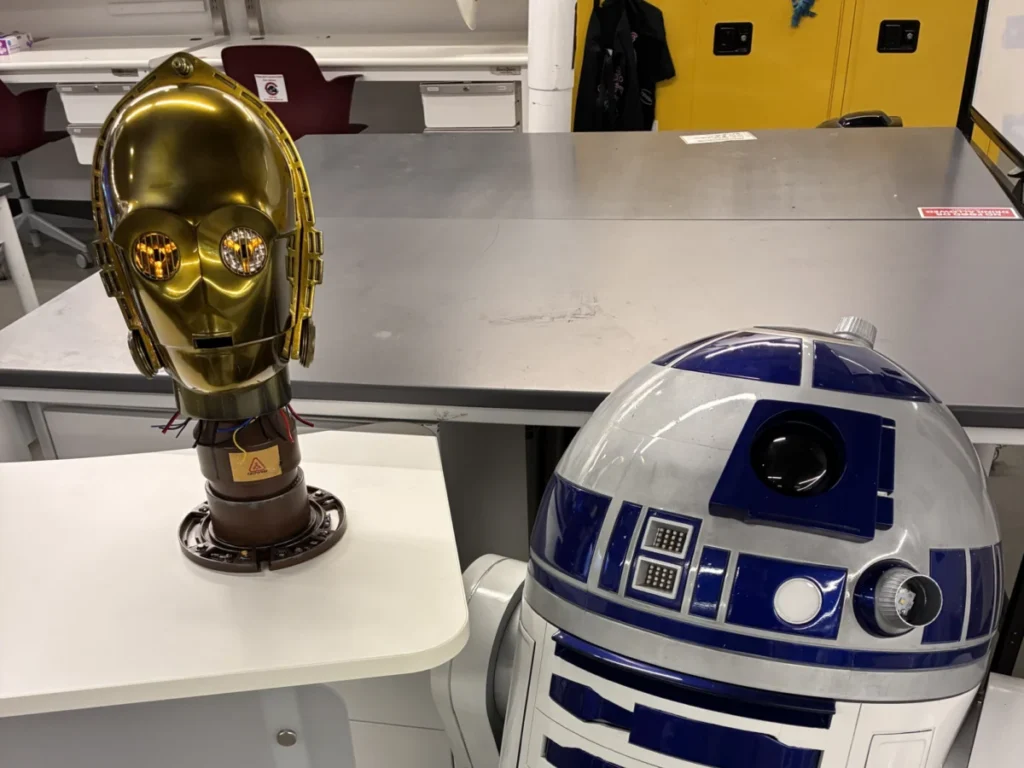
In an era saturated with digital AI chatbots, a groundbreaking project by Chapman University student Sam Potozkin is drawing significant attention by transplanting artificial intelligence from the screen into a tangible, iconic form. Potozkin’s "Threepio" project meticulously recreates the beloved protocol droid C-3PO from the Star Wars saga, not merely as a static replica, but as a fully conversational, embodied AI system designed to delve into the nuanced dynamics of human-AI interaction. This endeavor stands as a compelling testament to the evolving landscape of personal robotics and the critical role of physical embodiment in shaping human perception and engagement with intelligent machines.
The Genesis of an Icon Reimagined
The inspiration for Potozkin’s Threepio is undeniably rooted in the cultural phenomenon of Star Wars, specifically the original 1977 film that introduced audiences to the verbose and perpetually anxious C-3PO. For decades, C-3PO has served as a touchstone in popular culture, embodying the concept of a sentient, communicative robot capable of complex emotional responses and fluent in "six million forms of communication." This fictional character has deeply influenced real-world robotics and AI research, offering a blueprint for the kind of assistive and social robots humanity might one day integrate into daily life.
Potozkin, recognizing the profound impact of this character, embarked on a mission to translate C-3PO’s familiar persona and physical presence into a functional, real-world AI system. His objective was not merely to build a prop, but to explore how the inherent familiarity and established personality of a fictional android could alter human interaction with contemporary AI. This approach diverges significantly from the often-abstract experience of interacting with screen-based chatbots, aiming instead for a visceral, tangible connection that mimics the long-standing human-robot relationship depicted in fiction.
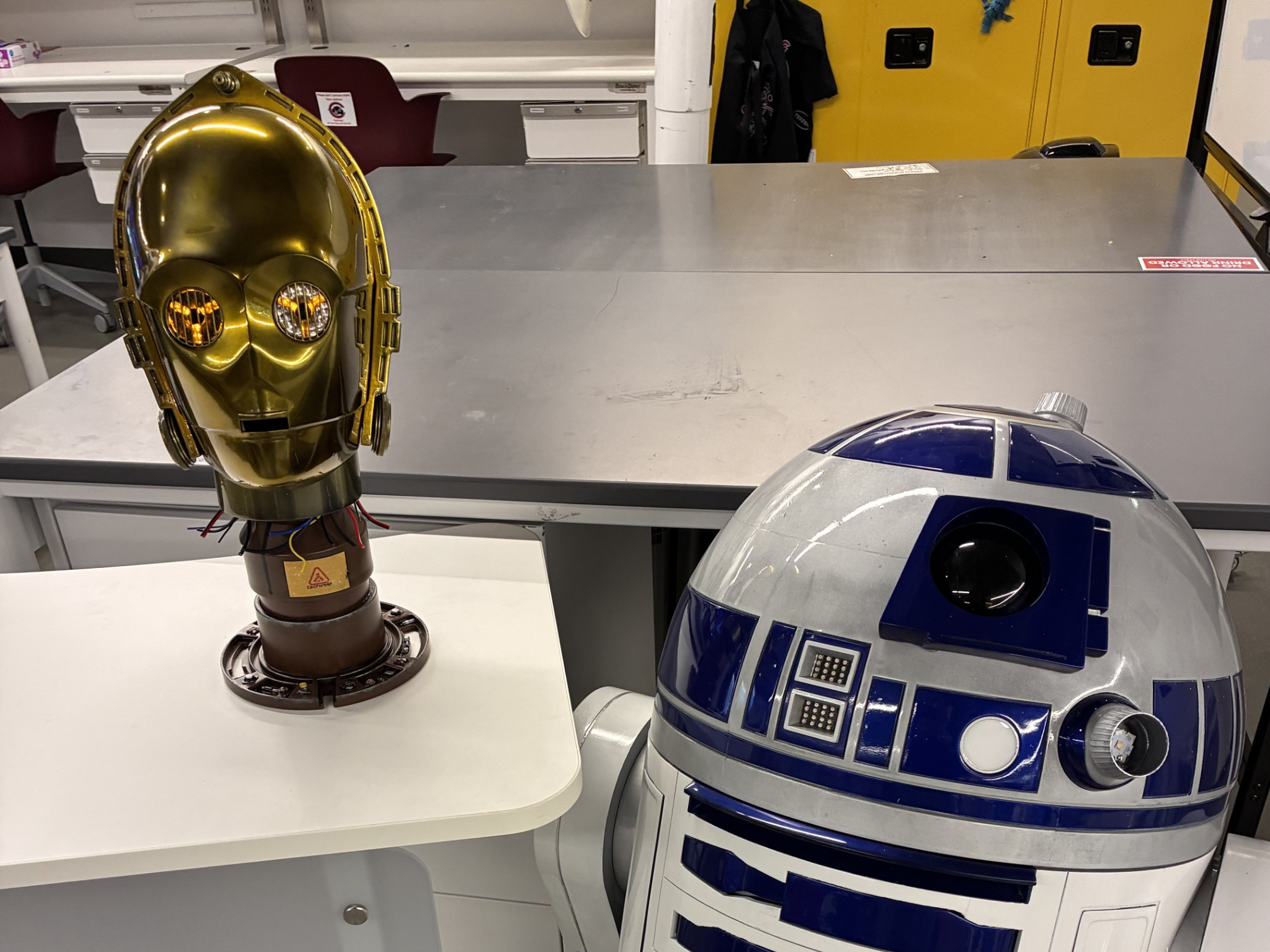
The project began with the painstaking recreation of C-3PO’s distinctive golden head. Leveraging modern fabrication techniques, Potozkin utilized 3D printing for the primary structure. This choice allowed for precise replication of the droid’s intricate contours and details. However, achieving the smooth, metallic finish characteristic of C-3PO required considerable post-processing, involving meticulous sanding of layer lines and careful application of coatings to overcome common 3D printing challenges like "orange peel" texture. The addition of "greeblies" – small, intricate details often used in science fiction models to suggest functional complexity – to the display stand further enhanced the illusion of an authentic Star Wars artifact. This dedication to aesthetic fidelity underscores the project’s foundational premise: that visual and tactile realism are crucial components in fostering a genuine sense of interaction with an embodied AI.
Engineering the Embodied Intelligence: Hardware and Software Synergy
At the heart of Potozkin’s Threepio lies a sophisticated yet accessible technical architecture, demonstrating the power of modern DIY electronics. Unlike many AI chatbots that rely on cloud-based processing, this C-3PO runs its entire AI chat stack locally on a Raspberry Pi 5. The Raspberry Pi 5, a recent iteration of the popular single-board computer, offers significantly enhanced processing power, making it a robust platform for local AI inference and complex computational tasks. Its quad-core Cortex-A76 processor, coupled with improved memory bandwidth and graphics capabilities, allows for the efficient execution of large language models (LLMs) and speech processing algorithms without constant internet dependency, enhancing response times and privacy.
The choice of local processing is not merely a technical preference but a philosophical one, aligning with the project’s goal of creating a self-contained, interactive entity. This independence from cloud services also mitigates concerns regarding data security and connectivity issues, ensuring a consistent and reliable user experience.
One of the most innovative aspects of the Threepio project is its approach to audio output. Instead of a conventional speaker, Potozkin employed an exciter. An exciter, or tactile transducer, vibrates a surface to turn it into a speaker. In this case, the exciter is strategically placed within C-3PO’s head, causing the entire head structure to resonate and produce sound. This ingenious method creates the illusion that the voice is emanating directly from the droid’s "brain" or internal mechanisms, rather than from an external speaker. This auditory realism is paramount to the project’s success in emulating the immersive experience of interacting with a fictional character. Potozkin invested considerable time in refining the audio effects, experimenting with various parameters to ensure the voice sounded authentic to C-3PO’s distinctive timbre and speech patterns, further blurring the lines between fiction and reality.
The software component integrates speech-to-text, a local LLM, and text-to-speech modules. When a user speaks, the audio is captured, converted to text, processed by the LLM to generate a response, and then converted back into speech through the exciter. This seamless loop creates a natural, conversational flow, enhancing the illusion of interacting with a truly intelligent entity. The local nature of the AI stack means that the underlying language model can be customized and fine-tuned, potentially allowing for specialized conversational styles or knowledge domains, pushing the boundaries of personalized AI.
Beyond the Build: A Deep Dive into Human-AI Interaction
Sam Potozkin’s project transcends mere technical prowess; it is fundamentally an academic exploration. He authored a comprehensive paper, available on GitHub, that delves into the theoretical underpinnings of his work, titled "Threepio: An Embodied AI System for Exploring Human-AI Interaction." This paper articulates the core research question driving the project: why do people react differently to modern, often screen-bound AI, compared to fictional, embodied androids like C-3PO, which have existed in popular consciousness for nearly 50 years?
Potozkin posits that familiarity, personality, and physical presence are critical factors in human acceptance and engagement with AI. His research bridges abstract concepts from both artificial intelligence and communication theory, demonstrating how these disciplines converge in the design of an effective embodied AI system. He highlights the distinction between AI as a purely digital construct and AI as a physical, interactive system with a tangible presence, voice, and personality.
The paper argues that the embodiment of AI provides crucial social cues and non-verbal signals that are absent in screen-based interactions. A physical robot, even one as rudimentary as a conversational head, occupies space, has a discernible orientation, and can project a sense of "presence" that profoundly influences human perception. This presence can evoke empathy, trust, or even frustration in ways that a disembodied voice or text interface cannot. Potozkin’s work thus contributes significantly to the burgeoning field of Human-Robot Interaction (HRI), which studies the complex interplay between humans and robots.
The Significance of Physicality in AI: Insights from HRI
The field of HRI has long emphasized that the physical form of a robot plays a critical role in how humans perceive and interact with it. Research in HRI consistently shows that people tend to anthropomorphize robots, attributing human-like qualities, intentions, and even emotions to them, especially when they exhibit human-like features or behaviors. C-3PO, with its bipedal form, expressive "face," and meticulous adherence to social protocols, is a prime example of a fictional robot designed to maximize anthropomorphism.
Potozkin’s project validates these HRI principles by demonstrating how replicating such a familiar, anthropomorphic design can immediately foster a sense of connection and familiarity. The gold-plated exterior, the distinctive head shape, and the careful articulation of C-3PO’s voice all contribute to a perception of "personality" that is often lacking in generic AI systems. This perceived personality encourages more natural and sustained interaction, moving beyond simple command-and-response paradigms to something akin to social engagement.
Furthermore, the physicality of the Threepio project addresses the concept of "situated cognition" in AI. Rather than being a disembodied intelligence, this C-3PO exists within a specific physical environment, interacting with the real world through its voice and presence. This situatedness allows for more intuitive and context-aware interactions, as users naturally orient themselves towards the physical entity, rather than an abstract cloud service. This approach is particularly relevant as AI moves beyond virtual assistants to applications in healthcare, education, and companionship, where physical presence can be crucial for trust and effectiveness.
Challenges and Triumphs in DIY Robotics

Building such an ambitious project was far from straightforward, as Potozkin documented the numerous challenges he encountered. The journey involved acquiring a diverse skill set, from basic electronics and soldering for integrating the Raspberry Pi and exciter, to advanced 3D printing techniques and surface finishing. Learning to solder reliably, for instance, is a foundational skill in electronics that requires precision and patience.
The aesthetic challenges were equally demanding. Achieving C-3PO’s iconic smooth, reflective gold finish from raw 3D-printed parts involved extensive post-processing, including sanding away layer lines inherent to additive manufacturing, applying primers, and managing issues like "orange peel" texture in paint application. One notable mishap, a dropped head, likely necessitated repairs and recalibration, highlighting the fragility and iterative nature of such complex builds.
On the software front, refining the audio effects to perfectly mimic C-3PO’s voice required significant experimentation and tuning. This involved adjusting equalization, reverb, and other audio processing parameters to achieve the desired vocal quality that instantly evokes the character. The integration of the various AI components – speech recognition, the local LLM, and text-to-speech – also presented its own set of challenges, requiring careful configuration and optimization to ensure seamless operation and minimal latency.
Despite these hurdles, Potozkin’s successful completion of the project underscores the power of the maker movement and the accessibility of advanced technology. It exemplifies how dedicated individuals, even students, can leverage open-source hardware and software to create sophisticated, impactful systems that push the boundaries of what’s possible in personal robotics and AI research.
The Open-Source Ethos and Future Expansions
In the spirit of collaboration and community, Potozkin has made his Threepio project open-source, with all relevant files and documentation available on GitHub. This decision transforms his personal endeavor into a platform for collective innovation. By open-sourcing the design files for the 3D-printed case, the Raspberry Pi integration schematics, and the AI chat stack, Potozkin invites makers, hobbyists, and researchers worldwide to customize, extend, and improve upon his work.
This open-source approach is critical for accelerating development in the DIY AI and robotics communities. It allows others to "put their spin on it," whether by refining the existing functionality, integrating new sensors or actuators, or indeed, adding support for the "other 5,999,999 languages" that C-3PO famously masters. For instance, community contributions could include:
- Enhanced Expressiveness: Adding servo motors to allow for head movement or basic facial expressions, further increasing the sense of embodiment.
- New Sensors: Incorporating cameras for basic object recognition or environmental awareness, allowing the AI to respond to its surroundings.
- Advanced AI Models: Experimenting with newer, more powerful local LLMs as they become available, or fine-tuning the existing model for specific conversational domains.
- Accessibility Features: Developing adaptations for users with specific needs, such as alternative input methods.
- Multi-language Support: Expanding the speech recognition and synthesis capabilities to truly encompass C-3PO’s legendary linguistic prowess.
The open-source nature ensures that the project can evolve beyond its initial scope, fostering a collaborative ecosystem of innovation that aligns with the best traditions of the maker community, where sharing knowledge and designs drives progress.
Broader Implications for AI Development and Society
Potozkin’s Threepio project offers several profound implications for the future of AI development and its integration into society.

Firstly, it underscores the increasing democratization of advanced AI. What once required specialized laboratories and vast computational resources can now be achieved by individuals using affordable, off-the-shelf components like the Raspberry Pi 5 and consumer-grade 3D printers. This accessibility lowers the barrier to entry for AI research and development, potentially leading to a surge of creative and impactful projects from diverse backgrounds.
Secondly, the project provides a compelling case study for the importance of embodiment in AI design. As AI systems become more ubiquitous, the way humans perceive and interact with them will be critical for their acceptance and effectiveness. Potozkin’s work suggests that giving AI a physical form, especially one imbued with a familiar personality, can significantly enhance user engagement, foster trust, and make AI feel less like a tool and more like a companion. This insight is particularly relevant for applications such as elder care, education, and mental health support, where social interaction and perceived companionship are paramount.
Thirdly, Threepio highlights the ongoing influence of science fiction on scientific innovation. Fictional characters like C-3PO often serve as aspirational blueprints for real-world technologies. By bringing such a character to life, Potozkin not only pays homage to a cultural icon but also demonstrates how these imaginative concepts can inspire tangible advancements, bridging the gap between futuristic visions and present-day reality.
Finally, the project contributes to the broader societal conversation about human-robot relationships. As robots become more sophisticated and integrated into daily life, understanding the psychological and sociological aspects of human-AI interaction will be crucial. Projects like Threepio offer valuable insights into how humans form connections with artificial entities, how perceived personality influences interaction, and the ethical considerations that arise when AI systems mimic sentient beings.
A New Era for Personal AI Companionship
In conclusion, Sam Potozkin’s Threepio project is far more than just a fan tribute or a clever electronics build. It represents a significant step forward in the exploration of embodied AI and human-robot interaction. By meticulously recreating a beloved fictional character and imbuing it with conversational intelligence, Potozkin has crafted a system that challenges our perceptions of AI, highlighting the profound impact of physical presence and personality on human engagement.
As AI continues its rapid evolution, moving from abstract algorithms to tangible entities, projects like Threepio will be instrumental in shaping how we design, interact with, and ultimately integrate intelligent machines into our lives. The future of AI may not just be about smarter algorithms, but also about more relatable, physically present, and even charming companions that can communicate in millions of ways, just like our favorite protocol droid. This innovative endeavor sets a high bar for future personal AI projects and signals a new era where the lines between science fiction and scientific reality continue to beautifully blur.