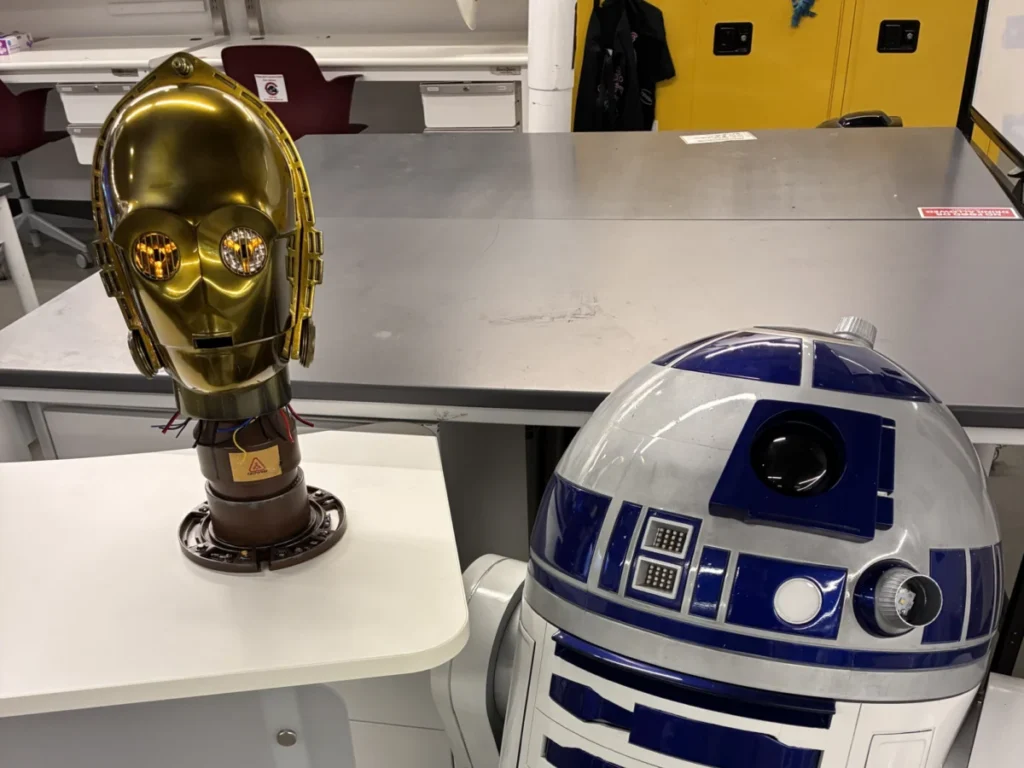
In an era increasingly defined by the ubiquitous presence of artificial intelligence, where chatbots are a common digital interface, a compelling project by Chapman University student Sam Potozkin is drawing significant attention for its innovative approach to human-AI interaction. Potozkin’s "Threepio" project transcends the conventional screen-based AI experience by manifesting a conversational agent in the physical form of the iconic Star Wars protocol droid, C-3PO. This endeavor not only showcases remarkable technical craftsmanship but also serves as a tangible exploration into the psychological and sociological dimensions of embodied AI, challenging perceptions of how humans engage with intelligent systems.
The Genesis of Threepio: Bridging Fiction and Reality
The inspiration for Potozkin’s ambitious project is undeniably rooted in George Lucas’s original 1977 film, Star Wars: A New Hope, which introduced audiences to C-3PO, a "human-cyborg relations" expert fluent in over six million forms of communication. C-3PO, with his distinctive golden plating, articulate speech, and often anxious personality, became a cultural touchstone, embodying the potential and pitfalls of human-robot coexistence. Potozkin’s goal was not merely to replicate the aesthetic of the droid but to faithfully capture the experience of interacting with such a character, bringing a fictional persona into the tangible world through advanced DIY electronics and AI.
The proliferation of AI chatbots in recent years has made conversational AI a commonplace technology. From customer service agents to personal assistants, these digital entities are encountered daily. However, Potozkin recognized a fundamental difference in how humans perceive and interact with a character like C-3PO compared to a generic AI chatbot. This distinction, he posits, lies in embodiment – the physical presence, personality, and contextual interaction that a physical robot offers. This insight formed the core academic premise behind his project, which culminated not only in the creation of the physical droid but also in a detailed paper exploring human-AI interaction.
Technical Ingenuity: Beyond the Golden Shell
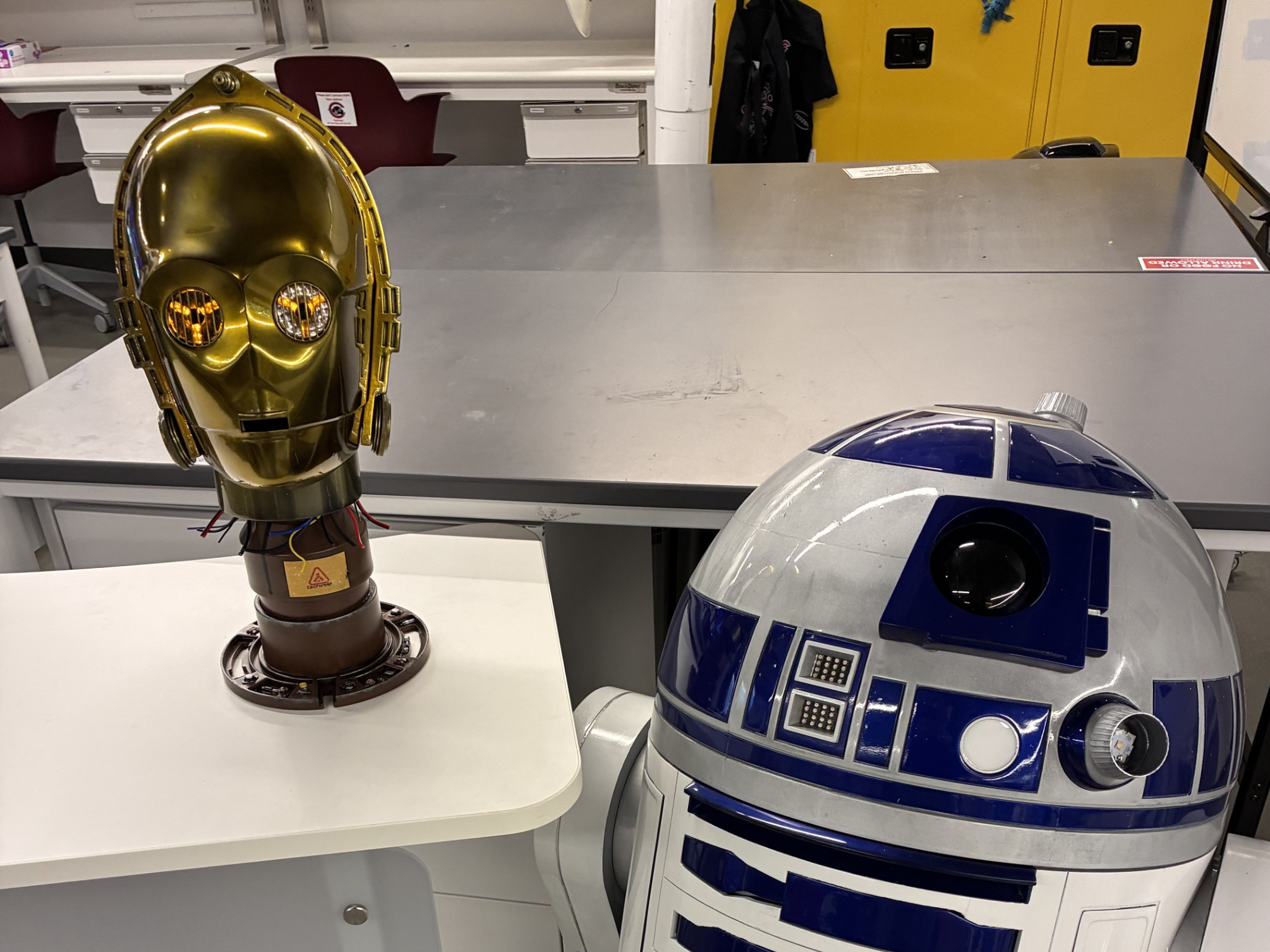
The Threepio project is a testament to sophisticated DIY engineering. The physical shell of the droid’s head was meticulously 3D-printed, a process that required considerable post-processing to achieve the smooth, reflective gold finish synonymous with C-3PO. Potozkin invested significant effort in sanding layer lines, addressing issues like "orange peel" texture, and even recovering from an accidental drop of the head during the finishing stages, highlighting the perseverance required in such intricate builds. Small "greeblies" – intricate detailing commonly found on science fiction models to enhance realism – were added to the display stand, further selling the illusion of a prop brought to life.
At the heart of Threepio’s intelligence is a Raspberry Pi 5, a powerful single-board computer that allows the entire AI chat stack to run locally. This choice is significant, as it demonstrates the increasing capability of embedded systems to handle complex AI operations without constant cloud connectivity, offering enhanced privacy and responsiveness. The Raspberry Pi 5, released in late 2023, offers substantial performance improvements over its predecessors, including a faster processor, improved graphics, and enhanced I/O capabilities, making it an ideal platform for demanding applications like local large language models (LLMs) or complex voice processing.
One of the most innovative aspects of Potozkin’s design is the audio output system. Instead of a conventional speaker, he utilized an exciter, a device that transforms any surface into a speaker. In Threepio’s case, the exciter makes the droid’s voice emanate from the entire head, creating a more immersive and realistic auditory experience. This detail is crucial for mimicking C-3PO’s unique vocal delivery, which often sounded as if it resonated from within his metallic shell. Potozkin spent considerable time refining these audio effects, fine-tuning pitch, tone, and modulation until the sound perfectly matched the iconic droid’s voice. This level of dedication to sensory detail underscores the project’s commitment to faithful replication.
The Embodiment Hypothesis: A Deeper Dive into Human-AI Interaction
While the technical execution of Threepio is impressive, the project’s true distinction lies in its academic underpinning. Potozkin authored a paper titled "Threepio: An Embodied AI Exploration of Human-AI Interaction," which delves into the theoretical framework behind his creation. The paper posits that the physical embodiment of an AI system significantly alters human perception and interaction compared to purely digital interfaces. This concept is central to the field of Human-Robot Interaction (HRI) and Human-Computer Interaction (HCI).
Potozkin’s research explores why individuals react differently to modern AI, often perceived as an abstract algorithm or a disembodied voice, versus a physically present android with a distinct personality, even if that android is decades old in fictional lore. The familiarity and established character traits of C-3PO provide a pre-existing mental model for interaction, fostering a sense of connection and understanding that generic chatbots often lack. As Potozkin articulates in his paper:

"This project explores the translation of a fictional character into a real-world, embodied AI system. Developing this system required translating and combining abstract concepts from both AI and communication theory into a functional, working architecture. The goal of the project was to explore what happens when conversational AI moves off the screen and into a physical, interactive system. Rather than treating AI as something purely digital, this build focuses on embodiment, giving the system a presence, voice, and personality that can be experienced in the real world."
This statement highlights the project’s dual nature: a practical engineering feat and a theoretical investigation. It underscores the importance of physical presence, non-verbal cues (even subtle ones like the direction of sound), and a consistent personality in shaping human perception of and interaction with AI. The paper likely draws upon theories of anthropomorphism, the tendency to attribute human characteristics to non-human entities, and how this phenomenon is amplified when an AI system has a physical form and a recognizable persona.
The Maker’s Journey: Challenges and Triumphs
The journey to create Threepio was fraught with challenges, typical of ambitious DIY projects that push the boundaries of personal skill and available technology. Potozkin’s account of the development process reveals a steep learning curve and a commitment to overcoming obstacles. He describes having to learn soldering, a fundamental skill in electronics, from scratch. Refining the audio effects to achieve the perfect C-3PO voice was a painstaking process, requiring iterative adjustments and a keen ear for detail. The extensive 3D printing and post-processing, including sanding and painting, demanded patience and precision to achieve the desired smooth, metallic finish. The anecdote of a dropped head underscores the fragility of complex prototypes and the resilience required to complete such a project.
These challenges are common in the maker community, where individuals leverage open-source hardware and software to bring complex ideas to life. The Raspberry Pi ecosystem, for example, thrives on a culture of shared knowledge and problem-solving, enabling hobbyists and students like Potozkin to tackle projects that might once have been the exclusive domain of professional engineers. The project serves as an inspiring example of how dedication, combined with accessible technology, can lead to remarkable innovations.
Broader Implications: The Future of Personalized AI and Robotics

Potozkin’s Threepio project carries significant implications for the future of human-AI interaction, personalized robotics, and the democratization of advanced technology.
- Enhanced Human-AI Interaction: By demonstrating the impact of embodiment and personality, Threepio suggests a future where AI companions are not just functional but also emotionally resonant. This could lead to more engaging and effective interfaces in fields like education, elder care, and personalized assistance. The sense of "presence" provided by a physical robot can reduce the perceived psychological distance between user and AI, potentially fostering greater trust and comfort.
- Democratization of Robotics and AI: The use of a Raspberry Pi 5 and 3D printing highlights how advanced robotics and AI development are becoming increasingly accessible. This empowers hobbyists, students, and small teams to innovate without the need for multi-million dollar labs, accelerating experimentation and diverse approaches to AI challenges. The open-source nature of the project further contributes to this democratization, inviting others to build upon Potozkin’s work.
- The Role of Pop Culture in AI Design: Threepio exemplifies how leveraging established fictional characters can provide a rich foundation for AI persona development. This approach taps into existing human emotional connections and narrative frameworks, making AI more approachable and understandable. Future AI assistants might draw inspiration from beloved characters, moving beyond generic voices to offer more distinct and engaging personalities.
- Educational Value: Projects like Threepio offer immense educational value, serving as hands-on learning platforms for electronics, programming, 3D design, and AI theory. They inspire the next generation of engineers and scientists to explore interdisciplinary fields and tackle complex problems.
- Ethical Considerations: While not explicitly detailed in the provided excerpt, the development of highly anthropomorphic and embodied AI raises ethical questions. These include the potential for emotional manipulation, the impact on human social interactions, and the responsibility of creators for the "personalities" they imbue in their AI. Potozkin’s academic paper likely touches upon some of these considerations within the context of his exploration.
A Legacy of Innovation: Open Source and Community Engagement
Crucially, Potozkin has made his Threepio project open source, providing the schematics, code, and insights on platforms like GitHub. This decision aligns with the collaborative spirit of the maker community and significantly enhances the project’s impact. By making the design customizable and extensible, Potozkin invites other enthusiasts to "put their spin on it," whether by refining the existing functionality, integrating new AI models, or even attempting to implement C-3PO’s full "six-million forms of communication." This openness fosters innovation and allows the project to evolve beyond its initial scope.
The Threepio project is not an isolated phenomenon within the broader landscape of Star Wars-inspired robotics. The "droidsmith" community, dedicated to building accurate and functional replicas of droids like R2-D2 and BB-8, is a vibrant testament to the enduring appeal of these characters. Experienced R2-D2 builders often advise beginners to start with the dome, acknowledging the complexity of these builds and the iterative process of learning. Potozkin’s work on Threepio’s head fits perfectly within this tradition, showcasing that if one is going to invest substantial time and effort into building a robot, giving it the ability to communicate meaningfully adds an invaluable dimension.
In conclusion, Sam Potozkin’s Threepio project stands as a remarkable achievement, seamlessly blending advanced DIY electronics, contemporary AI, and a profound understanding of human psychology. By transforming a beloved fictional character into a tangible, conversational entity, Potozkin has not only created an impressive piece of hardware but has also offered a compelling argument for the critical role of embodiment and personality in shaping our future interactions with artificial intelligence. As AI continues to integrate into our lives, projects like Threepio provide invaluable insights into building systems that are not just intelligent, but truly engaging and familiar.