Chuck Klosterman, a name synonymous with sharp cultural analysis and a distinctive voice in contemporary non-fiction, is poised to release his latest work, "Rock*: A Mainstream Alternative History of Alternative Mainstream Music." This intriguing new book, slated for release, delves into a fascinating counterfactual scenario that could have fundamentally reshaped the trajectory of popular music. Klosterman, whose earlier works like "Sex, Drugs, and Cocoa Puffs: A Low Culture Manifesto" cemented his reputation for dissecting pop culture with intellectual rigor and relatable prose, returns to explore the intricate relationship between musical movements and their historical reception.
The core premise of "Rock*" centers on a pivotal "what if" moment in music history: what if The Velvet Underground & Nico’s seminal 1967 self-titled album had achieved massive commercial success, propelling the band to the forefront of the era’s musical landscape and eclipsing the enduring legacy of The Beatles? This thought experiment, as detailed by Klosterman in a recent interview with GQ, forms the bedrock of his narrative. The book reportedly spans a significant period, from the late 1960s through the early 2000s, tracing the ripple effects of this singular alteration. To construct this alternate timeline, Klosterman explained the intricate process of first establishing a conventional history of rock music during that timeframe and then systematically "reverse-engineering" it, meticulously accounting for how the amplified success of The Velvet Underground would have influenced subsequent artists, genres, and the overall evolution of mainstream and alternative music.
This ambitious undertaking taps into a long-standing fascination with the power of cultural tipping points and the often-arbitrary nature of fame and influence. The Velvet Underground, despite their profound artistic impact and enduring cult status, were not commercial titans in their initial release. Their influence was largely posthumous, permeating the work of countless musicians who discovered their raw, experimental sound and lyrical candor years later. Klosterman’s hypothetical scenario imagines a world where this profound artistic vision resonated with the masses from the outset, potentially altering the sonic and thematic landscape of popular music for decades to come. The narrative is reportedly framed through the lens of a fictionalized Lester Bangs, the iconic and often acerbic rock critic, who is imagined to have survived into the 21st century and evolved into a respected elder statesman of rock journalism. This narrative device offers a unique perspective, allowing for commentary on the evolution of music criticism and the enduring relevance of a voice that championed authenticity and challenged convention.
The implications of such a shift are vast. A world where The Velvet Underground held the dominant cultural sway might have fostered a greater appreciation for avant-garde experimentation within the mainstream, potentially accelerating the development of genres like punk, post-punk, and indie rock. The commercial success of a band known for its confrontational lyrics, minimalist arrangements, and embrace of sonic dissonance could have set a different precedent, influencing the expectations of audiences and the creative output of aspiring musicians. The very definition of "mainstream" and "alternative" music might have been blurred or redefined entirely. This exploration invites readers to reconsider not only the history of music but also the cultural forces that determine artistic recognition and lasting impact.
The book’s title, "Rock: A Mainstream Alternative History of Alternative Mainstream Music," itself hints at the complex interplay between commercial appeal and artistic integrity, and how these categories can be fluid and subject to historical interpretation. The asterisk suggests a qualification, a nod to the inherent subjectivity in defining "rock" and its various subgenres, and perhaps an acknowledgment of the speculative nature of his alternate history. Klosterman’s previous work has consistently demonstrated an ability to connect seemingly disparate cultural phenomena, and "Rock" promises to be a profound examination of how one seismic shift in the musical zeitgeist could have cascaded through popular culture.

The Gorilla Sharpener: A Fusion of Art, Engineering, and Conservation
Beyond the realm of auditory and literary exploration, the contemporary landscape is also marked by the emergence of uniquely conceived functional art objects. The Gorilla Sharpener, a collaboration between the esteemed Swiss watchmaker MB&F and the renowned stationery brand Caran d’Ache, exemplifies this trend. This meticulously crafted item, designed to commemorate the 15th anniversary of MB&F’s M.A.D.Gallery, transcends its utilitarian purpose to become a statement piece of considerable artistic merit.
The genesis of the Gorilla Sharpener lies in the innovative vision of designer Maximilian Maertens, who took inspiration from Caran d’Ache’s classic hand-cranked pencil sharpener, a design that has remained largely unchanged since its introduction in 1933. Maertens’s reimagining imbues this established form with a striking, anthropomorphic quality. The addition of robust stainless steel and cast iron limbs, meticulously engineered to mimic the posture and musculature of a gorilla, transforms the familiar sharpener into a formidable, almost sentient, object. The stark, flat facial planes and the placement of a pencil within the "mouth" area contribute to its distinct and somewhat unsettling aesthetic, evoking a sense of primal power and mechanical ingenuity. This design choice, while potentially polarizing, undeniably sparks conversation and invites interpretation, with some likening its presence to an intriguing, albeit ominous, artifact from a narrative of psychological suspense.
Functionality is not sacrificed for form in this remarkable creation. The Gorilla Sharpener remains a fully operational pencil sharpener, retaining the precise sharpening mechanism of its progenitor. It is presented as a comprehensive set, including a selection of Caran d’Ache pencils, a securing clamp for stable operation, and a custom-designed case. The aesthetic is further enhanced by an "Alpine Frost" blue finish, adding a layer of sophisticated color to its rugged construction.
The release of the Gorilla Sharpener coincided with World Gorilla Day, a deliberate choice that underscores a significant philanthropic dimension to the project. The limited edition run of 300 pieces, priced at CHF 850 (approximately $1,165 USD), is not merely a commercial endeavor. MB&F is actively supporting gorilla conservation efforts through its partnership with the Dian Fossey Gorilla Fund. This support extends to the symbolic adoption of Rwanda’s Pablo mountain gorilla group, highlighting a commitment to the preservation of these critically endangered primates. This integration of art, engineering, and conservation positions the Gorilla Sharpener as a product with both tangible and intangible value, appealing to collectors, design enthusiasts, and those with an interest in environmental stewardship. The inherent rarity, coupled with its unique design and charitable association, makes it a sought-after item within its niche market.
Beats 360: A New Frontier in Personal Audio

In parallel with these unique object designs, the personal audio market continues its rapid evolution, with new contenders emerging to meet the ever-increasing consumer demand for immersive and high-fidelity sound experiences. Apple’s Beats brand, a long-standing player in the headphone industry, has introduced its latest flagship offering, the Beats 360 over-ear headphones. This release arrives at a time when consumers are actively seeking premium audio solutions, particularly in the wake of evolving personal listening habits and the desire for enhanced audio clarity and environmental isolation.
The Beats 360 represents a significant technological advancement for the brand, boasting a comprehensively redesigned acoustic system engineered to deliver superior sound reproduction. Key features include advanced active noise cancellation (ANC) technology, designed to effectively block out ambient distractions and allow for a more focused listening experience. Complementing the ANC is Personalized Spatial Audio with dynamic head tracking, a feature that aims to create a three-dimensional soundstage, mimicking the immersive experience of live audio by adjusting the soundscape in real-time as the listener’s head moves. This technology is particularly appealing to users seeking a more cinematic or concert-like audio immersion for music, movies, and gaming.
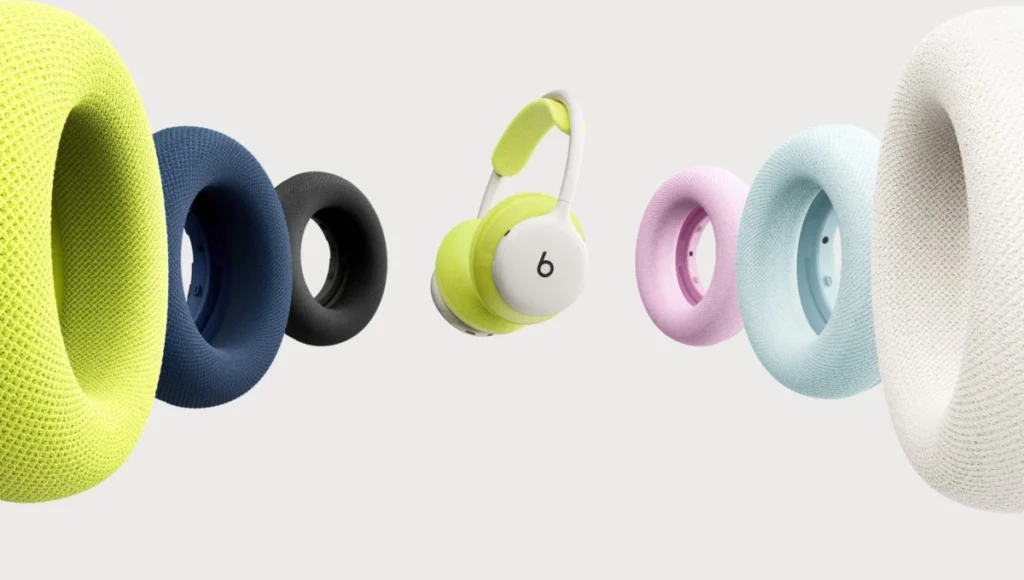
Addressing the diverse needs and preferences of users, Beats has incorporated an innovative interchangeable cushion system. Both the earcups and headband are designed to accommodate different material options, including Performance Knit and UltraPlush variants, available in a spectrum of colors. This modular approach allows users to customize the comfort and aesthetic of their headphones, catering to individual sensitivities and stylistic choices.
In terms of practical performance, the Beats 360 headphones offer an impressive battery life of up to 32 hours on a single charge, ensuring extended listening sessions without frequent recharging. Furthermore, the headphones are rated IPX4 for sweat and water resistance, making them a suitable option for active users who may expose their devices to moisture during workouts or in inclement weather. This durability factor broadens the appeal of the Beats 360 beyond casual listening to encompass fitness and outdoor activities.
The Beats 360 are now available for purchase at a retail price of $349.99 USD. They are offered in four distinct colorways: Black, Cloud, Pink, and Sky. The interchangeable cushion kits are sold separately, providing an additional avenue for personalization and allowing users to further tailor their audio experience. This strategic pricing and feature set position the Beats 360 as a direct competitor in the premium over-ear headphone market, vying for attention from consumers who prioritize both advanced audio technology and personalized design.
The Enduring Debate: Navigating the Allure and Absurdity of the "Dumb Phone"

The pervasive nature of smartphone technology has sparked a growing discourse surrounding its impact on our daily lives, prompting many to question the necessity and benefits of constant digital connectivity. This discussion is vividly illustrated by the burgeoning interest in "dumb phones"—devices that offer basic communication functionalities without the extensive features and potential distractions of smartphones. The personal struggle to balance the utility of a smartphone with the desire for a more present and less digitally mediated existence is a common theme.
For many, including individuals whose professional lives are intrinsically linked to digital platforms, the idea of completely relinquishing a smartphone presents significant challenges. The reliance on social media for professional networking, client communication, and the dissemination of work is a reality for a substantial portion of the modern workforce. Remote work arrangements further amplify the need for readily accessible communication tools like WhatsApp, essential for maintaining professional connections and team cohesion. Moreover, the ingrained habit of using smartphones for everything from instant gratification to subtle social signaling—such as sharing vacation highlights—creates a powerful inertia against adopting simpler devices.
Recent commentary, notably an opinion piece published in The New York Times, has explored the nuances of this debate, highlighting both the potential advantages and the practical limitations of embracing a "dumb phone." The article featured the experience of a writer who successfully reduced her screen time and enhanced her presence with family by opting out of smartphone usage for an extended period. This shift yielded tangible benefits, including more focused attention and a greater sense of mindfulness. However, the experiment also revealed a significant dependency on the infrastructure of a digitally connected society.
The challenges encountered by "dumb phone" users often stem from their reliance on others for tasks that have become seamlessly integrated into smartphone functionality. This can range from needing assistance with ride-sharing applications to requiring others to display digital tickets or QR codes for access. Such scenarios underscore the reality that in many social and professional contexts, a smartphone has become an almost indispensable tool for participation. The article also noted that users of simpler devices may find themselves out of sync with group conversations or increasingly dependent on spouses or partners for basic communication tasks. This reliance on others for digital facilitation can lead to a feeling of self-imposed obsolescence or inconvenience, a sentiment that resonates with individuals who already delegate certain tasks.
The pursuit of a digital equilibrium is leading some individuals to explore intermediate solutions. Devices like the Brick app, which aims to provide a more focused and less distracting digital experience, represent an attempt to bridge the gap between full smartphone immersion and complete digital abstinence. The ongoing exploration of such tools suggests a collective desire to harness the benefits of technology without succumbing to its potential drawbacks, seeking a happy medium that allows for connection without constant distraction.
The Gennai Pen SL01: An Edgy Fusion of Artistry and Engineering

The world of writing instruments, often characterized by elegant designs and refined functionality, has also seen the emergence of items that push the boundaries of conventional aesthetics. The Gennai Pen SL01, a product of collaboration between Japanese artist Hidetoshi Nakayama and TACTICALGEEK, stands as a testament to this trend. This ballpoint pen distinguishes itself through a design that evokes a striking blend of utilitarian industrialism and intricate mechanical artistry, drawing comparisons to both specialized tools and imaginative props from the steampunk genre.
The design philosophy behind the Gennai Pen SL01 is rooted in a unique mechanical inspiration: an old telegraph key. This influence is evident in its operational mechanism. Users extend the pen’s refill by pressing a button located at the top of the pen. Retraction is achieved via a lever positioned along the barrel, offering a tactile and engaging method of deployment. Even the pocket clip incorporates a distinct mechanical feature, designed to open with a press and securely lock into place upon release, ensuring a firm attachment to clothing or pockets.
Constructed from solid stainless steel and meticulously CNC-machined, the Gennai Pen SL01 boasts a robust build quality. Each pen undergoes a hand-finishing process, contributing to its unique character and appeal. The pen is designed to accept standard Parker-style G2 refills, ensuring widespread compatibility and ease of maintenance. Beyond the natural stainless steel finish, the SL01 is available in a variety of premium finishes, including Cerakote, Timascus, and hand-engraved editions, offering discerning customers a range of aesthetic options.
The Gennai Pen SL01 is currently accessible through a Kickstarter campaign, with prices starting at $189 USD. This crowdfunding model allows for direct engagement with early adopters and provides a platform for gauging market interest in such innovative design concepts. The pen’s appeal lies not only in its sophisticated engineering and unique aesthetic but also in its positioning as a piece of "mechanical EDC art"—a functional object designed for everyday carry that also serves as a piece of artistic expression. This approach appeals to a segment of consumers who value craftsmanship, distinctive design, and the integration of art into practical applications. The successful funding of such projects often signifies a growing appreciation for uniquely designed tools that transcend mere functionality to become objects of personal fascination and statement.