The landscape of industrial manufacturing is undergoing a profound transformation, driven by a relentless pursuit of efficiency, flexibility, and sustainability. At the forefront of this evolution is the increasing adoption of cabinet-free drives, an innovation that redefines traditional approaches to automation and control. These advanced motion components, championed by industry leaders such as Bosch Rexroth, represent a significant leap from older decentralized drive setups, offering manufacturers unprecedented opportunities to optimize operations, enhance machine responsiveness, and boost overall productivity.
The Evolution of Industrial Control: A Brief Chronology
For decades, the standard practice in manufacturing involved housing motors and drives, along with their intricate wiring and control systems, within large, centralized electrical cabinets. These cabinets were essential for protecting sensitive electronics from harsh industrial environments and managing complex power and communication networks. However, this centralized model came with inherent limitations:
- Space Consumption: Control cabinets occupied valuable floor space, a critical resource in increasingly congested manufacturing facilities.
- Cabling Complexity: Extensive wiring runs from the central cabinet to individual machines were time-consuming to install, costly, and prone to connection errors.
- Rigidity: Modifying or expanding production lines often required significant re-engineering of the entire control system, leading to costly downtime.
- Cooling Demands: The concentration of heat-generating components within enclosed spaces necessitated sophisticated and energy-intensive cooling systems.
The first significant step towards decentralization emerged with distributed drive setups. These systems moved some drive components closer to the motors, reducing cable lengths and simplifying installation. However, they often still relied on smaller, localized enclosures and did not fully address the challenges of extensive cabling or environmental protection for the drives themselves.
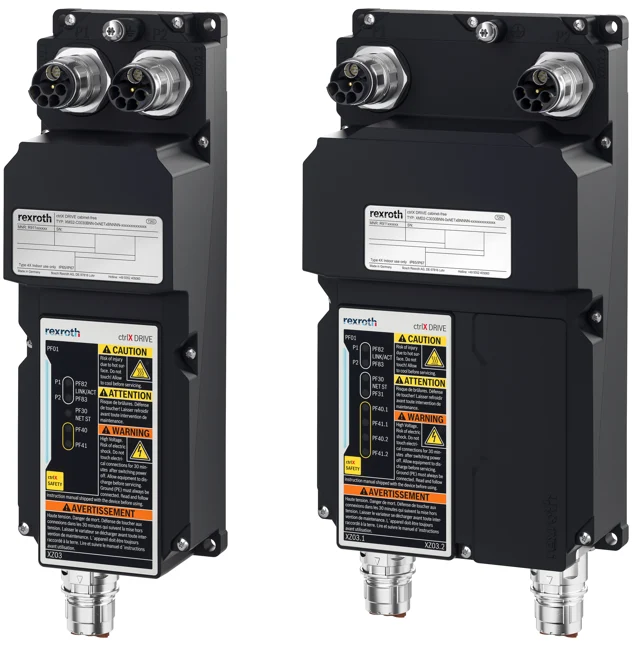
The advent of cabinet-free drives marks the culmination of this evolutionary journey. Leveraging advancements in component miniaturization, thermal management, and robust enclosure technologies, these drives are designed to be mounted directly on or next to the motor on the machine. This "on-machine" approach fundamentally alters factory layouts, streamlines installation, and integrates seamlessly with the principles of Industry 4.0 and digital transformation initiatives.
Driving Factors: Why Now?
Several converging factors are accelerating the adoption of cabinet-free automation:
- Industry 4.0 and Digital Transformation (DX): The overarching goal of DX in manufacturing is to create smarter, more connected, and data-driven operations. Cabinet-free drives, with their integrated communication capabilities and reduced complexity, are ideal enablers for this vision, facilitating the flow of real-time data and enhancing predictive maintenance. Global spending on digital transformation in manufacturing is projected to reach over $450 billion by 2026, highlighting the industry’s commitment to these advanced technologies.
- Market Demand for Agility and Customization: Modern consumers demand highly customized products and shorter product lifecycles. Manufacturers must respond with production systems that are inherently flexible and scalable. Traditional, rigid automation setups struggle to meet these demands, making modular and reconfigurable solutions like cabinet-free drives highly attractive.
- Rising Real Estate Costs: Industrial real estate, particularly in developed regions, continues to command high prices. Every square foot of factory floor space must be utilized efficiently. Cabinet-free drives directly address this by eliminating bulky control cabinets, freeing up space for additional production lines, improved ergonomics, or buffer zones.
- Sustainability Imperatives and Energy Efficiency: Environmental regulations and corporate sustainability goals are pushing manufacturers to reduce their energy consumption and carbon footprint. As Joaquin Ocampo, Product Manager at Bosch Rexroth, points out, cabinet-free drives offer significant advantages in this regard by reducing the need for energy-intensive cabinet cooling and enabling more precise power management.
- Technological Maturation: The underlying technologies for cabinet-free drives have matured significantly. This includes robust component design, advanced thermal management, high ingress protection (IP) ratings, and standardized hybrid cabling that consolidates power, data, and safety signals into one or two cables.
Key Benefits of Cabinet-Free Automation
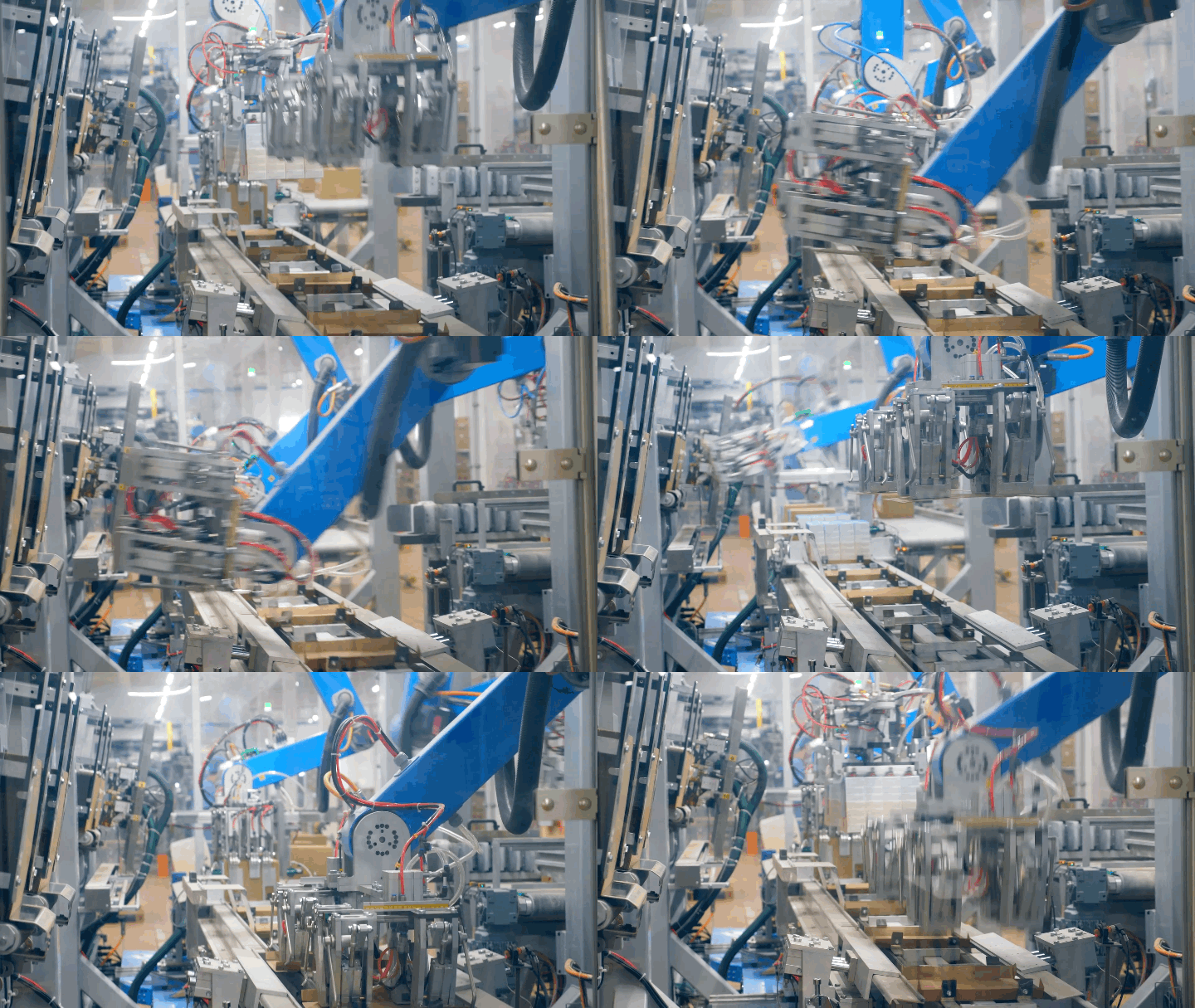
The advantages of migrating to cabinet-free discrete automation are multifaceted, impacting various aspects of manufacturing operations:
Space Optimization and Lean Manufacturing
Perhaps the most immediately apparent benefit of cabinet-free drives is the dramatic reduction in required floor space. By removing physical cabinets and mounting drives directly onto the machine, manufacturers can reclaim significant areas that were previously dedicated to electrical infrastructure. Industry analyses suggest that this approach can free up anywhere from 15% to 30% of floor space previously occupied by control cabinets, depending on the application.
This reclaimed space can be strategically reallocated:
- Increased Production Capacity: Manufacturers can install additional machinery or production lines within the existing facility footprint, boosting output without expanding the building.
- Improved Ergonomics and Workflow: More open space can lead to better access for operators, facilitating maintenance, material handling, and overall workflow efficiency.
- Enhanced Safety: Reducing clutter and improving accessibility can contribute to a safer working environment.
Furthermore, the simplification of cabling is a critical component of space savings and lean manufacturing principles. Traditional setups involve extensive runs of individual power, control, and communication cables. Cabinet-free drives utilize hybrid cables that combine these functions, drastically reducing the number of physical wires, connection points, and the associated labor for installation and troubleshooting. This reduction in cabling not only saves space but also minimizes potential points of failure, such as loose or faulty connections, which can disrupt production.
Enhanced Modularity and Flexibility
The ability to adapt quickly to changing market demands is a hallmark of competitive manufacturing. Cabinet-free automation inherently supports this agility through its modular design. Traditionally, drives and control cabinets were custom-built and rigidly tied to a specific machine or production line. Any expansion or modification often meant a complete overhaul, incurring substantial costs and prolonged downtime.
With cabinet-free drives, the paradigm shifts:
- Rapid Retooling and Reconfiguration: Machines equipped with cabinet-free drives can be more easily reconfigured or repurposed to produce different product variants or adapt to new processes. This flexibility is crucial for industries facing rapid product cycles and demand fluctuations.
- Scalable Operations: Adding or removing production modules becomes a simpler "plug-and-play" operation, as drives can be added or integrated without requiring changes to a central cabinet. Some advanced cabinet-free drives can even manage multiple axes (e.g., up to two 30A axes on a single drive), further enhancing their utility for powering complex machine segments.
- Faster Commissioning: The reduced complexity of wiring and the standardized interfaces of cabinet-free drives significantly shorten commissioning times, allowing manufacturers to bring new production lines online more quickly.
Significant Energy Savings and Sustainability
Energy consumption is a major operational cost for manufacturers, and the drive for sustainability is a growing global imperative. Cabinet-free automation offers tangible benefits in both these areas.
Traditional control cabinets require constant cooling to dissipate the heat generated by the electronic components within. This often involves dedicated air conditioning units or robust ventilation systems, which are significant energy consumers. By decentralizing the drives and mounting them on the machine, the need for centralized cabinet cooling is drastically reduced or eliminated. The drives themselves are designed with efficient heat dissipation mechanisms, often leveraging the machine’s existing structure or ambient air.
A key technological enabler for these energy savings lies in the advancement of semiconductor materials. The integration of silicon carbide (SiC) semiconductors into cabinet-free drives is a game-changer. SiC technology offers significantly lower power losses compared to conventional insulated-gate bipolar transistor (IGBT) technology. This translates to:

- Reduced Heat Generation: Less energy is wasted as heat, making the drives more efficient and reducing cooling requirements.
- Smaller Footprint: Lower heat generation allows for smaller, more compact drive designs.
- Overall Energy Efficiency: By accurately determining and delivering only the necessary power where and when it’s needed, cabinet-free systems minimize wasted energy across the entire production process.
While the impact of energy savings may be more immediately recognized in regions like Europe due to higher energy costs and stricter environmental regulations, American manufacturers are increasingly prioritizing these factors, recognizing their direct impact on the bottom line and corporate social responsibility.
Improved Reliability and Maintenance
The robust design of cabinet-free drives contributes directly to enhanced system reliability. Components are often rated with high ingress protection (IP) codes, such as IP65 or IP67, indicating their ability to withstand dust, water jets, and even temporary submersion. This makes them suitable for direct mounting in harsh industrial environments where traditional drives would require extensive protection.
Furthermore, the reduction in cabling and connection points inherently lowers the probability of electrical faults. Fewer wires mean fewer opportunities for loose connections, short circuits, or damaged insulation. When issues do arise, the modular nature of cabinet-free systems can simplify troubleshooting and component replacement, reducing mean time to repair (MTTR) and minimizing production downtime.
Technological Underpinnings
The success of cabinet-free automation relies on several critical technological advancements:
- Hybrid Cable Technology: This innovation combines conductors for power supply, data communication (often via industrial Ethernet protocols like EtherCAT or PROFINET), and safety signals into a single cable. This simplification drastically reduces wiring complexity, installation time, and potential points of failure.
- High Ingress Protection (IP) Ratings: Drives with IP65/67 ratings are sealed against dust ingress and protected against water jets (IP65) or even temporary immersion (IP67). This ruggedization is essential for direct machine mounting in environments exposed to coolants, lubricants, dust, or washdown procedures.
- Advanced Semiconductor Materials: As highlighted, the adoption of silicon carbide (SiC) in power electronics is pivotal. SiC devices operate at higher temperatures, offer faster switching speeds, and significantly reduce energy losses compared to silicon-based IGBTs, leading to more compact, efficient, and robust drive designs.
- Decentralized Intelligence: Modern cabinet-free drives often incorporate significant processing power, enabling them to handle more localized control tasks and communicate intelligently with higher-level control systems, contributing to a more distributed and responsive automation architecture.
Industry Perspectives and Expert Commentary
Joaquin Ocampo, Product Manager at Bosch Rexroth, underscores the transformative potential of these technologies. "Manufacturers looking to optimize operations are increasingly leveraging control technologies that can identify and address weaknesses," he states, emphasizing the role of digitalized connectivity and data-driven insights. He highlights that cabinet-free drives are enabling "new possibilities to let manufacturers boost machine responsiveness, flexibility, and productivity."
Industry analysts concur, noting that the shift towards cabinet-free solutions is part of a broader trend toward edge computing and decentralized intelligence in manufacturing. "The move to cabinet-free solutions is not just about saving space; it’s about building inherently more resilient, flexible, and sustainable production systems," remarked a leading automation industry analyst in a recent report. "Suppliers like Bosch Rexroth are driving this innovation by offering integrated solutions that simplify deployment while delivering advanced performance." The growing market for industrial automation components is a testament to this trend, with projections indicating continued robust growth as manufacturers invest in these next-generation technologies.
Implementation Strategies: A Gradual Transition
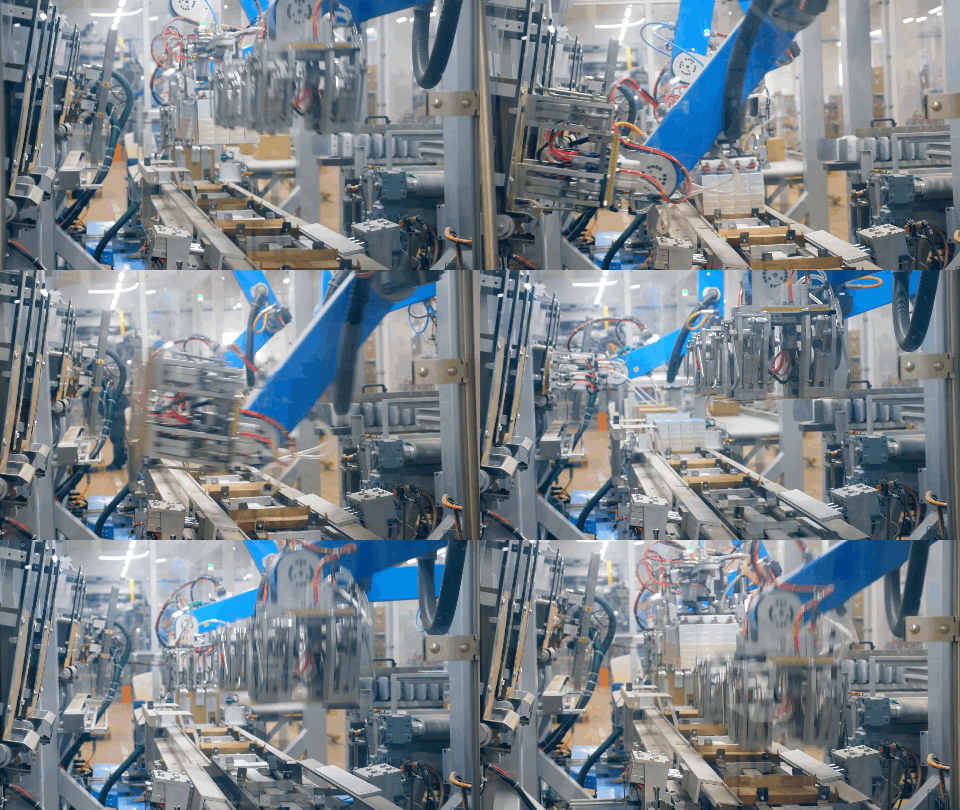
While the benefits of cabinet-free automation are compelling, manufacturers often approach such significant technological shifts with caution. The imperative to maintain uninterrupted productivity means that wholesale, immediate migration from established control-cabinet installations can be daunting.
Recognizing this, experts like Ocampo suggest a gradual, phased approach: "Testing out cabinet-free setups on an isolated workcell can sometimes work best," he advises. This strategy allows end-users to:
- Assess Impact on a Smaller Scale: Evaluate the performance, reliability, and benefits of cabinet-free drives in a controlled environment without jeopardizing entire production lines.
- Develop Internal Expertise: Train maintenance staff and engineers on the new technology, its installation, and troubleshooting procedures.
- Quantify Return on Investment (ROI): Gather concrete data on space savings, energy efficiency, and productivity gains to build a strong business case for broader adoption.
- Mitigate Risks: Identify and address any unforeseen challenges or integration issues before a wider rollout.
This incremental transition model allows manufacturers to leverage the advantages of cabinet-free automation while managing the risks associated with adopting new technology, ensuring a smooth and successful migration path.
Broader Implications for the Manufacturing Sector
The rise of cabinet-free discrete automation heralds profound implications for the future of manufacturing:
- Redefined Factory Layouts: Future factories will be characterized by more open, adaptable layouts, with less space dedicated to control infrastructure and more to actual production. This will facilitate greater operational flexibility and allow for easier reconfiguration.
- Enhanced Competitiveness: Manufacturers adopting cabinet-free solutions will gain a competitive edge through increased efficiency, reduced operational costs, faster time-to-market for new products, and the ability to respond more rapidly to market fluctuations. This applies equally to small and medium-sized enterprises (SMEs) and large multinational corporations.
- Skilled Workforce Evolution: The shift will necessitate a workforce skilled in integrating, managing, and maintaining these decentralized, smart automation systems, emphasizing diagnostics and software capabilities over traditional electrical wiring.
- Supply Chain Resilience: More agile and modular production systems can contribute to greater supply chain resilience, allowing manufacturers to quickly pivot production in response to disruptions or changing demands.
- The Path to Hyper-Flexible Production: Cabinet-free drives are a foundational component for achieving highly individualized and flexible production, paving the way for mass customization and batch-of-one manufacturing, where each product can be unique.
In conclusion, cabinet-free discrete automation is more than just a technological upgrade; it represents a fundamental rethinking of how industrial control systems are designed, deployed, and managed. By offering unparalleled space savings, enhanced modularity, significant energy efficiency, and improved reliability, these innovative drives are empowering manufacturers to navigate the complexities of the modern industrial landscape, driving forward the vision of a lean, flexible, and sustainable future for global production. The journey towards fully decentralized, intelligent manufacturing is well underway, with cabinet-free solutions leading the charge.