Rockford, Illinois & Toulouse, France – Collins Aerospace, a business unit of RTX, has marked a significant milestone in the development of hybrid-electric aircraft technologies, successfully completing integrated laboratory testing for the European Union’s Clean Aviation SWITCH project. This critical achievement paves the way for the transfer of the advanced hybrid-electric powertrain subsystems to Airbus, where they will undergo comprehensive aircraft-level integration and validation, pushing the industry closer to more sustainable air travel. The successful conclusion of these tests at "The Grid," Collins Aerospace’s state-of-the-art electric power systems laboratory, represents the most extensive integrated systems test conducted at the facility since its inauguration in 2023.
The global aviation industry faces immense pressure to decarbonize, with air travel currently contributing approximately 2.5% of global CO2 emissions. Projections indicate a significant increase in air traffic over the coming decades, further intensifying the need for innovative solutions. Hybrid-electric propulsion systems are emerging as a promising pathway to drastically reduce fuel consumption and emissions, particularly for short- and medium-haul flights which constitute a substantial portion of global air operations. The EU’s Clean Aviation Joint Undertaking, a public-private partnership, is at the forefront of this transformation, investing heavily in research and development to accelerate the availability of disruptive aircraft technologies. The SWITCH project, one of its flagship initiatives, directly addresses this challenge by focusing on integrating advanced hybrid-electric systems with next-generation engine technology.
The SWITCH Project: A Leap Towards Efficient Short-Haul Flights
The core objective of the SWITCH (Sustainable Winter Cruise Hybrid) program is to enhance the efficiency of future short- and medium-haul aircraft. This is achieved through the innovative combination of hybrid-electric propulsion with Pratt & Whitney’s highly efficient GTF (Geared Turbofan) engine technology. The demonstrator system integrates two megawatt-class motor generators and their associated motor controllers, meticulously developed by Collins Aerospace. This sophisticated powertrain is specifically engineered to deliver substantial reductions in fuel consumption and emissions, contributing significantly to the aviation sector’s environmental targets.
Kristin Smith, vice president of Electric Power Systems at Collins Aerospace, emphasized the collaborative nature and technological prowess behind this achievement. "This milestone underscores the power of combining RTX’s deep technology expertise with close industry collaboration to accelerate the development of hybrid-electric propulsion systems," Smith stated. "These systems are vital for significantly reducing fuel consumption in next-generation aircraft, aligning perfectly with the industry’s ambitious sustainability goals." Her remarks highlight the strategic importance of cross-industry partnerships in tackling complex engineering challenges and bringing transformative technologies to fruition.
The testing campaign at The Grid was a testament to robust multi-partner cooperation, drawing together leading entities from across the aerospace value chain. Pratt & Whitney, a fellow RTX company, played a pivotal role by leading the overall powertrain system integration and supplying the hybrid-electric engine controller, a critical component for managing the interplay between the electric and thermal propulsion elements. Airbus, the world’s largest aircraft manufacturer, contributed the interface controller, ensuring seamless communication and energy management between the propulsion system and the aircraft’s broader energy architecture. GKN Aerospace, a global tier-one aerospace supplier, was responsible for developing and delivering the intricate high-voltage wiring architecture, an essential element for safely and efficiently distributing electrical power throughout the integrated system. This intricate collaboration underscores the systemic nature of developing hybrid-electric aircraft, where no single entity can achieve the necessary advancements alone.
The Grid: Collins Aerospace’s Epicenter of Electrification
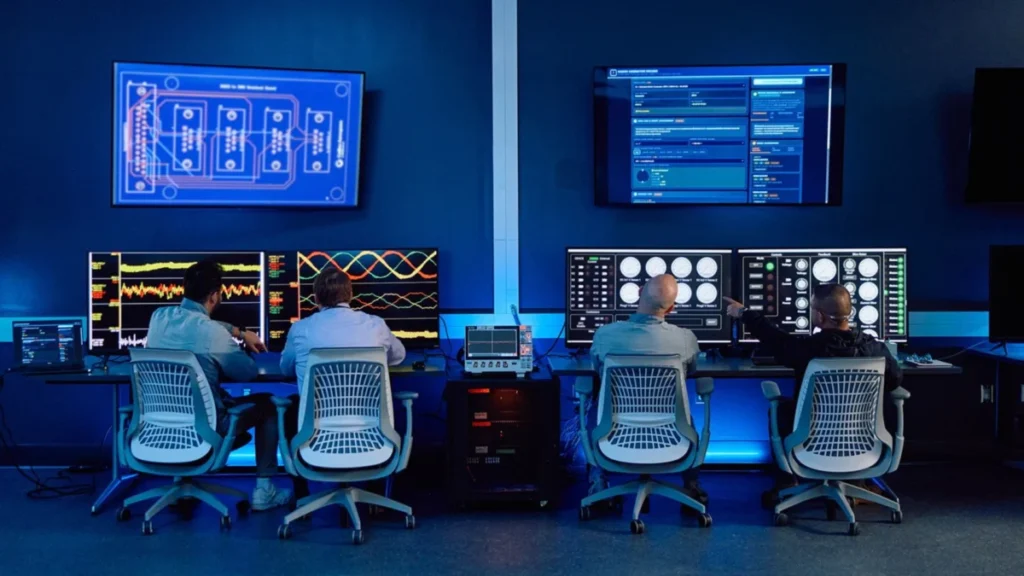
Opened in 2023, The Grid, located in Rockford, Illinois, stands as Collins Aerospace’s premier facility dedicated to advancing electric power systems for aerospace applications. This state-of-the-art laboratory is equipped with extensive testing capabilities, including high-power dynamometers, thermal management systems, and advanced control software, allowing for the rigorous evaluation of complex electrical systems. The successful completion of the SWITCH testing campaign at The Grid not only validates the facility’s advanced capabilities but also positions it as a crucial hub for future aerospace electrification research and development.
The investment in facilities like The Grid reflects a broader industry trend towards electrification. As aircraft move towards hybrid and eventually fully-electric propulsion, the demands on power generation, distribution, and thermal management systems become exponentially more complex. The Grid’s ability to simulate real-world flight conditions for high-power electrical systems makes it an invaluable asset in de-risking new technologies before they are integrated into flight demonstrators. This systematic approach ensures that components and subsystems meet stringent aerospace safety and performance standards.
Chronology of Progress and Future Outlook
The journey towards hybrid-electric aviation is a meticulously planned sequence of development and validation phases.
- 2023: The Grid, Collins Aerospace’s advanced electric power systems laboratory, opens in Rockford, Illinois, providing critical infrastructure for testing.
- Late 2023 – Early 2024: Integrated laboratory testing for the EU’s Clean Aviation SWITCH project commences at The Grid, involving extensive validation of hybrid-electric powertrain subsystems.
- Present (Mid-2024): Successful completion of SWITCH project laboratory testing, marking a key milestone. Subsystems are prepared for transfer to Airbus.
- Upcoming Phase: Aircraft-level integration tests begin at Airbus facilities, focusing on validating overall aircraft design, battery interfaces, and energy-management systems.
- Beyond SWITCH: The Grid transitions to serve as the primary testing platform for the Airbus-led LEIA (Large ScalE Integration Demonstrator of Hybrid Electrical Architecture) project.
- 2027: Scheduled demonstration tests for the hybrid-electric aircraft systems are expected, providing crucial flight performance data and insights into the potential of these technologies.
This structured timeline demonstrates a deliberate, phased approach to introducing revolutionary technology, moving from component-level testing to integrated system validation, and finally to flight demonstrations. Each step is essential for building confidence, gathering data, and addressing the myriad challenges associated with electrifying aircraft.
Expanding Horizons with the LEIA Project
Following the successful conclusion of the SWITCH testing campaign, The Grid will continue its pivotal role in advancing hybrid-electric aviation by serving as the testing platform for the Airbus-led LEIA (Large ScalE Integration Demonstrator of Hybrid Electrical Architecture) project. In this ambitious initiative, Collins Aerospace will expand its involvement, taking on the critical role of technical lead for energy sources. This entails supporting the development of key technologies specifically designed for future hybrid-electric short- and medium-range aircraft.
The LEIA project, also backed by the Clean Aviation program, is focused on advancing critical aircraft systems and components beyond the powertrain, including high-voltage power generation and electrical distribution systems. This holistic approach is crucial, as hybrid-electric aircraft demand not just efficient propulsion but also robust and reliable power management across the entire platform.
As part of its expanded contribution to the LEIA demonstrator, Collins Aerospace will provide a comprehensive suite of advanced electric aircraft technologies. These innovations are engineered to significantly improve system efficiency, bolster reliability, and enhance the overall passenger experience. Key contributions include:
- Four scalable electric motor-generators: These versatile units are central to the hybrid propulsion system, capable of both generating power and providing thrust. Their scalability ensures adaptability across different aircraft sizes and power requirements.
- Electronic controllers: These sophisticated controllers manage the complex interactions within the electric powertrain, optimizing performance and ensuring safe operation.
- Advanced power distribution systems: Essential for efficiently channeling high-voltage electricity throughout the aircraft, these systems are designed for minimal loss and maximum reliability.
- Cabin pressure and ventilation control technologies: While seemingly separate, these systems are increasingly integrated into the aircraft’s electrical architecture, benefiting from the enhanced power management capabilities of hybrid-electric designs.
Furthermore, Collins Aerospace’s facility in Nördlingen, Germany, will play a crucial role by supplying solid-state power controllers and power distribution panels. These cutting-edge components are designed to replace traditional mechanical circuit breakers and relays, offering substantial advantages. Solid-state devices significantly reduce aircraft weight due to their compact design and eliminate moving parts, thereby improving reliability and reducing maintenance requirements. This shift to solid-state technology is a testament to the ongoing drive for greater efficiency and robustness in modern aircraft systems.
The LEIA testing program will be a truly international effort, conducted across multiple Collins locations. Alongside The Grid in Rockford, Illinois, facilities across Europe will contribute, including sites in Toulouse (France), Frankfurt (Germany), Cork (Ireland), Rome (Italy), and Solihull (UK). This distributed testing approach leverages specialized expertise and infrastructure across the continent, underscoring the collaborative spirit of the Clean Aviation initiative.
Broader Impact and Implications for Aviation
The advancements made through the SWITCH and LEIA initiatives are considered essential building blocks by Clean Aviation for realizing the vision of hybrid-electric short- and medium-range aircraft. Pierre Durel, Project Officer at Clean Aviation, articulated this sentiment, stating, "These programs demonstrate the immense importance of international collaboration in advancing future aviation technologies. They are essential building blocks for our industry, paving the way for a more sustainable future." Durel further expressed anticipation for the outcomes of the demonstration tests scheduled for 2027, which are expected to provide invaluable insights into the real-world performance and potential of these hybrid-electric aircraft systems.
The implications of these developments extend far beyond the immediate technical achievements:
- Environmental Benefits: Hybrid-electric propulsion systems are projected to reduce fuel consumption by 20-30% or even more for specific flight segments, directly leading to a proportionate decrease in greenhouse gas emissions. Furthermore, electric components can significantly reduce noise pollution, particularly during take-off and landing, benefiting communities around airports.
- Economic Advantages: Fuel is a major operating cost for airlines. Significant reductions in fuel consumption translate into substantial operational savings, potentially making air travel more affordable and sustainable for carriers. Reduced maintenance due to fewer mechanical parts in electric systems also contributes to lower operating costs.
- Technological Leadership: Europe, through initiatives like Clean Aviation, is positioning itself at the forefront of sustainable aviation technology. The successful development and deployment of these systems will foster innovation, create high-tech jobs, and strengthen the region’s competitive edge in the global aerospace market.
- Passenger Experience: While primarily focused on efficiency, the move towards electrification can also lead to a quieter cabin environment and potentially smoother flight operations due to more precise power control.
- Addressing Challenges: While promising, hybrid-electric aviation faces significant challenges, including the weight and energy density of batteries, thermal management of high-power electrical components, and the rigorous certification processes required for new aircraft technologies. The ongoing projects like SWITCH and LEIA are specifically designed to address and overcome these hurdles.
The collaboration between industry giants like RTX/Collins Aerospace, Airbus, Pratt & Whitney, and GKN Aerospace, supported by the strategic funding and direction of the Clean Aviation program, represents a concerted global effort to redefine the future of flight. The successful completion of the SWITCH project’s lab testing is not merely a technical achievement; it is a critical step forward in a broader journey towards an aviation industry that is cleaner, quieter, and more economically viable for generations to come. The upcoming aircraft-level integration tests and the subsequent LEIA project will further refine these technologies, bringing the industry closer to the transformative flight demonstrations anticipated in 2027.