Quantum computers, the enigmatic engines of tomorrow’s computational frontier, have long been synonymous with cryogenic extremes. Most contemporary quantum systems demand temperatures perilously close to absolute zero – a frigid -459 degrees Fahrenheit (approximately 15 millikelvin) – to cradle the exquisitely fragile quantum states essential for computation and communication. This requirement has not only rendered them astronomically expensive to build and operate but has also confined them to specialized, heavily insulated laboratories, severely limiting their practical deployment and scalability. The intricate network of dilution refrigerators, cryostats, and cooling systems required to maintain such an environment forms a significant barrier to widespread quantum adoption, presenting both an engineering marvel and a formidable economic hurdle.
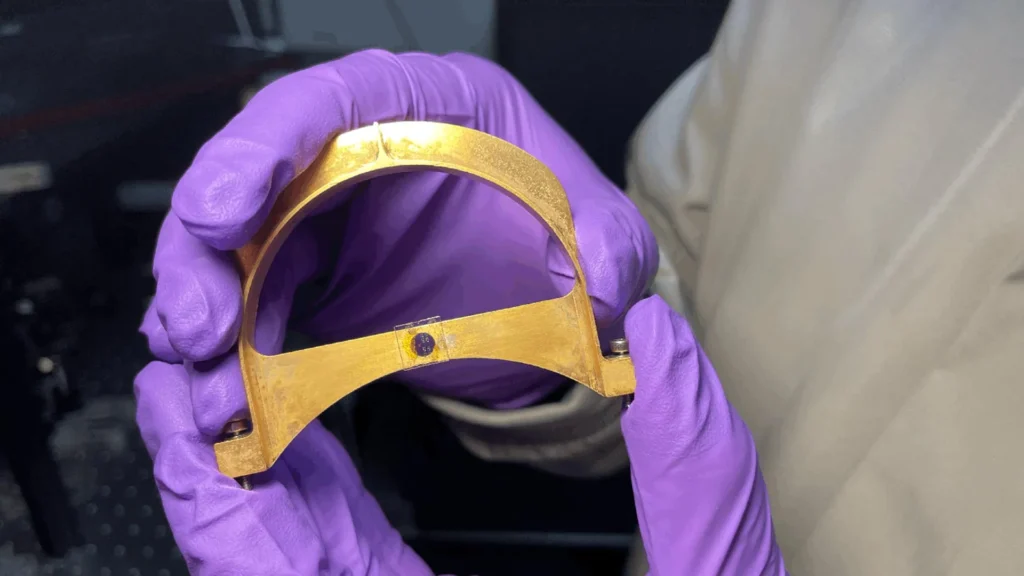
Now, a significant paradigm shift has emerged from Stanford University, where researchers have engineered a nanoscale optical device capable of functioning robustly at room temperature. This innovative component achieves a critical feat: it successfully links the quantum properties of light and electrons, a fundamental prerequisite for future quantum communication systems. Published in Nature Communications, this breakthrough could fundamentally alter the trajectory of quantum technology development, accelerating the advent of smaller, lower-cost, and more practical quantum devices capable of transmitting quantum information over vast distances. The ability to operate at ambient temperatures removes one of the most substantial logistical and financial impediments currently stifling the quantum revolution.
The Cold Reality of Quantum Computing: A Historical Context
For decades, the pursuit of quantum supremacy has been characterized by an ongoing battle against decoherence – the inevitable loss of quantum information due to environmental interference. Quantum states, unlike their classical counterparts, are inherently delicate, susceptible to collapse from even the slightest thermal fluctuations or stray electromagnetic fields. To mitigate this fragility, engineers have resorted to extreme measures. Superconducting qubits, for instance, which are currently at the forefront of quantum computing development, rely on superconductivity to minimize electrical resistance and thermal noise, necessitating cooling to millikelvin temperatures. Trapped ion systems, another promising modality, use electromagnetic fields to suspend ions in a vacuum, reducing environmental interaction, but still often require precise laser cooling and isolation.
The infrastructure for maintaining these ultra-cold environments is immense. A single dilution refrigerator, capable of reaching temperatures colder than deep space, can cost millions of dollars and occupy a substantial footprint, resembling a multi-tiered chandelier of intricate plumbing and wiring. The energy consumption to operate these systems is also considerable, adding to the operational overhead. This "cryogenic overhead" has been a primary driver of the high entry cost for quantum research and development, effectively limiting the number of institutions and companies that can actively participate in the quantum race. The Stanford team’s development directly addresses this long-standing and pervasive challenge, proposing a path towards a quantum future that is far less reliant on exotic cooling technologies.
Stanford’s Room-Temperature Revelation: Bridging Light and Matter
At the heart of Stanford’s breakthrough is a novel nanoscale optical device that enables entanglement – a unique quantum phenomenon where two or more particles become intrinsically linked, sharing a common fate regardless of distance – between photons (particles of light) and electrons. This quantum connection is not merely an academic curiosity; it is widely considered a cornerstone for constructing resilient and efficient quantum communication networks. Photons are excellent carriers of quantum information over long distances due to their speed and low interaction with the environment, while electrons are ideal for storing and processing quantum information within devices. The ability to seamlessly transfer quantum states between these two entities at room temperature opens up unprecedented possibilities.
"The material in question is not really new, but the way we use it is," states Jennifer Dionne, a professor of materials science and engineering at Stanford and the senior author of the seminal study. "It provides a very versatile, stable spin connection between electrons and photons that is the theoretical basis of quantum communication. Typically, however, the electrons lose their spin too quickly to be useful." This statement underscores the ingenuity of the Stanford approach: leveraging existing materials in a novel configuration to overcome a critical limitation in quantum coherence.
Twisted Light and Quantum Spin: The Mechanics of the Device
The device itself is an elegant marriage of advanced material science and nanophotonics. It comprises a thin, intricately patterned layer of molybdenum diselenide (MoSe2) integrated with a nanopatterned silicon substrate. Molybdenum diselenide belongs to a fascinating class of materials known as transition metal dichalcogenides (TMDCs), which have garnered significant attention in condensed matter physics and quantum materials research due to their exceptional optical and quantum properties. These properties include strong light-matter interaction, direct bandgaps in the monolayer limit, and robust spin-valley coupling, making them prime candidates for quantum applications.
The true innovation, according to the researchers, lies in the role played by the silicon nanostructures. These structures are not merely passive supports; they are meticulously engineered to generate what the team describes as "twisted light." Feng Pan, a postdoctoral scholar in Dionne’s lab and the paper’s first author, elaborates: "The Silicon nanostructures enable what we call ‘twisted light.’ The photons spin in a corkscrew fashion, but more importantly, we can use these spinning photons to impart spin on electrons that are the heart of quantum computing." This "twisted light" refers to photons possessing orbital angular momentum (OAM), a property distinct from their polarization (spin angular momentum). By precisely manipulating the OAM of photons, the device can effectively "twist" them in a specific direction, transferring this angular momentum to the electrons within the MoSe2 layer.
Dionne emphasizes the minute scale of these critical structures. "The patterned nanostructures are imperceptible to the human eye, about the size of the wavelength of visible light," she adds. "But they help us manipulate photons very precisely to make them spin – to twist them – in a specific direction, for example, up or down." This nanoscale precision is paramount for controlling the delicate quantum interactions required for entanglement and spin transfer. The ability to control electron spin – a fundamental quantum property akin to a tiny magnet – is crucial because electron spins can serve as qubits, the basic units of quantum information.
A Simpler Path to Quantum Communication and Computing
The entanglement of twisted light with electron spins creates stable qubits, the foundational elements for quantum information systems. Unlike classical bits, which can only represent 0 or 1, qubits leverage quantum mechanical phenomena such as superposition (being both 0 and 1 simultaneously) and entanglement to process and transmit information in radically new ways, promising exponential speedups for certain computational problems.
One of the most persistent and formidable challenges in quantum technology has been maintaining the coherence of these delicate quantum states. In most existing quantum systems, the necessity for extreme cooling stems directly from the need to suppress thermal vibrations and environmental noise that cause decoherence, leading to the rapid loss of quantum information. By operating at room temperature, the new Stanford device sidesteps one of the most significant engineering and financial obstacles that has historically limited the widespread adoption and practical deployment of quantum technologies.
Beyond the temperature advantage, the compact, nanoscale design of the device offers further benefits. It is relatively inexpensive to fabricate and promises greater practicality compared to the bulky, complex, and costly setups characteristic of many current quantum systems. If scaled and further developed, this technology holds immense potential to contribute to a wide array of transformative applications, including ultra-secure communications (via quantum key distribution), highly sensitive advanced sensing platforms, unprecedented high-performance computing capabilities, revolutionary advancements in artificial intelligence, and numerous other emerging applications across various sectors.
The Crucial Role of Material Science
The judicious selection of materials was central to the success of this project. The team deliberately chose TMDC materials like molybdenum diselenide due to their unusual quantum characteristics, specifically their strong spin-orbit coupling and direct bandgap properties, which facilitate efficient light-matter interaction and spin manipulation. The Stanford researchers collaborated closely with Fang Liu and Tony Heinz, experts in TMDC materials, to fully leverage their unique properties.
"It all comes down to this material and our Silicon chip," Pan explains. "Together, they efficiently confine and enhance the twisting of light to create a strong coupling of spin between photons and electrons. This stabilizes the quantum state that makes quantum communication possible." This synergistic interaction allows for a robust and sustained quantum connection between light and matter, essential for preserving the fragile quantum properties required for both communication and computational tasks. The ability of the patterned silicon to effectively sculpt and control light at the nanoscale, combined with the inherent quantum properties of MoSe2, forms the bedrock of this room-temperature quantum link.
Toward Future Quantum Networks and Everyday Integration
The Stanford team is actively engaged in refining the device, exploring various TMDC materials and alternative material combinations that could yield even better performance metrics, such as longer coherence times and higher entanglement fidelity. They are also investigating whether these novel room-temperature systems might unveil entirely new quantum capabilities or phenomena that are currently inaccessible under cryogenic conditions.
A more ambitious, longer-term objective is the seamless integration of devices like this into larger, interconnected quantum networks – the envisioned "quantum internet." Achieving this grand vision will necessitate concurrent advancements in a suite of supporting technologies, including more efficient and stable quantum light sources, high-speed modulators, sensitive quantum detectors, and robust quantum interconnects to link various components.
Ultimately, the overarching goal of quantum research is to miniaturize quantum components sufficiently to integrate them into everyday electronic devices, much like transistors revolutionized classical computing. While such a future remains several decades away, the work at Stanford represents a pivotal stride toward making quantum technology significantly more accessible, practical, and pervasive. The global race for quantum supremacy, currently seeing billions invested by governments and tech giants like IBM, Google, Intel, Microsoft, and Amazon, underscores the immense potential and perceived value of such breakthroughs. Projections suggest the quantum computing market alone could surge from a few billion dollars today to tens of billions by the early 2030s, a trajectory that will be heavily influenced by innovations like this one that drive down costs and expand accessibility.
"If we can do that, maybe someday we could do quantum computing in a cell phone," Pan muses with a hopeful smile, acknowledging the profound implications. "But that’s a 10-plus-year plan." This statement, while ambitious, encapsulates the transformative potential of room-temperature quantum operation. By overcoming the formidable challenges of cryogenic cooling, the Stanford team has not only pushed the boundaries of quantum engineering but has also illuminated a more direct and practical path towards a future where quantum technologies are no longer confined to specialized labs but become an integral part of our technological landscape, democratizing access to this revolutionary paradigm.