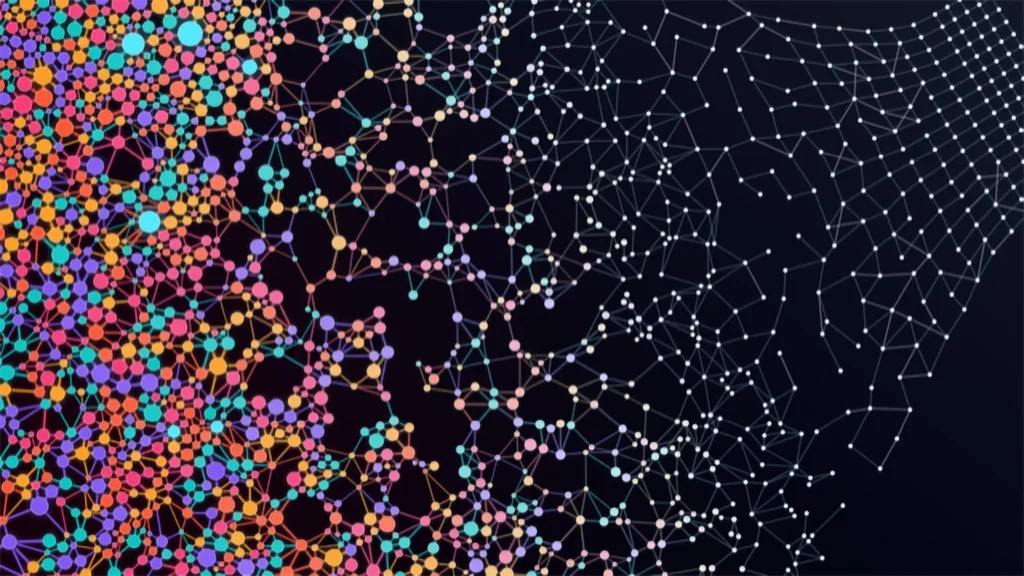
Perfection may not always be the best recipe for stability, especially in complex systems such as electrical grids, ecosystems, and advanced materials. A groundbreaking study from Northwestern University has revealed that variation, often perceived as a defect, can actually be an advantage, making complex networks more resilient and stable. This finding challenges decades of scientific and engineering assumptions that have largely prioritized uniformity in the design and understanding of interconnected systems.
For years, researchers operated under the premise that networks would perform more reliably if their individual components behaved as similarly as possible. This intuitive approach suggested that a system of identical parts, operating in predictable synchronicity, would naturally be more robust. However, real-world systems rarely exhibit such pristine tidiness. Power generators possess unique operational characteristics, neurons display diverse forms and behaviors, species occupy distinct niches within ecosystems, and the constituent parts of engineered materials are seldom perfectly uniform. The new research, published on September 17 in the prestigious journal Science, suggests that these inherent differences are not merely imperfections to be minimized but rather potential sources of strength.
Challenging the Paradigm of Uniformity
The notion that homogeneity equates to reliability has deep roots in various scientific disciplines. From early mechanical engineering, where interchangeable parts revolutionized manufacturing, to the theoretical models of physics seeking elegant, universal laws, the pursuit of uniformity has often been seen as the path to predictability and robustness. In the realm of network science, simplified mathematical models, such as the widely used Kuramoto model, often represent each node with only a single variable, inherently abstracting away the nuanced differences present in real-world components. While these models have provided valuable insights into synchronization and collective behavior, they have also inadvertently overlooked a crucial aspect of system dynamics: the role of heterogeneity.
"Previous studies found a growing number of cases in which disorder (also called heterogeneity, irregularity or asymmetry) across a network’s nodes can actually improve stability and desirable behavior," explained Adilson Motter, the Charles E. and Emma H. Morrison Professor of Physics and Astronomy at Northwestern’s Weinberg College of Arts and Sciences and director of the Center for Network Dynamics, who led the work. "We have seen this in important real-world systems, including power grids, metamaterials and brain computation. But we didn’t know how widespread this effect was or which kinds of systems could benefit from it. Our new study answers those questions, explains why these differences can improve stability and even reveals why scientists overlooked this effect for so long."
The historical focus on simplified models, which often assume identical nodes and connections, effectively "stripped away" the very complexities that, according to Motter’s team, are essential for understanding how disorder can promote stability. This is a significant revelation, as it indicates that a fundamental oversight in modeling approaches may have obscured a widespread natural phenomenon for decades.
A New Mathematical Framework for Understanding Variation
To address this gap, Motter’s team, including Northwestern postdoctoral researcher Arthur Montanari and graduate student Pietro Zanin (co-first authors of the study), developed a sophisticated mathematical framework. This framework was specifically designed to determine the precise conditions under which variation, or disorder, can actually enhance a network’s stability. Their approach moved beyond the simplified, single-variable representations of nodes, incorporating richer dynamics that more accurately reflect the complexity of real-world components and their interactions.
The researchers began by examining systems in a stable condition. They then meticulously calculated the system’s response to small disturbances. If these disturbances gradually diminished, the system was deemed to have returned to stability. Conversely, if the disturbances amplified, the system was considered unstable. This comparative analysis allowed them to systematically contrast networks with identical components against those featuring deliberate or inherent differences among their parts or connections. This methodology proved critical in identifying the general circumstances under which heterogeneity consistently outperformed uniformity in maintaining stability.
"Real systems are rarely uniform," Montanari noted. "Birds differ in personalities, neurons vary in shape, and even our social relationships can be asymmetric. These differences might appear random, but they can profoundly affect how the whole system behaves." The new framework provides the tools to quantify and understand these profound effects.
To further disseminate their findings and allow broader exploration, the researchers also developed an interactive website. This online tool enables users to visually experiment with different parameters, observing how network components interact, synchronize, and form organized patterns under varying degrees of disorder. This innovative approach makes complex theoretical concepts accessible, demonstrating the framework’s practical applicability.
Why Disorder Can Improve Stability: The Mechanisms
The study identified two primary ways in which disorder can bolster a system’s stability. Differences can manifest either within the nodes themselves (e.g., varying operating characteristics of generators, different types of neurons) or in the links connecting these nodes (e.g., varying strengths of transmission lines, diverse types of ecological interactions). Crucially, the researchers found that the effect of disorder is not universal; it depends critically on both the location and the precise amount of variation introduced.
A key insight from the study is that there exists an optimal level of disorder. A moderate degree of heterogeneity can significantly enhance a network’s stability, making it more resilient to perturbations. However, pushing this variation to excessive levels can eventually become detrimental, potentially destabilizing the system. This "sweet spot" of disorder is where the benefits are maximized.
"If you make the system more homogeneous, you lose stability," Montanari explained. "But if you increase disorder too much, you also lose stability. Our framework can help pinpoint the level of disorder that helps the system achieve optimal stability." This precision is invaluable for future engineering and design applications.
Furthermore, the research uncovered an intriguing aspect of beneficial disorder: it doesn’t always require meticulous, pre-designed engineering. In many of their models, randomly introduced variation surprisingly yielded greater stability than even the most carefully optimized, completely uniform configurations. This suggests that simply allowing for a certain degree of natural diversity within a system can, in itself, confer a significant advantage. This was particularly true when the variation occurred in the links connecting nodes rather than within the nodes themselves, where even networks with relatively simple node dynamics could gain stability from disorder.
These findings build upon earlier work by Motter’s team. A 2020 Nature Physics study demonstrated that electrical generators could synchronize more effectively when they exhibited slight operational differences. Subsequently, a 2025 Nature Communications study led by Montanari found similar effects in models simulating flocking behavior and drone swarms. What remained unclear until now was whether these instances were rare exceptions or indicative of a much broader, fundamental principle. The current Science paper confirms the latter, establishing that "Disorder can stabilize networks, but only when the node dynamics are rich enough," as Motter emphasized.
Broader Impact and Implications: Re-evaluating Nature and Engineering
The implications of this research are far-reaching, promising to reshape our understanding of existing complex systems and to inform the design of future technologies.
Ecological Networks: Solving a Longstanding Paradox
One of the most compelling applications of this framework lies in ecology. Since the seminal work of theoretical ecologist Robert May in the 1970s, mathematical models have largely predicted that large, highly complex ecosystems should be inherently unstable and prone to collapse. This theoretical prediction stood in stark contrast to the observed reality of nature, which is teeming with vast, diverse, and remarkably persistent ecosystems. This discrepancy became known as the "stability-complexity paradox."
"Since the 1970s, mathematical models have predicted that large, complex ecosystems should destabilize and collapse," Montanari recounted. "Yet very large and highly diverse ecosystems persist in nature. Our findings suggest that variation among mutually beneficial interactions, such as those between pollinators and flowers, could help explain this paradox." The new framework suggests that the very diversity and heterogeneity within these ecosystems, far from being a liability, are precisely what enable their long-term stability. The varied roles, interactions, and characteristics of species, rather than uniform behavior, could be the key to their resilience against environmental disturbances.
Power Grids: Designing for Resilience in the Face of Volatility
Modern electrical grids are quintessential complex systems, constantly balancing supply and demand across vast geographical areas. They are vulnerable to a multitude of disturbances, including sudden demand spikes, generator failures, cyberattacks, and extreme weather events. Traditionally, grid operators have strived for uniformity in generator output and transmission line capacity to maintain stability. However, the Northwestern study suggests that strategically introducing differences among generators or in the properties of transmission lines could create more resilient power grids. For instance, varying the response times or operational parameters of different generators, or designing transmission lines with diverse impedance characteristics, could help the grid absorb shocks and recover from disturbances more effectively, preventing cascading failures and widespread blackouts. This could lead to a paradigm shift in grid design, moving from a goal of perfect synchronization to one of adaptive heterogeneity.
Advanced Materials: Engineering Novel Properties
In materials science, the concept of "architected materials" involves building materials from repeating, often nearly identical, structural units to achieve specific macroscopic properties. The new findings open exciting avenues for innovation here. By deliberately varying the shapes, sizes, orientations, or even the physical properties of these constituent units, engineers might be able to create materials with unprecedented or significantly improved behaviors. Imagine materials designed to absorb shock more effectively, exhibit self-healing capabilities, or adapt their properties in response to external stimuli, all by leveraging controlled internal disorder. To achieve this, researchers would need to model these materials as mechanical networks, using detailed enough models to capture their true dynamic behavior. Computational techniques could then be employed to explore vast combinations of variation, pinpointing those that yield the greatest benefits for specific applications.
Neural Networks and Brain Computation: Echoes in the Mind
While not extensively detailed in the article, the mention of "brain computation" by Motter hints at another profound implication. The human brain, arguably the most complex network known, is characterized by immense neuronal diversity—neurons vary in type, size, connectivity, and firing properties. This inherent heterogeneity has long puzzled neuroscientists. The Northwestern study’s findings resonate deeply with this biological reality, suggesting that the brain’s "disorder" might not be a limitation but a fundamental aspect of its extraordinary stability, adaptability, and computational power. Understanding how this variation contributes to brain function could unlock new insights into neurological disorders and the design of more robust artificial intelligence systems.
A Call for Strategic Heterogeneity
The study "Disorder-promoted stability" marks a pivotal moment in network science. It unequivocally demonstrates that the traditional pursuit of perfect uniformity in complex systems is often misguided and, in many cases, counterproductive to stability. Instead, a new design philosophy emerges: one that embraces and strategically leverages heterogeneity.
"When disorder enhances stability, the next challenge is figuring out how best to design it," Motter concluded. This next phase of research will likely involve developing advanced computational tools and theoretical frameworks to not only identify the optimal levels of disorder but also to pinpoint the most effective patterns of variation for specific system goals. It will require interdisciplinary collaboration, bringing together physicists, engineers, biologists, and computer scientists to translate these theoretical insights into tangible, real-world applications.
The research was generously supported by key governmental and scientific organizations, including the Army Research Office (grant number W911NF-22-2-0109) and the National Science Foundation (grant number DMS-2308341). Further acknowledgment was extended to the NSF-Simons National Institute for Theory and Mathematics in Biology (NSF grant number DMS-2235451 and Simons Foundation grant number MP-TMPS-00005320) for providing a stimulating research environment. This robust funding underscores the recognized importance and potential impact of this paradigm-shifting work, which promises to revolutionize our approach to stability in the intricate, interconnected world around us. The era of strategic heterogeneity has arrived.