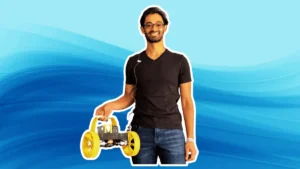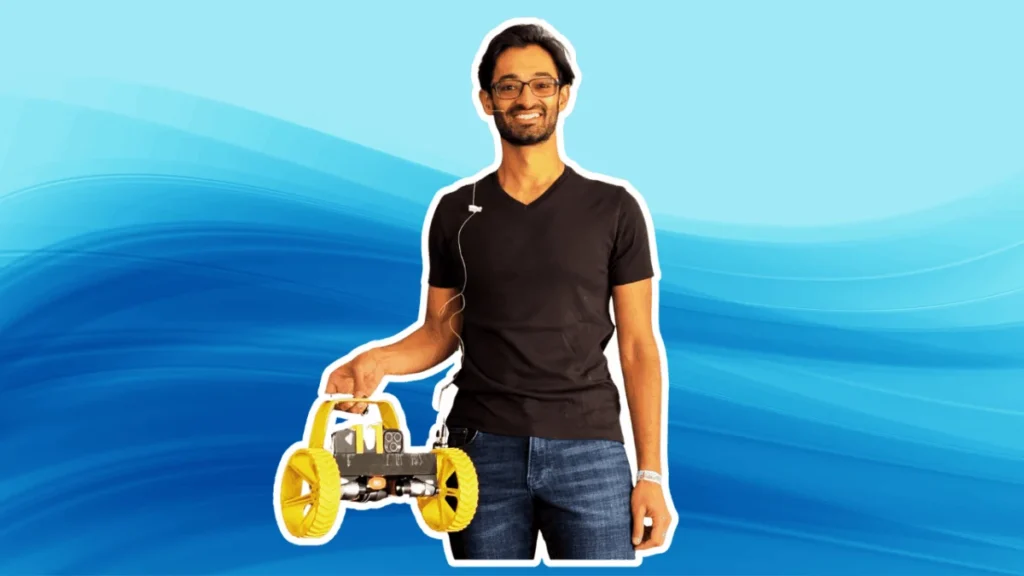
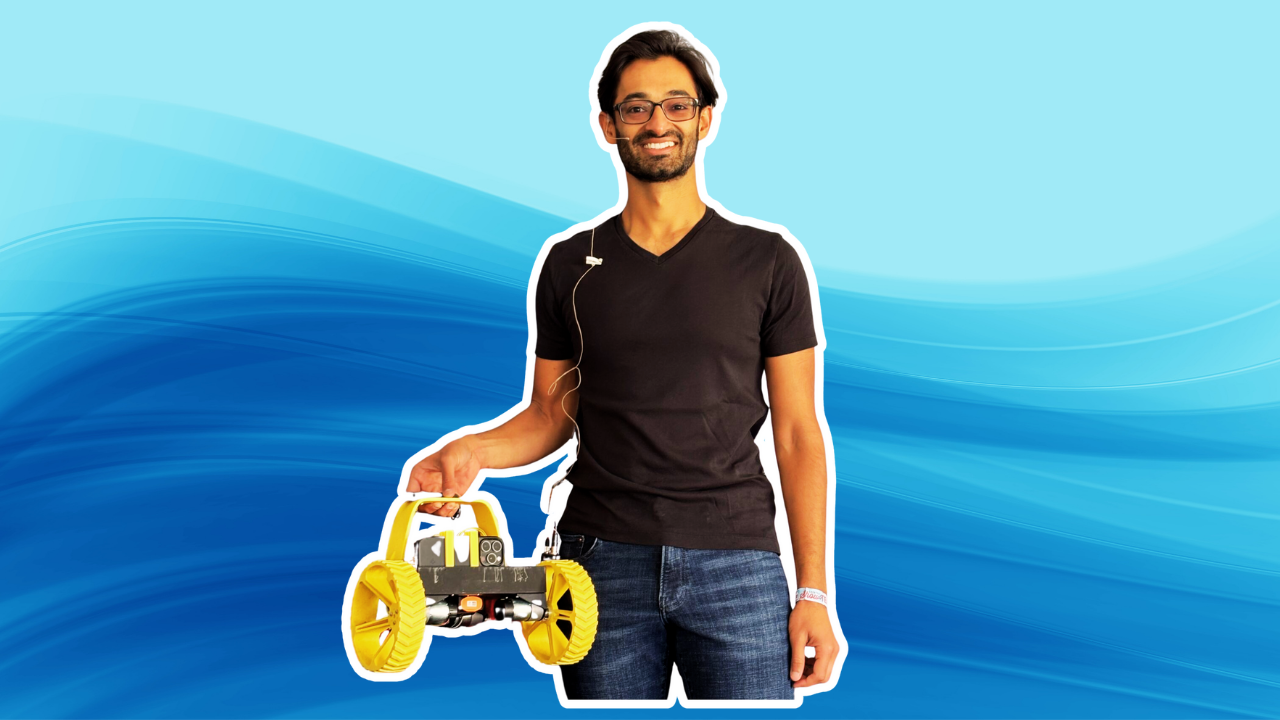
The spirit of innovation, often perceived as confined to high-tech laboratories and corporate research facilities, found a vibrant, tangible expression at Maker Faire Bay Area, where maker Survy Vaish unveiled his groundbreaking, phone-powered outdoor robot. Vaish’s journey from a rudimentary shoebox prototype to a sophisticated autonomous system capable of navigating outdoor environments and identifying objects serves as a compelling testament to the power of iterative design, accessible technology, and the democratizing ethos of the global maker movement. His project not only captivated attendees but also offered a powerful narrative on how ingenuity, rather than an unlimited budget, can drive significant technological advancements.
The Genesis of an Autonomous Vision: From Concept to Cardboard
The inception of Vaish’s robot project began not with advanced schematics or complex simulations, but with a fundamental question: how to transform a vague aspiration for an "autonomous robot" into a functional reality. This initial phase, showcased at the renowned Maker Faire, underscores a critical principle in engineering and product development: start simple. Vaish’s earliest iteration, a modest shoebox equipped with basic motors and wheels, deliberately eschewed complexity. Its purpose was singular: to establish the fundamental premise of mobility. This initial, seemingly unremarkable prototype represented the crucial first step in a much larger developmental arc, proving that the concept of a self-propelled unit was viable before investing in more intricate components or designs. This "minimum viable product" approach is a cornerstone of modern agile development, emphasizing rapid prototyping and real-world testing over theoretical perfection.
The choice of a shoebox, a ubiquitous household item, deliberately highlighted the project’s commitment to accessibility. It challenged the conventional notion that advanced robotics necessitates exotic materials or specialized workshops. Instead, it championed the idea that the greatest innovations often emerge from readily available resources, demonstrating a pathway for aspiring makers and engineers to embark on complex projects without prohibitive upfront costs.
The Iterative Dance: Test, Fix, and Evolve
The true brilliance of Vaish’s project, and a core lesson for anyone engaged in creative problem-solving, lies in its iterative development cycle. The video documentation, shared widely, meticulously illustrates a process far removed from a linear progression. Instead, it portrays a dynamic loop of testing, identifying flaws, implementing solutions, and re-testing—a cycle central to the engineering discipline.
Phase 1: Addressing Environmental Awareness (Sensors)
The initial shoebox, while capable of movement, lacked any understanding of its surroundings. Early field tests likely revealed immediate limitations: collisions with obstacles, inability to follow a path, or getting stuck. This empirical feedback led directly to the first significant upgrade: the integration of sensors. These initial sensors, likely basic ultrasonic or infrared modules, provided the robot with rudimentary proximity detection, allowing it to "feel" its immediate environment and avoid simple obstructions. This addition marked a pivotal shift from mere propulsion to basic interaction with the physical world, laying the groundwork for more complex autonomous behaviors.
Phase 2: The Computational Core (Raspberry Pi)
As the robot’s sensory input grew, so did the need for a processing unit capable of interpreting this data and making decisions. The integration of a Raspberry Pi, a compact and affordable single-board computer, represented a significant leap. The Raspberry Pi ecosystem, with its robust open-source community and versatile GPIO pins, provided Vaish with a powerful yet accessible "brain" for his robot. This allowed for the execution of more complex algorithms, enabling data fusion from multiple sensors and more sophisticated motor control. The Raspberry Pi’s low cost and widespread adoption have been instrumental in democratizing robotics, making advanced computing power available to hobbyists and educators worldwide. Its inclusion transformed the robot from a simple remote-controlled device into a semi-intelligent system capable of executing pre-programmed tasks based on sensor input.
Phase 3: Advanced Perception and Navigation (Smartphone Integration)
The most innovative and impactful phase involved harnessing the computational and sensory prowess of a modern smartphone. Recognizing the smartphone as a pocket-sized supercomputer, Vaish integrated it as the robot’s primary "eyes" and "navigator." Smartphones are equipped with an array of sophisticated sensors – high-resolution cameras, GPS modules, accelerometers, gyroscopes, and compasses – far exceeding what a hobbyist could typically afford or integrate individually.
- GPS for Localization: The smartphone’s GPS functionality enabled the robot to accurately determine its position in an outdoor environment, crucial for path planning and navigation. This allowed for goal-oriented movement, rather than mere obstacle avoidance.
- Camera Vision for Object Recognition: The smartphone’s camera, coupled with readily available computer vision libraries (many open-source, like OpenCV), allowed the robot to "see" and interpret its surroundings. This capability moved beyond simple obstacle detection to object identification, enabling the robot to distinguish between different types of objects in a park setting – perhaps distinguishing a tree from a bench, or even a human. This opened up possibilities for tasks like environmental monitoring, surveillance, or even interactive applications.
The smartphone integration exemplified a "smart reuse" strategy, leveraging existing consumer technology for specialized applications, thereby drastically reducing the project’s cost and complexity while simultaneously enhancing its capabilities. This approach is increasingly prevalent in the maker community, pushing the boundaries of what can be achieved with off-the-shelf components.
Maker Faire Bay Area: A Catalyst for Innovation
Survy Vaish’s presentation at Maker Faire Bay Area was not merely a demonstration; it was a living embodiment of the event’s core philosophy. Maker Faire, often dubbed "the Greatest Show (and Tell) on Earth," is a flagship event of the broader maker movement. Originating in the San Francisco Bay Area in 2006, it has grown into a global phenomenon, with satellite Faires held in cities across continents. Its mission is to celebrate creativity, innovation, and the DIY spirit, providing a platform for individuals to showcase their projects, share knowledge, and inspire others.
The event attracts a diverse audience, from seasoned engineers and artists to curious families and aspiring young makers. It fosters a unique environment where learning is hands-on, collaboration is encouraged, and failure is seen as a stepping stone to success. Vaish’s robot project perfectly encapsulated this ethos: it started humbly, evolved through perseverance, and utilized accessible technology, making it relatable and inspiring to a wide spectrum of attendees. Projects like his underscore the Faire’s role in democratizing technology and demonstrating that advanced concepts are within reach for anyone with curiosity and a willingness to experiment.
The Democratization of Robotics and STEM Education
Vaish’s project carries significant implications for the democratization of robotics and the future of STEM (Science, Technology, Engineering, and Mathematics) education. For decades, robotics was an exclusive domain of well-funded research institutions and large corporations, requiring specialized knowledge and expensive equipment. However, the advent of affordable single-board computers like the Raspberry Pi (which typically retail for $35-$75) and the ubiquitous presence of powerful smartphones has fundamentally altered this landscape.

The average smartphone today possesses more processing power, memory, and an array of sensors than supercomputers of just a few decades ago. By repurposing this readily available technology, Vaish demonstrates a pathway for individuals and educational institutions to engage with complex robotics concepts without prohibitive financial barriers. This fosters a more inclusive environment for innovation, allowing students and hobbyists from diverse backgrounds to explore, experiment, and contribute to the field.
Moreover, the project serves as an invaluable educational tool. It visually breaks down the complex process of building an autonomous robot into understandable, iterative steps. It teaches:
- Problem-solving: Each addition to the robot was a direct response to an identified problem.
- Systems Thinking: Understanding how different components (sensors, processor, actuators, software) interact to form a cohesive system.
- Practical Application of STEM: Concepts like kinematics, computer vision, embedded programming, and sensor fusion are demonstrated in a tangible, engaging manner.
- Resilience and Persistence: The journey highlights that innovation is rarely a straight line but rather a series of trials, errors, and refinements.
Such projects are crucial in sparking interest in STEM fields, particularly among younger generations. They shift the perception of engineering from abstract theory to exciting, hands-on creation, potentially inspiring future generations of innovators and problem-solvers. Educational initiatives increasingly seek out such accessible, project-based learning opportunities to make abstract concepts more concrete and engaging for students.
Broader Impact and Future Implications
The success of Survy Vaish’s phone-powered robot extends beyond individual achievement; it points to broader trends and future possibilities in the field of robotics and technology utilization.
Innovation through Repurposing: The project exemplifies a growing trend of innovation through repurposing existing consumer electronics. This approach is environmentally conscious, reduces costs, and allows for rapid prototyping using battle-tested components. This model could see wider adoption in areas like environmental monitoring, agricultural automation (e.g., small, autonomous farm bots), or even personal assistance robots, where cost-effectiveness and adaptability are paramount.
The Rise of Edge AI in Robotics: By using a smartphone, Vaish is essentially leveraging "edge AI" – artificial intelligence processed directly on the device rather than relying solely on cloud computing. This is crucial for outdoor robots where consistent internet connectivity might be unreliable, and real-time decision-making is essential. The increasing sophistication of on-device AI capabilities in smartphones means that more complex tasks, from advanced object recognition to predictive navigation, can be performed locally, enhancing autonomy and responsiveness.

Community and Open Source Contributions: While not explicitly stated, projects showcased at Maker Faire often draw inspiration from, and contribute back to, the open-source community. The use of a Raspberry Pi, Linux-based operating systems, and potentially open-source computer vision libraries like OpenCV, places Vaish’s work within a collaborative ecosystem. The sharing of build logs, code, and design principles allows others to replicate, modify, and improve upon the original work, fostering a cumulative cycle of innovation. This collaborative spirit is a hallmark of the maker movement and a powerful driver of technological progress.
Ethical Considerations and Accessibility: As robotics becomes more accessible, discussions around ethical considerations, such as data privacy (especially with camera-equipped robots), safety in public spaces, and responsible development, become increasingly pertinent. However, the accessibility championed by projects like Vaish’s also means that a wider range of voices can participate in these discussions and in the development of future robotic systems, potentially leading to more inclusive and ethically considered outcomes.
In conclusion, Survy Vaish’s journey from a humble shoebox to an autonomous, phone-powered outdoor robot is a compelling narrative of ingenuity, perseverance, and the transformative power of accessible technology. Presented at the Maker Faire Bay Area, it stands as a beacon for aspiring makers, educators, and innovators worldwide, proving that with a clear vision, an iterative mindset, and a willingness to embrace the learning process, even the most ambitious technological dreams can be brought to life, one simple step at a time. His work is a powerful reminder that the future of innovation is not solely the preserve of large institutions, but rather a vibrant, collaborative landscape shaped by individuals who dare to build.