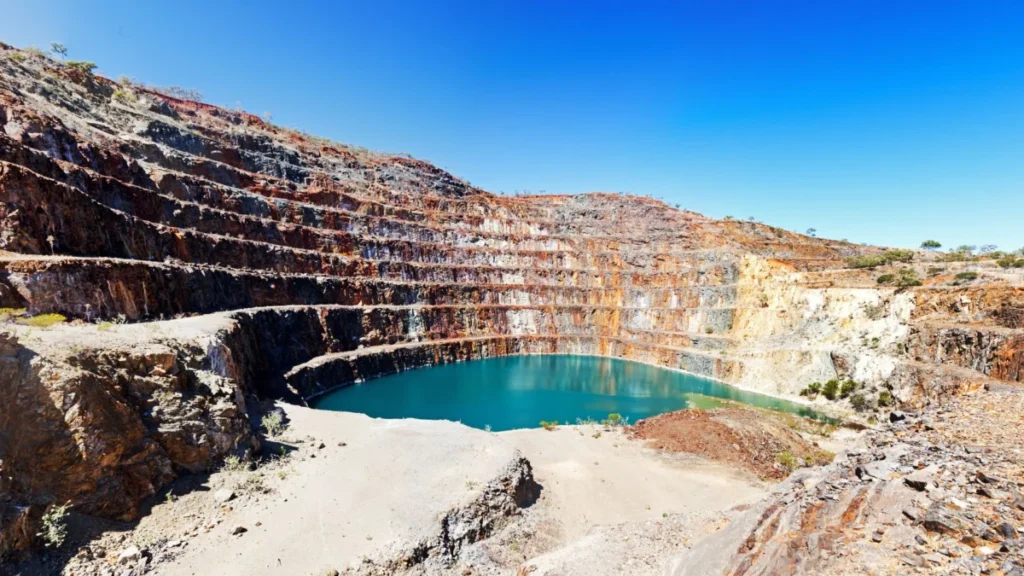
The United States is embarking on an ambitious initiative to revitalize its domestic uranium supply chain, a critical endeavor aimed at bolstering national energy security and reducing reliance on foreign sources. In this pivotal landscape, Eagle Nuclear Energy Corp. has strategically positioned itself, drawing significant attention with its control over what it describes as the nation’s largest conventional measured and indicated uranium deposit. This move comes as Washington intensifies its focus on cultivating homegrown nuclear fuel production capabilities, a priority underscored by geopolitical tensions and an escalating global demand for reliable baseload power.
A Critical Juncture for U.S. Nuclear Energy
For decades, the United States, despite operating the world’s largest fleet of nuclear reactors, has paradoxically become increasingly dependent on imported uranium to fuel its substantial energy needs. Nuclear energy currently accounts for approximately one-fifth of U.S. electricity generation, providing a crucial, carbon-free baseload power source. However, domestic uranium production has dwindled significantly since its peak in the late 1970s and early 1980s, largely due to a combination of lower global prices, high operating costs for domestic mines, and a general lack of sustained federal support. This decline has left the nation vulnerable to disruptions in the international market, with a substantial portion of its uranium and enrichment services historically sourced from countries like Russia, Kazakhstan, Canada, and Australia.
The current geopolitical climate, particularly the conflict in Ukraine, has dramatically highlighted the strategic vulnerabilities inherent in this import dependency. Federal efforts to mitigate this reliance have gained unprecedented momentum, translating into increased interest and investment in companies actively developing American uranium assets. The focus is particularly keen on projects that demonstrate a clear pathway toward production within the coming years, offering a tangible solution to the nation’s energy security concerns. Policymakers have formally added uranium to the U.S. critical minerals list, a designation that unlocks various federal incentives and streamlines regulatory processes for domestic development. Concurrently, the government is actively pursuing measures to reduce reliance on Russian nuclear fuel specifically, alongside initiatives to expand domestic conversion and enrichment capacity, thereby rebuilding the entire nuclear fuel cycle within U.S. borders.
The Aurora Project: Eagle Nuclear’s Flagship Asset
At the forefront of Eagle Nuclear Energy Corp.’s strategy is its flagship Aurora Uranium Project, strategically situated along the Oregon-Nevada border. This location places it within a historically prolific uranium mining region, albeit one that has seen limited activity in recent decades. The company asserts that the Aurora deposit hosts a substantial resource base, with 32.75 million pounds of indicated uranium resources and an additional 4.98 million pounds in the inferred category. These figures are reported under the U.S. Securities and Exchange Commission’s (SEC) S-K 1300 reporting standard, a robust framework designed to ensure transparency and comparability for mineral property disclosures by U.S. public companies, similar in intent to Canada’s NI 43-101 standard but tailored for the U.S. regulatory environment.
The immediate attention for Eagle Nuclear now pivots to demonstrating the project’s economic viability and its ability to support future mining operations. This critical phase involves a planned pre-feasibility drilling campaign. The company has formally submitted permit applications for this campaign, which is slated to include 47 drill holes covering an estimated 27,000 feet. The commencement of drilling is contingent upon securing necessary federal and state approvals, a process that can often be complex and time-consuming, reflecting stringent environmental and land-use regulations.
Eagle Nuclear anticipates completing this pivotal pre-feasibility study during the second half of 2027. To bolster its technical capabilities and accelerate progress, the company has recently expanded its technical team, bringing on Yukuskokon Professional Services. This addition complements and broadens existing partnerships with established engineering and consulting firms such as BBA USA and SLR International, who are engaged in crucial engineering design, resource evaluation, and ongoing permitting work. These collaborations are essential for navigating the multifaceted challenges of project development, from geological modeling to environmental impact assessments.
Financial Standing and Strategic Position
Financially, Eagle Nuclear Energy Corp. appears to be entering this intensive development phase with a relatively strong balance sheet, a notable advantage for a pre-revenue developer in the capital-intensive mining sector. According to its second-quarter 2026 filing with the U.S. Securities and Exchange Commission, the company reported approximately $28 million in cash and, critically, no interest-bearing debt. This financial prudence provides a buffer against unforeseen costs and allows for sustained investment in the Aurora project without immediate pressure from debt servicing, positioning the company favorably for potential future capital raises or strategic partnerships.
Industry analysts suggest that such a robust financial position is particularly attractive to investors in the current market, given the renewed interest in critical mineral projects and the inherent risks associated with early-stage resource development. The absence of significant debt offers flexibility and indicates a disciplined approach to corporate finance, which can be a key differentiator in attracting further investment as the project progresses through its milestones.
The Geopolitical and Economic Impetus for Domestic Uranium
Washington’s invigorated focus on uranium supply chain resilience is a direct response to a confluence of geopolitical and economic factors. The reliance on foreign uranium, particularly from state-owned or state-influenced entities in countries like Russia and Kazakhstan, has become an undeniable national security vulnerability. The U.S. government, through various legislative actions and executive orders, is actively seeking to de-risk its nuclear fuel supply. Initiatives such as the American Assured Fuel Supply Program and provisions within the Inflation Reduction Act aim to provide financial incentives, contracts, and regulatory support for domestic uranium mining, conversion, and enrichment.
The long-term demand outlook for uranium is also remarkably strong. Utilities across the globe are increasingly looking to secure long-term uranium supplies, driven by a global renaissance in nuclear energy. Governments worldwide, recognizing nuclear power’s role in decarbonization and energy independence, are planning and commissioning new reactors. Furthermore, the burgeoning electricity needs of advanced technologies, particularly the exponential growth of artificial intelligence (AI) data centers, are adding fresh pressure on grid operators to secure reliable, baseload power generation. Nuclear energy, with its high capacity factor and minimal land footprint compared to other renewables, is uniquely positioned to meet this escalating demand. These trends have collectively underpinned a sustained recovery in uranium prices and reignited substantial investor interest across the entire nuclear fuel cycle sector.
Navigating Milestones and Future Prospects
The trajectory of Eagle Nuclear Energy Corp. and the pace at which its Aurora project advances will be determined by several critical milestones. The immediate hurdle remains securing the necessary permit approvals for the planned pre-feasibility drilling campaign. This regulatory clearance is not merely a formality but a comprehensive review process involving environmental impact assessments, public consultations, and adherence to various federal and state guidelines, particularly in ecologically sensitive areas along the Oregon-Nevada border. The outcome of this drilling program will be instrumental in shaping the subsequent pre-feasibility study, providing more definitive data on the deposit’s geological characteristics, grade distribution, and overall economic potential.
Beyond uranium production, Eagle Nuclear also holds exclusive rights to a proprietary small modular reactor (SMR) technology. This strategic diversification provides the company with exposure to another area of intense interest from both policymakers and the broader nuclear industry. SMRs represent a paradigm shift in nuclear power generation, offering smaller, more flexible, and potentially more cost-effective reactor designs that can be deployed for various applications, including remote communities, industrial complexes, and grid stabilization. The combination of domestic uranium supply and SMR technology places Eagle Nuclear at the nexus of two critical components of the future energy landscape, aligning its business model with national energy independence and decarbonization goals.
However, like any nascent uranium developer, Eagle Nuclear faces a complex array of challenges. These include the inherent difficulties of the permitting process, which can involve significant delays and public opposition; technical risks associated with geological variability and mining methods; and the ever-present financial risks of bringing a large-scale mining project to commercial production. Capital expenditure requirements for mine construction can be substantial, often requiring further equity financing or project-level debt. Environmental stewardship and community engagement will also be crucial for long-term success, particularly in regions with a history of mining activity and evolving environmental regulations.
Despite these challenges, the Aurora project enters its next stage at a uniquely opportune moment for the United States. The urgent national imperative to secure reliable domestic uranium supplies has placed projects like Aurora under unprecedented industry and government scrutiny. Its successful development could represent a significant step toward rebuilding America’s nuclear fuel cycle, strengthening energy independence, and supporting the nation’s clean energy transition. The coming years will be critical in determining whether Eagle Nuclear Energy Corp. can transform its substantial resource into a strategic asset for the nation, thereby contributing to a more secure and sustainable energy future.






