In a landmark achievement for the field of fundamental physics, an international research consortium has successfully observed a long-predicted gravitational effect in a falling quantum object for the first time. The study, published on September 2 in the prestigious journal Science Advances, marks a significant milestone in the ongoing effort to reconcile the two seemingly incompatible pillars of modern science: Albert Einstein’s general theory of relativity and the principles of quantum mechanics. Led by researchers from Ben-Gurion University of the Negev, the University of Ulm, and the University of Oxford, the team—which includes Nobel laureate Professor Sir Roger Penrose—demonstrated that a core tenet of Einstein’s gravity continues to hold true even when applied to the strange, wave-like behavior of atoms at the microscopic scale.
The experiment focuses on the Weak Equivalence Principle (WEP), a foundation of general relativity which posits that all objects, regardless of their mass or composition, should fall at the same rate in a vacuum. While this principle has been verified with extraordinary precision using macroscopic objects—ranging from Galileo’s legendary (though perhaps apocryphal) experiments at the Leaning Tower of Pisa to the high-tech MICROSCOPE satellite mission—testing it within the quantum realm has historically proven elusive. The successful observation of these effects in a quantum system provides fresh empirical data for theorists attempting to construct a unified "Theory of Everything."
The Divergent Worlds of Modern Physics
For over a century, the progress of physics has been defined by a fundamental schism. On one side stands general relativity, Einstein’s geometric theory of gravitation, which describes the universe on a grand scale. It explains the orbits of planets, the bending of light by massive stars, and the expansion of the cosmos itself. On the other side is quantum mechanics, which governs the subatomic world. In the quantum realm, particles do not occupy single, definite positions; instead, they exist in states of superposition, behaving like waves that can traverse multiple paths simultaneously.
The challenge for modern physicists is that these two frameworks do not play well together. General relativity treats space and time as a smooth, continuous fabric (spacetime) that is warped by mass and energy. Quantum mechanics, however, suggests that at the smallest scales, everything is "quantized" or discrete. When scientists attempt to apply the mathematics of gravity to quantum particles, the equations typically break down, yielding nonsensical results. This experiment represents a rare instance where researchers have managed to peer into the "overlap" zone, where the gravitational influence of the Earth acts upon a system behaving according to quantum rules.
The Quantum Galileo Interferometer: A Technical Marvel
To bridge this gap, the research team developed a sophisticated instrument dubbed the "Quantum Galileo Interferometer." This device was designed to measure the "quantum phase" of an atom—a property that characterizes its wave-like state—as it moves through a gravitational field.
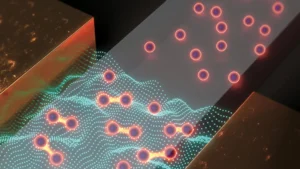
The experiment was conducted at the laboratories of Ben-Gurion University using clouds of rubidium atoms. Rubidium is frequently used in quantum optics because its properties allow it to be easily manipulated by lasers and magnetic fields. To begin the process, the researchers cooled these atoms to temperatures just millionths of a degree above absolute zero. At these extreme temperatures, the thermal motion of the atoms slows to a crawl, allowing their quantum characteristics to become dominant.
The atoms were held near the surface of a "chip-scale" device known as an atom chip. This technology uses microscopic wires to generate precise magnetic traps, allowing for the isolation and control of individual atomic clouds with high fidelity.
Chronology of the Experiment
The experimental procedure followed a highly controlled sequence of events, designed to isolate the effects of gravity on the quantum state of the atoms.
-
Initialization and Superposition: The process began by using microwave pulses to place the ultracold rubidium atoms into a state of quantum superposition. In this state, an atom does not exist in one specific energy level but rather in two different internal states simultaneously. Because these states respond differently to magnetic fields, the researchers could effectively "split" the atom’s wave function into two distinct paths.
-
The Dual-Path Trajectory: Once the atoms were split, the team used the atom chip’s integrated electrical wires to create a complex magnetic landscape. One part of the atomic wave was held stationary relative to the laboratory, anchored by a magnetic force that perfectly countered the downward pull of Earth’s gravity. This served as the "control" or reference part of the wave.
-
Free Fall Simulation: Simultaneously, the second part of the atomic wave was propelled upward by a magnetic pulse. Once it reached a certain height, the researchers switched it into a state that was virtually transparent to magnetic fields. This allowed this portion of the wave to enter a state of true free fall, following a ballistic trajectory—much like a ball thrown into the air—governed solely by gravity.
-
Recombination and Interference: After the falling portion of the wave completed its arc, the researchers applied another magnetic pulse to bring the two paths back together. When the "stationary" wave and the "fallen" wave were reunited, they underwent a process called interference.
-
Phase Measurement: By analyzing the resulting interference pattern, the scientists could calculate the "quantum phase" difference that had accumulated between the two paths. This phase difference is the quantum equivalent of the time dilation or path difference experienced by classical objects in a gravitational field.
Data Analysis and Results
The core finding of the research is that the measured quantum phase shift aligned perfectly with the predictions derived from Einstein’s equivalence principle. Specifically, the experiment showed that the gravitational potential of the Earth induced a shift in the quantum wave that was consistent with the laws of general relativity, despite the object itself being in a state of quantum superposition.
Lead author Professor Ron Folman of Ben-Gurion University emphasized the difficulty of the feat, noting that the experiment required a "hard experiment" to be married to a "far-reaching theoretical interpretation." The data confirmed that gravity affects the phase of a quantum wave in the exact manner that Einstein’s theory would suggest if it were extended into the quantum domain.
While previous experiments have used atoms to measure the strength of gravity (a field known as atom interferometry), this specific study is recognized as the first direct observation of the quantum phase produced specifically by a freely falling object in this configuration. It provides a laboratory-based verification that the "elevator" thought experiment used by Einstein to explain gravity remains valid even when the person in the elevator is replaced by a quantum wave.
Theoretical Implications and the Penrose Hypothesis
The inclusion of Professor Sir Roger Penrose in the research team adds a layer of theoretical depth to the findings. Penrose is well-known for his proposal that gravity may actually be the cause of quantum "collapse." In standard quantum theory, a particle remains in a superposition of states until it is measured, at which point the wave function "collapses" into a single state. Penrose’s theory, known as Objective Reduction (OR), suggests that if a superposition involves enough mass, the resulting "instability" in the fabric of spacetime will cause the wave function to collapse naturally.
The results of the Science Advances paper do not disprove Penrose’s theory. As the researchers noted, the rubidium atoms used in the experiment are far too light, and the duration of the superposition was too short, to trigger the gravitational collapse predicted by the Penrose model. However, the experiment provides the framework for testing these boundaries.
Professor Vlatko Vedral of the University of Oxford remarked on the robustness of current theory, stating, "We have no consistent theory telling us why quantum physics should fail. This experiment pushes quantum mechanics into one of its most intriguing frontiers, gravity, and shows that, once again, its predictions hold."
Broader Impact and Future Research
The implications of this research extend beyond the validation of Einstein’s theories. The ability to measure gravitational effects on quantum phases with such high precision has significant practical applications.
-
Quantum Sensing: The techniques developed for the Quantum Galileo Interferometer could lead to the creation of ultra-sensitive gravimeters. These devices could be used for mineral exploration, monitoring groundwater levels, or detecting underground structures by measuring minute fluctuations in Earth’s gravitational field.
-
Testing Quantum Gravity: While this experiment showed that gravity and quantum mechanics are compatible at this scale, the ultimate goal remains finding where they disagree. Identifying the point where Einstein’s theory fails is considered the "Holy Grail" of modern physics, as it would provide the first clues toward a theory of quantum gravity.
-
Scaling Up to Nanodiamonds: The team at Ben-Gurion University is already looking toward the next frontier. To test theories like those proposed by Penrose, they plan to replace rubidium atoms with much larger objects, such as nanodiamonds. These "macroscopic" quantum objects would contain millions of atoms, significantly increasing the mass involved in the superposition and potentially revealing the threshold where gravity begins to interfere with quantum behavior.
Institutional Collaboration
The success of the study was the result of a diverse international collaboration. Key institutions involved included:
- Ben-Gurion University of the Negev (Israel): Provided the primary experimental facility and lead researchers.
- University of Oxford (UK): Contributed theoretical expertise, particularly regarding the intersection of relativity and quantum theory.
- University of Ulm (Germany): Assisted in the development of the quantum interference models.
- University of Southampton (UK): Provided support in quantum systems engineering.
- German Aerospace Center (DLR): Contributed to the development of atom chip technologies suitable for high-precision physics.
- Texas A&M University (USA): Offered additional theoretical and data analysis support.
By successfully observing the gravitational signature on a falling quantum wave, this team has not only honored Einstein’s legacy but has also cleared a path for the next generation of experiments. As researchers move toward testing heavier objects and longer durations of superposition, the "Quantum Galileo" approach may eventually provide the answers to the most fundamental questions about the nature of our universe. For now, Einstein’s equivalence principle remains unshaken, proving once again that the "happiest thought" of the 20th century’s greatest physicist continues to resonate through the quantum world of the 21st.