The rapid integration of artificial intelligence into the global healthcare infrastructure has initiated a dual-sided revolution. While machine learning algorithms now expedite the discovery of novel treatments and enhance diagnostic accuracy through the analysis of vast datasets, they simultaneously introduce significant risks. These risks primarily manifest when algorithmic systems inadvertently amplify historical biases embedded within the data or the design process itself. To address these complexities at the foundational level of education, Kathy Jessen Eller of The Concord Consortium recently introduced the Data Science, AI & You (DSAIY) program. Presented during the fourth installment of the Raspberry Pi Foundation’s seminar series on "Teaching about AI in the Arts, Humanities, and Sciences," the DSAIY initiative represents a pivotal shift toward fostering critical data literacy among high school students, specifically within the high-stakes context of medical technology.
The seminar highlighted a growing concern among educators: the tendency of students to use AI tools as a means of "cognitive offloading" rather than as a supplement to deep inquiry. As generative AI becomes ubiquitous in the classroom, the challenge for modern pedagogy is no longer just about teaching students how to use these tools, but rather how to evaluate their outputs with a skeptical, evidence-based lens. The DSAIY curriculum, pronounced "Daisy," seeks to bridge this gap by involving students directly in the machine learning pipeline, ensuring they understand the "black box" of AI before they rely on its conclusions.
The Evolution of the DSAIY Curriculum and Educational Context
The development of the DSAIY program comes at a time when AI in the healthcare market is projected to grow at a compound annual growth rate (CAGR) of over 35% through 2030. As these technologies become standard in clinical settings, the need for a workforce—and a citizenry—that understands the ethical implications of data has never been more urgent. The Concord Consortium, a non-profit organization dedicated to transforming STEM education through technology, developed DSAIY as a semester-long curriculum designed to demystify machine learning for the next generation.
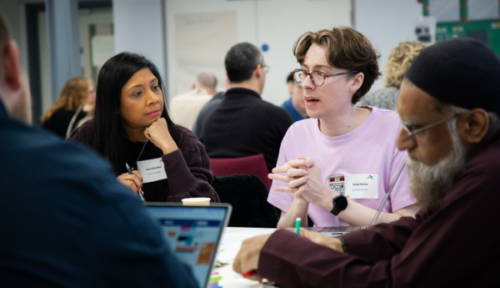
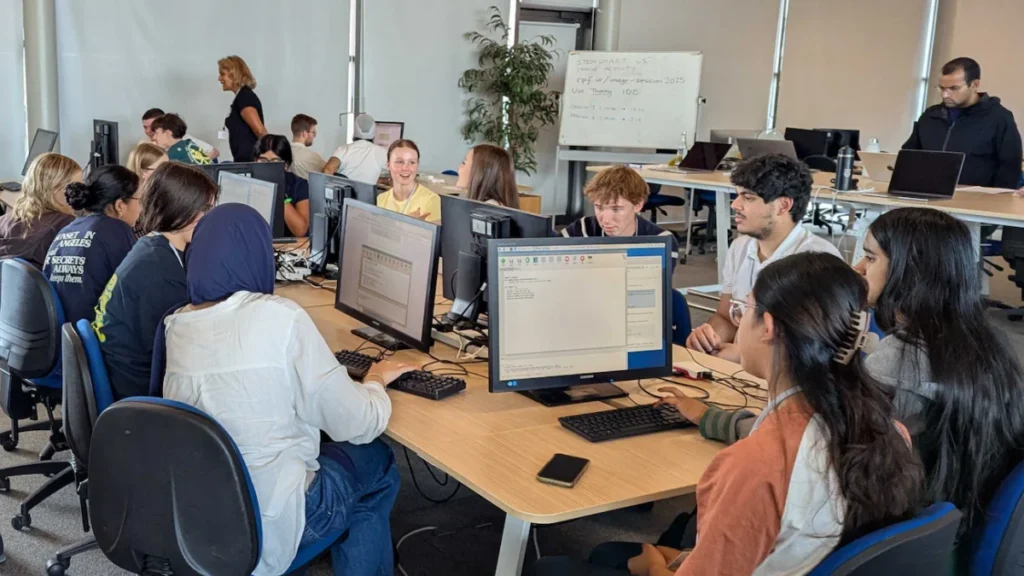
The program was piloted in Rhode Island, USA, where it has already reached over 800 students across various socioeconomic backgrounds. One of the most significant outcomes reported by participating educators was the diversity of the cohort. Despite the historical gender gap in computer science and statistics, the DSAIY program saw exceptionally high female participation. In several instances, teachers noted that enrollment among female students exceeded that of any other computer science elective offered at their institutions. This suggests that framing AI and data science through the lens of healthcare—a field with clear social utility and human impact—may be an effective strategy for broadening participation in STEM.
Chronology of the Machine Learning Pipeline in the Classroom
The DSAIY curriculum is structured to mirror the real-world workflow of data scientists and clinicians. Rather than theoretical lectures, the program emphasizes a "hands-on" approach that takes students through the following stages:
- Data Collection and Preparation: Students begin by identifying sources of data. In the healthcare context, this involves understanding where patient information comes from and the limitations of different collection methods.
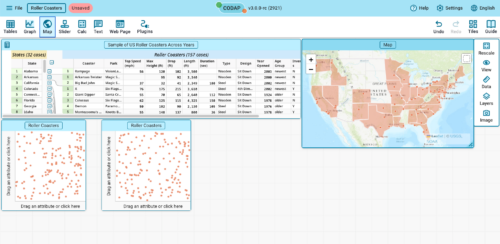
- Visualization and Initial Analysis: Using the Common Online Data Analysis Platform (CODAP), a web-based tool developed by The Concord Consortium, students visualize large datasets. This stage is crucial for transitioning students from basic graphing to "data reasoning," where they look for patterns, outliers, and inconsistencies.
- Model Training and Testing: Students utilize Python to train simple machine learning models. By working with authentic healthcare data, they learn how different variables (features) influence the predictions made by an algorithm.
- Evaluation and Iteration: The final stage involves testing the model against new data to check for accuracy and, more importantly, for bias.
The curriculum culminates in a high-intensity "AI-a-thon." This event functions as a cross-disciplinary hackathon where students collaborate with professional data scientists, healthcare clinicians, and their peers to solve real-world problems. This interaction provides students with a rare glimpse into the professional application of the skills they have acquired, reinforcing the practical value of their classroom work.
Technical Foundations: The Role of CODAP and Python
A primary barrier to entry for data science education has traditionally been the steep learning curve associated with programming and complex statistical software. The DSAIY program mitigates this by utilizing CODAP. As a free, browser-based tool, CODAP allows students to interact with data points dynamically. For example, a student can click on an individual outlier in a scatter plot and immediately see the specific case details associated with that point. This capability helps humanize the data, reminding students that every data point represents a person or a clinical event.

As students progress, they transition to Python, the industry standard for AI development. By introducing coding within the specific context of healthcare modeling, the curriculum provides a functional purpose for learning syntax, which often increases student persistence and engagement. The goal is to move students away from being passive consumers of technology toward becoming active architects who understand the underlying logic of the systems they use.
Case Study in Algorithmic Bias: The Pulse Oximeter
To ground the abstract concept of "bias" in reality, the DSAIY curriculum utilizes the example of the pulse oximeter—a device that became a household name during the COVID-19 pandemic. Pulse oximeters measure blood oxygen saturation by passing red and infrared light through the skin. However, peer-reviewed research has consistently shown that these devices can provide inaccurate readings for individuals with darker skin pigmentation, as the melanin can interfere with light absorption.
In the classroom, students collect their own oxygen saturation data and use CODAP to plot the results. This exercise leads to critical discussions about the ethics of data. Students are asked to consider: If a dataset used to train a medical AI primarily features light-skinned individuals, what happens when that AI is used in a diverse hospital setting? By grappling with the decision of whether to remove outliers or how to weight different demographic groups, students gain a first-hand understanding of how systemic bias is coded into "objective" technology.
Supporting Educators through Professional Development
The success of the DSAIY program is heavily dependent on the readiness of teachers, many of whom may not have formal training in computer science. To address this, the program provides four days of intensive professional development followed by ongoing technical assistance. This support structure ensures that teachers feel confident navigating the complexities of Python and the ethical nuances of healthcare data.

Feedback from the 11 teachers who participated in the Rhode Island pilot indicated that the curriculum’s focus on real-world application was its strongest asset. Teachers reported that students who previously showed little interest in mathematics or coding became highly engaged when the subject matter touched on health equity and social justice.
Analysis of Broader Implications and Future Directions
The DSAIY initiative highlights a fundamental shift in the definition of "AI Literacy." While many current educational frameworks focus on the functional use of AI (e.g., how to write a prompt), Kathy Jessen Eller and her colleagues argue that true literacy must be rooted in data literacy. Understanding how an AI arrives at an answer requires an understanding of the data it was fed.
This approach has significant implications for the future of education:
- Critical Evaluation of Generative AI: Students who understand how models are trained are better equipped to evaluate the trustworthiness of tools like ChatGPT. They recognize that these systems are probabilistic, not deterministic, and are prone to the biases of their training sets.
- Democratization of Tech Careers: By integrating AI education into general high school curricula rather than sequestering it in advanced computer science tracks, programs like DSAIY help ensure that the future AI workforce is as diverse as the population it serves.
- Informed Citizenship: As AI begins to influence public policy, criminal justice, and insurance, a citizenry capable of questioning algorithmic decisions is essential for maintaining democratic oversight.
Conclusion and Upcoming Research Seminars
The Data Science, AI & You program serves as a blueprint for how complex, high-stakes technology can be taught effectively at the secondary level. By focusing on the intersection of data, healthcare, and ethics, it provides students with the critical thinking skills necessary to navigate an increasingly automated world.
The Raspberry Pi Foundation’s seminar series continues to explore these themes. The next session, scheduled for Tuesday, 14 July, will feature Dan Verständig from Goethe University Frankfurt. The seminar will delve into the relationship between Social Explainable AI (Social XAI) and Critical Computational Literacy (CCL), further expanding the dialogue on how educators can prepare youth for a future defined by artificial intelligence. As the series progresses, the overarching goal remains clear: to transform AI from a mysterious force into a transparent tool that can be understood, questioned, and improved by the next generation.