In 2017, a moment of profound vulnerability and burgeoning hope unfolded on the stage of Kresge Auditorium at the Massachusetts Institute of Technology (MIT). Michael, a man living with the debilitating effects of Parkinson’s disease, attempted a seemingly simple task: drawing a spiral. This common diagnostic exercise, however, became an immediate testament to the severity of his tremors, which rendered the task exceedingly difficult. The audience, packed with students, faculty, and industry observers, watched as the struggle highlighted the pervasive challenge faced by millions globally.
What followed was a pivotal demonstration. Michael affixed a prototype wristband device, the brainchild of an MIT student team from the renowned 2.009 (Product Engineering Processes) course, who were presenting their innovative project that evening. With a press of a button, the device activated, emitting a subtle, patterned vibration. This mechanical stimulus sent intricate signals up his wrist and into his brain, triggering an almost instantaneous and dramatic reduction in his tremors. Within seconds, Michael was able to redraw the spiral with remarkable precision, a feat that elicited a roaring ovation and palpable emotion from the Kresge Auditorium crowd.
"When this device is turned on, I feel like I used to feel when I didn’t have Parkinson’s disease," Michael shared with the captivated audience, his voice conveying a sense of rediscovery. "It’s an amazing, amazing feeling." The profound impact of the demonstration resonated deeply, leading to immediate inquiries from attendees—classmates, professors, and others—eager to acquire the device for family members and friends grappling with similar tremor conditions. The students, however, had to explain that, for the time being, only one such prototype existed. This singular, impactful event marked the genesis of what would become Encora Therapeutics, igniting a near decade-long journey from an ambitious classroom project to a commercially viable, FDA-cleared medical device.
The Genesis of an Idea: From MIT Classroom to Life-Changing Innovation
The story of Encora Therapeutics is deeply rooted in MIT’s unique ecosystem of innovation, particularly its Department of Mechanical Engineering’s 2.009 course. This popular capstone product-design class challenges senior-level students to conceive, design, and prototype a novel product within a single semester, often pushing the boundaries of what is considered feasible. The course emphasizes real-world problem-solving, teamwork, and the rigorous process of product development from ideation to presentation.
The three co-founders who remain integral to Encora Therapeutics today—Daniel Carballo ’18, SM ’20, Allison Davanzo ’18, and Kyle Pina ’18—were all seniors in 2017 when they embarked on the 2.009 journey. The semester commenced with a broad brainstorming session, where groups of approximately 17 students were tasked with generating dozens of potential product ideas. It was Carballo who proposed a wearable device utilizing mechanical vibration to deliver signals to the brain, aiming to mitigate tremors. The initial focus was on Parkinson’s disease, a neurodegenerative disorder characterized by tremors, rigidity, bradykinesia (slowness of movement), and postural instability.
"It was one of hundreds of throwaway ideas," Carballo recounted, reflecting on the humble origins. "The initial concept was inspired by classes I had taken in robotics around neural control of movement. I had a preliminary understanding of how an electromechanical device might interact with the body’s control systems and feedback loops that control movement to relieve pathological control of movement." This foundational understanding, though nascent, planted the seed for what would later become a breakthrough technology.
The team meticulously whittled down their extensive list of ideas. Remarkably, Carballo’s proposal was ultimately selected by an overwhelming vote of 16-1, with Carballo himself casting the sole dissenting vote. "I tried to explain to the team that this was so far-fetched that there was no way, in one semester, we would be able to make anything," Carballo admitted, highlighting the inherent skepticism regarding the project’s ambitious scope within the tight academic timeframe. "Thankfully, I got outvoted." This democratic decision, against the inventor’s own reservations, proved to be a pivotal moment.
For much of the semester, Carballo’s initial pessimism seemed justified. The team often lagged behind other groups at various class milestones, struggling with the complexities of developing such a sophisticated device. The turning point arrived just a week before the final presentations when they met Michael, whose severe hand tremors stemmed from early-onset Parkinson’s disease. Michael’s personal story underscored the urgent need for effective solutions. "He was a home renovator, so he worked with his hands, but his tremors had progressed to the point that he struggled to turn a screwdriver, use a drill, or even fill out paperwork," Carballo recalled. "He had become reliant on his wife and daughter not only to run his business, but to help him with everyday activities."
By this critical juncture, the 2.009 team had managed to assemble a prototype: "a foamcore box with a Raspberry Pi chip and some wires coming out," as Carballo described it—a testament to ingenuity under resource constraints. When Michael put on this rudimentary device and activated it, his tremors dramatically decreased. "It was like a light switch turned on and his tremors stopped," Carballo vividly described. "His wife and daughter started crying." This profoundly emotional and successful trial provided the validation the team desperately needed, propelling them forward. A week later, Michael graciously agreed to repeat the demonstration on stage for the final presentations, transforming a class project into a public spectacle of hope.
The overwhelming response from the audience, particularly the outpouring of interest from individuals seeking the device for their loved ones, galvanized the team. "It showed us there were a lot of people with this problem that could really benefit from this," Carballo stated. "A subset of the team became possessed. It would have been such a shame to know this could exist and to have it never leave the classroom."
From Concept to Company: Navigating the Entrepreneurial Ecosystem
The determination to transition their groundbreaking prototype from a classroom success to a commercial reality led some team members to leverage MIT’s robust entrepreneurial resources. Programs like MIT Sandbox, which provides seed funding and mentorship; MIT FUSE, an accelerator for student startups; and the MIT Venture Mentoring Service (VMS), which connects founders with experienced mentors, became crucial allies in their journey. These platforms offered not just financial support but also invaluable guidance on business strategy, regulatory pathways, and market development.
In 2020, the student team formally incorporated as Encora Therapeutics. However, this was merely the beginning of an arduous path. Dozens of hardware iterations were required to refine the "foamcore box" into a sleek, user-friendly, and durable medical device. This iterative process involved extensive engineering, material science, and user experience design to ensure both efficacy and patient comfort. Following hardware development, the critical phase of clinical trials began, a rigorous process essential for validating the device’s safety and effectiveness and securing regulatory approval.
Initially, Encora focused on Parkinson’s disease, running its first clinical trial with 20 Parkinson’s patients in 2022 in collaboration with MassGeneral Brigham. However, subsequent research and market analysis revealed a broader, equally pressing need: essential tremor (ET). Essential tremor is a neurological disorder characterized by involuntary, rhythmic shaking, most commonly affecting the hands but also able to impact the head, voice, legs, and torso. It is often confused with Parkinson’s disease but is distinct, being far more prevalent, affecting an estimated 10 million Americans, roughly ten times the number of individuals diagnosed with Parkinson’s.
"It was a greater unmet need," Carballo explained. "There are a lot of drugs being developed for Parkinson’s disease, but essential tremor hasn’t experienced that same innovation." This strategic pivot towards essential tremor underscored Encora’s commitment to addressing significant gaps in patient care and leveraging their technology where it could have the most immediate and widespread impact.
The Science Behind the Solution: Non-Invasive Neuromodulation
Understanding the scientific basis of tremors is key to appreciating Encora’s innovation. Scientists today believe that tremors are caused by malfunctioning signals within specific regions of the brain responsible for interpreting sensory input and coordinating movement. "In these diseases, neurotransmitter deficiencies result in this pulsed signaling in the brain that manifests as tremors that are basically pulsed motor outputs," Carballo elaborated. These abnormal electrical patterns disrupt the smooth, controlled movements the brain typically orchestrates.
Current conventional treatments for severe tremors, particularly essential tremor, range from medications like beta-blockers and anti-seizure drugs, which often come with significant side effects, to more invasive surgical options. These surgical interventions include Deep Brain Stimulation (DBS), which involves implanting electrodes into specific brain areas to deliver electrical impulses, and Focused Ultrasound (FUS) thalamotomy, which uses highly focused ultrasound waves to ablate a small target in the brain. While effective for many, these procedures are invasive, carry risks, and are not suitable for all patients.
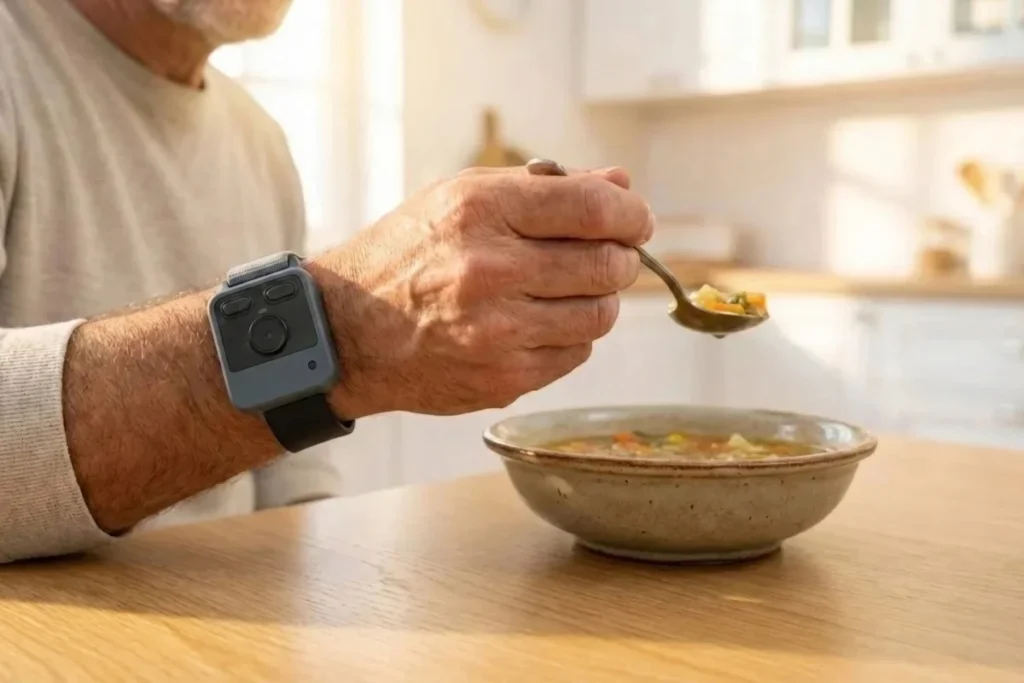
Encora’s innovation offers a radically different, non-invasive approach to neuromodulation. Their watch-like product targets the same critical brain regions as surgery but does so externally, through mechanical vibrations applied at the wrist. "We’re applying mechanical stimulus, basically vibration, to stretch receptors in the wrist, which tell your body where it is in space," Carballo explained. These stretch receptors, known as proprioceptors, are crucial for the body’s spatial awareness and motor control.
The stimulation causes these receptors to activate and send a patterned signal via peripheral nerves in the wrist. This signal then travels through the peripheral nervous system and into the central nervous system, ultimately reaching the very same regions of the brain that are targeted by invasive surgical procedures. By introducing a new, corrective pattern of sensory input, the device aims to re-calibrate the malfunctioning neural circuits responsible for tremor, effectively overriding or dampening the pathological signals. This elegant, external intervention bypasses the need for surgical incisions or implanted hardware, representing a significant leap forward in tremor management.
Clinical Validation and Regulatory Triumph: The Path to FDA Clearance
The journey to commercialization culminated in a series of rigorous clinical trials designed to establish the device’s safety and efficacy. In 2023, Encora conducted a 59-person trial where patients used the device in their homes, mimicking real-world conditions. This trial yielded highly promising results, with 78 percent of patients reporting meaningful benefits after 90 days of home use. This strong patient response underscored the device’s potential to significantly improve daily life.
Building on this success, Encora conducted a randomized control trial in 2024 involving 47 patients living with essential tremor. In both trials, more than 70 percent of patients experienced significant improvement, a statistically and clinically meaningful outcome. These robust results provided the necessary evidence to pursue regulatory approval.
In a momentous development in February 2024, nine years after Michael’s courageous demonstration at MIT, Encora Therapeutics received 510(k) clearance from the U.S. Food and Drug Administration (FDA). This clearance signifies that the FDA has determined the device is substantially equivalent to another legally marketed device, demonstrating its safety and effectiveness for helping adults with essential tremor. The 510(k) pathway is a common route for medical devices and represents a critical regulatory milestone, officially paving the way for Encora’s product to reach patients.
"It’s been a long and difficult — very difficult — journey, but also very rewarding, especially when we get feedback from patients," remarked Daniel Carballo, co-founder and vice president of strategy at Encora. "We hear stories from patients about how they’ve struggled with their condition and how much they benefit from this. It reminds us why we keep going." This sentiment encapsulates the deep motivation driving the Encora team, highlighting the human impact at the core of their scientific and entrepreneurial endeavors.
Broader Impact and Future Horizons
The FDA clearance marks a new chapter for Encora Therapeutics and offers renewed hope for millions affected by essential tremor. For many patients, the device offers rapid benefit, enabling them to perform tasks they haven’t been able to do in years. Patients have described the device as genuinely life-changing, restoring independence and improving their quality of life. "We see some patients using the device 12, 14 hours a day," Carballo noted, illustrating the profound utility and integration of the device into daily routines.
With regulatory approval secured, Encora’s immediate focus is on building a national sales force and working diligently to secure coverage from insurers. This will be crucial for making the device accessible and affordable for a wider patient population. As the company ramps up production, the product will finally become available to qualified patients, fulfilling the promise born in an MIT auditorium.
Looking further ahead, Encora Therapeutics remains committed to its original mission of helping mitigate tremors in patients with Parkinson’s disease. The foundational research and development for essential tremor provide a strong platform for exploring applications in other neurological movement disorders. Carballo believes the approach holds promise for a surprisingly long list of conditions. "The most obvious are neurological movement disorders," he affirmed. "But the bigger picture of wearable neuromodulation is a rapidly growing field that has seen therapeutic benefit across a broad range of diseases. We see this as a platform technology."
The success of Encora Therapeutics is a powerful testament to the potential of academic innovation, entrepreneurial spirit, and perseverance in addressing significant unmet medical needs. It underscores MIT’s role in fostering deep-tech startups that translate cutting-edge research into tangible solutions. As the field of non-invasive neuromodulation continues to evolve, Encora’s pioneering work with mechanical vibrations offers a compelling glimpse into a future where debilitating conditions like essential tremor can be managed with greater ease, less invasiveness, and a renewed sense of hope for patients worldwide. The journey from a classroom prototype to a life-changing medical device underscores the transformative power of blending scientific inquiry with unwavering dedication to human well-being.