The global plastic crisis has reached a critical juncture, characterized by a fundamental disconnect between the utility of synthetic polymers and their environmental longevity. While a plastic bag or a piece of food packaging may be utilized for less than an hour, the chemical bonds that grant these materials their durability ensure they persist in ecosystems for centuries. In a transformative study published in the journal ACS Applied Polymer Materials, a team of researchers has unveiled a sophisticated "living plastic" that addresses this discrepancy. By embedding engineered, dormant bacterial spores directly into the molecular structure of the plastic, the scientists have created a material capable of programmed self-destruction, achieving complete decomposition into harmless monomers within just six days.
The research, led by Zhuojun Dai, Jin Geng, Dianpeng Qi, and their colleagues, represents a significant leap forward in the field of synthetic biology and materials science. Unlike traditional biodegradable plastics that rely on external environmental factors—which are often inconsistent or insufficient—this new class of living material carries its own disposal system within its matrix. This "built-in" approach ensures that once the material’s functional life is over, it can be triggered to break down efficiently and thoroughly, leaving no microplastic residue behind.
The Scientific Context: The Persistence of Synthetic Polymers
To understand the importance of this breakthrough, one must consider the scale of the plastic problem. Since the 1950s, an estimated 8.3 billion metric tons of plastic have been produced globally. Of this, only about 9% has been recycled, while the vast majority has accumulated in landfills or the natural environment. Most common plastics, such as polyethylene (PE) and polypropylene (PP), are composed of long, stable chains of molecules called polymers. These chains are resistant to the natural metabolic processes of most microorganisms, leading to degradation timelines that span between 400 and 1,000 years.
Even "biodegradable" plastics currently on the market, such as polylactic acid (PLA), often require specific industrial composting conditions—high heat and specific moisture levels—to break down. If these materials end up in the ocean or a backyard compost pile, they may persist nearly as long as conventional plastics. Furthermore, as these materials slowly fragment, they often create microplastics—particles smaller than five millimeters that infiltrate the soil, water, and even human bloodstream.
The research team headed by Zhuojun Dai sought to bypass these limitations. "The realization that traditional plastics persist for centuries, while many applications, like packaging, are short-lived, led us to ask: Could we build degradation directly into the material’s life cycle?" Dai explained. The answer lay in turning durability from a permanent liability into a "programmable feature."
The Engineering Breakthrough: A Two-Enzyme Synergistic System
The core innovation of the study involves the use of Bacillus subtilis, a common soil bacterium known for its resilience. B. subtilis has the unique ability to form endospores—tough, dormant structures that can survive extreme heat, radiation, and chemical stress. By using these spores, the researchers were able to mix the biological components into the plastic during the manufacturing process without killing the microbes.
Previous attempts at "living plastics" often utilized a single enzyme to break down the polymer. However, single-enzyme systems are frequently inefficient; they may break the long polymer chains into smaller fragments, but they struggle to reduce those fragments to their base components, often resulting in the very microplastics environmentalists seek to avoid.
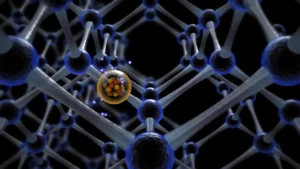
To solve this, the research team engineered B. subtilis to produce a "dual-enzyme" system. This system mimics the way some natural organisms digest complex organic matter:
- The Endopeptidase: The first enzyme acts like a pair of molecular scissors, cutting the long polymer chains at random points. This rapidly reduces the structural integrity of the plastic and turns long chains into shorter oligomers.
- The Exopeptidase: The second enzyme works specifically at the ends of these shorter fragments. It "chews" the fragments from the outside in, systematically breaking them down into their individual monomer building blocks.
By coordinating these two enzymes, the researchers ensured a "bottom-up" decomposition. This synergy is what allows the material to disappear entirely rather than simply crumbling into invisible, persistent plastic dust.
Experimental Results and the Six-Day Decomposition Timeline
For their experimental substrate, the team used polycaprolactone (PCL). PCL is a biodegradable polyester widely used in specialized applications, including 3D printing filaments and medical devices like surgical sutures. While PCL is more degradable than polyethylene, it still requires significant time to break down under natural conditions.
The researchers integrated the engineered B. subtilis spores into the PCL during a process that mimicked standard industrial plastic molding. One of the primary concerns with living materials is whether the biological additives will compromise the material’s strength. However, the study found that the finished living plastic maintained mechanical properties—such as tensile strength and flexibility—comparable to ordinary PCL films. Under dry, normal-temperature storage conditions, the spores remained dormant, and the plastic remained stable and functional.
The true test came during the activation phase. To trigger the self-destruction, the researchers submerged the plastic in a nutrient broth heated to 122 degrees Fahrenheit (50 degrees Celsius). This specific temperature and the presence of nutrients acted as a "wake-up call" for the spores. As the bacteria returned to their active vegetative state, they began secreting the two-enzyme cocktail.
The results were definitive:
- Day 1-2: The plastic began to lose its structural integrity as the endopeptidases severed the polymer chains.
- Day 4: Significant mass loss was recorded as the exopeptidases reduced fragments to monomers.
- Day 6: The plastic had completely decomposed. Chemical analysis confirmed that the polymer had been reduced to its basic building blocks, with no detectable microplastics remaining in the solution.
Real-World Application: The Wearable Electrode
To move the technology from a theoretical laboratory success to a practical proof-of-concept, the researchers developed a wearable plastic electrode. Wearable electronics represent a growing sector of the "e-waste" problem; these devices often contain thin plastic components that are difficult to recycle and easy to discard.
The team’s living plastic electrode functioned effectively as a sensor, demonstrating that the presence of the bacterial spores did not interfere with the electrical or mechanical requirements of the device. Once the "useful life" of the electrode was over, the team applied the activation protocol. Within two weeks, the device had completely degraded. This demonstration suggests that living plastics could be particularly useful for "transient electronics"—devices designed for short-term medical monitoring or environmental sensing that need to disappear without a trace after their mission is complete.
Broader Implications and Environmental Analysis
The implications of this research extend far beyond 3D printing and medical sutures. If this technology can be scaled and adapted for other polymers, it could revolutionize the packaging industry, which accounts for approximately 40% of all plastic waste.
Addressing the Microplastic Threat
One of the most significant aspects of the study is the elimination of microplastics. Current "oxo-degradable" plastics have faced bans in regions like the European Union because they often only fragment into smaller pieces, which then enter the food chain and water supply. By ensuring a complete monomeric breakdown, the living plastic approach aligns with "circular economy" goals, where the end products of degradation could potentially be harvested and used to synthesize new plastics, creating a closed-loop system.
Industrial Scalability
While the 50°C (122°F) activation requirement is feasible for industrial composting facilities or controlled waste management systems, the researchers acknowledge that for widespread environmental impact, the system needs to be even more versatile. The team is currently working on methods to activate the spores in ambient water conditions. This would be a game-changer for marine pollution, allowing plastic that ends up in the ocean to self-destruct upon contact with seawater.
Regulatory and Economic Context
The development of living plastics comes at a time of increasing regulatory pressure. The United Nations is currently negotiating a global treaty to end plastic pollution, which may include mandates for higher biodegradability standards. However, the cost of production remains a hurdle. Engineered microbes and specialized polymers like PCL are currently more expensive than petroleum-based polyethylene. For living plastics to achieve mass-market penetration, the cost of the biological additives must decrease, or the environmental costs of conventional plastics (carbon taxes, waste management fees) must be more accurately reflected in their market price.
Future Research and Global Impact
The team’s success with PCL is viewed as a "template" for future innovation. "Although the experiments focused on a single polymer, the researchers believe the same general strategy could be adapted for other materials, including plastics widely used in disposable products," the study notes. This includes the potential for engineering different strains of bacteria to target the specific chemical bonds found in more stubborn plastics like PET (polyethylene terephthalate), used in beverage bottles.
The funding for this research was provided by a coalition of major Chinese scientific institutions, including the National Key Research and Development Program of China and the National Natural Science Foundation of China. This level of institutional support underscores the strategic priority many nations are placing on "green chemistry" and biotechnological solutions to environmental crises.
As the world seeks to decouple economic growth from environmental degradation, living plastics offer a glimpse into a future where materials are not just "disposable," but truly "perishable." By embedding the seeds of their own destruction, these materials suggest a path forward where human-made objects respect the cyclical nature of the biological world. The transition from "durable waste" to "programmable matter" may well be the defining shift in the next generation of materials science.