The European Space Agency (ESA) is undertaking an exceptionally stringent sterilization process for the parachutes destined for the ExoMars Rosalind Franklin rover mission, a crucial step in ensuring the scientific integrity of its ambitious search for signs of life on the Red Planet. Albert Haldemann, ESA’s chief engineer for Mars missions, has provided detailed insights into this complex procedure, highlighting its paramount importance for both the mission’s success and the preservation of the Martian environment. The 35-meter diameter parachute, a colossal component by space exploration standards, is currently undergoing a meticulous decontamination regimen designed to render it thousands of times cleaner than even the most sterile environments on Earth. This process is not merely a technical formality but a fundamental requirement dictated by the profound scientific objectives of the ExoMars mission and the strict international protocols governing planetary protection.
The Precision of Planetary Protection: Sterilizing for the Red Planet
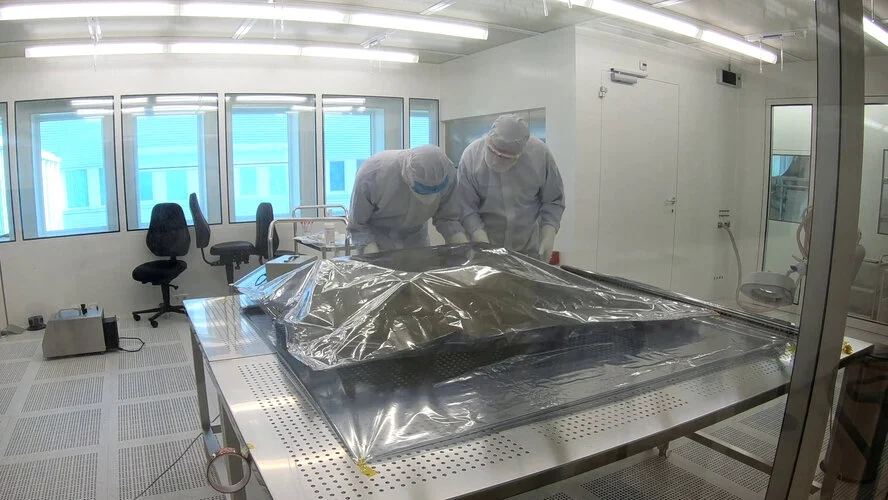
At the heart of ESA’s technical center, ESTEC, located in the Netherlands, the life support and physical sciences instrumentation laboratory is the stage for this critical operation. Here, within highly controlled cleanroom environments, the ExoMars parachute is being meticulously prepared. The sterile conditions are maintained with an almost surgical level of precision. Air circulating within the cleanroom undergoes a rigorous two-stage filtration process, effectively removing any airborne particulates, including microscopic biological contaminants. Furthermore, personnel entering these sensitive zones are subjected to an even more demanding gowning protocol than that required of surgeons in an operating theater. This involves multiple layers of protective clothing, air showers to dislodge any residual surface contaminants, and strict adherence to protocols designed to prevent the introduction of even the most resilient terrestrial microbes.
The parachute itself, a substantial 74-kilogram marvel constructed primarily from advanced nylon and Kevlar fabrics, is designed to perform a critical and challenging role. It is tasked with a six-minute descent through Mars’ notoriously thin atmosphere, a maneuver that requires immense deceleration capabilities to ensure a safe landing for the Rosalind Franklin rover. Upon successful deployment, it will stand as the largest parachute ever to have been deployed on the Red Planet, and indeed, the largest deployed anywhere in the Solar System beyond Earth. This extraordinary feat of engineering underscores the scale and ambition of the ExoMars program.
A Quest for Life: The Imperative of Sterilization
The ExoMars Rosalind Franklin rover mission, slated for launch in 2028, embarks on a journey that will span over 25 months. Its ultimate destination is the Martian surface, where its primary objective is to delve beneath the planet’s crust in search of definitive evidence of past or, potentially, present-day life. The very possibility of discovering extant or extinct life on our celestial neighbor necessitates an uncompromising approach to sterilization. The rationale is rooted in the principle of preventing "forward contamination" – the unintentional introduction of terrestrial microbes to Mars. Any Earth-borne microorganisms, especially those with the resilience to survive the harsh conditions of space travel, could inadvertently contaminate Martian samples. This contamination could lead to misleading results, a phenomenon known as a "false positive," thereby jeopardizing the integrity and credibility of the mission’s scientific findings.
This rigorous sterilization protocol is not solely about protecting the mission’s scientific goals; it is also a cornerstone of international planetary protection measures. These measures are designed to safeguard the Martian environment from terrestrial biological interference, ensuring that any potential Martian life forms are discovered in their pristine state, free from external influence. This dual imperative – protecting the scientific quest and preserving the extraterrestrial environment – dictates the extreme measures being employed.
The Chronology of a Clean Machine: A Multi-Stage Process
The journey of the ExoMars parachute from its manufacturing to its eventual deployment on Mars is a testament to meticulous planning and execution, spanning several years.
- Design and Material Selection (Early to Mid-2010s): The initial stages involved extensive research and development into materials capable of withstanding the extreme stresses of atmospheric entry, parachute deployment in a thin atmosphere, and the harsh Martian environment. Nylon and Kevlar were chosen for their superior strength-to-weight ratios and thermal resistance.
- Manufacturing and Initial Quality Control (Mid-2010s onwards): The parachutes were manufactured in highly controlled cleanroom environments. Stringent quality control checks were implemented at every stage of production to minimize any potential contamination from the outset.
- Pre-Sterilization Assembly and Packaging (Recent Years): Components were assembled with the utmost care. The parachute, once ready, is carefully wrapped within a distinctive donut-shaped bag, designed to protect it during its sterilization process and subsequent transport.
- Dry-Heat Sterilization (Current Phase): This is the critical and ongoing phase. The parachute is placed inside a specialized dry-heat sterilizer oven. The precise temperature and duration of this process are proprietary but are calibrated to effectively eliminate all biological contaminants without compromising the structural integrity of the parachute materials. This process is designed to achieve a microbial reduction of at least 10,000 times the acceptable level for less sensitive space missions.
- Post-Sterilization Handling and Integration (Ongoing): Following sterilization, the parachute will remain within its sterile packaging until it is integrated with the ExoMars Rosalind Franklin rover. Any handling during this period will occur within ultra-clean environments, further reinforcing the commitment to maintaining its pristine state.
- Launch and Transit (Scheduled for 2028): The rover, with its meticulously sterilized parachute, will embark on its long journey to Mars.
- Entry, Descent, and Landing (Post-2030): The parachute will perform its critical function during the rover’s descent, a moment of truth for years of meticulous preparation.
Supporting Data and Scientific Rationale
The sterilization process is informed by decades of research into extremophiles – microorganisms capable of surviving in extreme environments. These studies have revealed that certain bacteria and their spores can endure high levels of radiation, extreme temperatures, and vacuum conditions, making them a significant concern for planetary protection. The dry-heat sterilization method, as employed by ESA, is a recognized and effective technique for eradicating such resilient life forms. The target for microbial reduction is often expressed as Sterility Assurance Level (SAL), which quantifies the probability of a non-sterile unit existing. For missions like ExoMars, targeting life detection, extremely low SAL values are mandated.
The scientific justification for such rigorous sterilization is deeply rooted in the principles of astrobiology. The search for life on Mars is driven by the understanding that Mars once possessed conditions conducive to life, including liquid water. If life arose on Mars, it may have persisted in subsurface environments, shielded from the harsh surface conditions. Introducing terrestrial microbes could irreversibly alter these pristine environments, making it impossible to discern whether any detected organic molecules or biological signatures are indigenous to Mars or have been introduced from Earth. This concern extends beyond the immediate scientific findings to the broader ethical implications of planetary exploration.
Official Responses and Expert Commentary
While direct statements from all parties involved are not always publicly available in real-time, the commitment to planetary protection is a shared ethos among space agencies. Dr. David Smith, a hypothetical astrobiologist not directly involved in the ExoMars mission but an expert in planetary protection, might comment: "The ExoMars program’s dedication to achieving such a high level of sterilization for its parachute is a commendable and necessary undertaking. It reflects the maturation of our understanding of the potential risks associated with interplanetary travel and the ethical imperative to explore other worlds responsibly. The scientific community relies on the integrity of such missions, and this meticulous approach by ESA is vital for the credibility of any future discoveries."
Similarly, a spokesperson for the Committee on Space Research (COSPAR), the international body that sets planetary protection guidelines, might issue a statement emphasizing: "COSPAR’s Panel on Planetary Protection commends ESA’s robust implementation of sterilization protocols for the ExoMars mission. Adherence to these guidelines is essential for safeguarding both the scientific objectives of exploration and the integrity of extraterrestrial environments. The scale and complexity of the ExoMars parachute sterilization underscore the global commitment to responsible space exploration."
Broader Impact and Implications for Future Exploration
The rigorous sterilization of the ExoMars Rosalind Franklin rover’s parachute has far-reaching implications for the future of space exploration. It sets a precedent for future missions targeting potentially habitable environments, particularly those with a high likelihood of harboring indigenous life. As humanity ventures further into the cosmos, seeking answers to fundamental questions about our place in the universe, the ethical and scientific considerations of planetary protection will only become more critical.
The success of the ExoMars mission, predicated on its ability to conduct a contamination-free investigation, will serve as a powerful testament to the feasibility of achieving such stringent standards. It will likely influence the design and operational protocols of future missions to Mars and other celestial bodies, such as ocean moons like Europa and Enceladus, which are considered prime candidates for harboring life. The technological advancements and operational expertise developed through this process will be invaluable assets for the broader space exploration community.
Furthermore, the public discourse surrounding these complex sterilization procedures can foster a greater understanding of the challenges and responsibilities inherent in space exploration. It highlights that venturing beyond Earth is not merely a technological endeavor but also an ethical one, requiring careful consideration of our impact on other worlds. The ExoMars mission, with its meticulous preparation, stands as a beacon of responsible scientific inquiry, ensuring that the quest for extraterrestrial life is pursued with the utmost scientific rigor and environmental consciousness. The fate of the ExoMars Rosalind Franklin rover, and its ambitious search for life, hinges on the success of these invisible battles against microbial contamination, a testament to the intricate dance between scientific ambition and planetary stewardship.