This groundbreaking innovation from the University of Toronto’s engineering faculty heralds a significant leap forward in the field of chemical sensing, offering unprecedented sensitivity and molecular selectivity. The newly engineered dye-sensitized nanoparticles represent a paradigm shift, capable of identifying trace amounts of specific chemicals and distinguishing between even subtle structural variations in molecules, a feat that has long challenged conventional detection methods. This technological breakthrough promises profound implications across a spectrum of critical sectors, from pharmaceutical manufacturing and environmental monitoring to potentially broader applications in medical diagnostics and security.
The Intricacies of Chemical Detection: A Persistent Challenge
The ability to accurately and sensitively detect specific chemical compounds is fundamental to numerous scientific, industrial, and public safety endeavors. In pharmaceuticals, ensuring the purity of drug batches and identifying unwanted impurities or structural isomers is paramount for efficacy and patient safety. For environmental protection, the early detection of pollutants, often present in vanishingly small quantities, is crucial for timely intervention and preventing widespread contamination. However, traditional analytical techniques, while robust, frequently face limitations in terms of cost, speed, sensitivity, and, critically, their ability to differentiate between structurally similar molecules.
Many conventional sensing platforms rely on fluorophores – organic molecules that absorb high-energy light (e.g., UV or visible light) and re-emit it as lower-energy, colorful emissions. While effective for decades, this "downconversion" process inherently suffers from a significant drawback: autofluorescence. Biological samples, water bodies, or complex chemical mixtures often contain naturally fluorescent compounds that can generate background signals, effectively masking the faint emissions from the target molecules and significantly reducing detection sensitivity. This "daytime stargazing" effect, where the target signal is overwhelmed by background noise, has been a persistent hurdle in achieving ultra-sensitive detection.
The Upconversion Advantage: Turning Low Energy into Bright Signals
The University of Toronto team’s breakthrough centers on a phenomenon known as "upconversion," which directly addresses the limitations of traditional fluorophores. Unlike downconversion, upconversion nanoparticles (UCNPs) absorb low-energy photons, typically in the near-infrared (NIR) spectrum, and convert this energy into higher-energy photons, emitting light in the visible spectrum. This unique capability is central to their enhanced performance.
"Organic molecules called fluorophores have been used for decades to absorb light and convert it into colorful emissions, but the process only works in one direction," explains Professor Kai Huang, senior author on the paper published in the Journal of the American Chemical Society. "With fluorophores, the excitation frequency has to be higher than the emission frequency, which means that they convert high-energy photons into low-energy photons. What makes our dye-sensitized nanoparticles special is that they are capable of upconversion, meaning that they can absorb light in the form of low-energy photons and emit higher-energy ones."
The use of NIR light for excitation offers a critical advantage: it effectively bypasses the autofluorescence problem. NIR light penetrates deeper into samples and, more importantly, is not typically absorbed or emitted by most biological or environmental matrices, creating a "zero-autofluorescence background." As Professor Huang vividly illustrates, "It’s like the difference between stargazing at night versus the daytime. The stars shine the same brightness all the time, but during the day the sun is so powerful that it overwhelms them. Shifting the excitation frequency lower produces zero-autofluorescence background in the samples you are analyzing, while the luminescent nanoprobes keep shining; it is like turning off the sun, so you can see the stars better." This inherent ability to minimize background noise directly translates into significantly improved signal-to-noise ratios and, consequently, superior detection sensitivity.
Overcoming Luminescence Quenching: A Novel Architectural Solution
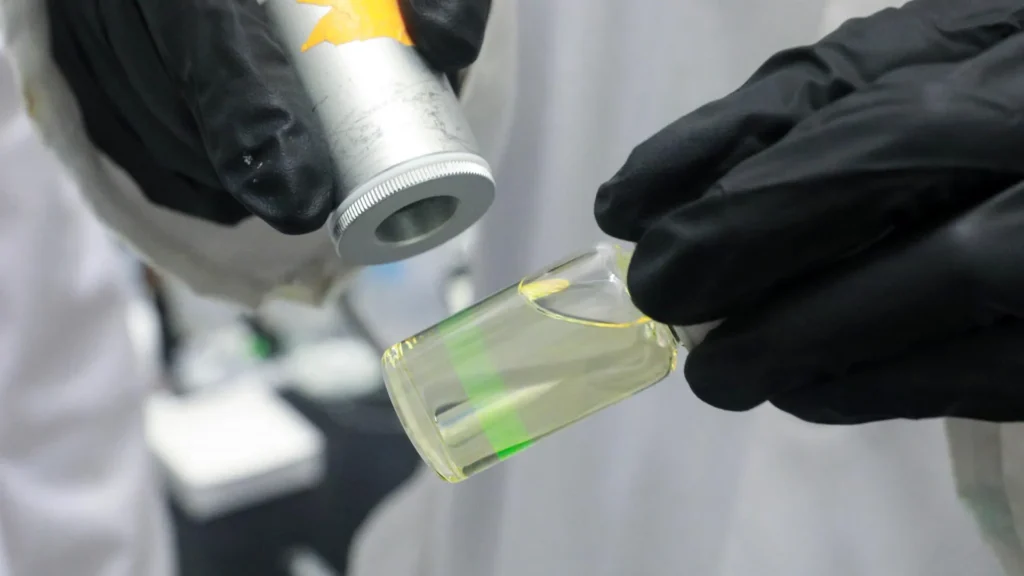
The upconversion process in these nanoparticles relies on specific lanthanide elements, notably ytterbium (Yb) and erbium (Er) ions. Ytterbium ions act as sensitizers, efficiently absorbing the incoming low-energy NIR photons and transferring that energy to erbium ions, which then perform the upconversion step, emitting higher-energy visible light (e.g., bright green).
Earlier generations of upconversion nanoparticles often faced a critical design challenge: achieving high brightness. While increasing the concentration of ytterbium ions was intuitively thought to enhance energy absorption and subsequent emission, it paradoxically led to a phenomenon called "back-energy transfer" or concentration quenching. "But there’s a problem: if you pack the ytterbium atoms in too densely, they start to absorb not only the energy coming in, but also the energy coming out," explains Jiaze Wu, a PhD student in Huang’s lab and lead author on the new paper. "This is called back-energy transfer: it means that the energy that would have been emitted by the erbium ions as green light instead gets bounced back to the ytterbium relay and never reaches the surface." This effectively short-circuits the upconversion process, diminishing the emitted signal and limiting overall brightness and sensitivity.
To circumvent this fundamental limitation, Wu, Huang, and their collaborators undertook a radical redesign of both the chemical composition and structural architecture of the nanoparticles. Moving beyond flat hexagonal structures and a host material of sodium, yttrium, and fluorine, the team engineered more three-dimensional, diamond-shaped particles. Crucially, they developed a novel host matrix using lithium, lutetium, and fluorine. The most significant innovation lies in the layered "core-shell-shell" architecture, where each particle comprises a dense core surrounded by distinct inner and outer shells.
"We were able to create a nice gradient: the concentration of embedded ytterbium ions gets denser as you go through each layer, with the core being the most dense," says Wu. "This arrangement enabled us to pack in much more ytterbium. In our particles, the light energy coming in flows almost entirely in one direction, inward toward the erbium ions." This meticulously engineered gradient effectively creates a "one-way energy tunnel," ensuring that absorbed energy is efficiently transferred to the erbium emitters and subsequently released as bright visible light, without being reabsorbed or lost through back-energy transfer.
Computational Design: Accelerating Discovery
A key factor in the rapid development and optimization of this complex nanoparticle design was the strategic integration of advanced computational modeling. Rather than relying solely on time-consuming trial-and-error experimental approaches, the research team leveraged sophisticated simulations to explore a vast parameter space of chemical formulations and structural configurations.
"We used Monte Carlo simulations and density functional theory to simulate how the energy would interact between different parts of the nanoparticle, right down to the atomic or even subatomic level," says undergraduate student Weixiang Ben, who led the computational work. This predictive modeling allowed researchers to virtually test dozens of potential designs, identify the most promising candidates, and understand the underlying physics and chemistry governing energy transfer within the nanoparticles. "That’s how we showed that this core-shell-shell structure could actually function as a one-directional energy tunnel for incoming light," Ben adds. This computational-experimental synergy significantly streamlined the research process, enabling the team to arrive at an optimized design with unprecedented efficiency.
Unprecedented Brightness and Selectivity: Performance Metrics
The result of this innovative design is a class of nanoparticles that exhibit extraordinary performance characteristics. The emitted light from these new dye-sensitized nanoparticles is roughly 150 times brighter than that of upconversion nanoparticles that have not been dye-sensitized. Furthermore, under identical excitation conditions, they are approximately 50 times brighter than some of the most highly optimized conventional upconversion nanoparticle structures previously reported in scientific literature.
This dramatic increase in brightness directly translates into unparalleled sensitivity. Because each nanoparticle generates such a potent optical signal, even a minuscule number of particles bound to their target molecules can produce a detectable light signal. This makes them ideal for detecting substances present in extremely low concentrations, pushing the boundaries of what is currently possible with standard analytical techniques.
Beyond sensitivity, the nanoparticles demonstrate another remarkable capability: the ability to distinguish between structural isomers. Structural isomers are molecules that possess the exact same types and numbers of atoms but differ in the way those atoms are arranged. These subtle structural differences, often involving slight changes in bond angles or spatial configurations, can profoundly alter a molecule’s chemical and biological properties. Detecting and differentiating these isomers is a significant analytical challenge, yet the Toronto nanoparticles achieve this with high precision.
Transformative Applications in Pharmaceuticals
The ability to detect chemicals at extremely low concentrations and distinguish structural isomers holds particular significance for the pharmaceutical industry. Drug manufacturing is a highly regulated and complex process where purity and precise molecular structure are non-negotiable. The presence of unwanted structural isomers, even in minute quantities, can have severe consequences, ranging from reduced drug efficacy to dangerous side effects.
"Let’s say you’re making a drug molecule, and your manufacturing process works fine, except that 10% of the batch is the wrong structural isomer," illustrates Wu. "That’s a huge problem: it can make the drug less effective, or worse, lead to side effects that you definitely don’t want. The current process for detecting this relies on very expensive analytical tests, but with these nanoparticles, you could do it using low-cost lasers and a very small sample."
Current industry practices for isomer detection often involve sophisticated and costly analytical techniques such as high-performance liquid chromatography (HPLC) coupled with mass spectrometry (MS) or nuclear magnetic resonance (NMR) spectroscopy. While effective, these methods can be time-consuming, require specialized equipment and highly trained personnel, and may involve destructive sample preparation. The new nanoparticle technology offers the potential for a faster, simpler, and more cost-effective alternative for quality control, potentially accelerating drug development and ensuring greater patient safety by identifying problematic batches earlier in the production cycle. This could streamline regulatory approval processes and reduce manufacturing overheads.
Safeguarding Our Environment: Monitoring Pollutants
The same combination of high sensitivity and molecular selectivity makes these nanoparticles invaluable for environmental monitoring. Researchers and regulatory bodies constantly grapple with the challenge of detecting trace amounts of chemical pollutants in vast and complex environmental matrices, such as groundwater, soil, and air. Many emerging contaminants, including certain pesticides, industrial byproducts, and pharmaceutical residues, can exert significant ecological and health impacts even at parts-per-billion or parts-per-trillion concentrations.
The nanoparticles’ ability to operate with a zero-autofluorescence background is particularly advantageous in environmental samples, which are often replete with organic matter and other naturally fluorescent substances that confound traditional optical sensors. By enabling the detection of specific pollutants at ultra-low levels, the technology could facilitate earlier identification of contamination sources, more precise tracking of pollutant plumes, and more effective remediation strategies. This could translate into improved water quality, healthier ecosystems, and enhanced public health protection against hazardous chemical exposure.
Beyond Detection: Future Avenues in Biomedical Imaging and Security
While the initial focus is on pharmaceuticals and environmental monitoring, the inherent advantages of upconversion nanoparticles suggest a broader spectrum of potential applications. In biomedical imaging, the use of NIR excitation allows for deeper tissue penetration with minimal scattering and absorption by biological components, while the visible light emission provides a clear, high-contrast signal. This could pave the way for novel diagnostic tools for early disease detection, targeted drug delivery monitoring, or real-time surgical guidance, where traditional fluorescent probes are limited by tissue autofluorescence and shallow penetration depth.
Furthermore, the capability for highly sensitive and selective chemical detection could find utility in national security and defense applications. Detecting trace levels of explosives, chemical warfare agents, or illicit substances, often in challenging environments, is a critical need. The development of portable, low-cost sensors based on this nanoparticle technology could provide rapid, on-site detection capabilities, enhancing safety and response efforts.
The Road Ahead: Scaling Production and Commercialization
Despite the immense promise, the technology remains at the proof-of-concept stage. The primary challenge moving forward lies in developing a practical and scalable manufacturing process for these sophisticated nanoparticles. Current laboratory synthesis methods, while effective for research, are typically not designed for industrial-scale production, which demands consistency, cost-efficiency, and high throughput.
Professor Huang acknowledges this hurdle: "We’re working on this already, in fact. We think it’s feasible, but it requires a very long roadmap." This roadmap will likely involve optimizing synthesis protocols, exploring continuous manufacturing techniques, and addressing quality control measures to ensure batch-to-batch uniformity. Additionally, for widespread adoption, the nanoparticles would need to be functionalized with specific recognition elements (e.g., antibodies, aptamers, molecularly imprinted polymers) that selectively bind to the desired target molecules, a task that requires extensive research and development for each application.
Expert Outlook and Broader Implications
The scientific community generally regards breakthroughs in nanoparticle design and upconversion technology as highly significant. The Toronto team’s work, particularly the elegant solution to the back-energy transfer problem through structural engineering and computational modeling, marks a substantial advance in the field of materials science and analytical chemistry.
The implications are far-reaching. This technology has the potential to democratize high-sensitivity chemical analysis, making it more accessible and affordable. By reducing reliance on expensive, complex laboratory instruments, it could enable point-of-care diagnostics, on-site environmental testing, and more efficient industrial quality control in settings previously constrained by resource limitations.
As Professor Huang concludes, "In the meantime, this model serves as proof-of-concept; with this technique, we can produce a very high-performance upconversion nanoparticle that could be customized to any molecule you might want to detect. That’s something entirely new." This statement underscores the foundational nature of the research, providing a versatile platform that can be tailored to a multitude of specific detection challenges, promising a future where invisible threats and hidden impurities are brought to light with unprecedented clarity. The journey from laboratory innovation to widespread application will be complex, but the potential societal benefits of this Toronto-led discovery are undeniable.