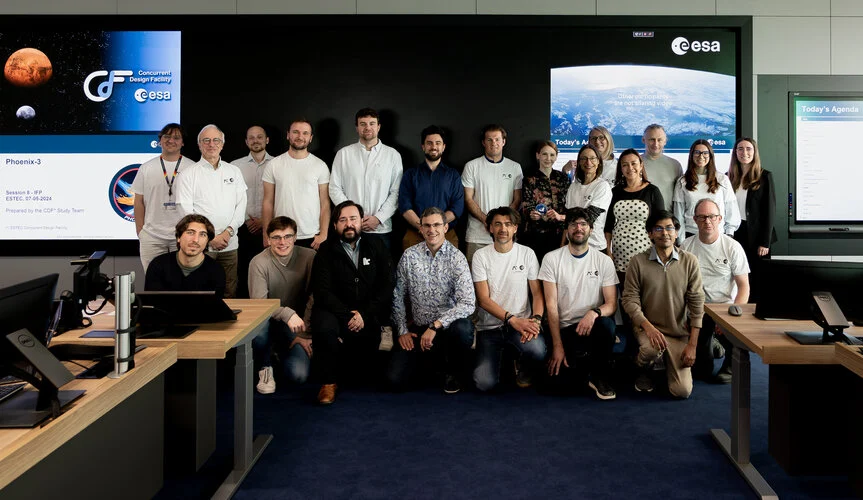
European engineers have successfully concluded an intensive concept study for Phoenix 3, a groundbreaking reusable spacecraft designed to transport experiments into microgravity and safely return them to Earth. This collaborative effort, involving experts from the European Space Agency (ESA) and its industry partners, marks a significant stride towards enhancing Europe’s capabilities in orbital logistics and scientific research. The study, which took place earlier this year at ESA’s Concurrent Design Facility (CDF), evaluated the feasibility of Phoenix 3, a fully European reusable orbital return vehicle proposed by the burgeoning European startup, ATMOS Space Cargo.
The Concurrent Design Facility: A Hub for Innovation
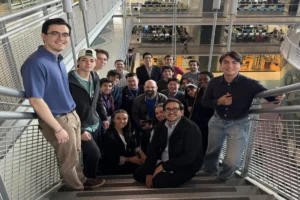
The CDF, located at ESTEC, ESA’s technical centre in the Netherlands, served as the crucible for this critical concept evaluation. This state-of-the-art facility is equipped with an advanced network of computers, multimedia devices, and sophisticated software tools, enabling multidisciplinary teams to converge and assess complex designs with remarkable efficiency. Typically, projects that might take several months through traditional sequential engineering processes are analyzed and refined within weeks at the CDF. Here, experts from a diverse array of engineering disciplines collaborate intensively, pooling their specialized knowledge to scrutinize and validate innovative concepts.
The Phoenix 3 study exemplifies the CDF’s core function: to act as a multidisciplinary think-tank that rapidly assesses the technical and economic viability of ambitious space missions. By bringing together specialists in areas such as orbital mechanics, propulsion, thermal control, structural engineering, avionics, and mission operations, the CDF provides a holistic view of a concept’s potential. This integrated approach is crucial for identifying potential challenges and opportunities early in the development lifecycle, preventing costly redesigns later.
Phoenix 3: A Vision for Reusable Orbital Science
The core objective of the Phoenix 3 concept is to provide a versatile and cost-effective platform for conducting experiments in the unique environment of microgravity and for validating new technologies in orbit. The spacecraft is envisioned as a reusable orbital return vehicle, capable of launching to low Earth orbit, hosting scientific and commercial payloads for extended periods, and then performing a controlled deorbit and atmospheric entry for recovery and refurbishment.

During the CDF study, the ATMOS team presented their Phoenix 3 concept, which was then rigorously examined by ESA engineers and external specialists. The process involved using established templates and guidelines to ensure a comprehensive review. The outcome was the identification of key trade-offs and design drivers, providing ATMOS with a clear roadmap for the next stages of development. This initial concept lays the groundwork for a spacecraft that can serve a range of applications, from fundamental scientific research to the burgeoning field of in-orbit manufacturing.
Mission Parameters and Payload Capacity
Enrico Tormena, ESA’s lead for the study, detailed the reference scenario that guided the expert evaluation. "For this study, we focused on a scenario where Phoenix 3 would be launched into low Earth orbit, to an altitude of around 350 km," he explained. This orbital altitude is a common target for many microgravity research missions and is within the reach of various launch vehicles, offering flexibility in mission planning.
At this altitude, Phoenix 3 is intended to support a variety of commercial and scientific endeavors. These include advanced microgravity manufacturing, fundamental science experiments that benefit from the absence of gravity, and in-orbit demonstration and validation of new technologies. The spacecraft’s operational lifespan in orbit was projected to range from several months to approximately one year. Following its mission, Phoenix 3 would execute a controlled deorbit maneuver, re-enter the Earth’s atmosphere, and then be recovered on the ground. The inherent reusability of the system is central to its economic proposition, allowing for refurbishment and preparation for subsequent launches, thereby reducing the overall cost per mission.
The configuration assessed during the CDF study envisioned a service module equipped with essential systems such as power generation and propulsion. Crucially, it included a pressurized cabin area designed to replicate Earth-like atmospheric conditions. This cabin is intended to accommodate payloads weighing over 1000 kg, providing significant capacity for scientific instruments, experimental setups, and potentially even small manufacturing facilities. While this configuration served as a reference for the study, it is important to note that it remains flexible. Key design choices and trade-offs are still open for resolution in Phase A, the subsequent, more detailed design phase of a space mission’s lifecycle.
Innovative Re-entry Technology: The Inflatable Decelerator
A cornerstone of ATMOS’s approach to reusable re-entry vehicles is its proprietary inflatable decelerator technology. This innovative system is currently undergoing maturation and flight-testing across the company’s Phoenix family of spacecraft. This technology is critical for enabling safe and precise atmospheric entry and landing.

Jeffrey Hendrikse, Chief Technology Officer and Co-Founder of ATMOS Space Cargo, elaborated on the significance of this technology. "During reentry, the spacecraft uses its Inflatable Atmospheric Decelerator to slow down through the atmosphere ahead of a safe recovery," he stated. The successful validation of this system is vital for the reusability aspect of Phoenix 3. By utilizing an inflatable structure, the decelerator can be compactly stored during launch and then deployed in the upper atmosphere, providing a large drag surface to reduce the spacecraft’s velocity significantly before parachute deployment or other landing mechanisms engage.
Hendrikse also expressed satisfaction with the study’s confirmation of the system’s modularity. "What pleases me most is that the study confirmed we can maintain the modularity of the microgravity platform, serving our customers from late access before launch to early access after return, as well as the communication bandwidth they need in orbit," he added. This modularity implies that payloads can be integrated or retrieved with relative ease, and that communication links with the spacecraft can be maintained throughout its mission, enhancing operational flexibility and data acquisition.
Next Steps and ESA’s Role in Industrial Growth
The CDF study not only validated the Phoenix 3 concept but also identified crucial areas requiring further attention. "The CDF study also identified key trade-offs and risks to be addressed next, providing a solid starting point for Phase A," commented Daniela Lomanto from ESA’s Concurrent Engineering and Future Missions section. In Phase A, ATMOS will concentrate on optimizing several critical aspects of the spacecraft’s design, including its aerodynamics, stability, and thermal management. Enhancements in entry modeling and guidance systems are also planned to improve landing accuracy, ensuring that recovery operations are as efficient and predictable as possible.
ESA’s support for the Phoenix 3 study aligns perfectly with its overarching mandate to foster and accelerate the competitiveness of European industry. By providing crucial technical expertise and access to advanced facilities like the CDF, ESA empowers innovative companies, particularly startups, to develop cutting-edge space technologies and services. This collaborative model is designed to de-risk nascent technologies and help them mature to a point where they can attract further investment and achieve commercial success.
Ilaria Roma, Head of the CDF, highlighted the strategic importance of this collaboration. "ATMOS has created a win-win scenario for the future of European space exploration, so their vision and this specific mission assessment is supported by ESA’s Directorate of Human and Robotic Exploration," she remarked. The Directorate of Human and Robotic Exploration plays a key role in identifying and nurturing new concepts that can contribute to Europe’s ambitions in space, whether for scientific discovery, resource utilization, or commercial development.

Sustainability and European Sovereignty
A significant underlying theme of the Phoenix 3 initiative, and one that resonates strongly with ESA’s current strategic priorities, is sustainability. The development of a new class of reusable return vehicles directly addresses the pressing need for greater circularity in space operations and a reduced environmental footprint. By enabling multiple missions with a single spacecraft, Phoenix 3 contributes to minimizing the generation of space debris and optimizing resource utilization.
Furthermore, the project is seen as a crucial step towards strengthening Europe’s sovereign capabilities in space infrastructure. "At the same time, ATMOS is developing concepts and solutions that will directly benefit industrialisation capabilities and sovereign infrastructure within Europe," Roma noted. This focus on national and continental self-sufficiency in space is a growing priority for many space-faring nations and blocs, as it ensures independent access to space and reduces reliance on external providers.
Marta Oliveira, Chief Operating Officer and Co-Founder of ATMOS Space Cargo, underscored the value of the CDF process in achieving this objective. "The value of the CDF is the ability to examine every major subsystem and interface at the same time," she stated. "Bringing specialists from across disciplines into one concurrent process helped us identify dependencies that would be difficult to resolve through sequential engineering work." This integrated approach minimizes the risk of overlooking critical interdependencies between different spacecraft systems, which can often lead to design flaws or delays.
The collaboration on the Phoenix 3 concept study was facilitated through ESA’s Third Party Activity (TPA) initiative. This program allows external entities, ranging from agile startups to established industrial giants, to leverage ESA’s extensive consultancy and testing infrastructure. By opening its resources to the broader industrial ecosystem, ESA fosters innovation and strengthens the collective European space sector, ensuring its competitiveness on the global stage. This initiative is vital for nurturing a dynamic and innovative space industry capable of meeting the challenges and opportunities of the 21st century. The successful completion of this study represents a tangible step towards realizing a more sustainable, accessible, and capable future for space exploration and utilization originating from Europe.