European Space Agency (ESA) is set to host its prestigious Industry Space Days (ISD) event on September 16-17, 2026, at ESA-ESTEC in the Netherlands. This pivotal gathering will convene Europe’s burgeoning space industry, fostering an environment for idea exchange, capability showcasing, collaborative discussions, and the exploration of new opportunities with ESA. A significant focus of this year’s event will be on empowering innovative startup companies, particularly those emerging from ESA’s extensive network of Business Incubation Centres (BICs).
The ISD serves as a crucial platform for the entire European space sector, from established industry giants to nascent enterprises. The event aims to accelerate the commercialization of space technologies and services by facilitating direct interactions between stakeholders. In an era of rapid technological advancement and increasing private investment in space, the ISD 2026 is anticipated to be a catalyst for significant collaborations and the advancement of Europe’s competitive edge in the global space market.
ESA’s commitment to nurturing space innovation is underscored by its network of 40 Business Incubation Centres (BICs) strategically located across 23 European Participating States. These BICs are instrumental in providing comprehensive business support to over 250 new space-based start-up companies annually. This support extends beyond mere incubation, offering access to technical expertise, market intelligence, and crucial networking opportunities. The Industry Space Days are a prime example of how ESA translates this incubation effort into tangible market engagement for its supported ventures.

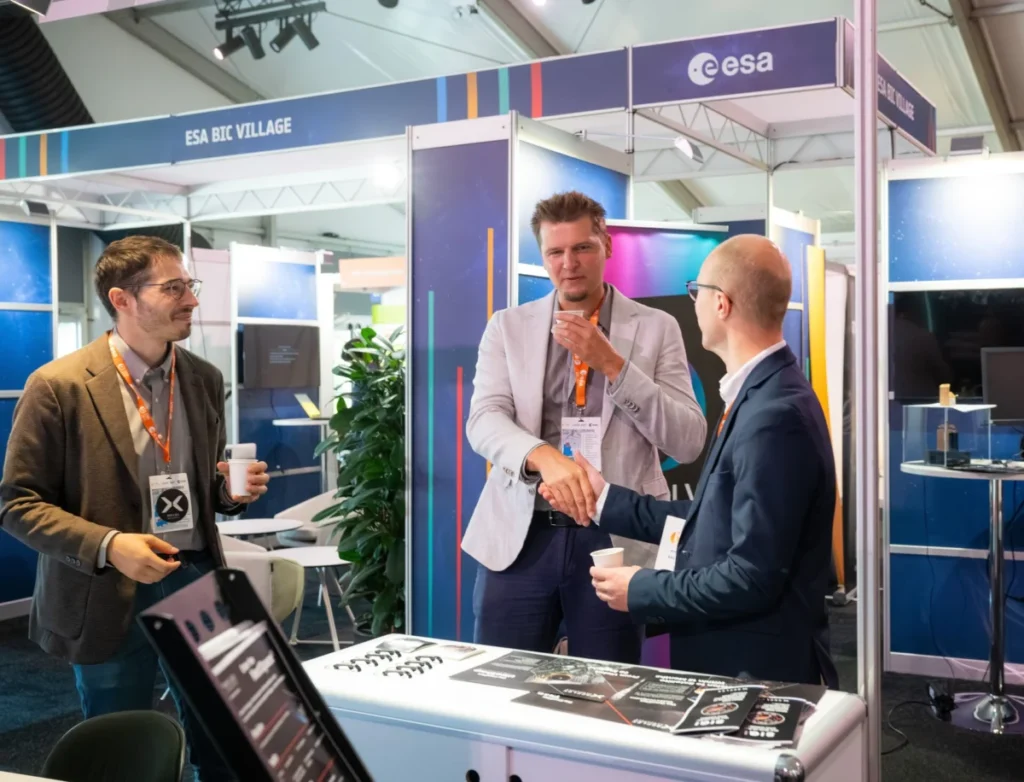
A dedicated "ESA BIC Village" within the ISD Exhibition Hall will host 32 selected startups. These companies, chosen for their groundbreaking ideas and potential to leverage space for innovative applications, will each share a booth for one day, presenting their products, services, and unique innovations to a targeted audience of potential customers, investors, and business partners. This concentrated presentation format is designed to maximize exposure and facilitate meaningful connections within the limited timeframe of the event.
"At Industry Space Days, there will be thousands of pre-planned business meetings, presentations from ESA directors and industry leaders, and forums to share ideas and collaborate on new commercial uses of space," stated Jens Kauffmann, Head of ESA’s SME Section, the organizing body for the event. "This is an unparalleled opportunity for startups to introduce themselves to other industry players of all sizes for potential collaboration. It’s about building the future of the European space economy, together."
The startups featured in the ESA BIC Village represent a diverse spectrum of cutting-edge technologies and services, spanning both upstream (satellite design, launch, operations) and downstream (satellite data applications, services) markets, as well as technology transfer initiatives. The comprehensive exhibition hall at ISD 2026 will list all companies with a booth, providing attendees with a detailed overview of the innovative landscape present at the event.
Featured Startups and Their Innovations

The following five startups, selected for their compelling contributions to the space sector, offer a glimpse into the diverse innovations that will be showcased at the ESA BIC Village:
Alloy Additive: Revolutionizing Metal Part Manufacturing for Space
Alloy Additive, a German-based startup, is poised to transform the lead times for critical metal components in the space industry. By utilizing advanced TIG-Wire Arc Additive Manufacturing (WAAM) technology, the company delivers custom titanium, nickel, and stainless-steel parts on demand, reducing production timelines from months to mere days. This capability is particularly vital for the creation of high-performance launcher subcomponents, large-scale structural metal parts, and lightweight pressure vessels that are precisely optimized for the rigorous demands of space missions.
Mehmet Çetinkaya, CEO and Founder of Alloy Additive, emphasized the strategic importance of participating in ISD 2026: "Joining an event like this brings us directly to the centre of the European space business ecosystem. At the ISD, we hope to connect with prime integrators looking to drastically reduce lead times for large-scale metal components, while demonstrating how our 3D-printing technology makes space hardware manufacturing faster, cleaner, and more cost-effective." Alloy Additive is actively seeking to engage with launch vehicle manufacturers, satellite and spacecraft developers, space-system integrators, propulsion companies, and Tier-1 aerospace suppliers who are in pursuit of more agile and efficient solutions for large-scale, high-performance metal components. The company’s innovative approach directly addresses a persistent bottleneck in space hardware production, promising significant cost savings and accelerated mission timelines.
CompPair Technologies: Pioneering Self-Repairing Composites for Enhanced Spacecraft Longevity
Switzerland’s CompPair Technologies is set to present its groundbreaking composite materials capable of ultra-fast self-repair, leveraging its proprietary HealTech™ technology. These advanced materials hold immense potential for space applications, offering a paradigm shift in the reliability and longevity of spacecraft structures. The HealTech™ system enables the repair of matrix microcracks through a simple, localized thermal activation process. This capability is crucial for extending the operational life of components and significantly improving the overall reliability of space assets, which often operate in harsh and inaccessible environments.

Amaël Cohades, CEO of CompPair Technologies, highlighted the significance of ISD: "Industry Space Days is a key event for connecting with the European space community and strengthening collaborations across the sector. We are developing advanced healable composite technologies that will soon make repairable spacecraft structures possible, improving reliability, durability, and sustainability for future space missions." CompPair’s ongoing projects with ESA, including Genesis and First!, are actively contributing to the development of a more sustainable and competitive space transportation ecosystem, aligning with Europe’s vision for reusable and low-impact space infrastructure. The ability to perform in-situ repairs could dramatically reduce maintenance costs and extend the operational lifespan of satellites and other space vehicles.
Marine Weather Intelligence (MWI): Leveraging AI for Enhanced Maritime Safety and Efficiency
French deeptech startup Marine Weather Intelligence (MWI) is utilizing artificial intelligence to optimize maritime operations, enhance weather forecasting accuracy, and bolster safety at sea. Their suite of solutions is designed to serve a wide array of maritime professionals, enabling smarter and safer navigation while simultaneously contributing to the reduction of the carbon footprint associated with maritime activities. A key focus for MWI at ISD 2026 will be their "proximity alert system," an innovative tool engineered to anticipate hazardous weather phenomena, providing critical advance warning in an increasingly unpredictable climate.
Basile Rochut, CTO and Co-founder at Marine Weather Intelligence, articulated their objectives for the event: "At ISD, we hope to explore data partnerships with ESA and connect with potential clients and fellow ESA BIC startups, as well as investors interested in space, deeptech, artificial intelligence, and maritime topics." MWI’s integration of AI with satellite data and advanced meteorological models offers a powerful solution for an industry facing both environmental challenges and the imperative for greater efficiency and safety. The implications for global trade and marine exploration are substantial, promising reduced risks and optimized operational planning.
Nautilus: Enabling Autonomous Navigation and Collision Avoidance for Satellites
Italian startup Nautilus is at the forefront of developing autonomous navigation and guidance technology for satellites, alongside providing comprehensive mission design and flight dynamics services for missions across Earth orbit and deep space. Their flagship offering, the EON flight unit, provides onboard autonomous navigation and collision avoidance capabilities. This system is designed to interface seamlessly with NEMO, their highly automated, ground-based flight dynamics software, which supports a broad spectrum of missions. The synergistic application of EON and NEMO is engineered to facilitate efficient management of satellite fleets, a critical requirement as orbital congestion and the complexity of space operations continue to grow.

Mattia Pugliatti, Head of On-Board Systems at Nautilus, shared their strategic approach for ISD 2026, building on their positive experience at ISD 2024: "That first experience helped us understand the event’s format and connect with key players in the European space ecosystem. This year we’re returning with a more targeted plan for partnerships and visibility. We would like to meet mainly satellite integrators and potential customers interested in the technologies behind EON and NEMO. We would also be interested in getting in touch with possible early adopters who would be interested in using EON in their daily operations." The development of autonomous capabilities is a cornerstone for the future of space exploration and utilization, promising increased operational safety and reduced reliance on constant ground control intervention.
ARKai: Enhancing Dam Safety Through Satellite-Derived Geo-intelligence
Latvia-based ARKai is revolutionizing the monitoring of critical infrastructure, particularly dams, by integrating satellite-derived ground deformation data (InSAR) with existing in-situ sensors and operational records. This multi-faceted approach enables dam and hydropower operators to identify potential risks at an earlier stage, allowing for proactive intervention and enhanced safety protocols. The company is actively preparing its first pilot projects and developing a sophisticated dam-monitoring platform that consolidates various data streams into a single, intuitive system. This platform empowers operators to detect subtle movements, differentiate between normal seasonal variations and hazardous changes, and generate compliance-ready risk intelligence.
Alberto Manuel García Navarro, CTO and co-founder of ARKai, expressed enthusiasm for the event’s potential: "Dam owners and operators have expressed significant interest in our technology which is transferable to railways, mining and other critical infrastructure. At ISD, we hope to meet ESA technology and research partners, especially dam operators interested in pilot projects in Europe and Asia." ARKai’s innovative application of space technology addresses a critical need for robust and reliable monitoring of essential infrastructure, with broad implications for public safety and environmental protection.
The Broader Context: ESA’s Role in Space Commercialization

The Industry Space Days event is more than just a trade show; it is a strategic initiative by ESA to foster a dynamic and competitive European space sector. By providing a dedicated platform for startups to connect with established players, investors, and potential customers, ESA is actively driving the commercialization of space. The success of the ESA BICs in nurturing innovative ventures is a testament to the agency’s long-term vision for a thriving space economy.
Historically, space exploration and utilization were largely dominated by government agencies. However, in recent decades, there has been a significant shift towards private sector involvement. This has been fueled by technological advancements, decreasing launch costs, and a growing recognition of the vast economic potential of space-based services and data. ESA, as a leading space agency, plays a crucial role in facilitating this transition by de-risking innovation, providing access to cutting-edge infrastructure, and creating market opportunities for emerging companies.
The ISD event, held biennially, has become a cornerstone of this strategy. It allows for the structured exchange of knowledge, fostering a collaborative ecosystem where new ideas can be tested, refined, and scaled. The pre-planned business meetings, a hallmark of the ISD, ensure that participants can maximize their time and engage in targeted discussions, leading to more productive outcomes.
Implications for the Future of Space

The innovations showcased by the ESA BIC Village startups at ISD 2026 signal a future where space is more accessible, more sustainable, and more integrated into our daily lives. Alloy Additive’s advancements in manufacturing could lead to more affordable and rapidly deployable space infrastructure. CompPair Technologies’ self-repairing materials promise to extend the lifespan of satellites, reducing waste and operational costs. MWI’s AI-driven solutions highlight the growing importance of Earth observation data for terrestrial applications, enhancing safety and efficiency across various industries. Nautilus’s work on autonomous satellites is essential for managing increasingly crowded orbits and enabling more complex space missions. ARKai’s geo-intelligence applications demonstrate the power of satellite data in safeguarding critical infrastructure and protecting communities.
The European Space Agency’s commitment through events like the Industry Space Days is pivotal in ensuring that Europe remains at the forefront of this rapidly evolving space landscape. By championing innovation and fostering collaboration, ESA is not only advancing scientific and technological frontiers but also building a robust and competitive European space industry for the 21st century.
Registration and Further Information
For those interested in attending Industry Space Days 2026 and engaging with these pioneering companies and the wider European space community, further information and registration details are available on the official Industry Space Days website. The event promises to be a vital convergence point for shaping the future of space exploration and commercialization in Europe and beyond.