The European Space Agency (ESA) is extending a unique and groundbreaking invitation to European researchers and companies: the opportunity to deploy and test their cutting-edge software directly in the harsh environment of deep space, aboard ESA’s highly anticipated Hera mission. This initiative marks a significant step in fostering onboard intelligence and autonomy in future space exploration endeavors.
A New Frontier for In-Orbit Experimentation
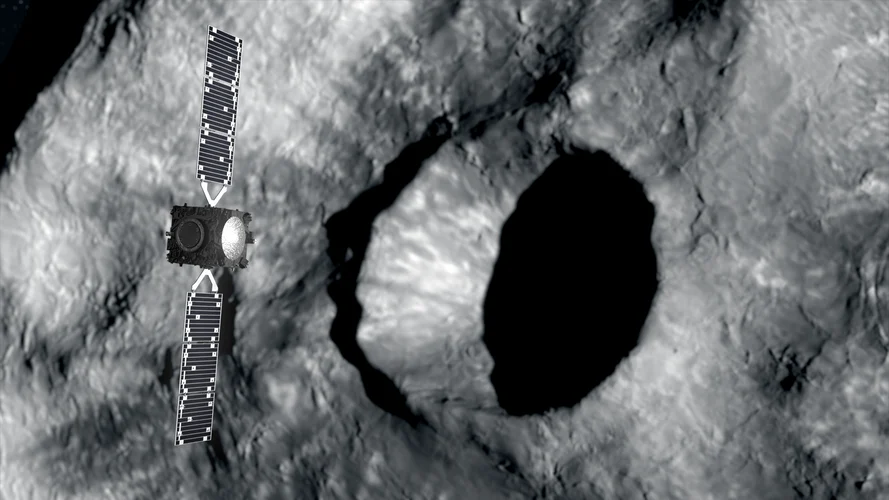
Scheduled to conclude its primary planetary defense objectives around the binary asteroid system Didymos and Dimorphos in mid-2027, ESA’s Hera spacecraft will transition into an extraordinary new role. Positioned approximately 150 million kilometers from Earth, Hera will transform into a pioneering flying software laboratory. This exceptional vantage point in the vacuum of space will provide European innovators with an unparalleled platform to rigorously test next-generation approaches for onboard intelligence, sophisticated image processing, and advanced AI-driven operations and autonomy. The critical aspect of this opportunity is the direct, in-flight testing of these innovative solutions on the actual spacecraft.

This initiative is designed to accelerate the development of technologies that will reduce reliance on constant ground control, enhance mission resilience, and pave the way for more ambitious and capable future exploration missions. By offering its mission infrastructure, ESA aims to bolster Europe’s leadership in the development of advanced space systems and foster a vibrant ecosystem of space innovation.
A Legacy of Planetary Defense and Future Exploration
Hera’s initial mission objective is rooted in the crucial field of planetary defense. Launched in 2024, the spacecraft is currently en route to its target, the asteroid Dimorphos. This celestial body holds a unique place in space history, being the first object in the Solar System whose orbit was demonstrably altered by human intervention. In 2022, NASA’s Double Asteroid Redirection Test (DART) spacecraft intentionally impacted Dimorphos, successfully shifting its orbital path around its larger companion, Didymos.
Upon its arrival in autumn 2026, Hera will conduct an in-depth, close-up investigation of the impact site. This detailed "crash scene investigation" will gather vital data about the asteroid’s composition, structure, and its response to the DART impact. The scientific return from this phase is expected to resolve key questions central to understanding and mitigating potential asteroid threats to Earth.

However, as Hera completes its primary scientific mandate, its journey is far from over. The spacecraft’s extended mission phase is poised to unlock new avenues for technological advancement, transforming it into a crucial testbed for future space capabilities.
The "Sandbox" Approach: Ensuring Safety and Innovation
The concept of running experimental software on a live, deep-space mission presents inherent challenges, primarily concerning the safety and integrity of the primary mission operations. To address this, ESA has meticulously designed a secure "sandbox" environment within Hera’s onboard computer.
Dietmar Pilz, ESA’s Director of Technology, Engineering and Quality, emphasized the agency’s commitment to fostering innovation while maintaining mission security. "This is an exceptional opportunity that will help accelerate European innovation, enabling researchers and industry to push the boundaries of onboard intelligence and autonomy," Pilz stated. "We invite Europe’s innovators to shape the next generation of intelligent, robust, and autonomous space missions."

Pilz further elaborated on the selection criteria for proposed experiments: "We are looking for targeted, innovative experiments that push onboard intelligence beyond today’s procedural boundaries, while running safely alongside Hera’s flight-critical systems in a protected ‘sandbox’ environment. These ideas will help ESA mature technologies that reduce reliance on ground control, increase mission resilience, and enable more capable future exploration missions."
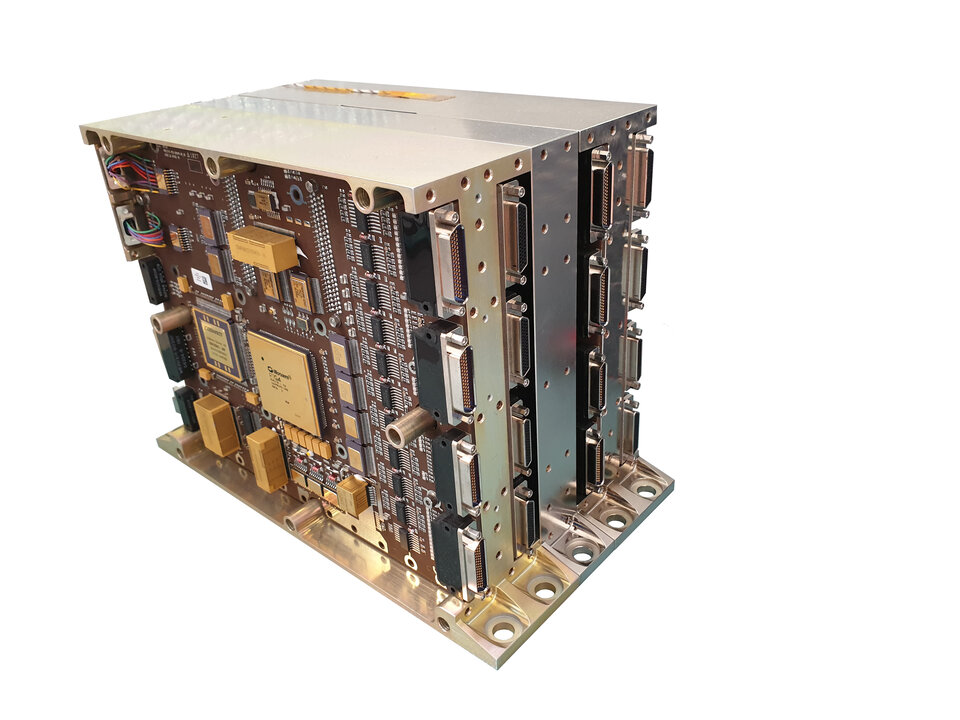
The core of this safety mechanism lies in Hera’s European-developed dual-core LEON3 processor. Jorge Lopez Trescastro, ESA’s Hera software engineer, explained the technical implementation: "Our priority is to perform these experiments in an entirely safe way, so we are taking advantage of the fact that Hera’s onboard computer runs on a European-developed dual-core LEON3 processor. One core will operate the actual spacecraft, while the other has a safe sandbox environment that has been optimized to host guest software."
Access to spacecraft instruments and subsystems will be facilitated, but with strict limitations. "The hosted software will only run for two to three hours at a time, and be shut off immediately if any problems are identified," Trescastro added. "Setting all this up to execute in a safe and reliable way has been really challenging, but now we are ready, and really excited to see what ideas the community brings forward!"

A Call for Visionary Ideas
ESA is actively soliciting proposals from European researchers and companies for software experiments that can be deployed within this secure deep-space laboratory. The call for ideas is being managed through ESA’s Open Space Innovation Platform (OSIP), a dedicated portal for collecting and evaluating innovative concepts.
The submission process involves an initial outline form for ESA’s evaluation. Following this initial assessment, selected teams will be invited to submit their full implementation package and source code for rigorous validation. The deadline for submitting the complete implementation is May 31, 2027. The planned operational period for these experiments is a one-month window during August 2027, following Hera’s primary mission activities.
Ian Carnelli, Hera Mission Manager, highlighted the transformative potential of this initiative. "Usually, we operate precious deep-space missions based on carefully validated procedures and frequent ground control oversight. But in this case, we are inviting European innovators to work in a real mission environment to help redefine how spacecraft might think, decide and operate in the future," Carnelli remarked. "The goal is not to hand over control of Hera, but to safely test ideas that could light the way towards more capable, more autonomous, and more resilient spacecraft operations."

Accelerating European Technological Leadership
This unique opportunity builds upon ESA’s long-standing commitment to in-orbit technology demonstration. Missions like the Proba family of satellites, including the current formation-flying Proba-3, and the planned Henon CubeSat for deep space exploration, have consistently provided platforms for testing new technologies in real space conditions. These endeavors are crucial for reducing risks in future, more complex missions and accelerating the transition of innovations from laboratories to operational spacecraft.
A notable precursor to this initiative was ESA’s OPS-SAT CubeSat, which also invited software developers to run standard software in space, famously including a demonstration of the classic video game Doom. The Hera mission represents a significant leap forward, applying a similar spirit of open innovation to a complex, deep-space mission.
The implications of this program extend far beyond the Hera mission itself. By fostering the development of advanced onboard intelligence, ESA is paving the way for spacecraft that can make autonomous decisions, adapt to unforeseen circumstances, and operate with greater efficiency and reduced communication latency. This is particularly critical for future deep-space exploration missions, where communication delays can span minutes or even hours, making real-time human intervention impractical.
The success of these experiments could lead to enhanced capabilities in areas such as:
- Autonomous Navigation and Hazard Avoidance: Enabling spacecraft to navigate complex environments and avoid obstacles without constant ground input.
- Onboard Data Analysis and Decision-Making: Allowing spacecraft to process vast amounts of data in situ and make critical decisions, such as prioritizing scientific observations or responding to anomalies.
- Intelligent Resource Management: Optimizing power consumption, propellant usage, and other critical resources for extended missions.
- Advanced AI for Scientific Discovery: Developing AI algorithms that can identify patterns, anomalies, and significant findings in scientific data collected during missions.
The selection of winning ideas is scheduled for mid-October 2026. The teams whose proposals are chosen will then embark on the detailed implementation and validation phase, culminating in the opportunity to see their software operate millions of kilometers away, contributing to the future of space exploration. This initiative underscores ESA’s forward-thinking approach to space technology development, positioning Europe at the forefront of intelligent and autonomous space systems.