The global economy’s circularity has alarmingly slipped to 6.9%, a stark indicator that industrial sectors are consuming resources at a rate far exceeding their recuperation capabilities. This accelerating depletion of finite resources poses a critical challenge to both environmental sustainability and long-term industrial resilience. Amidst this backdrop, efficient motor drives, particularly Variable Frequency Drives (VFDs), emerge as a pivotal technology capable of significantly mitigating this resource gap and redefining what constitutes "premium" in industrial operations.
The Widening Circularity Gap and its Implications
The latest Circularity Gap Report (CGR), a seminal annual publication, has once again underscored the profound environmental and structural challenges facing contemporary industries. The report, which systematically measures the state of the circular economy globally, reveals a consistent downward trend in circularity, indicating an increasing reliance on virgin materials. This trajectory highlights a fundamental disconnect: while global awareness of climate change and resource scarcity has grown, the practical implementation of circular principles at scale remains insufficient.
For industries, the implications extend beyond environmental stewardship. Long-term competitiveness, supply chain stability, and economic viability are increasingly intertwined with the ability to design, manufacture, and operate industrial assets that inherently consume fewer resources, boast extended operational lifespans, and facilitate the preservation and recovery of Critical Raw Materials (CRMs). These CRMs, including rare earth elements, cobalt, lithium, and copper, are indispensable components in modern technologies, from electric vehicles to advanced electronics and, crucially, high-performance industrial drives. Their scarcity, coupled with complex supply chains and geopolitical dependencies, makes their efficient use and recovery a central strategic imperative for manufacturers worldwide.
Variable Frequency Drives: Cornerstones of Industrial Efficiency
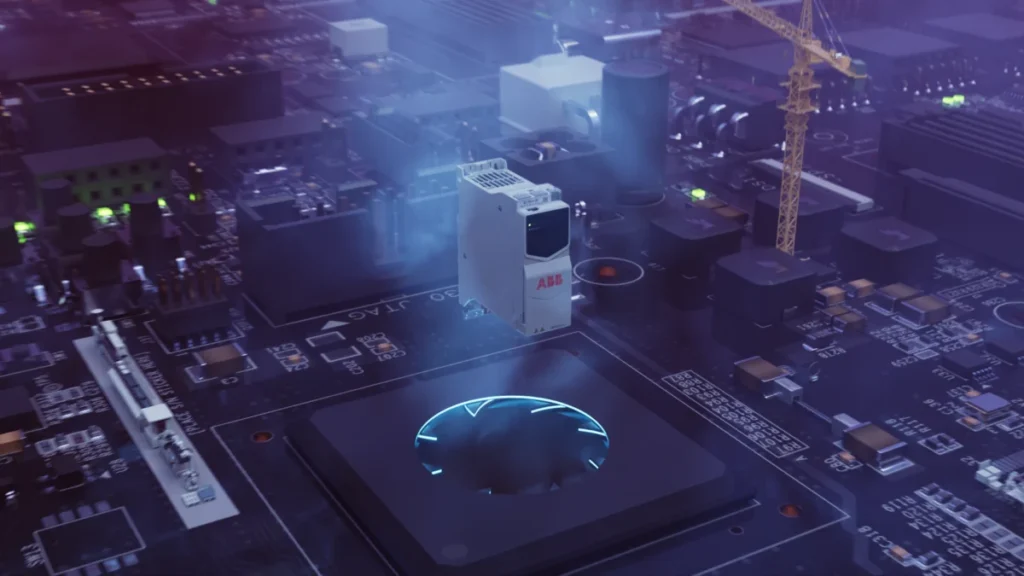
Within the vast landscape of industrial automation, motor-driven systems account for a significant portion of global electricity consumption, often estimated at over 40%. At the heart of these systems are industrial motors, and their efficiency is profoundly influenced by the control mechanisms employed. Variable Frequency Drives (VFDs), also known as AC drives or inverters, are long-life infrastructure assets designed to precisely control the speed and torque of electric motors. Unlike conventional direct-on-line (DOL) systems that run motors at full speed regardless of actual load, VFDs adjust motor output to match demand, leading to substantial energy savings.
The service life and material efficiency of VFDs directly influence energy consumption, operational uptime, and waste generation over decades of use. Their strategic importance in reducing the overall environmental footprint of industrial processes cannot be overstated. However, their full potential in driving circularity is often overlooked if the definition of "premium" remains anchored solely to initial purchase price and basic efficiency ratings.
Redefining "Premium": Beyond Price and Basic Efficiency

Anne Franzas, Global Product Manager for Circularity at ABB, articulates this evolving perspective, stating, "Global circularity has slipped to 6.9%, which indicates industries are consuming resources faster than they can be recuperated. Efficient motor drives can help close this gap." Her insight underscores a paradigm shift: the definition of "premium" for VFDs must evolve to encompass a broader spectrum of attributes. It must extend beyond mere initial cost and nameplate efficiency to include durability, inherent reliability, material-efficient design, and, crucially, the ability to retain value and functionality across multiple life cycles.
This redefinition means that a truly premium industrial drive is one that offers:
- Exceptional Energy Efficiency: Minimizing electricity consumption throughout its operational life.
- Extended Operating Life: Designed for longevity, delaying replacement cycles.
- High Reliability and Uptime: Reducing maintenance needs and unplanned downtime.
- Low Critical Raw Material (CRM) Demand: Employing fewer CRMs or utilizing easily recoverable ones.
- Upgradeability and Adaptability: Allowing for modular enhancements and software updates.
- Recoverability at End-of-Life: Facilitating easy disassembly, recycling, or remanufacturing of components.
The Circularity Journey: From Design to End-of-Life
Circularity, particularly in the context of industrial drives, is often mistakenly perceived as an end-of-life consideration—a matter of recycling discarded products. However, as advanced manufacturers are demonstrating, the most significant circularity impact begins much earlier: at the foundational stages of design, material selection, and optimization of operational life.
1. Design for Circularity and Material Efficiency:
The preservation and efficient use of CRMs have become a central strategic priority. This necessitates a fundamental shift in equipment design principles. Drives must be engineered with:
- Fewer Dependencies on CRMs: Exploring alternative materials or reducing the volume of critical materials used.
- Longer Lifetimes: Enhancing component robustness and system resilience to extend operational longevity.
- Higher Recoverability: Designing for easy disassembly, material separation, and component recovery at end-of-life. This includes standardized fasteners, clear material labeling, and modular construction.
- Clearer Traceability: Implementing systems to track materials and components throughout their lifecycle, aiding in responsible sourcing and end-of-life management.
Reliability, therefore, ceases to be merely an engineering target for performance and becomes an integral resource-conservation strategy. Every kilogram of avoided material and every kilowatt-hour saved over a drive’s operating life directly contributes to the preservation of non-renewable resources and the achievement of global climate goals. Recent innovations from leading suppliers showcase how modularity, lightweight construction, and intelligent material choices can significantly reduce overall material demand while simultaneously boosting installation flexibility and ease of maintenance.
2. Manufacturing and Quality Assurance for Durability:
The pursuit of extended operational life necessitates rigorous manufacturing processes and comprehensive quality assurance. Companies like ABB, with their advanced testing facilities (such as the Helsinki laboratory), invest heavily in understanding and mitigating component degradation mechanisms. This involves a suite of sophisticated techniques, including electron microscopy to analyze material structures, accelerated aging tests to simulate decades of use, and rigorous exposure to vibration, temperature extremes, and corrosive environments. This meticulous approach informs design improvements, ensuring VFDs are built to last as long as possible, thereby minimizing the demand for new CRMs and extending the utility of existing ones.
3. The Unrivaled Impact of Energy Efficiency:
While material circularity is crucial, the single biggest circularity impact from industrial drives stems from their energy efficiency. Globally, a substantial proportion of industrial motors continue to operate direct-on-line (DOL). These motors run at full speed constantly, irrespective of the actual load requirements, with mechanical throttling often used to control output. This inherent inefficiency represents one of the largest untapped opportunities for industrial decarbonization.
The adoption of VFDs offers a transformative solution. By precisely controlling motor speed, VFDs can reduce a motor’s energy consumption by 25% to 70%, depending on the application. Beyond energy savings, speed control enhances process yield, reduces wear and tear on mechanical systems (e.g., pumps, fans, compressors), and prevents unnecessary electricity use. Increasing the adoption rates of VFDs across various industries is, therefore, one of the most effective and immediate ways to reduce the total lifecycle material and energy consumption footprint of industrial operations.

4. Adaptability, Upgradeability, and Digital Longevity:
In a rapidly evolving industrial landscape, VFDs must remain relevant and functional as customer requirements, digital ecosystems, and regulatory expectations shift. A truly premium drive is not static but dynamic. Modular, forward- and backward-compatible architecture is key. This design philosophy reduces the need for complete unit replacements, allowing for targeted upgrades of specific components or modules. This approach keeps CRM-intensive components in productive use for longer, minimizing waste and resource consumption.
Digitalization further enhances longevity. Upgradable electronics and cooling modules, coupled with firmware-based performance enhancements, extend the usefulness of drives without consuming new materials. Furthermore, advanced digital diagnostics play a crucial role in preventing premature replacement. By continuously monitoring drive health and performance, these systems enable optimized, predictive maintenance schedules, avoiding the wasteful spare-parts usage often associated with fixed, time-based service schedules. This proactive approach ensures that components are replaced only when necessary, maximizing their operational life.
5. End-of-Life Recovery and Remanufacturing:
Even with extended lifespans and upgradeability, industrial drives eventually reach their end-of-life. At this stage, the circular economy model dictates that materials and components must not be lost to waste streams. Instead, they should be reclaimed and reintroduced into the value chain through established take-back and remanufacturing programs. This involves processes such as:
- Disassembly and Sorting: Efficiently separating components and materials for recycling.
- Refurbishment and Remanufacturing: Restoring components or entire units to "as-new" condition for resale or reuse.
- Material Recycling: Recovering valuable raw materials, especially CRMs, for use in new products.
These programs ensure that the technical and material value embedded in VFDs is preserved, closing the loop and significantly reducing the demand for virgin resources.
Chronology of Circularity Awareness and Action
The concept of a circular economy has evolved significantly over recent decades. While discussions around recycling and waste reduction gained traction in the late 20th century, the formalized concept of a circular economy, encompassing design, production, and consumption patterns, began to solidify in the early 2000s. Key milestones include:
- Early 2000s: Emergence of foundational texts and frameworks by organizations like the Ellen MacArthur Foundation, popularizing the "make-use-return" model.
- 2015: Adoption of the UN Sustainable Development Goals (SDGs), with SDG 12 (Responsible Consumption and Production) directly promoting circularity.
- Mid-2010s: Increased focus on critical raw materials due to geopolitical shifts and supply chain vulnerabilities, driving interest in material circularity.
- 2018 onwards: The annual Circularity Gap Report begins to quantify global circularity, providing concrete data that highlights the urgency of the transition. The consistent decline in the circularity rate over these years (from 9.1% in 2018 to 6.9% currently) serves as a stark call to action for industries and policymakers alike.
- Present Day: Growing regulatory pressure (e.g., EU Circular Economy Action Plan) and corporate sustainability commitments are accelerating the integration of circular principles into industrial design and operations.
Broader Impact and Implications
The redefinition of "premium" for industrial drives carries profound implications across multiple dimensions:
Economic Implications:

- Cost Savings: While the initial investment in premium, circular-designed VFDs might be higher, the long-term operational savings from reduced energy consumption, extended equipment life, and lower maintenance costs offer a compelling return on investment.
- Enhanced Competitiveness: Companies adopting circular principles gain a competitive edge by demonstrating sustainability leadership, attracting environmentally conscious customers and investors.
- Supply Chain Resilience: Reducing reliance on virgin CRMs and establishing robust take-back and remanufacturing programs mitigates risks associated with volatile raw material markets and geopolitical supply chain disruptions.
Environmental Implications:
- Reduced Carbon Footprint: The significant energy savings achieved through VFDs directly translate into reduced greenhouse gas emissions, contributing substantially to climate goals.
- Resource Preservation: Minimizing the consumption of critical raw materials helps conserve finite natural resources and reduces the environmental impact of mining and extraction.
- Waste Reduction: Longer product lifespans, upgradeability, and end-of-life recovery programs dramatically reduce industrial waste sent to landfills.
Social Implications:
- Job Creation: The circular economy fosters new job opportunities in areas like product design for circularity, remanufacturing, repair, and advanced recycling.
- Improved Corporate Reputation: Companies committed to circularity enhance their brand image and attract talent, especially younger generations who prioritize sustainable practices.
Technological Advancement:
- Innovation Driver: The challenge of designing for circularity spurs innovation in material science, modular design, digital diagnostics, and advanced manufacturing techniques.
- Integration of Digital Tools: The emphasis on traceability, predictive maintenance, and end-of-life management accelerates the integration of IoT, AI, and blockchain technologies into industrial assets.
Official Responses and Industry Outlook
The insights provided by experts like Anne Franzas from ABB reflect a growing consensus within the industrial sector. Major players are increasingly recognizing that sustainability is not merely a compliance issue but a strategic imperative that drives innovation and long-term value. While specific policy statements are often localized, the overarching message from global industry associations and regulatory bodies emphasizes the critical role of industrial efficiency and circularity in achieving broader climate and resource goals. The International Energy Agency (IEA), for instance, consistently highlights industrial motor systems as a key area for energy efficiency improvements globally.
Conclusion: A Leaner, Cleaner Future
In a world characterized by constrained materials and escalating energy costs, the traditional definition of "premium" for industrial drives is no longer sufficient. It must expand to embrace a holistic view of lifecycle value, encompassing efficiency, durability, material stewardship, and adaptability. Industrial drives and motors, responsible for converting over 40% of global electricity into motion, possess an enormous, yet largely untapped, potential to accelerate the green transition. This potential can only be fully realized if their adoption significantly increases in currently under-automated Direct-On-Line (DOL) applications, and if the drives themselves are meticulously engineered for circular material flows.
This shift represents more than just an environmental imperative; it is a fundamental re-evaluation of industrial economics. By embracing this redefined premium, end-users can not only boost operational performance and profitability but also actively contribute to the creation of a leaner, more resilient, and cleaner industrial future. The journey towards a truly circular industrial economy begins with these fundamental technological choices, transforming the very fabric of how we power progress.