A pivotal moment in modern naval engagement unfolded on September 12 when a Ukrainian unmanned surface vessel (USV) successfully engaged and destroyed a Russian naval drone in the Black Sea. This unprecedented confrontation, described by Ukraine’s Navy as the first-ever combat between two unmanned boats, signals a significant escalation in maritime warfare and a new chapter in the ongoing Russia-Ukraine conflict. The operation was a collaborative effort, with Ukraine’s military intelligence agency, HUR, playing a crucial role in identifying and tracking the Russian vessel before the Ukrainian drone initiated its attack.
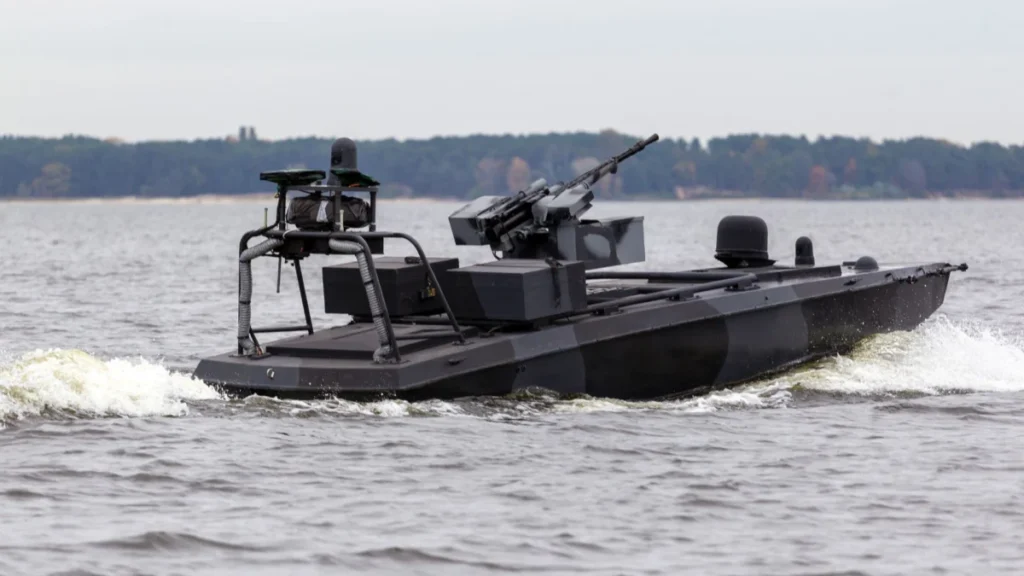
The Ukrainian Navy confirmed that its Sargan-3000 USV, a sophisticated platform, utilized a 12.7-mm Protector remote weapon station (RWS) to neutralize the Russian unmanned adversary. This event transcends a mere skirmish; it underscores a profound shift in military strategy, as both sides increasingly rely on advanced naval drones to target ships, ports, and critical maritime infrastructure. The incident, captured and subsequently released in video footage by Ukraine on its official Telegram account, vividly depicted the Ukrainian drone engaging its Russian counterpart at sea, offering tangible evidence of this historical combat.
The Escalating Role of Unmanned Systems in the Black Sea
The Black Sea has emerged as a critical theatre of operations in the Russia-Ukraine War, characterized by Ukraine’s innovative and often asymmetric responses to Russia’s numerically superior Black Sea Fleet. From the early stages of the full-scale invasion, Ukraine, lacking a conventional navy capable of directly challenging Russia’s fleet, turned to unmanned systems to project power and deny Russia uncontested control of key maritime areas. This strategy has seen a rapid evolution, with Ukrainian naval drones, such as the Magura V5 and the ‘Sea Baby,’ becoming instrumental in a series of high-profile attacks. These have included strikes on Russian warships, naval bases in Sevastopol, and even the Kerch Bridge, a vital logistical artery connecting mainland Russia to occupied Crimea.
Russia, in turn, has adapted its tactics, bolstering defenses around its naval assets and increasingly deploying its own fleet of unmanned systems. The development and deployment of USVs by both nations reflect a global trend towards integrating autonomous platforms into military operations, driven by their cost-effectiveness, reduced risk to human life, and enhanced operational capabilities in contested environments. The September 12 engagement represents the culmination of this escalating unmanned arms race, transitioning from drone attacks on manned vessels or fixed targets to direct drone-on-drone combat.
Anatomy of the Engagement: Ukrainian Sargan-3000 vs. Russian Orcan
The Russian vessel intercepted and destroyed was identified as an improved Orcan type, also referred to as Zefir or Zephyr in certain Russian military and intelligence circles. This small, agile USV is primarily designed for explosive attacks, carrying a significant payload intended to inflict damage upon impact. Its design and dimensions bear a notable resemblance to Ukraine’s earlier Magura V3 and V5 naval drones, suggesting a parallel evolution in unmanned attack craft doctrine. The Orcan is characterized by an internal motor connected to a steerable water jet, a configuration that grants it exceptional speed and maneuverability, making it a challenging target to intercept. Crucially, the vessel is fully unmanned, underscoring the shift towards autonomous operations in high-risk zones.
Russia has progressively integrated these Orcan-type USVs into its operational strategy, primarily employing them against Ukrainian ports and naval targets along the Black Sea coast. Reports of multiple attacks near Odesa and the interception of other suspected maritime drone operations highlight Russia’s intent to disrupt Ukrainian maritime activities and potentially target critical infrastructure. The deployment of such expendable, high-speed assets provides Russia with a persistent, low-cost harassment capability, forcing Ukraine to allocate significant resources to defense and interception.
On the Ukrainian side, the Sargan-3000, known also by its moniker SeaWolf, is a multipurpose USV manufactured by Nordex. The Ukrainian Navy stated that this platform reportedly completed its combat testing phases recently, signifying its readiness for operational deployment. Described as "highly maneuverable," the Sargan-3000 is designed to execute a variety of strike missions. For the September 12 operation, it was configured with a Protector remote weapon station armed with a 12.7-mm machine gun. This armament allowed the Ukrainian drone to engage the Russian vessel from a standoff distance, effectively neutralizing the threat without requiring a direct, potentially self-destructive, collision. The modular design of the Sargan-3000 further enhances its versatility, with other variants reportedly capable of carrying air-defense equipment or electronic warfare (EW) systems, enabling the platform to fulfill diverse operational roles, from reconnaissance and surveillance to interdiction and electronic warfare.
Chronology of Unmanned Warfare in the Black Sea
The September 12 event did not occur in isolation but is part of a developing timeline of unmanned maritime warfare:
- Early 2022: Following Russia’s full-scale invasion, Ukraine begins exploring asymmetric naval capabilities, including the development of rudimentary unmanned surface vessels.
- October 2022: Ukrainian naval drones execute a daring attack on Russian Black Sea Fleet vessels in Sevastopol, demonstrating the potent threat posed by USVs. This marks a turning point, showcasing the vulnerability of traditional warships to these new weapons.
- Mid-2023: Ukraine intensifies its naval drone campaign, deploying increasingly sophisticated USVs like the Magura V5 and ‘Sea Baby.’ High-profile attacks include those on the Kerch Bridge, the landing ship Olenegorsky Gornyak, and the SIG tanker, showcasing expanding range and target diversity.
- August 2023: Russia acknowledges the threat and enhances its defensive measures against USVs, including deploying boom barriers and increasing patrols. Simultaneously, reports emerge of Russia deploying its own offensive USVs, such as the Orcan/Zefir types, against Ukrainian targets. Satellite imagery begins to show new facilities for naval drones in occupied Crimea, indicating a strategic investment.
- September 12, 2023: The direct engagement between the Ukrainian Sargan-3000 and a Russian Orcan-type drone occurs. This marks the first confirmed instance of two unmanned naval vessels actively engaging each other in combat, moving beyond unilateral attacks.
- Post-September 12: Both sides are now compelled to reassess their naval drone strategies, focusing not only on offensive capabilities but also on advanced counter-drone measures, including the ability to detect, track, and destroy enemy USVs.
Strategic Implications and Broader Impact
While the precise location of the encounter remains undisclosed, it is highly probable that it took place in the northwestern Black Sea, an area that has witnessed a significant uptick in both Ukrainian and Russian maritime activity. This region is strategically vital for both sides, influencing grain export routes, naval projection, and supply lines to Crimea. Russia’s naval drone operations often originate from bases in northwestern Crimea, such as Chornomors’ke and the Lake Donuzlav area, further solidifying this zone as a hotspot for unmanned naval engagements.
A key aspect of Russia’s evolving drone strategy is the potential for synergy between its naval USVs and long-range aerial drones, such as the Geran systems (repurposed Shahed-136 drones). These aerial assets can provide crucial support for surveillance, communication relays, and command and control over extended distances, enhancing the operational effectiveness and coordination of naval drones. Ukraine has mirrored this expansion, with its Navy reporting striking a staggering 105 Russian vessels and maritime targets during its Sea of Azov campaign, underscoring the scale and impact of its unmanned efforts.
The destruction of a single USV might appear to have a limited impact on overall fleet numbers, especially given that these systems are inherently designed to be expendable. However, the true significance of the September 12 event lies in its tactical and strategic implications. The engagement marks a profound shift in naval warfare doctrine: naval drones are no longer merely instruments for attacking traditional manned vessels or static infrastructure; they are now actively being employed to hunt and neutralize other naval drones.
This development forces both sides to rapidly innovate and adapt their methods for detecting, defending against, and engaging unmanned vessels at sea. It necessitates advancements in areas such as:
- Detection Systems: Development of more sophisticated radar, sonar, and electro-optical/infrared (EO/IR) systems specifically tuned to detect small, fast-moving, low-signature USVs.
- Interception Technologies: Beyond traditional naval armaments, there will be an increased focus on specialized anti-drone weaponry, including short-range missiles, directed energy weapons, advanced electronic warfare systems to disrupt control, and even small arms for close-in defense.
- Autonomous Countermeasures: The need for USVs themselves to be equipped with defensive capabilities, including evasive maneuvers, jamming, and potentially offensive weaponry to engage other drones.
- Command and Control: Enhanced secure communication links and resilient command structures capable of operating in highly contested electromagnetic environments.
- Artificial Intelligence: Further integration of AI for autonomous navigation, target identification, and engagement decisions to reduce human workload and response times.
The "first-ever battle between unmanned naval boats" is more than just a headline; it is a harbinger of the future of naval power. It signals a potential rebalancing of maritime forces, where the traditional advantages of large, expensive warships may be increasingly challenged by swarms of cost-effective, adaptable, and expendable unmanned systems. This event underscores Ukraine’s remarkable ingenuity in asymmetric warfare and is set to accelerate a global technological arms race in naval drone development, shaping the strategies and capabilities of navies worldwide for decades to come. The Black Sea, in this conflict, continues to serve as a crucible for the evolution of modern warfare.