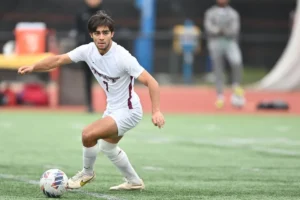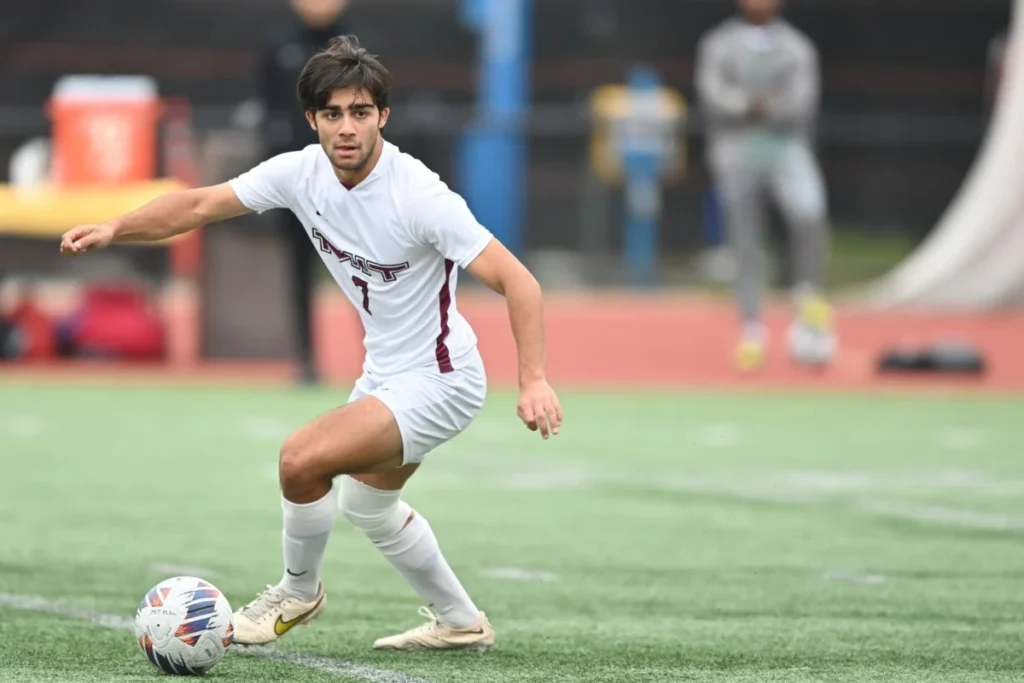
Dilin Meloni, a rising senior at the Massachusetts Institute of Technology, is redefining the archetype of the modern student-athlete by balancing the rigors of a double major in nuclear science and physics with a leadership role on the soccer pitch and in student government. As an attacking midfielder for the MIT Engineers and a co-leader of the Student Athlete Advisory Committee (SAAC), Meloni has become a central figure in bridging the gap between the institute’s high-pressure academic environment and its robust athletic community. His journey from an All-American high school standout in Needham, Massachusetts, to a summer intern at Commonwealth Fusion Systems (CFS) highlights the unique synergy between competitive sports and advanced engineering.
The Path to Cambridge: From Needham High to the PSFC
Meloni’s trajectory toward MIT was set long before he donned the cardinal and gray jersey. While attending Needham High School, he earned national recognition as a Massachusetts Boys Soccer Player of the Year and an All-American. Despite having a plethora of collegiate options—many of which offered more traditional athletic pathways—Meloni’s decision was catalyzed by an academic spark. During his junior year of high school, he encountered a research paper from MIT’s Plasma Science and Fusion Center (PSFC). The paper’s exploration of fusion energy and plasma physics resonated with him, aligning his professional ambitions with his athletic discipline.
The choice to attend MIT allowed Meloni to pursue a dual identity: an "Engineer" on the field, representing the university’s varsity soccer team, and an "engineer" in the lab, tackling the complexities of clean energy. This dualism is a hallmark of the MIT experience, where the athletic department—the Department of Athletics, Physical Education, and Recreation (DAPER)—manages one of the largest Division III programs in the United States, supporting 33 varsity sports.
Academic Rigor: Navigating Course 22 and Course 8
At MIT, academic programs are famously referred to by their numbers. Meloni is a double major in Course 22 (Nuclear Science and Engineering) and Course 8 (Physics). These fields are among the most demanding at the institute, often requiring extensive hours in the laboratory and advanced mathematical modeling. Meloni notes that while the "student-athlete" moniker is common across campus, there is a distinct lack of varsity athletes within the nuclear engineering and physics departments.
"You don’t find a ton of varsity athletes in nuclear engineering or physics, unfortunately," Meloni observed, noting that he has taken it upon himself to mentor incoming players and encourage them to explore these challenging disciplines. His current summer internship at Commonwealth Fusion Systems (CFS), a prominent MIT spinoff company focused on commercializing fusion energy, serves as a practical application of his studies. At CFS, Meloni is contributing to the development of the SPARC tokamak, a compact, high-field fusion device designed to prove the viability of fusion as a carbon-free energy source. This professional experience underscores the high stakes of his academic pursuits, which exist in a separate sphere from his life as a soccer player.
The Social Architecture of MIT Athletics
Contrary to the external perception of MIT as a purely academic enclave, Meloni emphasizes that the athletic community serves as a primary driver of the school’s social fabric. For many students, particularly fall athletes who arrive on campus weeks before the general student body for preseason training, the team becomes an immediate support system.
Meloni’s social life is deeply intertwined with his teammates. His fraternity is comprised largely of the soccer team, alongside members of the football, swimming, and track programs. This camaraderie provides a necessary counterweight to the isolation that can sometimes accompany intense scientific research. "Athletics help you meet students who are very much like yourself: people who come to MIT for academics but who have also dedicated so much of their lives to a sport that it’s a major part of them," Meloni explained. He views this integration not as a silo, but as a gateway to the broader "MIT ecosystem," allowing him to move between the diverse backgrounds of his lab colleagues and the shared goals of his teammates.
Leadership and Advocacy: The Role of the SAAC
Beyond his personal balance of sports and studies, Meloni has emerged as a vocal advocate for the student-athlete population through his work with the Student Athlete Advisory Committee (SAAC). The SAAC is a student-led organization mandated by the NCAA to ensure that student-athletes have a voice in the governance of their athletic departments and the institution at large.
Representing the needs of 33 different varsity teams is a logistical challenge. Last summer, Meloni and his co-president initiated a comprehensive outreach program, meeting with coaches and athletes to identify "pain points" within the DAPER system. These issues range from high-level NCAA legislation to the granular details of daily life, such as food quality and facility access.
One of the primary areas of concern identified by the SAAC is the allocation of time and space in the new Sports Performance Facility and on the university’s turf fields. In an urban campus like Cambridge, where space is at a premium, the competition for field time is fierce. Meloni describes the frustration of varsity teams having to share space with student clubs or non-athlete residents. "If you’re trying to have a soccer practice and there are people running on the track… or if you’re trying to book an off-season practice and a student club already booked the field—all these things can be frustrating," he said.
Bridging the Gap Between Administration and Students
Meloni’s background in student governance—having served on his town’s school committee and larger Massachusetts school committees during high school—has prepared him for the diplomatic nuances of the SAAC presidency. He views his role as a translator between the idealistic demands of students and the logistical realities of university administration.
"The difficult part can be communicating realistic standards," Meloni noted. "I’ve come to understand fully that there’s a cost associated with everything… finding compromises when it comes to field time, or food, or whatever it may be—I end up explaining a lot. You can’t just demand everything."
This pragmatic approach has yielded results. Meloni reports that DAPER and Student Life staff have become increasingly receptive to the SAAC’s input, leading to an overhaul of certain administrative processes. This year is described as a "tipping point" in the relationship between the student-athletes and the administration, with officials now seeking Meloni’s input on broader aspects of student life beyond the athletic department.
Chronology of a Dual Career: Dilin Meloni’s Milestones
- 2020-2021: Meloni earns Massachusetts Boys Soccer Player of the Year honors and All-American status at Needham High School.
- Junior Year (High School): Reads a pivotal paper from the MIT Plasma Science and Fusion Center, solidifying his interest in nuclear engineering.
- Fall 2021: Enrolls at MIT, joins the varsity soccer team as an attacking midfielder, and immediately joins the Student Athlete Advisory Committee.
- 2022-2023: Deepens involvement in Course 8 and Course 22; begins advocating for more athletes to enter the physical sciences.
- Summer 2023: Initiates a comprehensive survey of all 33 varsity teams to identify administrative and facility-related grievances.
- Summer 2024: Interns at Commonwealth Fusion Systems while serving as co-president of the SAAC, working to finalize facility allocation agreements for the upcoming academic year.
Broader Impact and the Future of the Student-Athlete
The story of Dilin Meloni serves as a case study for the value of the Division III model, which emphasizes the "student" in student-athlete without sacrificing the competitive spirit. At a top-tier research institution like MIT, the presence of students who can navigate both the complexities of a tokamak fusion reactor and the tactical demands of a collegiate soccer match is a testament to the school’s holistic approach to education.
As Meloni enters his senior year, his focus remains on leaving the athletic department better than he found it. By maintaining open communication channels with the administration, he believes that small, incremental changes in facility management and student support will lead to long-term improvements in the student-athlete experience.
"Obviously, it’s a privilege to come to this school, but if you’re here you still need to be heard," Meloni concluded. His dual legacy at MIT—advancing the frontiers of fusion energy and strengthening the voice of the athletic community—highlights the potential for student-athletes to serve as effective leaders in both scientific and civic arenas. As the world looks toward fusion as a potential solution to the global energy crisis, the next generation of engineers like Meloni are proving that the discipline learned on the field is an essential component of the innovation required in the lab.