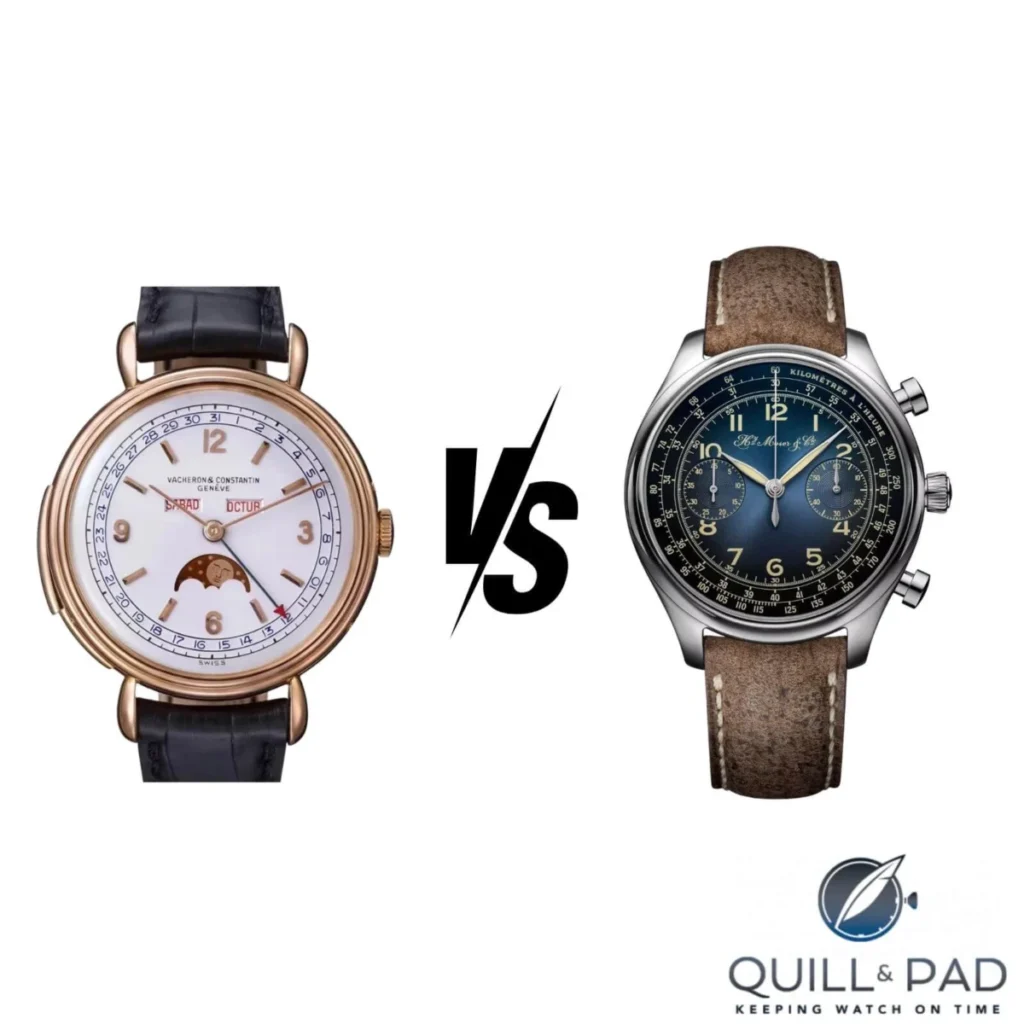
The modern luxury watch industry presents discerning collectors with a fascinating dichotomy, particularly when examining two titans of Swiss horology: Vacheron Constantin and H. Moser & Cie. These brands, while both representing the pinnacle of mechanical watchmaking, embody fundamentally different philosophies, appealing to distinct collector profiles. Choosing between them necessitates a deeper understanding of their heritage, design language, technical prowess, and the unique statements they make in the rarefied world of haute horlogerie. This comparison delves into the core attributes that differentiate these esteemed maisons, guiding collectors toward a decision that aligns with their personal values and appreciation for the art of timekeeping.
The Weight of Centuries Versus an Incredible Comeback
Vacheron Constantin stands as a testament to enduring legacy. Founded in 1755 by Jean-Marc Vacheron, it boasts the longest continuous history of watchmaking in the world. This unbroken lineage, spanning over 260 years, imbues each timepiece with an immeasurable gravitas. The brand has navigated revolutions, wars, and the seismic shifts brought about by the quartz crisis, consistently upholding its commitment to artisanal craftsmanship and timeless design. This historical depth means that every Vacheron Constantin watch is not merely an instrument of time, but a tangible piece of horological history. The brand’s authority in the industry is so deeply entrenched that questioning its heritage feels akin to questioning the very passage of time.
However, this profound history also presents a unique challenge. Vacheron Constantin operates under the weight of its illustrious past. Designers and engineers at the maison are not simply creating new watches; they are engaging in a dialogue with generations of master watchmakers and the iconic aesthetic codes established by figures like Francois Constantin. The result is a design language rooted in classical Genevan watchmaking. This tradition demands a meticulous adherence to established principles, precluding radical departures from the brand’s core identity. A Vacheron Constantin designer, for instance, would not conceive of a neon green, carbon fiber sports watch that resembles a spaceship. Instead, the focus remains on refined elegance, intricate detailing, and the preservation of a heritage that has earned it a place among the "Holy Trinity" of Swiss watchmaking, alongside Audemars Piguet and Patek Philippe.
In stark contrast, H. Moser & Cie presents a narrative of remarkable revival and bold innovation. While the brand bears a historic 19th-century name, its modern iteration is a testament to a phoenix-like return from dormancy. Founded by Heinrich Moser in the 19th century, who amassed his fortune in Russia through the production of highly regarded pocket watches, the company faltered during the quartz crisis and vanished from the horological landscape. Its resurrection in the early 2000s, spearheaded by Dr. Jürgen Lange and later acquired by the Meylan family, marked the beginning of a new chapter defined by audacious creativity.
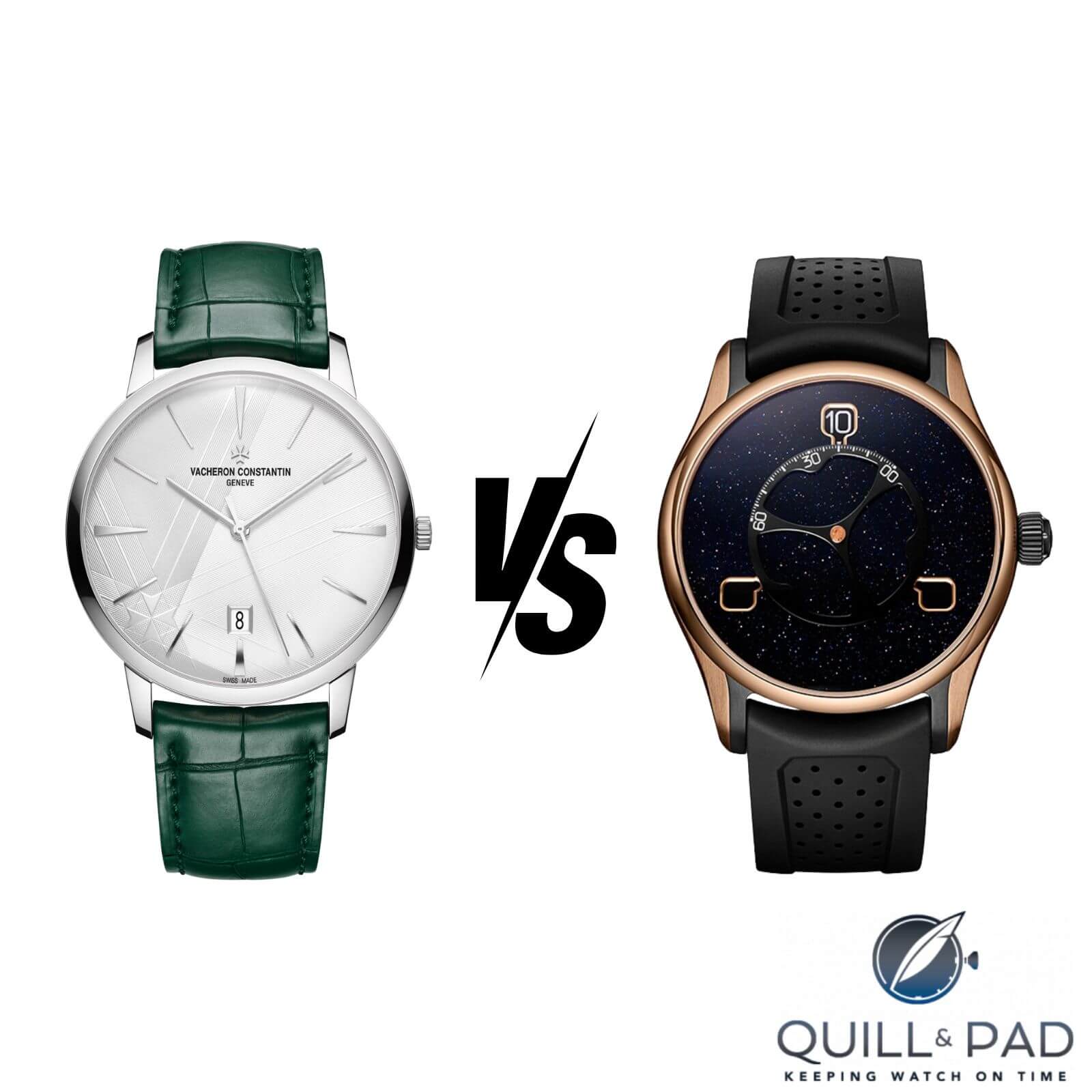
This break in continuity, which might be perceived as a weakness for other brands, has become a strategic advantage for H. Moser & Cie. Freed from the creative constraints of a centuries-old design archive, the brand, under the leadership of CEO Edouard Meylan, has embraced a philosophy of modern interpretation and artistic expression. While possessing the technical mastery to rival the most established maisons in terms of movement finishing, H. Moser & Cie enjoys the creative liberty to push boundaries. This approach positions the brand as a disruptor, a contemporary force that leverages traditional watchmaking skills to craft watches that are both technically superb and aesthetically avant-garde. It represents the art of a comeback, where a resurrected name can afford the freedom to innovate without being beholden to a rigid historical precedent.
Institutional Finishing Meets Minimalist Subversion
The aesthetic divergence between Vacheron Constantin and H. Moser & Cie is perhaps the most immediate and striking difference for collectors. Vacheron Constantin’s visual language is one of classical complexity and refined detail. Its dials often feature traditional hand-turned guilloché patterns, meticulously carved into solid gold blanks using rose engine lathes. The brand’s cases are characterized by stepped lugs, precise fluting, and an architectural presence that unequivocally signals their Genevan origin.
Central to Vacheron Constantin’s identity is the Maltese Cross, its iconic emblem. This symbol is woven into the fabric of its creations, appearing as the tourbillon cage, subtly integrated into bracelet links, or adorning clasps. The aesthetic of every Vacheron Constantin watch is intrinsically linked to the stringent requirements of the Poinçon de Genève, or Hallmark of Geneva. This prestigious certification dictates not only the performance of the movement but also the meticulous decoration of every microscopic surface. Screw heads are polished, their slots chamfered; pinion leaves are polished; and the anglage (beveling) applied to the bridges is executed by hand with flawless interior angles. The result is a watch that feels profoundly institutional, a paragon of Genevan horological excellence.
H. Moser & Cie, conversely, has carved its niche by embracing a philosophy of minimalist subversion. In a crowded marketplace, the brand has found its voice by often saying less, allowing the inherent beauty of the materials and the purity of the design to speak for themselves. A prime example is its celebrated "Concept" dial, which, at a price point exceeding CHF 60,000, omits hour markers, minute tracks, and even the brand logo. This deliberate absence compels the wearer to engage directly with the intense color and texture of its signature fumé dials, which are notoriously difficult to produce to such a high standard. This approach forces a deep appreciation for the material execution and the craftsmanship involved.
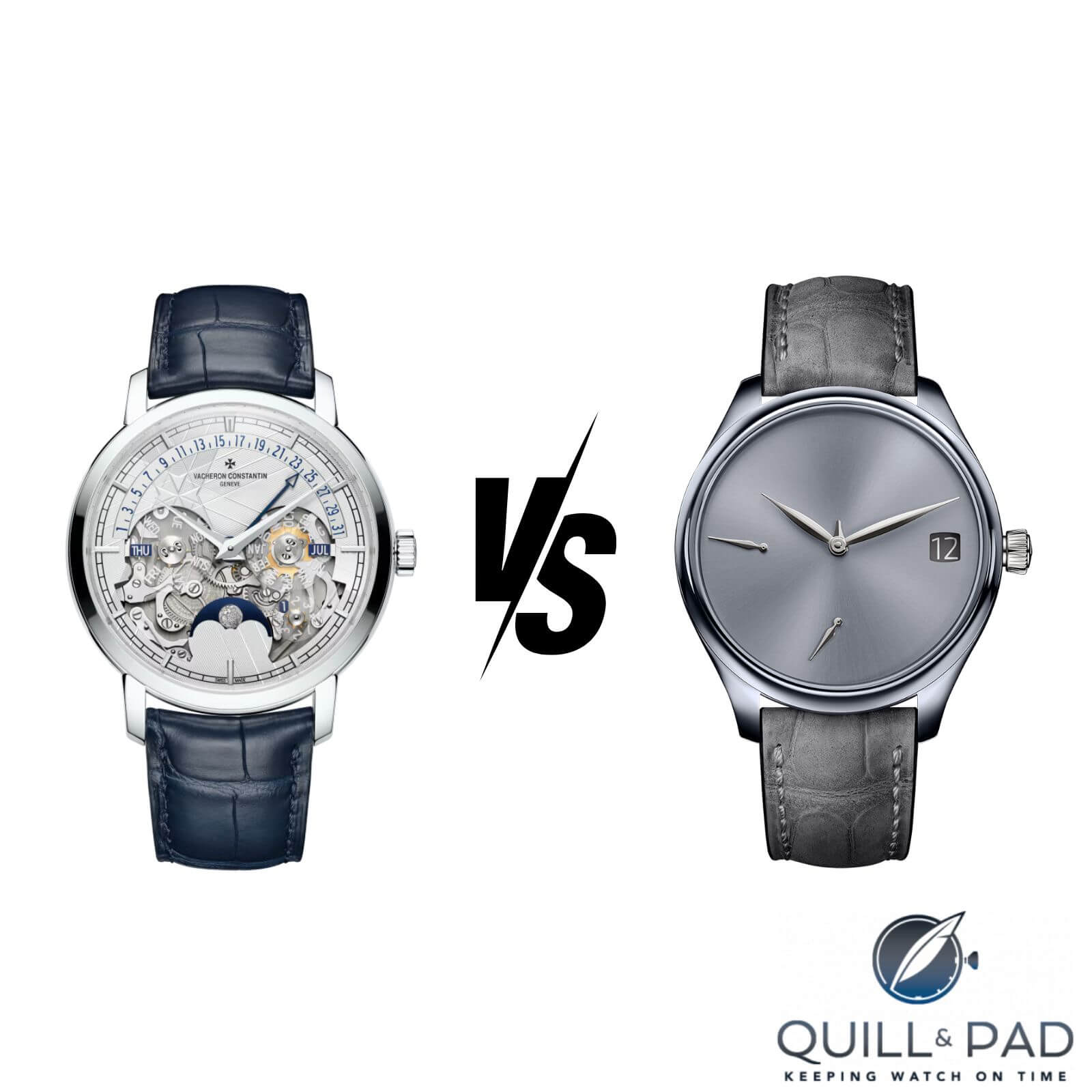
The case designs at H. Moser & Cie echo this principle of organic fluidity. They often feature deeply sculpted forms with fluid hollows, a stark contrast to the geometric precision favored in Geneva. This design language prioritizes a tactile and visually immersive experience, inviting the collector to appreciate the watch not just as a timekeeping device, but as a piece of functional art.
The Calibre Chronology
A closer examination of the movements powering these timepieces reveals further distinctions in their horological philosophies. Vacheron Constantin’s strength lies in its extensive back catalogue of calibres, many of which are celebrated for their complexity and refinement. The legendary Calibre 1120, for instance, is a benchmark in ultra-thin watchmaking, a movement so exquisitely engineered that it has been shared among the Holy Trinity, yet widely considered to have been perfected by Vacheron. Similarly, the Calibre 1142 represents the zenith of lateral-clutch, column-wheel chronographs, with its flawless mirror-polished column wheel caps serving as a testament to the maison’s dedication to perfection. Vacheron Constantin excels in producing grand complications, including minute repeaters that chime with crystalline clarity and perpetual calendars of exceptional sophistication, embodying the highest echelons of traditional watchmaking.
H. Moser & Cie also demonstrates exceptional prowess in movement manufacturing, bolstered by its sister company, Precision Engineering AG. This in-house capability allows Moser to produce its own hairsprings and escapements, granting it unparalleled control over the very heart of its watches. Notably, Moser has developed the Straumann double hairspring, a dual-hairspring system mounted opposing each other on the balance staff. This innovative design ensures that the center of gravity remains centered as the hairsprings expand and contract, effectively eliminating gravitational errors that the tourbillon was originally invented to counteract.
Furthermore, H. Moser & Cie has revolutionized movement architecture with its interchangeable escapement module. This ingenious system allows the entire regulating organ to be unscrewed and removed as a single unit for servicing, and then replaced with a freshly cleaned and regulated module. This significantly reduces the time a watch spends away from its owner, a practical benefit for the modern collector. Combined with traditional hand-finishing, Moser’s distinctive double-crested striping on the bridges, and its pioneering engineering, HMC calibres represent a compelling investment in both innovation and artisanal quality.
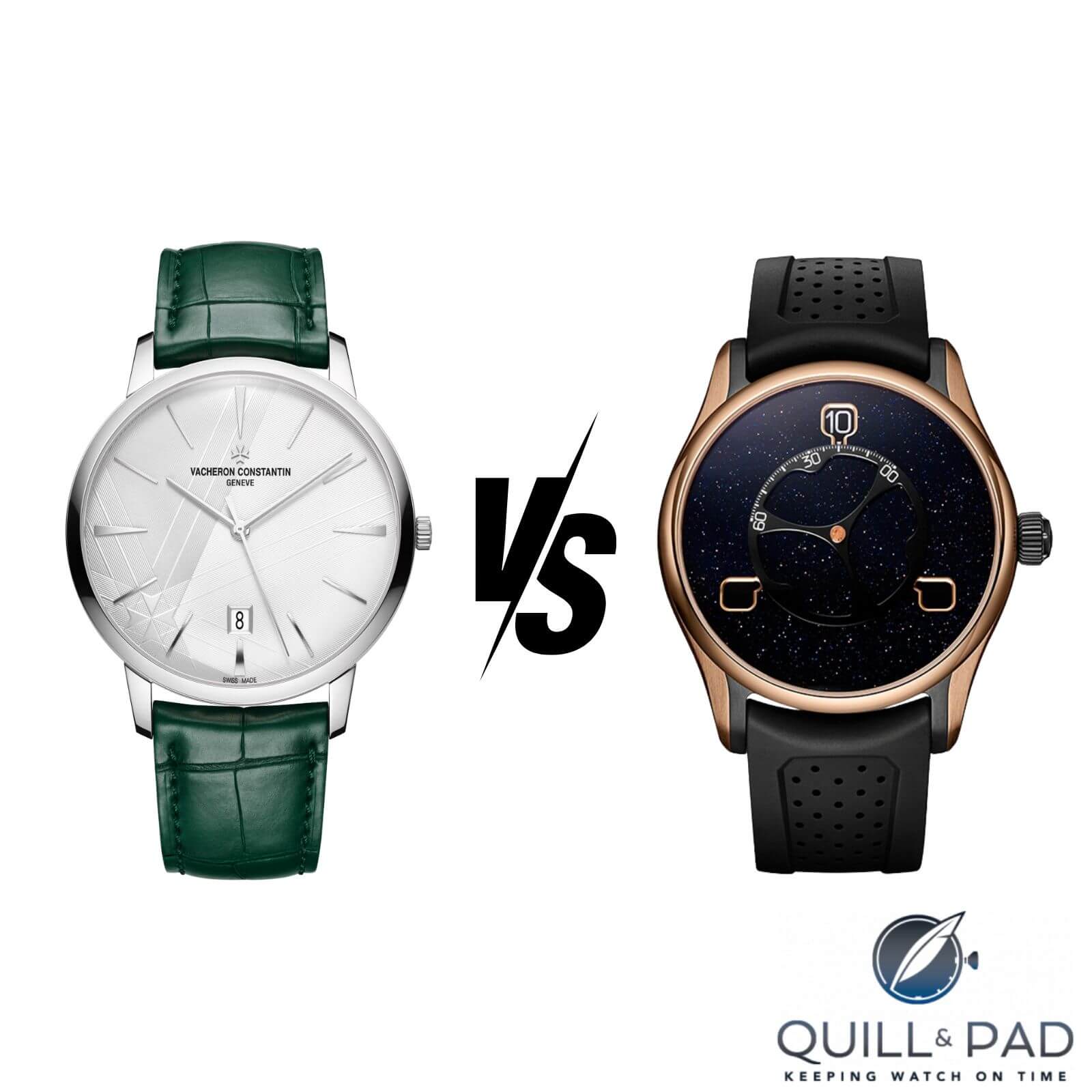
The Great Sport-Chic Compromise: Overseas and Streamliner
The integrated sports watch segment represents a crucial battleground where both Vacheron Constantin and H. Moser & Cie vie for collector attention and market share. These watches, characterized by their seamless integration of case and bracelet, are designed for versatility and everyday wear, blending sporty aesthetics with refined luxury.
Vacheron Constantin’s entry into this arena is embodied by its Overseas collection, a design lineage that evolved from the iconic Jorg Hysek-designed reference 222. The Overseas is positioned as a maritime king of the luxury sports watch world, though it lacks the immediate pop-culture recognition of competitors like the Audemars Piguet Royal Oak or the Patek Philippe Nautilus. Its bezel is a sophisticated interpretation of the Maltese cross, and the bracelet links subtly echo this geometric motif. Vacheron approached the sports watch by elevating it, incorporating features like quick-release bracelet systems well before they became an industry standard. The finishing of its movements adheres to the rigorous Hallmark of Geneva standards, underscoring its commitment to haute horlogerie even in a sports watch context. Consequently, the Overseas is often seen as a sports watch for the connoisseur who appreciates understated luxury and impeccable craftsmanship, perhaps someone who owns a yacht but would refrain from exposing their timepiece to the elements.
H. Moser & Cie’s foray into the integrated sports watch market with its Streamliner collection was a masterstroke of design innovation. Rather than following the prevalent octagonal, bezel-screw aesthetic, Edouard Meylan drew inspiration from the aerodynamic curves of 1920s high-speed trains and 1970s automotive design. The Streamliner eschews traditional lugs and sharp angles in favor of a fluid, cushion-shaped case that flows seamlessly into its intricate bracelet. The articulated links, rather than being standard geometric shapes, evoke the scales of a reptile or the plates of an armadillo, creating a liquid-like flexibility on the wrist. The Streamliner also features a chronograph model powered by the Agengraphe calibre, developed by Jean-Marc Wiederrecht at Agenhor. This innovative movement cleverly hides the winding rotor between the dial and the movement, allowing for an unobstructed view of the exceptional mechanical artistry through the caseback. This bold design choice has positioned the Streamliner as a distinctive and highly sought-after model in the integrated sports watch category.
The Rule-Breaker and the Traditionalist
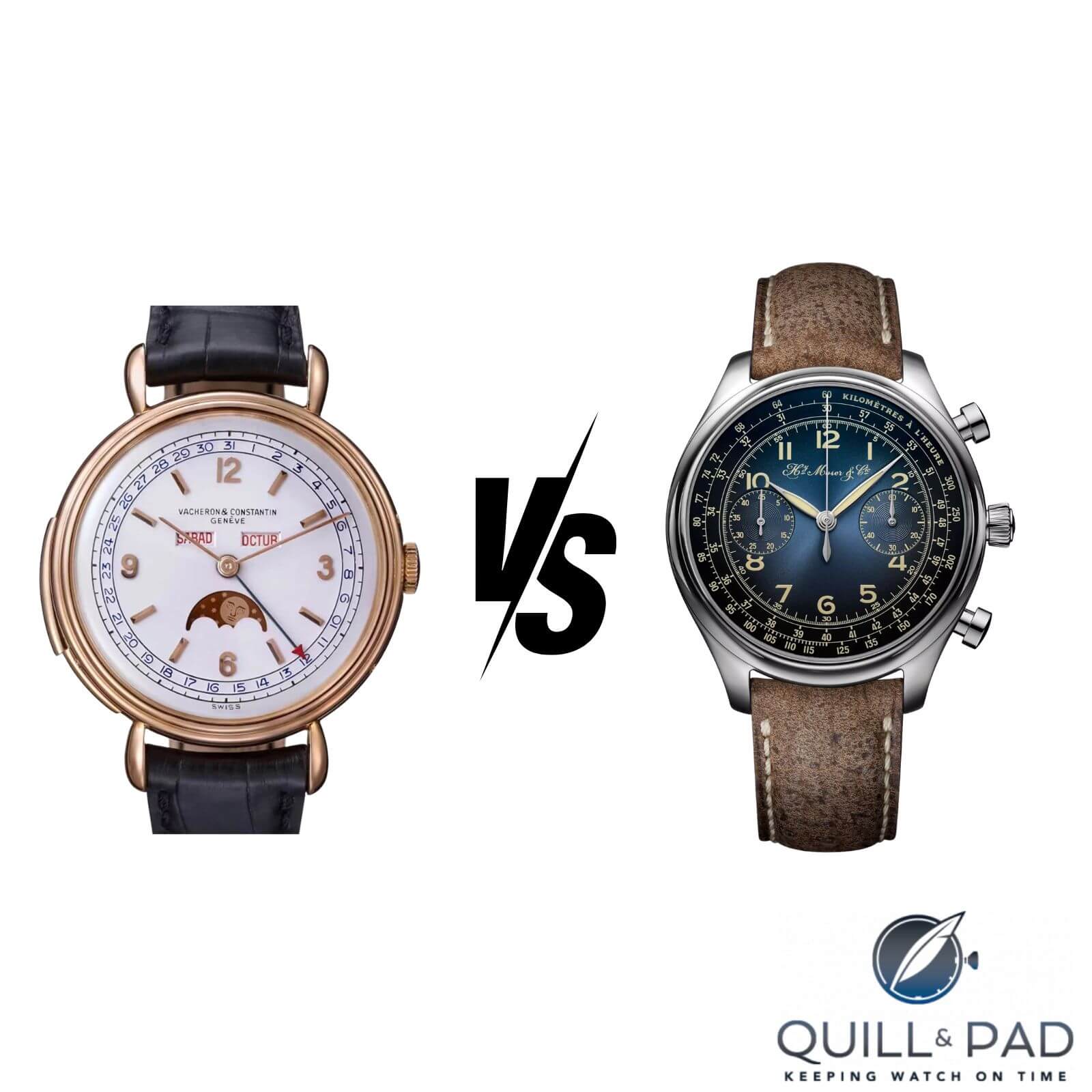
Beyond the tangible aspects of metal and mechanics, the choice between Vacheron Constantin and H. Moser & Cie often hinges on the symbolic statement a collector wishes to make within the watch community. Vacheron Constantin, the undisputed grandee, operates with a scholarly confidence. Its Les Collectionneurs program, which actively buys back, restores, and resells its own vintage pieces with factory warranties, speaks to a deep respect for its own history and a commitment to its collectors. The Les Cabinotiers department, dedicated to producing unique, highly complicated commissions for ultra-wealthy clientele, further solidifies its position at the apex of haute horlogerie. Owning a Vacheron Constantin suggests a settled, mature appreciation for horological permanence and a connection to a rich, enduring legacy.
H. Moser & Cie, on the other hand, embraces a more audacious and playful persona. The brand is known for its irreverent wit and its willingness to challenge industry norms. Memorable examples include the Swiss Alp Watch, which housed a traditional mechanical movement within a case mimicking an Apple Watch, a clever jab at the smartwatch phenomenon. The Swiss Mad Watch, featuring a case crafted from real Swiss cheese combined with resin, further highlights Moser’s penchant for the unexpected and the provocative. Moser understands that today’s discerning collector is educated and often cynical, yet yearns for authenticity beyond endless marketing narratives. Wearing a Moser signals an appreciation for the rules of haute horlogerie, but with a refreshing lack of self-seriousness, a knowing wink to the art and the industry.
At the End of the Day
The decision between a Vacheron Constantin and an H. Moser & Cie ultimately transcends a mere comparison of specifications. It is a choice that reflects a collector’s personal values and their desired relationship with the world of horology.
For those who resonate with the profound depth of history, find solace in the rigorous standards of the Genevan Seal, and seek a tangible connection to over two and a half centuries of watchmaking legacy, Vacheron Constantin stands as the quintessential choice. Acquiring a Vacheron is akin to taking custodianship of a significant piece of horological heritage, a testament to enduring craftsmanship and timeless elegance.

Conversely, if the allure lies in cutting-edge engineering, a belief that true luxury is expressed through understated design and the absence of overt branding, and a desire to embrace innovation within the framework of traditional watchmaking, then H. Moser & Cie will undoubtedly capture the heart. Both brands represent the pinnacle of independent watchmaking, each excelling in its distinct domain. Neither is inherently superior; rather, the choice boils down to the personal statement a collector wishes to make when they roll up their shirt sleeve, revealing not just the time, but their own discerning taste and philosophy.