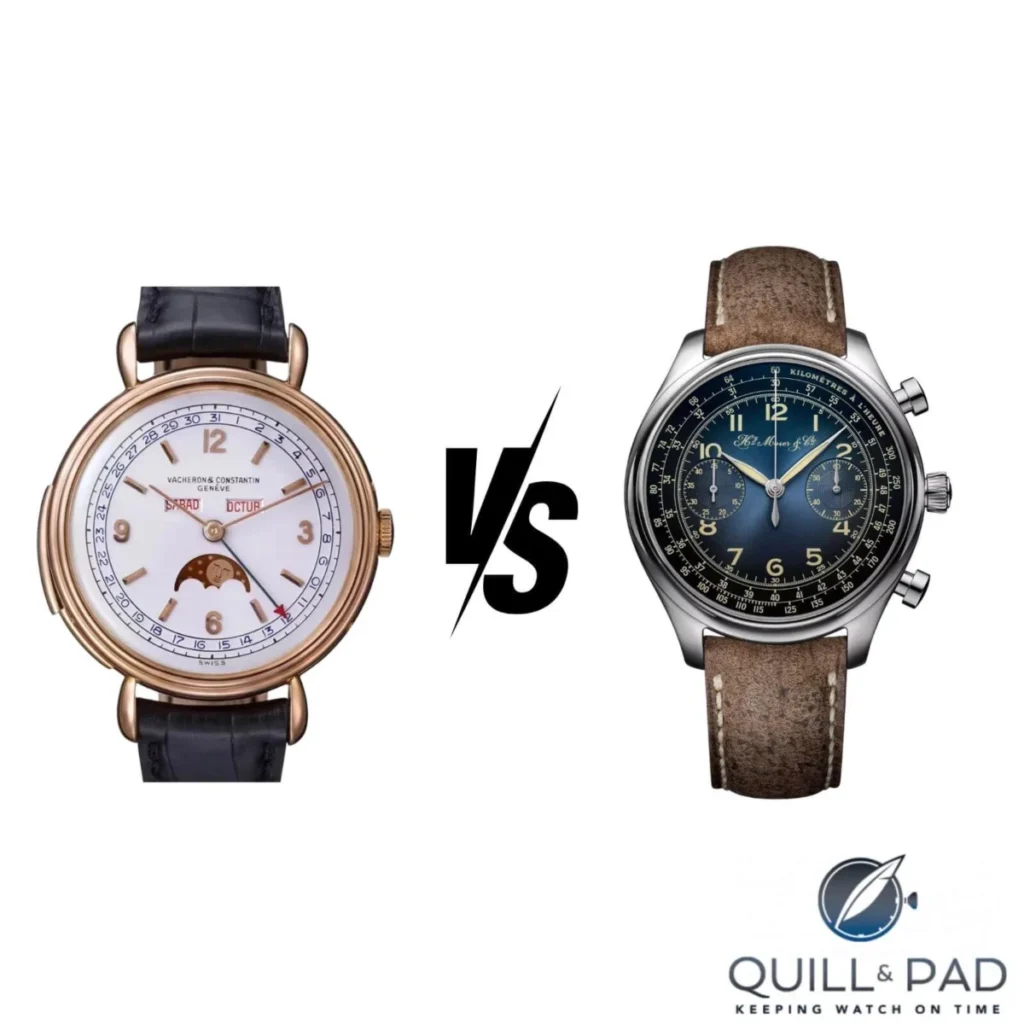
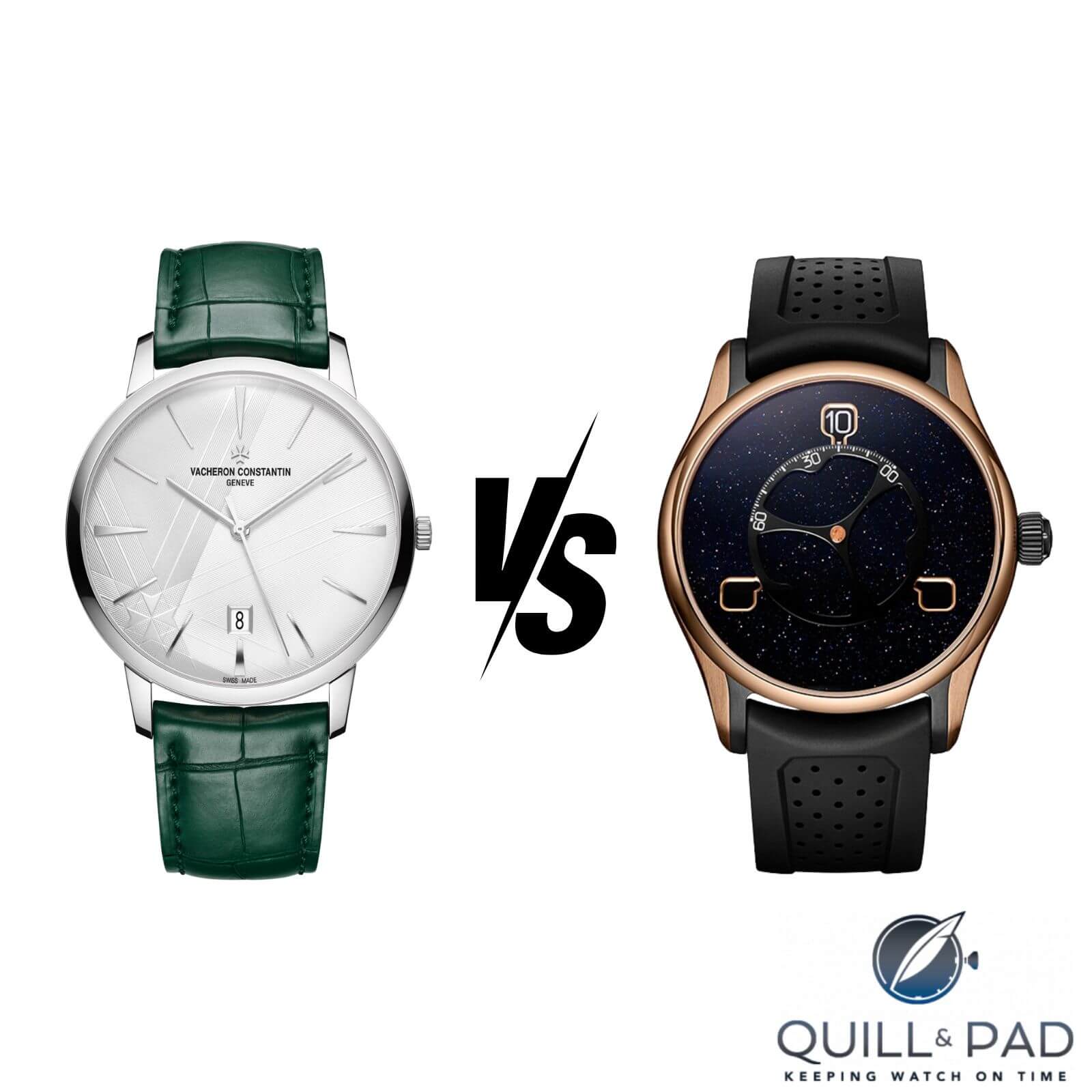
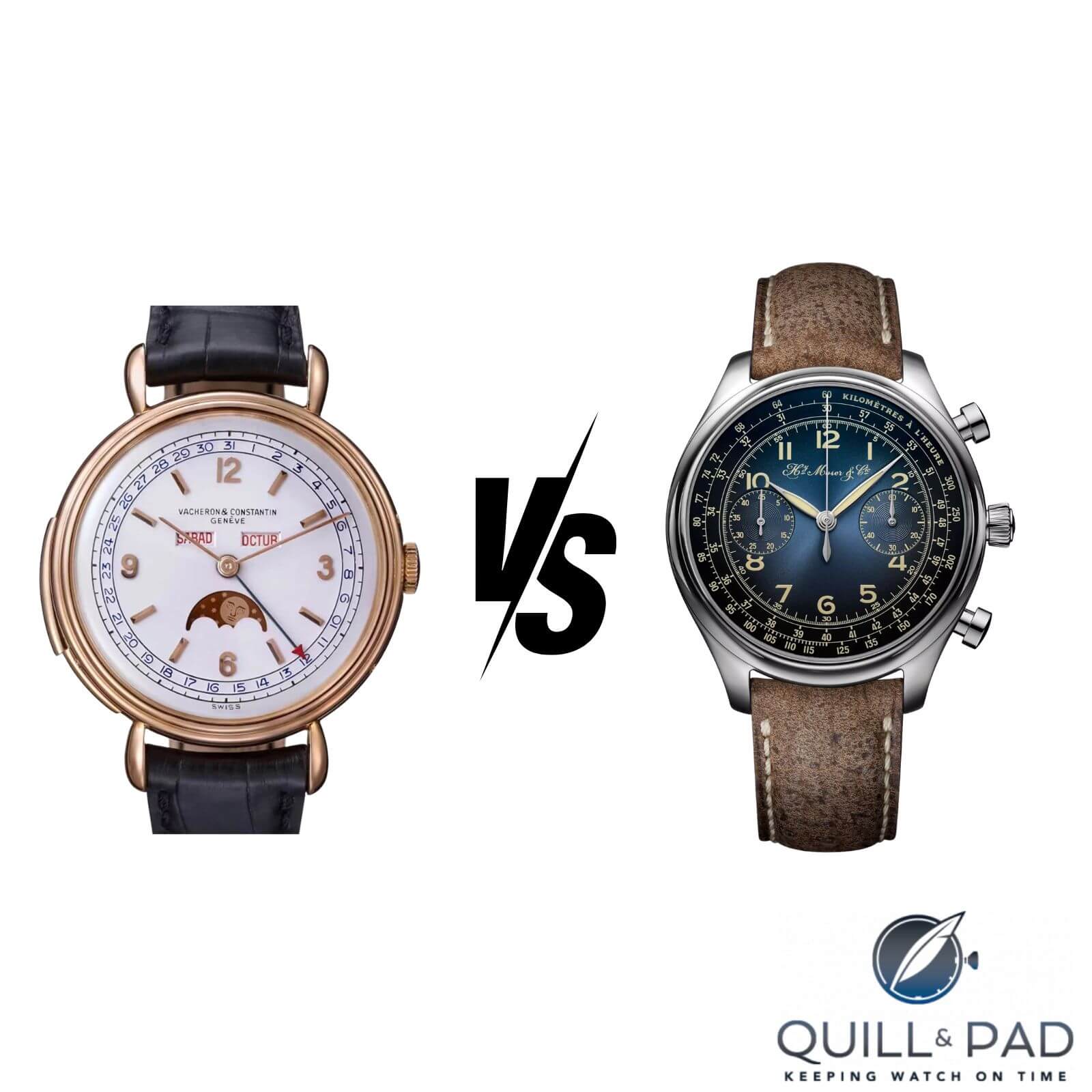
In the sophisticated realm of modern luxury watchmaking, discerning collectors often find themselves at a crossroads, compelled to align their preferences with brands that embody distinct horological philosophies. Imagine a meticulously arranged display: on one side, a Vacheron Constantin timepiece, representing a venerable institution steeped in Geneva’s rich watchmaking heritage. This brand, a veritable patrician of horology, boasts an unbroken lineage stretching back centuries, its authority as deeply ingrained in the industry as time itself. On the other side rests a watch from H. Moser & Cie. While also bearing a historic 19th-century name, this marque has emerged as a contemporary disruptor, harmoniously blending its storied past with the avant-garde, and crucially, employing some of the most exceptionally gifted traditional watchmakers of our era.
A superficial comparison of these two esteemed maisons, focusing solely on technical specifications or power reserves, would be a disservice to their nuanced approaches. Such arguments are best confined to online forums. For the serious collector or horological enthusiast, the distinction lies in a fundamental clash of philosophies—a divergence in how they approach the art of mechanical watchmaking. To understand the decision-making process between acquiring a Vacheron Constantin Traditionnelle and an H. Moser & Cie Endeavour, one must look beyond the tangible materials and delve into the very soul of each brand, examining their conceptualization of the intricate mechanisms that drive timekeeping and the meticulous design of their dials. At their core, both Vacheron Constantin and H. Moser & Cie grapple with a singular challenge: how to present and sell what some might perceive as an anachronistic mechanical object to today’s affluent clientele. Remarkably, they achieve this with distinct design languages and strategic brand positioning.
The Weight of Centuries Versus an Incredible Comeback
The concept of "historical baggage" in the luxury watch industry is often perceived as a paramount asset. Vacheron Constantin exemplifies this, holding the distinction of being the world’s longest continuously operating watchmaker, with an unbroken history dating back to Jean-Marc Vacheron’s signing of his first apprenticeship contract in 1755. The sheer gravity of this legacy is profound; the brand has navigated the tumultuous waters of the French Revolution, weathered multiple global conflicts, and survived the existential threat of the quartz crisis, as well as the consolidation of the luxury market.
However, this unbroken continuity can also act as a creative constraint. When designing a new dial or engineering a new caliber at Vacheron Constantin, there is an inherent responsibility to honor the legacy of figures like Francois Constantin and the lineage of master watchmakers who established the brand’s distinctive aesthetic codes from its inception. This commitment to classical Genevan watchmaking is sacrosanct. A Vacheron Constantin designer cannot arbitrarily introduce a neon green carbon fiber sports watch resembling a spaceship. Instead, the brand acts as the ultimate guardian of horological tradition, meticulously preserving its heritage.
H. Moser & Cie’s narrative presents a different trajectory. Heinrich Moser, a brilliant 19th-century Swiss entrepreneur, amassed his fortune in Russia, producing highly regarded pocket watches and expanding his extensive trading network. Unlike Vacheron Constantin, however, the brand experienced a period of dormancy during the disruptive quartz era, vanishing from the horological landscape. It was only in the early 2000s that it was bravely resurrected by Dr. Jürgen Lange, eventually being acquired by the Meylan family.
This break in its historical continuity, which might be seen as a weakness, has paradoxically become a strategic advantage for Edouard Meylan and his team. With the brand essentially rebuilding itself from the ground up, a rigid adherence to tradition was not as compelling a strategy as it might be for its more established competitors. While H. Moser & Cie possesses the technical prowess to finish movements with the same exquisite detail as the "Holy Trinity" of watchmaking, it is also liberated from the creative shackles of a 200-year-old design archive. Moser embodies the spirit of a remarkable comeback, demonstrating that a resurrected name, backed by genuine horological expertise, can afford the freedom to innovate and push boundaries.
Institutional Finishing Meets Minimalist Subversion
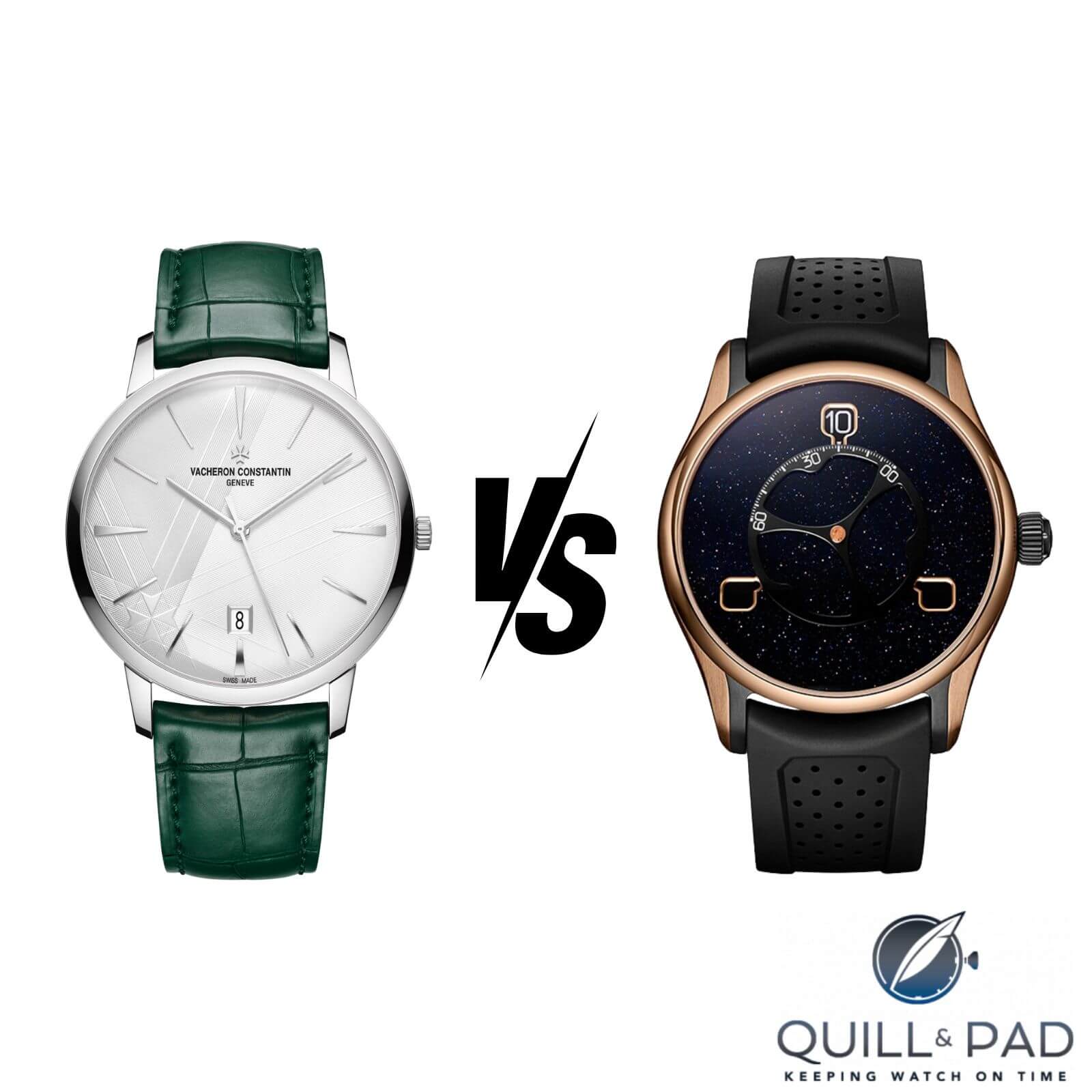
Aesthetic differentiation is a clear hallmark that distinguishes the design languages of these two brands. While Moser’s resurgence was fueled by a creative imperative, Vacheron Constantin articulates a visual narrative of classical complexity, where each dial functions as a deeply layered text, intended for those initiated into its intricacies. This is evident in its signature hand-turned guilloché patterns, meticulously carved into solid gold dial blanks using rose engine lathes. The cases of Vacheron Constantin watches further underscore this heritage, featuring stepped lugs, precise fluting, and an architectural presence that unequivocally marks them as products of the highest Genevan order.
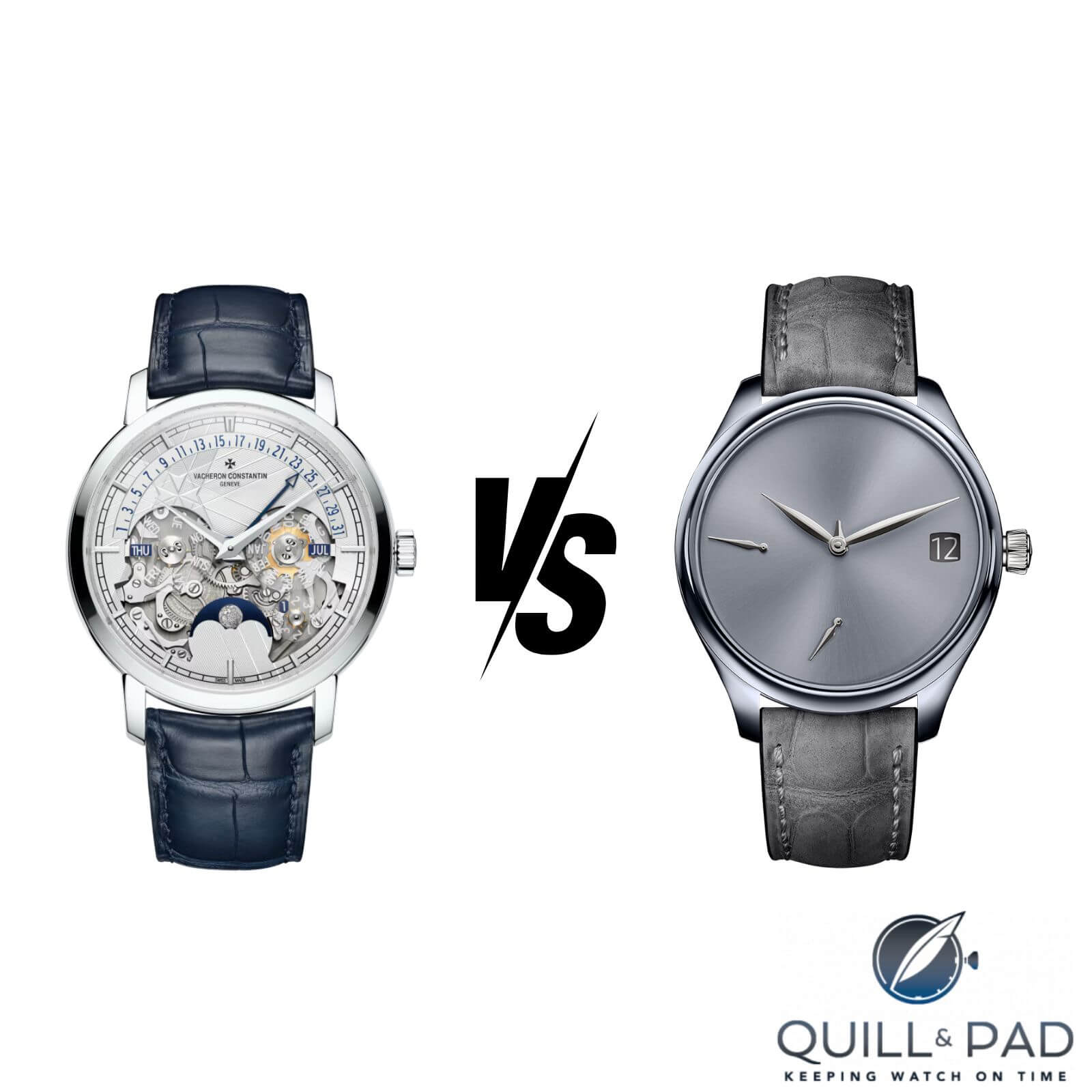
The brand’s iconic Maltese Cross emblem is woven into the fabric of its creations, manifesting as the cage of a tourbillon, integrated into bracelet links, or subtly adorning a clasp. The aesthetic integrity of each Vacheron Constantin watch is governed by the stringent requirements of the Poinçon de Genève, the Hallmark of Geneva. This esteemed institutional standard dictates not only the performance of the movement but also the meticulous decoration of every microscopic surface. Screw heads are polished, their slots chamfered; pinion leaves are polished; and the anglage applied to the bridges is executed by hand with flawless interior angles. The result is a watch that feels profoundly institutional, a testament to centuries of refined craftsmanship.
In contrast, H. Moser & Cie has chosen to make a bold statement in a crowded market by embracing a philosophy of reduction. The brand introduced its "Concept" dial, a timepiece priced upwards of CHF 60,000, conspicuously devoid of hour markers, minute tracks, and even the brand logo. What remains is the intense color and texture of its signature fumé dials, a feat of production that is remarkably difficult to achieve. H. Moser & Cie compels the wearer to engage directly with the material execution and the sheer artistry of the watch. This minimalist ethos extends to its cases, which feature deeply sculpted designs with organic, fluid hollows, a stark departure from the geometric precision often associated with Genevan watchmaking.
The Calibre Chronology
A deeper appreciation for each brand’s distinct approach to movement architecture can be gained by examining the intricate mechanics visible through the caseback of a Vacheron Constantin or H. Moser & Cie watch. Vacheron Constantin draws upon an extensive back catalogue of calibers, mastering complex feats such as ultra-thin movements. The legendary Caliber 1120, for instance, is a movement so thin and exquisitely engineered that it has been shared among the Holy Trinity of watchmaking, yet arguably perfected by Vacheron Constantin. Equally impressive is the Caliber 1142, a pinnacle of the lateral-clutch, column-wheel chronograph, where the flawless mirror polishing on the caps of the column wheel represents a true marvel of engineering. Ultimately, Vacheron Constantin excels in the realm of grand complications, producing minute repeaters that chime with crystalline clarity and perpetual calendars that epitomize high horology.
Moser, too, brings formidable expertise to the table in movement manufacturing. Through its sister company, Precision Engineering AG, H. Moser & Cie produces its own hairsprings and escapements entirely in-house. This vertical integration grants the brand an almost unparalleled degree of control over the beating heart of its timepieces. These are not standard hairsprings; Moser has developed the Straumann double hairspring. This innovative design features two identical hairsprings mounted opposing each other on the balance staff. As they expand and contract, the center of gravity remains precisely centered, effectively eliminating the gravitational errors that Abraham-Louis Breguet famously sought to solve with the invention of the tourbillon.
Furthermore, H. Moser & Cie’s approach to movement architecture is uniquely forward-thinking. The brand has developed an interchangeable escapement module, allowing the entire regulating organ to be unscrewed and removed as a single unit during servicing. This module can then be replaced with a freshly cleaned and regulated unit, significantly reducing the time a watch spends away from its owner. Coupled with its traditional hand-finishing, Moser’s signature double-crested Côtes de Moser striping on the bridges, and its pioneering engineering, HMC calibers represent a compelling investment in horological innovation.
The Great Sport-Chic Compromise: Overseas and Streamliner
The integrated sports watch segment represents a critical battleground where both brands vie for the attention and patronage of collectors. Regardless of the number of exquisite grand complications produced behind closed doors, this category is where their modern appeal is often most keenly felt.
Vacheron Constantin entered this arena by evolving its design language from the original Jorg Hysek-designed 222 into the contemporary Overseas collection. The Overseas has established itself as a formidable contender in the luxury sports watch market. While it may not possess the same pop-culture ubiquity as iconic models like the Audemars Piguet Royal Oak or the Patek Philippe Nautilus, its bezel features a brilliantly executed homage to the Maltese Cross, and the bracelet links echo this geometric motif. Vacheron Constantin’s approach to the sports watch has been one of elevation. The brand incorporated quick-release bracelet systems long before they became an industry standard, and the finishing of its movements adheres to the exacting standards of the Hallmark of Geneva. In essence, the Overseas is a sports watch designed for someone who appreciates refined luxury and impeccable craftsmanship, perhaps someone who owns a yacht but would meticulously avoid getting sea spray on their cuffs.
Then there is the H. Moser & Cie Streamliner. When Moser decided to enter the integrated sports watch market, many anticipated another derivative design featuring an octagonal bezel and visible screws. Instead, Edouard Meylan deliberately eschewed the established design playbook and drew inspiration from the aerodynamic curves of 1920s high-speed trains and 1970s automotive design. The Streamliner lacks conventional lugs and sharp, aggressive angles. Its case is a fluid, pebble-like cushion shape that seamlessly transitions into a captivating bracelet design. Rather than traditional links, its articulated links evoke the scales of a reptile or the plates of an armadillo, offering a fluidity akin to liquid. H. Moser & Cie equipped the Streamliner with a chronograph featuring the Agengraphe caliber, developed by Jean-Marc Wiederrecht at Agenhor. This ingenious movement cleverly hides the winding rotor between the dial and the movement, allowing for an entirely unobstructed view of the mechanism through the exhibition caseback.
The Rule-Breaker and the Traditionalist
Beyond the tangible aspects of metal and mechanics, the choice between these two brands often hinges on how a collector wishes to perceive their role within the watch community. Vacheron Constantin embodies the role of the Grandee, operating with scholarly confidence. The brand caters to the highly educated collector through initiatives like its Les Collectionneurs program, which actively buys back, restores, and resells its own vintage pieces with factory warranties. Furthermore, its bespoke Les Cabinotiers department produces unique, highly complicated commissions for ultra-wealthy clients. Owning a Vacheron Constantin signifies a settled, mature appreciation for horological permanence and heritage.
Moser, conversely, operates with a more audacious spirit and a decidedly wicked sense of humor. The brand’s "Swiss Alp Watch," which housed a traditional rectangular movement within a case mimicking an Apple Watch, was a satirical jab at the smartwatch phenomenon. Then there was the "Swiss Mad Watch," featuring a case crafted from actual Swiss cheese combined with resin. Moser understands that the contemporary collector is often highly educated, discerning, and perhaps a touch cynical, weary of relentless marketing jargon. Wearing a Moser watch signals an understanding of the established rules of haute horlogerie, coupled with a refusal to take oneself too seriously.
At the End of the Day
Having dissected the divergent philosophies underpinning each brand’s heritage, dial design, movement architecture, and integrated bracelet offerings, the comparison extends further. If a collector resonates deeply with a company’s history and finds reassurance in the stringent standards of the Genevan Seal, then Vacheron Constantin emerges as the logical choice. Acquiring a Vacheron Constantin is akin to becoming the custodian of two and a half centuries of horological legacy.
Conversely, for the collector who values sheer engineering innovation and believes that the absence of a brand logo represents the ultimate expression of luxury, H. Moser & Cie is likely to capture their heart. Both brands represent the pinnacle of independent watchmaking, and neither is inherently superior to the other. The ultimate decision, therefore, boils down to the personal statement a collector wishes to make when they roll up their shirt sleeve.