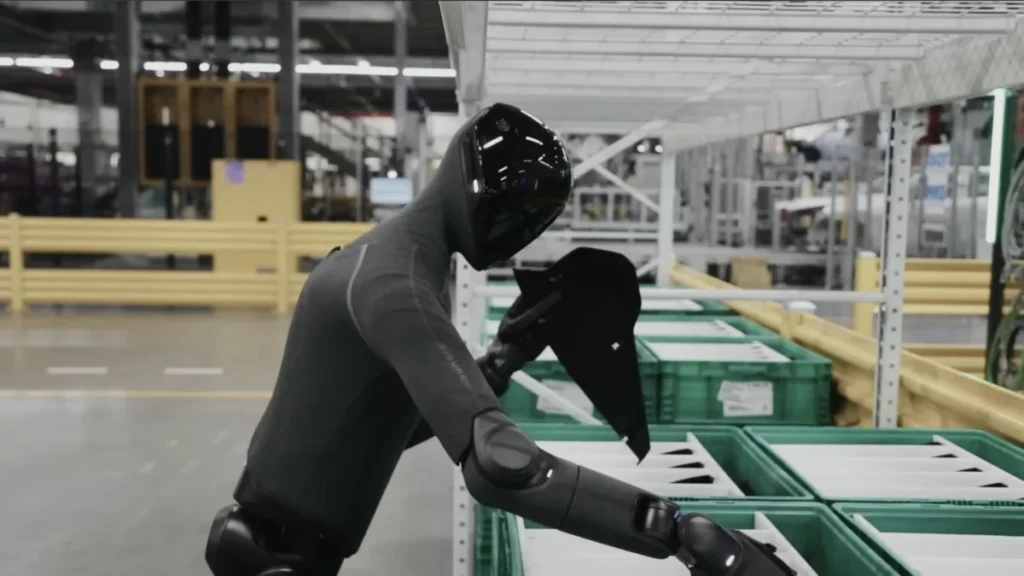
Researchers have unveiled a novel vision algorithm designed to grant humanoid robots a more sophisticated and human-like capacity for perceiving depth, utilizing a twin forward-facing camera setup that mimics biological binocular vision. This innovative system departs from conventional stereo camera approaches by meticulously processing subtle visual discrepancies between the left and right camera feeds, thereby constructing an exceptionally precise three-dimensional understanding of their surrounding environment. Developed by a pioneering team spearheaded by experts from York University in Toronto, Canada, this advance is poised to revolutionize how humanoid robots gauge distances, ascertain object orientations, and navigate with unprecedented accuracy through complex and dynamic settings. The research represents a significant leap forward, aligning robotic vision capabilities more closely with the biologically inspired depth perception inherent to humans, and establishing a crucial foundation for the development of future generations of highly capable humanoid visual systems.
The Enduring Quest for Robotic Vision Excellence
For decades, engineers and computer scientists have striven to imbue robots with visual capabilities that rival, or at least adequately simulate, human perception. Early attempts often relied on simple rangefinders or rudimentary image processing, but the complexity of real-world environments quickly demonstrated the limitations of such approaches. The advent of stereo vision, employing two cameras to triangulate depth based on parallax, marked a significant improvement. However, traditional stereo systems typically utilize parallel camera configurations, which simplify the mathematical models but inherently limit their flexibility and ability to mimic the dynamic eye movements central to human vision. Human eyes are not fixed; they actively converge on objects of interest, a process known as vergence, which provides crucial depth cues. This biological mechanism has long been a benchmark for roboticists aiming to create truly adaptable and intelligent autonomous agents.
The challenges in robotic depth perception are manifold. Robots operating in unstructured environments—from navigating a cluttered room to performing intricate assembly tasks—require robust and reliable 3D information. Traditional methods often struggle with scenes containing repetitive patterns, featureless surfaces, or significant self-occlusion, where the correspondence problem (identifying which pixel in one image corresponds to which pixel in the other) becomes computationally intractable or prone to error. Lidar systems offer accurate depth maps but are often bulky, expensive, and can be limited by lighting conditions or reflective surfaces. Monocular depth estimation, while promising, relies heavily on deep learning models and can lack the absolute precision derived from true stereo vision. The development of the Convergent Binocular Stereo (CBS) algorithm directly addresses many of these longstanding challenges, presenting a biologically inspired solution that leverages the active movement of cameras to enhance perception.
Introducing Convergent Binocular Stereo (CBS): A Paradigm Shift
The core innovation of the CBS algorithm lies in its ability to enable humanoid robots to calculate depth using a camera arrangement that more closely mirrors the dynamic nature of human vision. Unlike static, parallel camera setups, CBS is specifically engineered for robotic heads equipped with two cameras capable of converging, or pointing, towards a common focal point in space. This "active" vision paradigm is fundamentally different from passive stereo, where cameras remain fixed. When human eyes converge on an object, the brain processes not only the horizontal displacement (disparity) between the two retinal images but also the slight vertical differences that arise from the eyes’ rotational movements and slight misalignments. The CBS algorithm capitalizes on this principle.
Traditional stereo vision primarily calculates horizontal differences between images captured by parallel cameras to infer depth. While effective for many scenarios, this approach can be less accurate when objects are very close, very far, or when the scene lacks distinct features. The CBS system, by contrast, explicitly accounts for both horizontal and vertical disparities. These vertical disparities, often considered noise or an artifact in parallel stereo, become invaluable data points when cameras actively converge on a target. By incorporating camera movement as an integral part of the depth-perception process, CBS gains a richer, more nuanced understanding of the 3D scene. This dynamic interaction between camera movement and image processing is what imbues CBS with its human-like qualities, allowing for more intuitive and robust spatial reasoning.
The Biologically Inspired Mechanism: Mimicking Human Eye Movements
The human visual system is a marvel of biological engineering, and its ability to perceive depth is a complex interplay of several cues, with binocular vision being paramount. When we focus on an object, our eyes converge—they rotate inward—to project the image onto the fovea of each retina. This convergence angle provides a powerful cue for distance. Furthermore, the slight differences in the images received by each eye, known as binocular disparity, are processed by the brain to create a vivid 3D perception. These disparities are not just horizontal; subtle vertical differences also exist due to factors like the slight tilt of our heads or the inherent geometry of our eyes. The CBS algorithm meticulously replicates this active, convergent behavior.
By designing robotic heads with cameras that can physically converge on a target, the researchers have created a system that inherently generates more informative disparity maps. When a robot’s "eyes" fixate on a specific 3D point, the geometric relationship between the two resulting images becomes uniquely defined by the convergence angle and the precise camera parameters. This allows the algorithm to leverage the very act of focusing as a source of depth information, much like the human brain uses vergence. This active perception paradigm contrasts sharply with passive stereo systems, which rely solely on the static differences between two images. The integration of physical camera movement with advanced image processing allows CBS to build a more comprehensive and robust internal model of the environment, making it more resilient to the challenges that often plague static vision systems.
Unpacking the CBS Algorithm: Technical Nuances
The technical prowess of the CBS algorithm lies in its multi-stage processing pipeline, designed to extract maximal information from convergent image pairs. The process begins with the critical step of fixing both cameras on a specific 3D point. This initial convergence provides the foundational geometric relationship between the left and right images, a departure from parallel systems where this relationship is fixed and simpler.
Following this, the algorithm constructs a five-level Gaussian pyramid. This hierarchical representation allows the system to analyze images at multiple resolutions, starting from coarser, more abstract levels and progressively moving to finer details. This multi-scale approach is vital for efficiently identifying corresponding features across images, especially in complex scenes. At the coarser levels of the pyramid, CBS employs Scale-Invariant Feature Transform (SIFT) features. SIFT is a robust local feature descriptor widely used in computer vision for tasks like object recognition and image matching because it is invariant to scale, rotation, and illumination changes. By detecting and matching these SIFT features, the algorithm establishes initial correspondences. Crucially, it then applies epipolar constraints to these matches. Epipolar geometry describes the geometric relationship between two stereo images, defining where the projection of a 3D point in one image must lie in the other image. This constraint significantly narrows the search space for corresponding points, improving accuracy and reducing computational load.
Once initial horizontal and vertical disparities are estimated, Gabor filters come into play. Gabor filters are specialized linear filters used for edge detection and texture analysis, particularly effective at capturing specific frequency and orientation information. By applying Gabor filters at different orientations and scales, CBS can analyze the texture and edge information within the images, further refining the identification of corresponding pixels between the two convergent views.
The algorithm then enters a progressive refinement phase. It takes the disparity estimates derived from the lower-resolution images of the Gaussian pyramid and uses them to guide the search for correspondences at progressively higher resolutions. This iterative process allows for increasingly precise disparity maps, narrowing the search area at each stage and leveraging the broader context captured at coarser levels. The culmination of this intricate processing yields detailed horizontal and vertical disparity maps, which are then converted into comprehensive 3D information and accurate depth estimates. Beyond mere depth, the researchers highlight that CBS can also capture critical information regarding surface slant, the pose (position and orientation) of objects, and even the perceived scaling of depth and size, offering a holistic and remarkably human-like approach to robotic visual processing.
Rigorous Testing and Promising Results
To thoroughly evaluate the performance of the CBS algorithm, the research team developed a specialized dataset named Convergent Binocular Stereo–BenchMark (CBS-BM). This dataset is a testament to the comprehensive and challenging scenarios designed to push the boundaries of robotic depth perception. It comprises 49 distinct scenes, carefully curated to include a diverse range of environments that commonly present difficulties for conventional stereo systems. These scenes encompass everyday tabletop arrangements, but critically, also feature complex elements such as repeated patterns (e.g., checkerboards, textured wallpapers), featureless surfaces (e.g., plain walls, smooth objects), and highly self-occluded objects (where parts of an object are hidden from one camera’s view but visible to the other). Each scene within CBS-BM includes not only traditional parallel image pairs but also between five and twelve convergent fixation image pairs, capturing the dynamic visual information crucial for the CBS algorithm.
When pitted against established stereo methods and several contemporary deep-learning systems, CBS demonstrated highly competitive performance. Across the entire CBS-BM dataset, the algorithm consistently achieved lower mean horizontal disparity errors and depth errors compared to the parallel methods included in the comparison. This broad superiority underscores its general applicability and robustness.
However, CBS exhibited its most significant advantage in precisely the types of challenging scenes where conventional systems typically falter: environments containing repeated patterns. In such scenarios, traditional parallel stereo algorithms often struggle with the "correspondence problem"—determining which visually similar feature in one image correctly corresponds to a feature in the other, leading to erroneous depth estimations. Here, CBS truly shone, producing a mean depth error approximately 0.8 meters lower than the next-best method. Furthermore, it achieved a horizontal disparity error about 100 pixels lower in this challenging subset, a substantial improvement that translates directly to more accurate spatial understanding in visually ambiguous situations. These results highlight CBS’s unique ability to leverage convergent vision to resolve ambiguities that confound static stereo systems, marking a critical step towards more reliable robotic navigation and manipulation in complex, real-world settings.
Addressing Current Limitations and Future Directions
While the CBS algorithm represents a significant advancement, the researchers candidly acknowledge certain limitations in its current iteration, which also delineate clear avenues for future research and optimization. One primary concern is the algorithm’s accuracy, which tends to decrease for targets situated at greater distances. This is a common challenge in stereo vision, where baseline (the distance between cameras) and focal length play crucial roles, and convergent systems may experience reduced angular disparity sensitivity at far ranges.
Another critical dependency for CBS’s optimal performance is the requirement for precise camera calibration and motor positioning. Any inaccuracies in knowing the exact geometric relationship between the cameras or in controlling their convergence angles can introduce errors into the depth calculations. This necessitates highly accurate sensors and robust robotic mechanisms, potentially increasing the complexity and cost of hardware integration.
Furthermore, the current implementation of the algorithm, while demonstrating conceptual superiority, is not yet optimized for real-time applications. The process takes approximately 69 seconds to run on an AMD Ryzen 7 7700X processor. For dynamic tasks like robot navigation or interaction in real-time environments, this processing speed is a substantial bottleneck. However, the researchers emphasize that this is the initial proof-of-concept implementation, and there is considerable scope for optimization through parallel computing, GPU acceleration, and algorithmic refinements to significantly reduce processing time.

The team explicitly states that CBS is not intended as a universal replacement for parallel stereo vision, especially in applications where human-like vision is not a prerequisite or where computational resources are highly constrained. Instead, its primary value lies in providing a robust foundation for humanoid robots and other autonomous systems that benefit from or require their physical eye movements and visual processing to operate in a cohesive, biologically inspired manner. Future work will likely focus on improving computational efficiency, integrating CBS with other sensor modalities (like inertial measurement units or tactile sensors), enhancing its adaptability to varying lighting conditions, and developing robust self-calibration mechanisms to further enhance its real-world utility.
Broader Implications for Humanoid Robotics
The development of the CBS algorithm carries profound implications for the future trajectory of humanoid robotics and autonomous systems. By enabling robots to perceive depth with a fidelity closer to that of humans, CBS can unlock a new generation of capabilities across various sectors.
In manufacturing and logistics, humanoid robots equipped with CBS could perform more intricate assembly tasks, navigate dynamic factory floors, and handle irregularly shaped objects with greater precision. Their enhanced depth perception would allow them to differentiate between closely packed items, avoid collisions in confined spaces, and perform quality control inspections with improved reliability.
For service robotics, particularly in healthcare or hospitality, CBS-enabled robots could interact more naturally and safely with humans. Accurately judging distances to people, objects, and obstacles is paramount for tasks such as assisting patients, delivering goods, or navigating crowded public spaces. The ability to understand surface slant and object pose would also be invaluable for manipulating items like cutlery, handling delicate equipment, or pouring liquids.
Beyond terrestrial applications, this technology could significantly benefit space exploration. Humanoid robots exploring planetary surfaces or assisting astronauts on space stations require highly robust and adaptive vision systems to operate in unstructured, hazardous environments. Improved depth perception would enhance their navigation over uneven terrain, facilitate complex manipulation tasks, and enable more reliable scientific data collection.
Moreover, the "active vision" paradigm championed by CBS fosters a more intuitive human-robot interaction. Robots that can actively focus on objects, mimicking human gaze, can convey intent and responsiveness, making them more approachable and understandable to human collaborators. This biological inspiration extends to the realm of artificial intelligence, providing a tangible example of how emulating natural intelligence can lead to superior machine capabilities. As humanoid robots become more ubiquitous, their ability to perceive and interpret the world in a human-like manner will be critical for seamless integration into our daily lives and workplaces.
The Road Ahead: Towards More Capable Autonomous Systems
The research from York University marks a pivotal moment in the evolution of robotic vision. By transcending the limitations of traditional passive stereo, the Convergent Binocular Stereo algorithm offers a compelling blueprint for how robots can achieve a more dynamic, nuanced, and biologically plausible understanding of their 3D surroundings. The focus on actively converging cameras and processing both horizontal and vertical disparities represents a sophisticated embrace of principles long understood in neuroscience, bringing the field of computer vision closer to replicating the intricacies of biological perception.
While challenges remain, particularly concerning real-time performance and the precision requirements for hardware, the foundational work laid by the CBS algorithm opens numerous avenues for future development. Its immediate impact will likely be felt in specialized applications where high-fidelity depth perception is paramount, such as advanced manufacturing, complex manipulation in unstructured environments, and human-robot collaboration. As computational power continues to increase and robotic hardware becomes more refined, the speed and robustness of CBS and similar biologically inspired algorithms are poised to improve dramatically. This progression will ultimately pave the way for humanoid robots that are not merely tools, but intelligent agents capable of perceiving, understanding, and interacting with our complex world with a level of sophistication previously confined to the realm of science fiction. The journey towards truly autonomous and perceptive robots continues, with CBS illuminating a promising path forward.