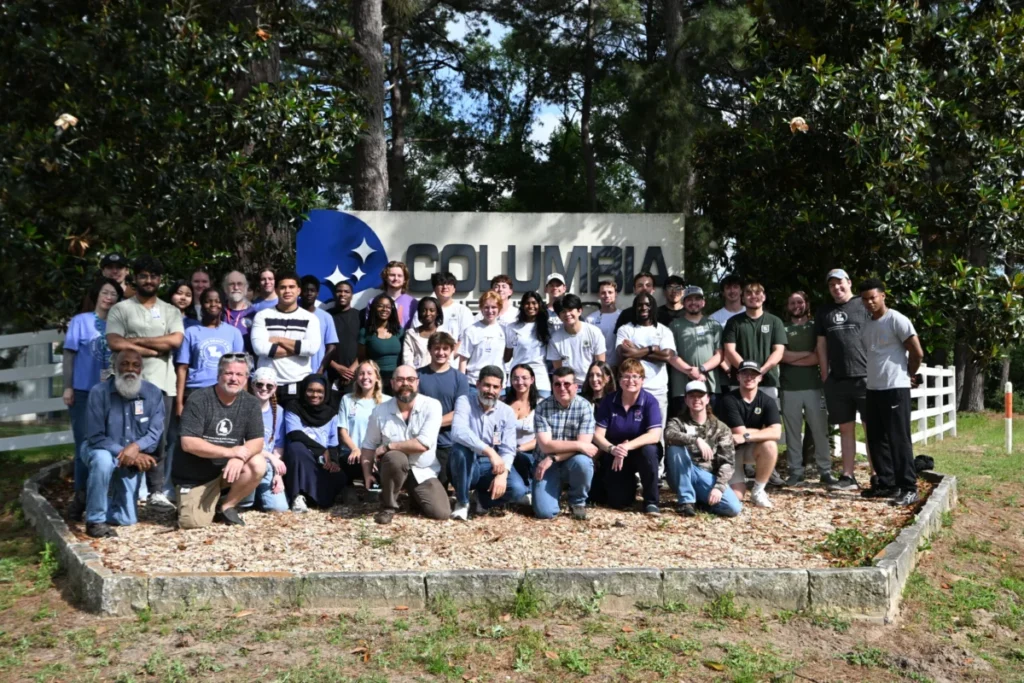
Every spring, the expansive fields surrounding NASA’s Columbia Scientific Balloon Facility in Palestine, Texas, transform into a vibrant hub of scientific endeavor, welcoming students and faculty from across Louisiana. This annual pilgrimage, a cornerstone of the Louisiana Aerospace Catalyst Experiences for Students (LaACES) program, sees aspiring scientists and engineers arrive armed with meticulously crafted sensors, sophisticated laptops, and payloads developed over months of dedicated work. Their collective objective: to propel their experimental designs to the very edge of Earth’s atmosphere, harness valuable scientific data, and embody NASA’s enduring mission to cultivate the next generation of aerospace professionals.
A Legacy of Hands-On Exploration and STEM Cultivation
NASA’s commitment to fostering scientific talent is deeply rooted in its numerous student outreach programs. These initiatives serve as crucial entry points for hands-on exploration, directly connecting students with the agency’s cutting-edge missions and immersing them in authentic aerospace environments. Among these vital programs, LaACES stands out as a particularly robust undergraduate introduction to the intricate world of scientific ballooning. It provides a unique platform for students to translate theoretical knowledge into tangible, real-world applications, mirroring the rigorous lifecycle of NASA’s own research and development endeavors.
The 74th and 75th Flights: A Milestone in Collaboration
The pre-dawn hours of May 19 marked a significant moment in this ongoing partnership. As the first light broke over the Texas horizon, student-designed instruments began their ascent, notching the 74th and 75th successful launches in a long-standing collaboration between the Columbia Scientific Balloon Facility and the Louisiana Space Grant Consortium. The 2026 LaACES campaign, a testament to this enduring alliance, featured 11 distinct payloads. These innovative experiments were the product of dedicated teams from nine Louisiana universities, including Louisiana State University, Northwestern State University, Southeastern Louisiana University, McNeese State University, Loyola University, and Southern University, alongside a promising high school team from St. Joseph’s Academy. This weeklong event at the Palestine facility is the culmination of a year-long journey for these students.
Diverse Scientific Objectives Reach New Altitudes
The scientific objectives of the student teams spanned a broad spectrum of critical research areas, reflecting the diverse interests and capabilities within Louisiana’s academic institutions. Investigations ranged from intricate atmospheric science studies and the detection of elusive cosmic rays to the development and testing of advanced thermal management systems. Other teams focused on characterizing ultraviolet radiation, analyzing stratospheric wind patterns, and evaluating the performance of solar cells in near-space conditions. This variety underscores the program’s success in enabling students to pursue a wide array of scientific questions, pushing the boundaries of current knowledge.
Rigorous Design Reviews Mirror NASA’s Engineering Lifecycle
The journey to the launch line was as academically demanding as the flights themselves. Prior to their arrival in Texas, each student team meticulously advanced their mission concepts through a structured sequence of design reviews. This process was deliberately modeled after NASA’s own stringent engineering lifecycle, demanding that teams defend their technical decisions, refine their payload designs, and demonstrate their readiness for the unique challenges of a stratospheric flight. These reviews, conducted at various stages from preliminary design to flight readiness, ensured that each payload met rigorous standards for safety, functionality, and scientific potential, instilling a deep understanding of professional engineering practices.
Palestine, Texas: The Launchpad for Innovation
Once cleared for flight by program directors Doug Granger and Aaron Ryan, who provide crucial oversight for the LaACES initiative, the student teams transitioned their focus to the operational environment of Palestine, Texas. The Columbia Scientific Balloon Facility, a critical partner in this endeavor, provided indispensable support for the 2026 LaACES campaign. Facility personnel offered daily weather briefings, meticulously managed the helium inflation process for the latex balloons, and provided essential launch-line guidance. This comprehensive support was vital in ensuring the safety and success of each operation.
Hugo Franco, operations manager at the balloon facility, expressed his enthusiasm for the program: "We genuinely enjoy being able to support the students’ launches here and hope to help them cultivate a deep-seated love for ballooning and scientific exploration. Seeing their dedication and ingenuity firsthand is incredibly rewarding, and it aligns perfectly with our mission to facilitate cutting-edge scientific research."
Successful Flights and Data Recovery
The two flight trains, designated LACES-74 and LACES-75, commenced on May 19, initiating the program’s first launch window of the campaign. These balloons, designed to carry payloads weighing between 7 and 9 pounds, ascended to altitudes nearing the edge of space. Throughout their journeys, the payloads were meticulously monitored using a suite of advanced communication and tracking systems. Both missions concluded successfully, with their payloads being recovered approximately 60 miles north of the launch site, near the town of Ben Wheeler, Texas. This successful recovery is a crucial step, allowing students to access the invaluable data collected during their flights.
Savannah Matlock, a student participant from Louisiana State University, shared her perspective on the post-flight experience: "My most memorable experience during the course of this year was seeing the data plots for the first time post-flight. When we observed the data behaving precisely as we had anticipated, and witnessed the scientific principles we aimed to demonstrate validated, it made all the arduous work incredibly worthwhile. It’s an unparalleled feeling to see your hard work culminate in such tangible results."
Data Analysis and Knowledge Dissemination
Following the successful recovery of their payloads, the student teams embarked on the critical phase of data analysis. They meticulously examined their sensor readings and environmental measurements, working to interpret the complex datasets. Subsequently, these findings were presented to a discerning audience, including engineers and technicians from the balloon facility, their faculty mentors, and their fellow student participants. This presentation phase is vital for solidifying learning, fostering critical thinking, and encouraging peer-to-peer knowledge exchange.
The Sophistication of NASA Scientific Balloons
It is imperative to understand that NASA’s scientific balloons are far more sophisticated than conventional meteorological balloons. The Columbia Science Balloon Facility plays a pivotal role in the launch, tracking, and recovery of large scientific balloons capable of transporting advanced research instruments to altitudes of up to 120,000 feet, often referred to as the edge of space. These high-altitude flights are instrumental in supporting a wide array of scientific investigations, encompassing fields such as astrophysics, atmospheric science, planetary research, and crucial technology demonstrations, pushing the boundaries of human knowledge.
Bridging Academia and National Research Operations
By immersing students within this operational ecosystem, the LaACES program effectively bridges the gap between academic learning and the realities of national research operations. Students gain invaluable firsthand experience in every facet of a scientific mission: the meticulous preparation of experiments, the complex integration of payloads, the precise execution of launches, the continuous tracking of payloads in flight, and the critical recovery operations. These experiences are transformative, capable of reshaping career trajectories and opening doors to future opportunities within NASA, academia, and the broader aerospace industry. The program serves as a powerful catalyst for developing a skilled and passionate workforce for the future.
A Proven Track Record and a Future Pipeline of Innovators
Funded by NASA’s National Space Grant College and Fellowship program, LaACES operates as a statewide initiative of the Louisiana Space Grant Consortium. Since its inception, the program has had a profound impact, supporting over 500 students across 13 higher education institutions. This extensive network has facilitated more than 60 successful balloon flights, carrying approximately 135 unique payloads to the edge of space. As NASA continues its relentless pursuit of scientific discovery and technological advancement, programs like LaACES are indispensable in ensuring a robust pipeline of future innovators. For these Louisiana students, the sight of their payload ascending into the vast expanse of the sky represents more than just a technical milestone; it is a defining moment, a powerful spark that ignites curiosity and transforms it into tangible possibility, paving the way for a new era of scientific exploration.