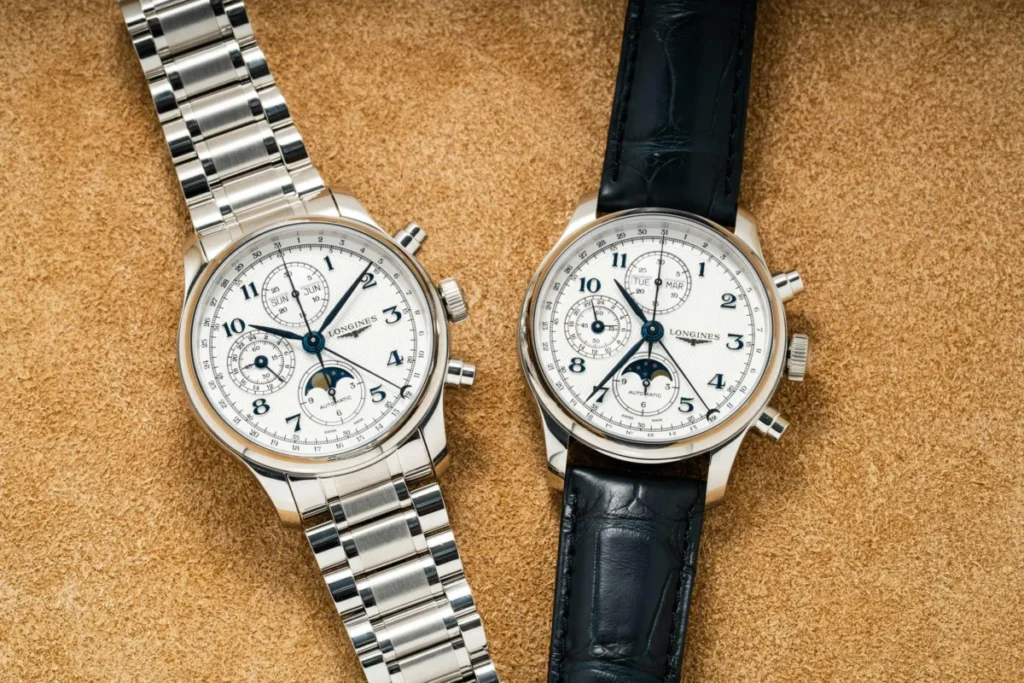
Longines continues its impressive stride in the chronograph segment, building upon a foundation of robust specifications, refined aesthetics, and exceptional value. The brand has recently unveiled a significant update to its distinguished Master Collection, introducing a brand-new monopusher chronograph and a refreshed iteration of its popular triple calendar chronograph. This dual launch signifies Longines’ commitment to both heritage-inspired innovation and the continuous refinement of its core offerings.
A Renewed Vision for the Master Collection
Earlier this year, Longines initiated a comprehensive refresh of its elegantly styled Master Collection, primarily focusing on time-and-date models. However, the latest product announcements introduce a more compelling dimension to the collection, catering specifically to the discerning watch enthusiast. The introduction of a monopusher chronograph, a complication deeply rooted in Longines’ rich history, alongside an updated triple calendar chronograph, underscores the brand’s strategy to blend its horological legacy with contemporary market demands.
The Evolved Master Collection Chrono Moonphase: A Symphony of Refinement
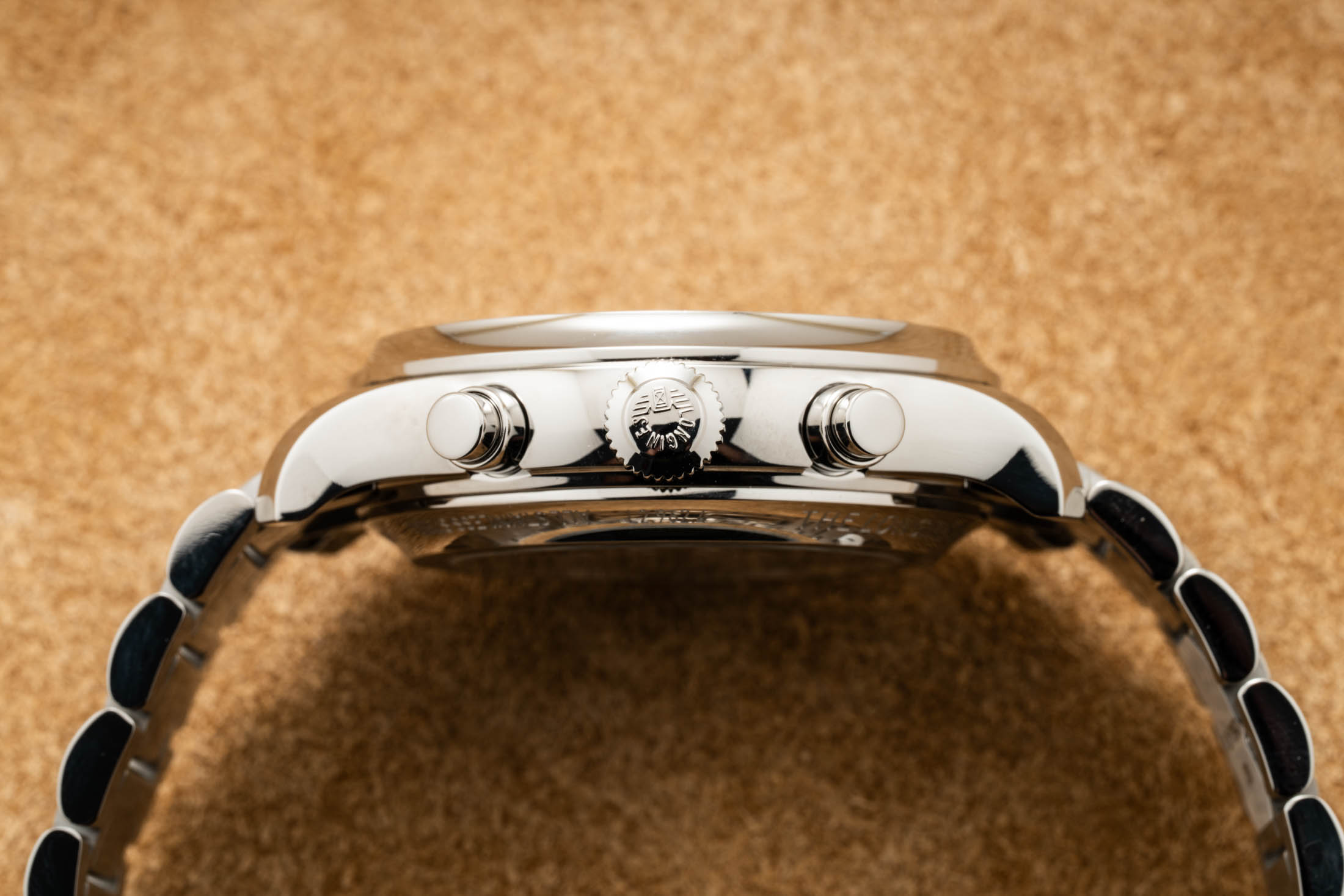
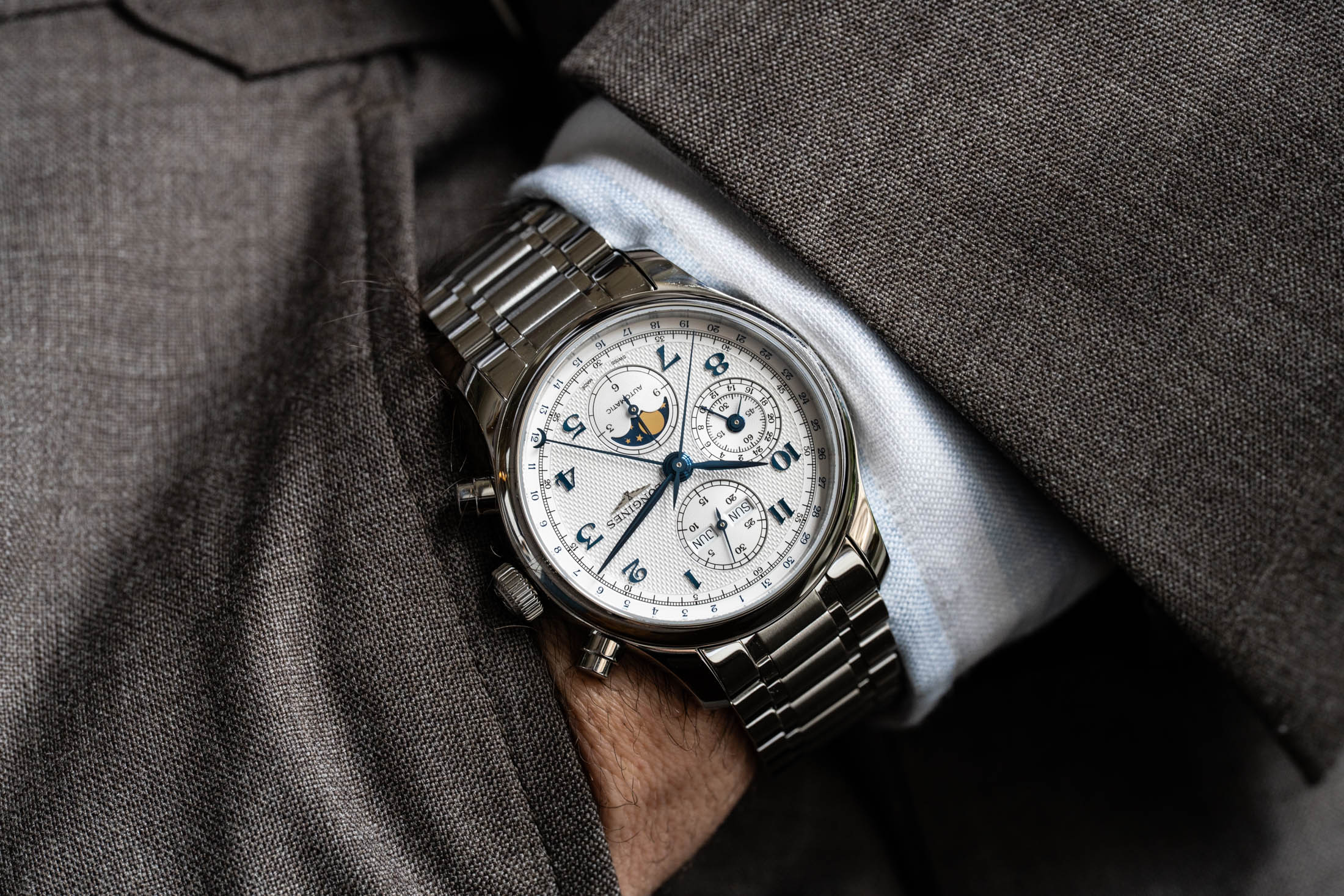
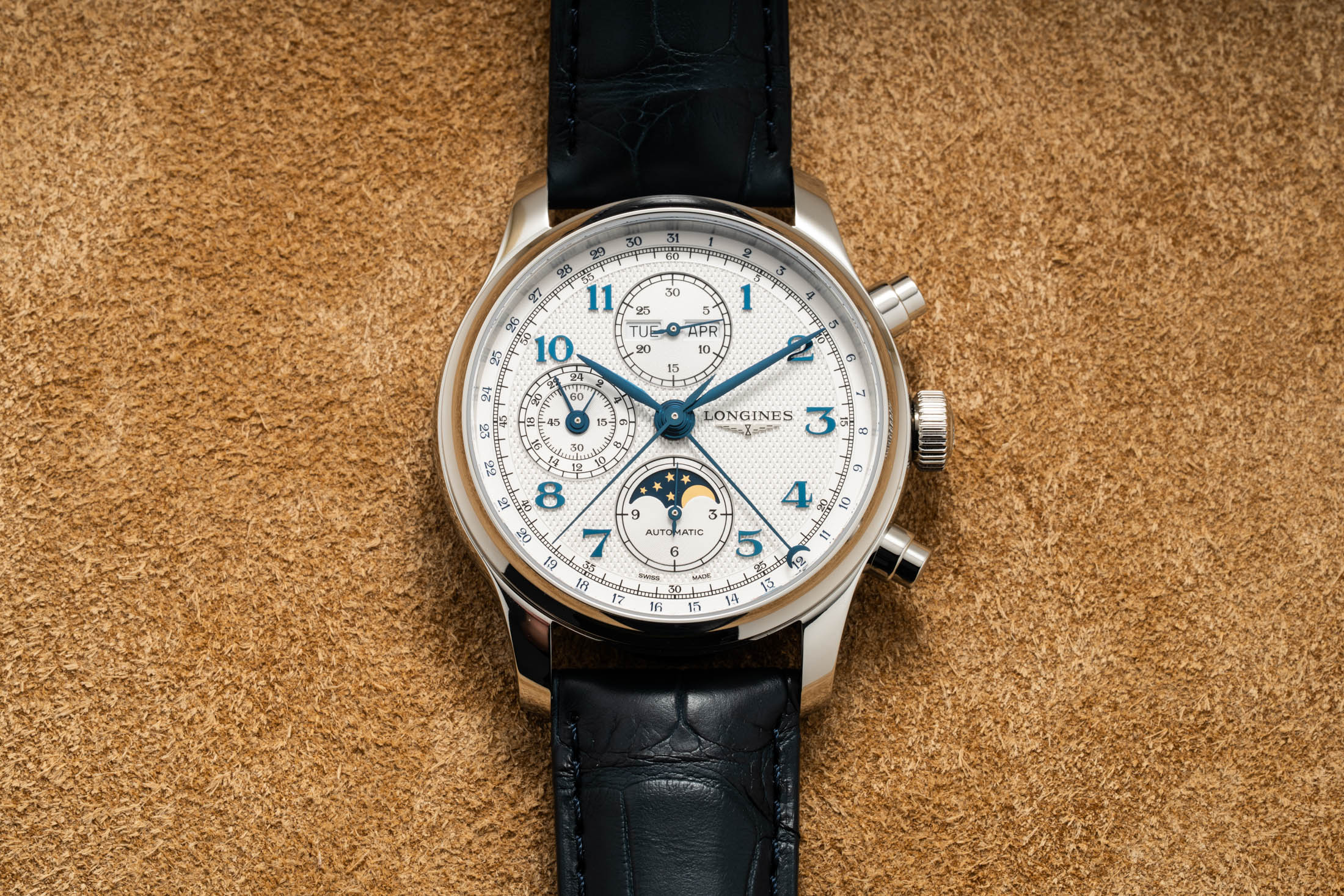
The first notable release is an updated version of the Master Collection Chrono Moonphase, reference L2.962.4.73.2. This revision represents a significant aesthetic evolution of the outgoing model. Longines has strategically consolidated the previous 40mm and 42mm case options into a single, harmonious 41mm diameter for the new generation. The stainless steel case now measures 13.8mm in thickness, a slight reduction from the previous 14.2mm, and features a lug-to-lug measurement of 48.6mm, striking a balance between presence and wearability. The case design retains its signature soft, fully polished aesthetic, characterized by minimal external lines or facets, further accentuated by a polished concave bezel.

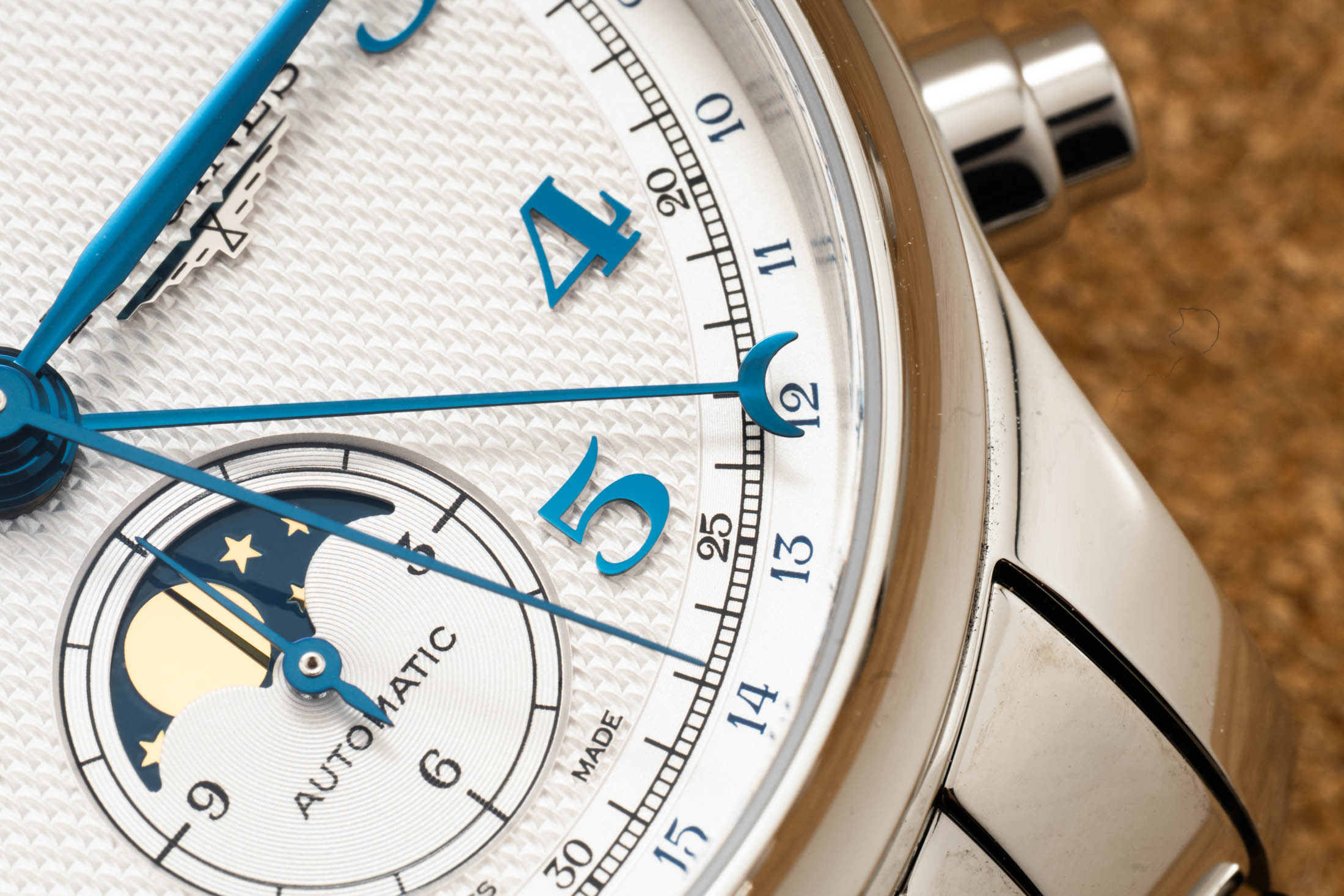
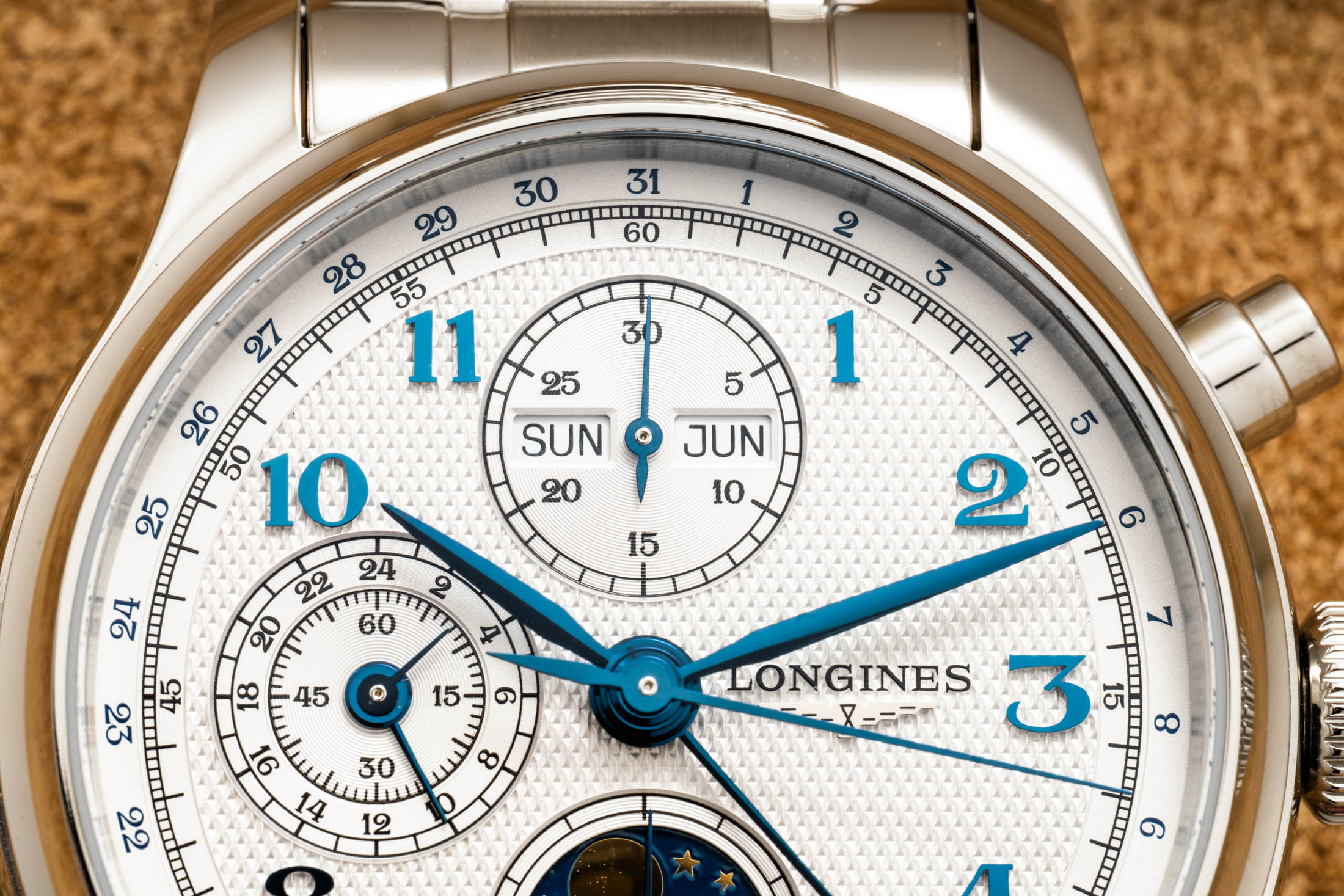
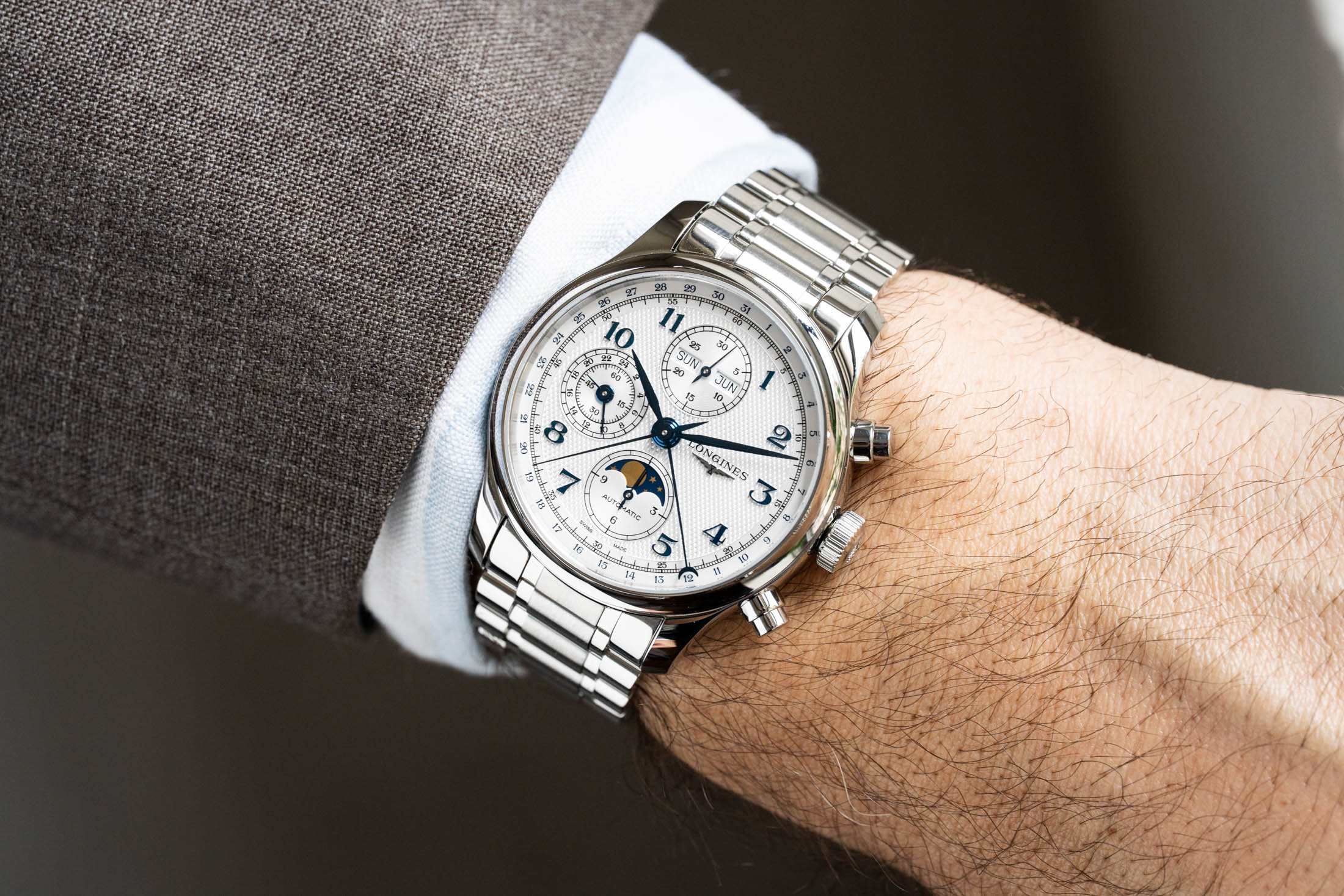
The most impactful changes, however, are evident on the dial. Longines has meticulously refined the design, resulting in a more balanced and visually cohesive presentation of the dial’s numerous indications. The familiar barleycorn texture remains, providing a subtle yet sophisticated backdrop. The typography has been significantly cleaned up, addressing a previous inconsistency where highly stylized numerals were interspersed with text that appeared to be in Helvetica. The new design employs a standardized typographical system across all numerical elements, enhancing legibility and overall aesthetic harmony. The calendar apertures, along with the "Swiss Made" and "Automatic" markings, now feature a clean sans-serif font, contributing to the dial’s unified appearance.
A key improvement lies in the removal of the sloped rehaut. The previous generation featured a rehaut with a printed minutes track and a date ring that extended to it, often resulting in the minutes hand not fully reaching the track. The new Chrono Moonphase reverses this arrangement: the pointer date numerals are now printed on the outermost portion of the chapter ring, with the printed minutes track positioned inside. This subtle yet significant alteration ensures that the minutes hand now correctly aligns with its intended track, a welcome improvement for both precision and visual satisfaction.
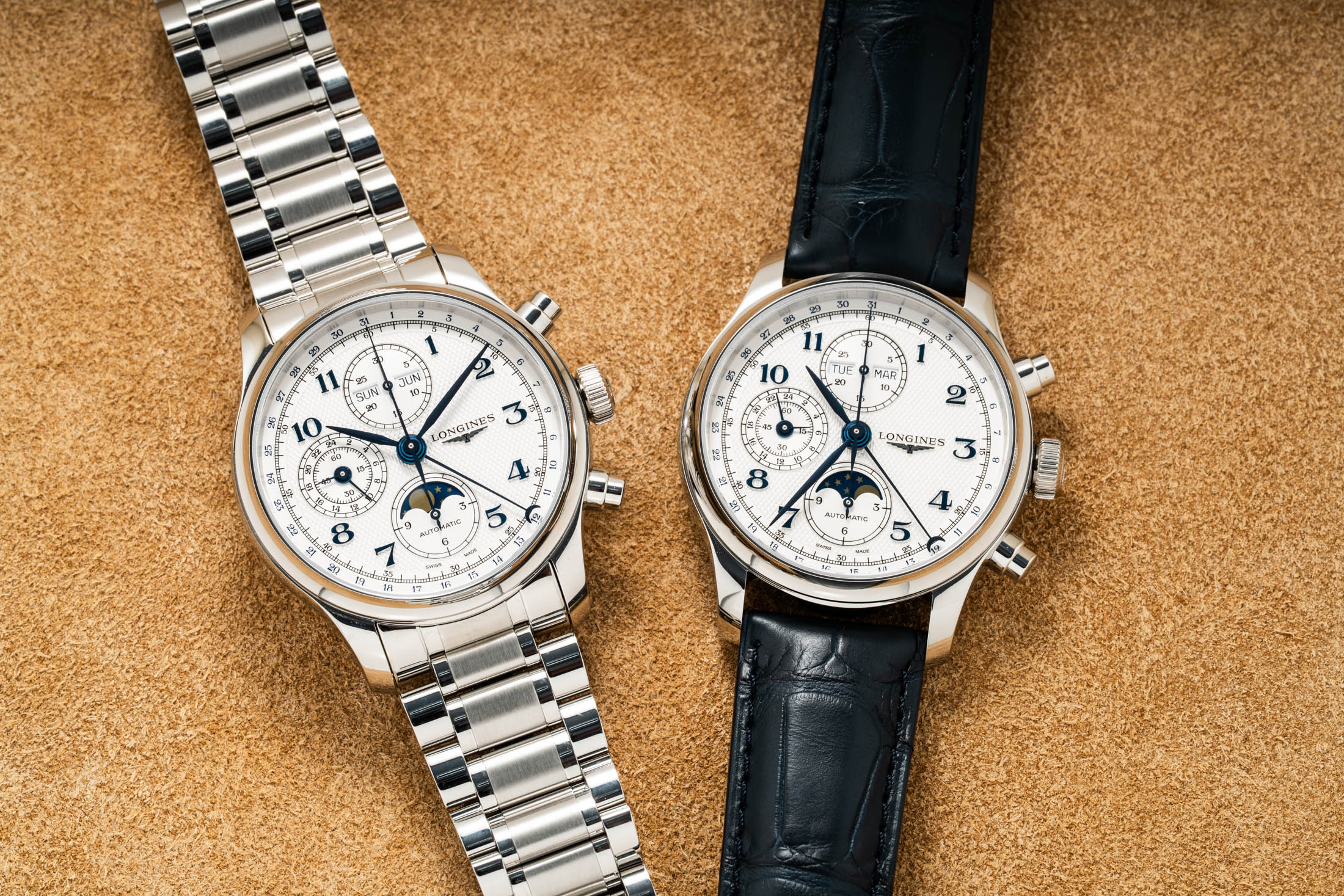
Furthermore, the new generation boasts applied numerals and an applied Longines winged hourglass logo. These elements introduce an additional layer of depth and refinement to the dial, with the raised blue numerals creating a tactile and visually appealing contrast. Crucially, none of the applied hour numerals are obscured by the subdials, maintaining the dial’s clean layout.
On the wrist, these dial enhancements translate to improved legibility and light interaction. The applied numerals and blued handset are now more easily distinguishable from the surrounding text, enhancing the watch’s functionality.
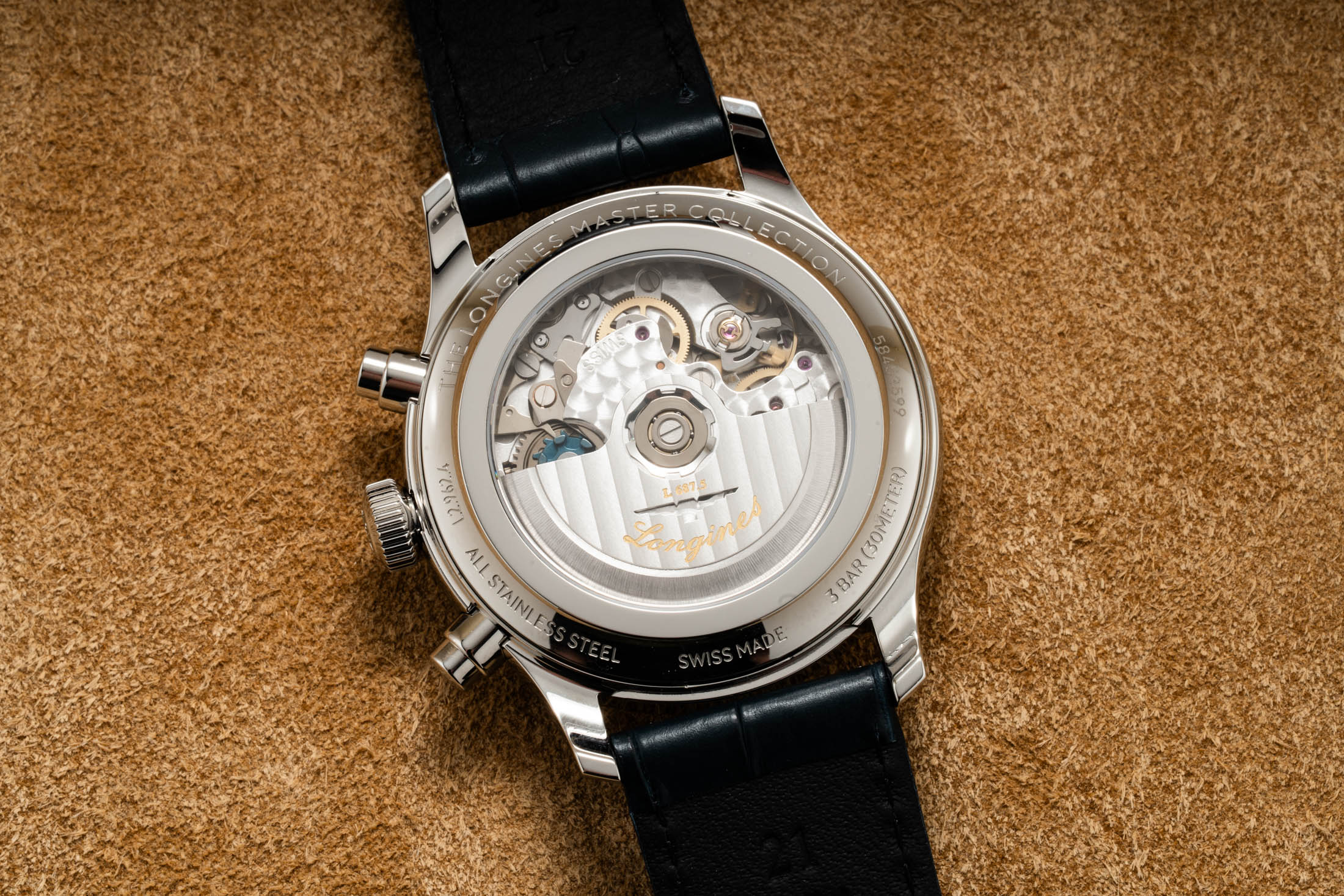
Technical Prowess: The L687.5 Caliber
Powering the refreshed Chrono Moonphase is the Longines-exclusive L687.5 caliber, a robust movement based on the well-regarded Valjoux 7751. This automatic movement offers a substantial 66-hour power reserve and features a column wheel for precise chronograph operation and a silicon balance spring, contributing to enhanced accuracy and durability. These specifications remain consistent with the prior generation, highlighting Longines’ focus on reliable and high-performing in-house or exclusive movements.
Availability and Value Proposition
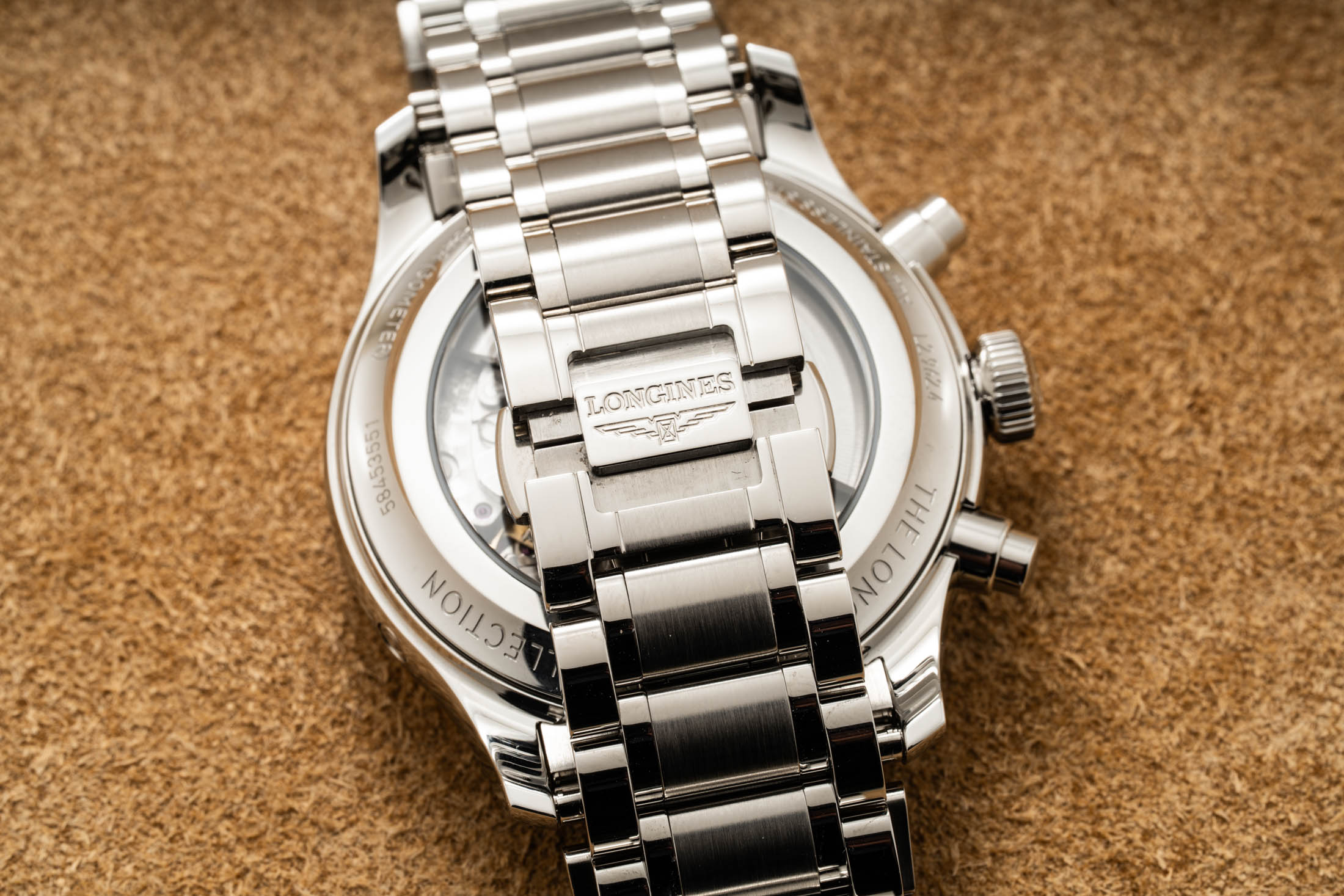
The new Master Collection Chrono Moonphase is available with either a stainless steel bracelet or an alligator leather strap. Notably, both options are priced identically at $4,250. The bracelet and the clasp for the leather strap feature tool-less micro-adjustment mechanisms, enhancing wearability and convenience. This pricing positions the watch as a compelling value proposition within the luxury watch market, offering a complex complication and refined finishing at an accessible point.
The Grand Return of the Monopusher Chronograph
The second, and arguably more anticipated, announcement is the introduction of the new Master Collection Chrono Monopusher. This marks a significant return for Longines in the monopusher chronograph segment, a complication that holds a special place in the brand’s historical narrative. It has been six years since Longines last released a monopusher for its modern collection, the Avigation Watch Type A-7 1935, which paid homage to a distinctive early 20th-century pilot’s watch. The absence of a contemporary monopusher felt like a missed opportunity for Longines, a brand renowned for pioneering some of the earliest wrist-worn chronographs, many of which were monopushers.
Design Heritage Meets Modern Execution
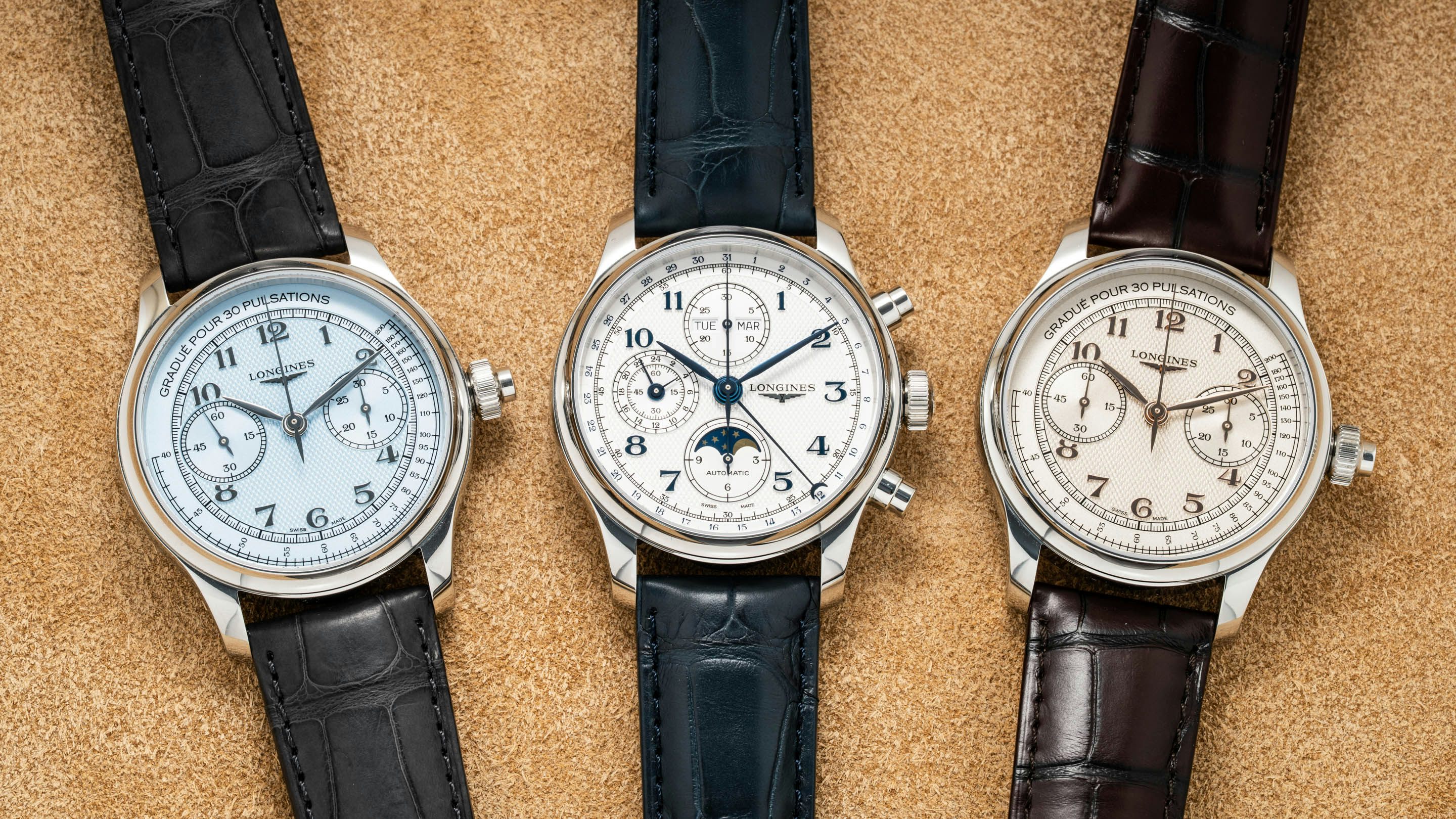
The new monopusher chronographs draw heavily from the Master Collection’s established aesthetic. They feature a rounded, fully polished case, a concave bezel, and a stamped barleycorn guilloché pattern on the dial. Two dial color options are offered: a frosted blue hue (ref. L2.960.4.93.2) and a warm silver opaline (ref. L2.960.4.78.2).
Both variants are housed in a 41mm stainless steel case, with a thickness of 12.6mm and a lug-to-lug measurement of 48.6mm. This means that both the Chrono Monopusher and the Chrono Moonphase models share the same case diameter and lug-to-lug dimensions, with the primary difference being the thickness. While this unified case size offers a consistent aesthetic for this refresh, the watch community might anticipate smaller case options in future iterations, a trend Longines has successfully implemented with models like the Hydroconquest and Legend Diver.
On the dial, the applied numerals complement the tone of the handset. The silver opaline dial features 5N plated rose gold numerals, while the light blue dial boasts rhodium-plated numerals. These numerals are set against the barleycorn-textured backdrop. Unlike the Chrono Moonphase, however, the numerals at the 2, 4, 8, and 10 o’clock positions are partially obscured by the two snailed subdials. This design choice, while historical in its inspiration, creates a slightly more crowded dial appearance compared to its triple-calendar counterpart. The decision to omit a date window is a welcome one, simplifying the dial and enhancing its cleaner aesthetic.
A notable feature for horological enthusiasts is the inclusion of a pulsation scale, a nod to vintage chronographs, replacing the more conventional tachymeter scale. While a charming detail, the pulsation scale occupies a significant portion of the dial relative to other elements. This larger scale aids in reading the chronograph seconds but results in a noticeable amount of negative space around the main dial, which might appear somewhat empty, especially on a 41mm case. This visual characteristic echoes some vintage pulsometer chronographs, which often featured similarly proportioned scales. However, those vintage watches were typically much smaller in diameter, making the scale’s prominence more contextually appropriate. The larger 41mm case size of the new Longines makes this aspect more pronounced, potentially fueling discussions for a future, more compact case design that could rebalance the dial’s elements.
Despite these minor observations, the dial execution is generally commendable. The cohesive typography across printed scales and subdial markings, combined with the applied numerals, imparts a premium feel. The subtle layering of dial elements, including the stepped pulsometer ring and the slightly sunken subdials, adds textural depth without overwhelming the overall design.
The Heart of the Monopusher: The L799.5 Caliber
The integrated crown and monopusher mechanism on the right side of the case is a key feature. This operates the new L799.5 caliber, a manual-winding movement exclusive to Longines and built by ETA. This movement shares many specifications with modern Longines chronograph calibers, including a column wheel for precise activation of the chronograph functions, a silicon balance spring for improved performance, and a 68-hour power reserve. It operates at a frequency of 28,800 vibrations per hour (VpH).
Pricing and Market Positioning
The Master Collection Chrono Monopusher is priced at $3,900 when fitted with an alligator leather strap. A bracelet option is not currently offered for the monopusher variants. This price point positions the watch as an exceptional value, particularly when considering the complexity of a mechanical monopusher chronograph. While some microbrand offerings might present lower price tags, they often utilize cam-operated movements, such as the Sellita SW510. Even watches featuring the SW510 are frequently priced comparably, or even higher, than this new Longines.
When compared to Longines’ own 2020 Avigation Watch Type A-7 1935 monopusher, which retailed for $3,450, the price increase over six years for a demonstrably more complex dial and a superior caliber is remarkably modest. This pricing strategy firmly establishes the Master Collection Chrono Monopusher as a significant value proposition within Longines’ diverse product range and a welcome addition to the relatively sparse market for mechanical monopusher chronographs.
Broader Implications and Longines’ Strategic Vision
The dual release of the refreshed triple calendar chronograph and the new monopusher chronograph from the Master Collection signifies Longines’ adeptness at balancing its historical legacy with the demands of the contemporary watch market. The brand has consistently demonstrated an ability to deliver high-quality, aesthetically pleasing timepieces with robust movements at competitive price points.
The refinement of the Chrono Moonphase addresses subtle yet important design critiques, enhancing the legibility and overall appeal of an already complex and attractive complication. This update reinforces Longines’ commitment to continuous improvement across its product lines.
The reintroduction of the monopusher chronograph is a strategic move that leverages Longines’ deep heritage in this specific complication. By integrating it into the popular Master Collection, Longines taps into a broader audience interested in classic watchmaking while offering a modern interpretation of a historical function. The value proposition of these new chronographs is undeniable, further solidifying Longines’ reputation as a brand that offers exceptional horological content without exorbitant pricing.
The success of these launches is likely to further bolster Longines’ standing in the global watch market, appealing to both seasoned collectors and newcomers alike. The brand’s ability to offer such compelling products, rooted in history yet executed with modern precision and value, positions it for continued growth and influence in the years to come. The ongoing demand for well-executed chronographs, especially those with historical significance, ensures that these new Master Collection pieces will find a receptive audience.