The global pursuit of a room-temperature superconductor has entered a transformative phase as an international research team, led by Aalto University, demonstrates how artificial intelligence can bypass the traditional, labor-intensive bottlenecks of material discovery. By integrating machine learning with advanced quantum calculations, the SuperC consortium has successfully identified and synthesized two new superconducting materials, YRu3B2 and LuRu3B2. This breakthrough, recently documented in the journal Physical Review Research, provides a definitive proof-of-concept for a methodology that could eventually screen billions of chemical combinations, potentially solving one of the most persistent challenges in modern physics.
Superconductors are materials characterized by their ability to conduct electricity with zero resistance and the expulsion of magnetic fields, a phenomenon known as the Meissner effect. While these properties have the potential to revolutionize global infrastructure, they have historically been restricted to environments of extreme cold. Most known superconductors function only at temperatures near absolute zero—approximately -273.15 degrees Celsius—necessitating expensive and bulky cooling systems utilizing liquid helium or liquid nitrogen. The discovery of a material that maintains these properties at room temperature would mark a paradigm shift in energy efficiency, computing, and transportation.
The Computational Bottleneck in Material Science
For over a century, the discovery of new superconductors has been largely a matter of serendipity or grueling trial and error. Since Heike Kamerlingh Onnes first observed superconductivity in mercury in 1911, scientists have identified roughly 7,000 superconducting materials. However, according to Professor Päivi Törmä of Aalto University, the leader of the SuperC consortium, the underlying physics is so complex that researchers have only been able to theoretically predict the viability of approximately 20 of these materials.
The difficulty lies in the sheer scale of the "materials space." The periodic table offers a virtually infinite number of ways to combine elements into compounds. Traditional quantum mechanical simulations, such as Density Functional Theory (DFT), are highly accurate but require immense computational power. Running these simulations on every possible combination of elements would take centuries, even with modern supercomputers. Consequently, many potential superconductors remain undiscovered simply because the scientific community lacks the resources to test them all.
To address this, the SuperC team developed a specialized machine-learning algorithm designed to act as a high-speed filter. Instead of performing deep quantum calculations on every possibility, the AI rapidly screens vast libraries of elemental combinations to identify those with the structural and electronic signatures of superconductivity. This "pre-screening" allows the researchers to reserve their most intensive computational resources for only the most promising candidates.
The Role of Quantum Geometry and the Kagome Lattice
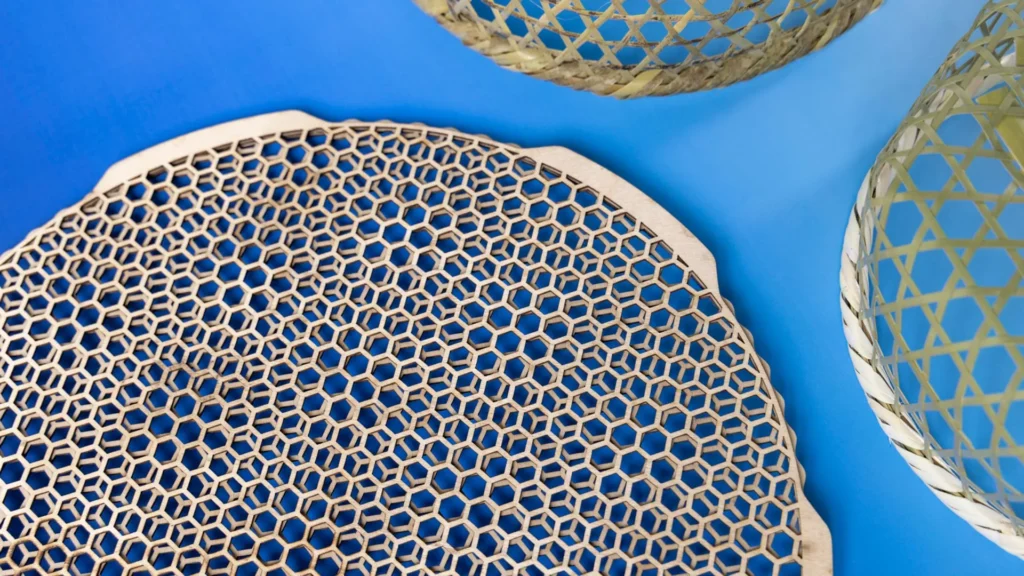
The recent success of the SuperC consortium centers on a specific geometric arrangement known as the kagome lattice. Named after a traditional Japanese basket-weaving pattern, the kagome lattice consists of corner-sharing triangles arranged in a hexagonal symmetry. In the world of quantum physics, this specific geometry is highly prized because it can lead to the formation of "flat bands" in the material’s electronic structure.
In typical conductors, electrons move at high speeds, which often prevents them from interacting in the specific ways required for superconductivity. However, in a flat band, the kinetic energy of electrons is suppressed, effectively causing them to "slow down." This state encourages the electrons to interact strongly and form Cooper pairs—the fundamental units of a superconducting current.
The newly identified materials, YRu3B2 (composed of yttrium, ruthenium, and boron) and LuRu3B2 (lutetium, ruthenium, and boron), were selected by the AI specifically because their atomic structures suggested the presence of these flat bands. By focusing on quantum geometry, the SuperC team moved beyond looking for specific elements and instead looked for specific mathematical conditions within the material’s architecture.
Experimental Verification at Rice University
The transition from a theoretical AI prediction to a physical material requires specialized expertise in chemical synthesis. Once the AI and subsequent quantum calculations flagged YRu3B2 and LuRu3B2 as high-probability candidates, the project moved to Rice University in the United States. Under the leadership of Professor Emilia Morosan, a renowned expert in the synthesis of complex materials, the Rice team undertook the task of creating these compounds from scratch.
Synthesizing new materials involves precisely heating constituent elements in high-temperature furnaces and carefully controlling the cooling process to ensure the desired crystalline structure forms. After the materials were successfully synthesized, the Rice team performed experimental measurements to verify their properties. The tests confirmed that both materials exhibited superconductivity, validating the AI’s predictions and proving that the machine-learning model could accurately identify functional superconductors that had never been documented before.
Chronology of the SuperC Consortium and Future Goals
The SuperC consortium was established in 2023 with a mission that bridges fundamental physics and environmental sustainability. The group, which includes leading physicists from across the globe, was founded on the belief that quantum physics is a necessary tool for addressing the climate crisis.
The consortium has set an ambitious timeline for its research:
- 2023: Formal establishment of the SuperC consortium and development of the initial machine-learning framework.
- 2024: Successful identification and synthesis of YRu3B2 and LuRu3B2, proving the efficacy of the AI-driven approach.
- 2026: The research and its implications will be featured in the "Designs for a Cooler Planet" exhibition at Aalto University from September to October.
- 2033: The consortium’s target date for the discovery of a practical, room-temperature superconductor.
This ten-year roadmap reflects the urgency of the energy challenges facing the modern world. Professor Törmä emphasizes that while the current discovery involves materials that still require cooling, the methodology itself is the real breakthrough. With the ability to process billions of materials, the odds of finding a room-temperature variant improve exponentially.
Economic and Environmental Implications
The quest for a room-temperature superconductor is not merely an academic exercise; it is an economic and environmental necessity. Currently, a significant portion of the electricity generated worldwide is lost during transmission and distribution due to the inherent resistance in copper and aluminum wires. Estimates suggest that global transmission losses range from 5% to 10%. In a world powered by superconducting grids, these losses would be eliminated, effectively increasing the global energy supply without burning a single additional ton of carbon.
The Information and Communications Technology (ICT) sector stands to benefit even more dramatically. Data centers currently consume approximately 1% to 2% of global electricity, a figure that is rising with the proliferation of AI and cloud computing. A large portion of this energy is used not for processing, but for cooling the heat generated by electrical resistance in traditional conductors.
"If such a material could replace regular conductors in applications like computers and data centers, global energy consumption could be slashed and the heat footprint of the ICT sector vastly reduced," says Professor Törmä. Beyond energy savings, room-temperature superconductors would enable the development of ultra-fast "cryogenic" computers that operate at room temperature, more affordable and portable MRI machines, and more efficient fusion reactors.
Supporting Data and Scientific Analysis
The integration of AI into material science represents a broader trend often referred to as the "Materials Genome Initiative." By treating the properties of materials as "genes" that can be mapped and predicted, scientists are moving away from the era of accidental discovery.
Data from the SuperC study indicates that the machine-learning model was able to reduce the search space by several orders of magnitude. While traditional methods might take weeks to analyze a single complex crystal structure, the AI can evaluate thousands of candidates in a matter of hours. This efficiency is critical because the number of possible ternary (three-element) and quaternary (four-element) compounds is estimated to be in the millions, far exceeding the capacity of human researchers to investigate manually.
The focus on the kagome lattice also provides a stable theoretical framework. Previous "high-temperature" superconductors, such as the cuprates discovered in the 1980s, were found largely by accident and their underlying mechanism is still a subject of intense debate. By using quantum geometry as a guiding principle, the SuperC team is building a predictive "map" that allows them to understand why a material should be a superconductor before they ever step into a lab.
Funding and Collaborative Support
The success of the SuperC consortium is supported by a diverse group of international foundations and private donors, reflecting the global interest in sustainable energy solutions. Funding for the project is provided by The Kavli Foundation, the Klaus Tschira Stiftung, and individual benefactor Kevin Wells. Additional support comes from several Finnish organizations, including the Jane and Aatos Erkko Foundation, the Magnus Ehrnrooth Foundation, the Keele Foundation, and the Neste and Fortum Foundation.
This broad financial backing underscores the multidisciplinary nature of the work, which combines high-level theoretical physics, computer science, and experimental chemistry. As the consortium moves toward its 2033 goal, the collaboration between Aalto University, Rice University, and their international partners serves as a model for how coordinated global efforts can tackle the most complex scientific problems of the 21st century.
Conclusion
The discovery of YRu3B2 and LuRu3B2 is a landmark achievement, not because of the materials themselves, but because of the process used to find them. By proving that AI can successfully navigate the complexities of quantum physics and predict the behavior of new materials, the SuperC consortium has opened a new frontier in science. As the team continues to refine their algorithms and expand their search into the billions of possible elemental combinations, the dream of a room-temperature superconductor moves from the realm of science fiction toward a tangible, technological reality. The implications for a "cooler planet"—where energy is abundant, efficient, and carbon-neutral—have never been more within reach.