The European Space Agency’s (ESA) Materials, Environments, and Contamination Control Section is at the forefront of ensuring the success of ambitious space missions by rigorously investigating and testing materials essential for surviving the unforgiving vacuum of space. This critical work, bolstered by the influx of fresh perspectives from a cohort of young researchers, is vital for safeguarding the performance and longevity of spacecraft venturing into the cosmos.
The Unseen Battleground: Materials Under Extreme Pressure
Space is an environment of unparalleled hostility. For spacecraft, this translates into a relentless assault from multiple fronts: the near-absolute vacuum, which can cause materials to outgas and degrade; extreme temperature fluctuations, ranging from scorching sunlight to the frigid shadows; and pervasive, high-energy radiation that can compromise electronic components and structural integrity. Engineers designing these complex machines rely on materials that not only withstand these conditions but perform reliably over extended mission durations.
Within ESA’s dedicated Materials, Environments, and Contamination Control Section, a synergistic effort is underway. Research fellows, European Space Agency Graduate Trainees (EGTs), National Trainees, and visiting researchers, many supported by ESA’s forward-thinking Discovery programme, collaborate to push the boundaries of material science for space applications. Their collective mission is to identify, develop, and validate materials that can endure the rigors of space, ensuring that the instruments and systems they protect can fulfill their scientific and operational objectives.

Malgorzata Holynska, a materials and processes engineer within the section, elaborates on the core challenges. "Our section studies the challenges imposed on materials by the space environment," she explains. "It is mainly the exposed non-metallic parts of spacecraft that are affected by all the hostile space environmental factors, and their degradation might lead to issues with performance." This degradation can manifest in numerous ways, from the discoloration and embrittlement of polymers to the reduction in efficiency of optical surfaces. The stakes are incredibly high; a material failure can compromise an entire mission, leading to significant financial and scientific losses.
The section’s commitment extends beyond immediate mission support. A significant portion of their work involves internal research aimed at expanding the fundamental understanding of material behavior in space. This proactive approach is crucial for anticipating future challenges and developing innovative solutions before they become critical mission constraints. "We have many young talented researchers in our section," Malgorzata adds. "They are all part of our Researcher Forum – a group that meets on a regular basis to discuss their work, provide feedback, and generate new ideas." This structured environment fosters cross-pollination of ideas and encourages a collaborative spirit, essential for tackling complex, multi-faceted problems.
Pioneering Research Areas: From Laser Contamination to Lunar Dust
The diverse expertise within the Materials, Environments, and Contamination Control Section is reflected in the specialized research undertaken by its young investigators. These individuals are not only contributing to current ESA objectives but are also laying the groundwork for future exploration endeavors.
Detecting and Mitigating Laser-Induced Contamination
Sarah Krahl, an ESA Graduate Trainee, exemplifies the dedication and passion driving this research. "One of my biggest passions is being in a lab, conducting research and experiments," she states. Her current focus is on laser-induced contamination (LIC), a critical issue for optical systems employing high-power ultraviolet (UV) lasers. These lasers are fundamental to various Earth observation missions, including light detection and ranging (lidar) systems, with the Aeolus satellite, a pioneering wind-measuring mission, serving as a notable example.

"High-power UV lasers are used in light detection and ranging (lidar) missions, of which Aeolus is a famous example," Sarah explains. "The lifetime and reliability of optical systems is directly affected by small amounts of outgassed contaminants – molecules of trapped gasses that are released from materials under vacuum and condense onto cold surfaces like mirrors or lenses." This outgassing, exacerbated by the extreme vacuum, can lead to a gradual buildup of a film on optical components, obscuring their view and reducing their effectiveness.
To study the complex interaction between outgassed molecules and high-power UV lasers, Sarah utilizes the Radiation Induced Environmental Effects Facility (RIEEF) within ESA’s Materials and Components Laboratories. This specialized facility allows for the precise simulation of space conditions and the analysis of material responses under controlled laser exposure. Her work aims to develop strategies to prevent or minimize this detrimental contamination, thereby ensuring the longevity and accuracy of sensitive optical instruments. The implications of her research are far-reaching, impacting the design of future telescopes, Earth observation satellites, and even deep-space probes that rely on precise optical measurements.
Understanding and Counteracting Water Ice Contamination
Alex Laroche, an internal research fellow, is tackling another pervasive challenge: the behavior of water as a contaminant in and around spacecraft. "It is ironic how water, so essential to life, tends to obscure our search for it," he muses. Water ice contamination is a significant hurdle for sensitive scientific missions, particularly those with delicate optical instruments like the Euclid and Gaia space observatories, which are dedicated to mapping the cosmos.
"Water ice contamination of important spacecraft surfaces is a hindrance especially to science missions like Euclid or Gaia, and current contamination models are not able to predict it accurately enough," Alex highlights. This inaccuracy stems from the complex phase transitions of water under vacuum and varying temperature gradients, leading to unpredictable ice formation on critical surfaces such as sensor windows, mirrors, and antennas.
Alex’s research fellowship is dedicated to developing improved models through a combination of rigorous experimentation and theoretical analysis. By understanding the precise mechanisms of water sublimation, condensation, and ice formation in the space environment, he aims to provide mission designers with more accurate predictive tools. This will enable them to implement more effective thermal control strategies and material selection to mitigate ice contamination, saving future missions valuable time, resources, and ultimately, ensuring the integrity of their scientific data. The ability to accurately predict and prevent water ice formation is paramount for missions operating in cryogenic environments or those experiencing significant thermal cycling.

Investigating the Impact of Lunar Dust on Materials
The burgeoning era of lunar exploration brings with it a unique set of material challenges, most notably the pervasive and abrasive lunar dust. Corinne Barker, an ESA Graduate Trainee, is delving into this critical area, studying how lunar regolith affects materials on the Moon’s surface.
"Lunar dust is adhesive and abrasive – meaning it can easily stick to materials and damage them," Corinne explains. "It can cause visible degradation to solar panels, optical instruments, or protection materials, including astronaut suits." The fine, sharp particles of lunar dust, created by billions of years of micrometeorite impacts, can act like microscopic sandpaper, abrading surfaces and compromising their functionality. Furthermore, its electrostatic properties can cause it to cling to surfaces, creating further operational issues.
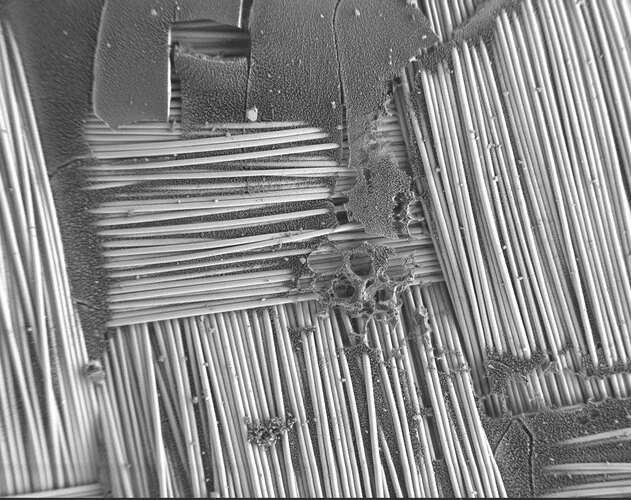
Corinne’s research involves working with simulated lunar dust particles to understand their adherence to various materials. She employs sophisticated techniques, such as measuring the force of adhesion between dust particles and a retractable tip within a scanning electron microscope (SEM), to quantify the interaction. Her project also contributes to the Euro Material Ageing (EMA) experiment, which involves analyzing material samples that have been exposed to the harsh space environment for a year on the exterior of the International Space Station. Her findings will be instrumental in developing robust surface treatments, protective coatings, and material selection guidelines for future lunar landers, rovers, and habitats, ensuring the longevity and reliability of equipment operating on the lunar surface.
Identifying and Validating Sustainable Space-Proof Materials
In line with a growing global emphasis on sustainability, ESA is actively exploring environmentally conscious materials for space applications. Léo Fournier, an ESA Graduate Trainee, is at the forefront of this initiative, assessing alternative materials for critical space applications with a focus on ecodesign and hazardous substance analysis.
"In my traineeship, I’m gaining hands-on experience in sustainability and ecodesign for space missions, and contributing to ESA’s environmental compliance by analysing hazardous substances in mission materials," he states. The materials used in spacecraft construction and operation are often subjected to stringent performance requirements, but increasingly, the environmental impact of their production and disposal is also coming under scrutiny.

Léo’s research specifically targets space textiles, which are ubiquitous across spacecraft and essential for mission success. "Space textiles are used so widely across spacecraft that they are essential to mission success. Their constant exposure to the harsh space environment means that even small changes in the manufacturing process or supply chain can affect their long-term performance," he notes. To ensure that updated or sustainably sourced textiles continue to meet rigorous mission requirements, Léo evaluates their behavior through a comprehensive simulation of space exposure. This includes thermal-vacuum cycling, exposure to ultraviolet (UV) and vacuum ultraviolet (VUV) radiation, atomic oxygen, and outgassing assessments, with meticulous inspections conducted after each stage to monitor material evolution. His work contributes to ESA’s goal of reducing the environmental footprint of space activities while maintaining the highest standards of mission reliability.
Defending Against Atomic Oxygen Erosion
Maciej Skorupski, a National Graduate Trainee, is investigating the damaging effects of atomic oxygen on materials in low Earth orbit (LEO). Atomic oxygen, highly reactive individual oxygen atoms formed in the upper atmosphere by the dissociation of molecular oxygen by solar UV radiation, poses a significant threat to spacecraft.
"I have the unique opportunity to operate the only atomic oxygen facility in Europe," Maciej shares, referring to ESA’s Low Earth Orbit Facility, LEOX. "Having access to state-of-the-art instruments and gaining experience in ESA laboratories helps me work towards my career goal: contributing to human space exploration through materials engineering."
"Atomic oxygen is one of the most aggressive environmental factors affecting spacecraft materials in low Earth orbit," Maciej explains. "It erodes polymers, degrades protective coatings, and alters surface chemistry, leading to reduced performance or premature failure of spacecraft components." This erosion can affect everything from the outer layers of satellites to the coatings on solar panels and the materials used in spacesuits.
Through his work with LEOX, Maciej replicates real orbital conditions by generating atomic oxygen moving at extremely high speeds, simulating the impact experienced by spacecraft in LEO. His research focuses on understanding the fundamental erosion mechanisms and evaluating the durability of candidate materials. The data he generates is crucial for designing more robust spacecraft structures, developing advanced protective coatings, and improving the long-term reliability of missions operating in this challenging orbital regime.

A Culture of Innovation and Collaboration
The success of the Materials, Environments, and Contamination Control Section is not solely attributed to cutting-edge technology and rigorous scientific methodology; it is also deeply rooted in its organizational culture. Adrian Tighe, the head of the section, emphasizes the vital role of its young researchers.
"It’s great to see the enthusiasm and commitment of our researchers," notes Adrian Tighe, head of the section. "They are provided with unique access to the high-tech equipment in our labs, and we get to learn from their innovative ideas – it’s a win-win situation. We wish all our researchers well for their future careers, and hope that they have been inspired by the time spent with us."
This symbiotic relationship, where experienced professionals guide and mentor emerging talent while benefiting from their fresh perspectives and innovative approaches, is a cornerstone of ESA’s strategy for fostering scientific excellence. The Researcher Forum, as mentioned by Malgorzata, is a tangible manifestation of this collaborative spirit, providing a platform for open discussion, constructive feedback, and the generation of novel ideas. This approach not only accelerates scientific progress but also cultivates a highly skilled workforce, prepared to tackle the future challenges of space exploration.
The ongoing work within ESA’s Materials, Environments, and Contamination Control Section is a testament to the agency’s commitment to pushing the boundaries of human knowledge and capability. By meticulously understanding and mitigating the myriad challenges posed by the space environment, these dedicated researchers are not only ensuring the success of current missions but are actively building the foundation for humanity’s continued expansion into the cosmos, paving the way for future discoveries and explorations. The insights gained today will undoubtedly shape the spacecraft of tomorrow, enabling bolder missions to the Moon, Mars, and beyond.